Serving Phoenix, AZ & nearby
(602) 562-4982
Phoenix, AZ

What That Garage Door Noise Is Actually Telling You

Phoenix homes built 1979-2007 are hitting the age where springs, rollers, and openers start talking. Here's what each noise means and when it's serious.

What That Garage Door Noise Is Actually Telling You

The Situation

Across Phoenix's nine mapped growth areas - from to - most houses went up between 1979 and 2007, with the median build year landing at 2001. That means a huge share of the doors and openers in this city are somewhere between 18 and 45 years into service life at the same time. Steel torsion springs are rated by cycle count, not calendar years, but a spring installed when a house was built in the late 1990s or early 2000s is due, or overdue, for replacement now.

With roughly 40,039 owner-occupied houses in the service area, a lot of them from that same 2000s building wave, the noises start showing up in clusters - not because one street has bad luck, but because the hardware across whole subdivisions aged in together. A grinding roller in one house on a 2001-built block usually means the identical roller two doors down is close behind it.

The sound is the diagnostic. Learn what each one means before you call, and you'll have a better conversation with whoever shows up.

How Local Conditions Play In

Phoenix sits in a severe heat band, and that changes what fails first and how it sounds. Nylon rollers that would last years in a milder climate dry out and flat-spot faster here, and a flat-spotted roller makes a rhythmic thump - once per wheel rotation - as the door travels. Lubricant on torsion springs and hinges breaks down faster under repeated 100-plus-degree cycling, so a spring that's lost its coating starts to squeal or chirp on lift, a sound owners in cooler regions rarely hear until much later in the spring's life.

Metal expansion matters too. A track that's slightly out of plumb will bind more noticeably during the hottest parts of the day, when steel is at its most expanded, producing a scrape or hard drag that eases off once things cool. If your door only groans in the afternoon and runs quiet in the morning, that's heat-driven binding, not a random fault.

And because so much of the housing stock here dates to the same 2000s window, a lot of these openers are original equipment nearing the end of their duty-cycle rating, which shows up as a labored motor whine before it shows up as an outright failure.

The Common Mistake

The mistake we see most is spraying WD-40 on a noisy spring or track and calling it fixed. WD-40 is a solvent, not a lubricant - it strips what grease is left and the noise often gets worse within a week. The other common mistake is ignoring a slow, deep groan on a door original to a house built in the late 1990s or early 2000s, treating it as background noise instead of a spring nearing the end of its rated cycles in a climate that shortens that life.

We also see people replace a single roller or hinge and expect the noise to disappear, when the rest of the hardware set is the same age and wearing at roughly the same rate. If one roller on a 20-plus-year-old door is worn enough to be loud, the other nine are close behind it, even if they're quiet for now.

One honest limit here: we can't tell you which specific failure a noise means over the phone. Pitch, timing, and location on the door all matter, and guessing wrong means either an unnecessary spring swap or a missed one.

When Waiting Is Fine

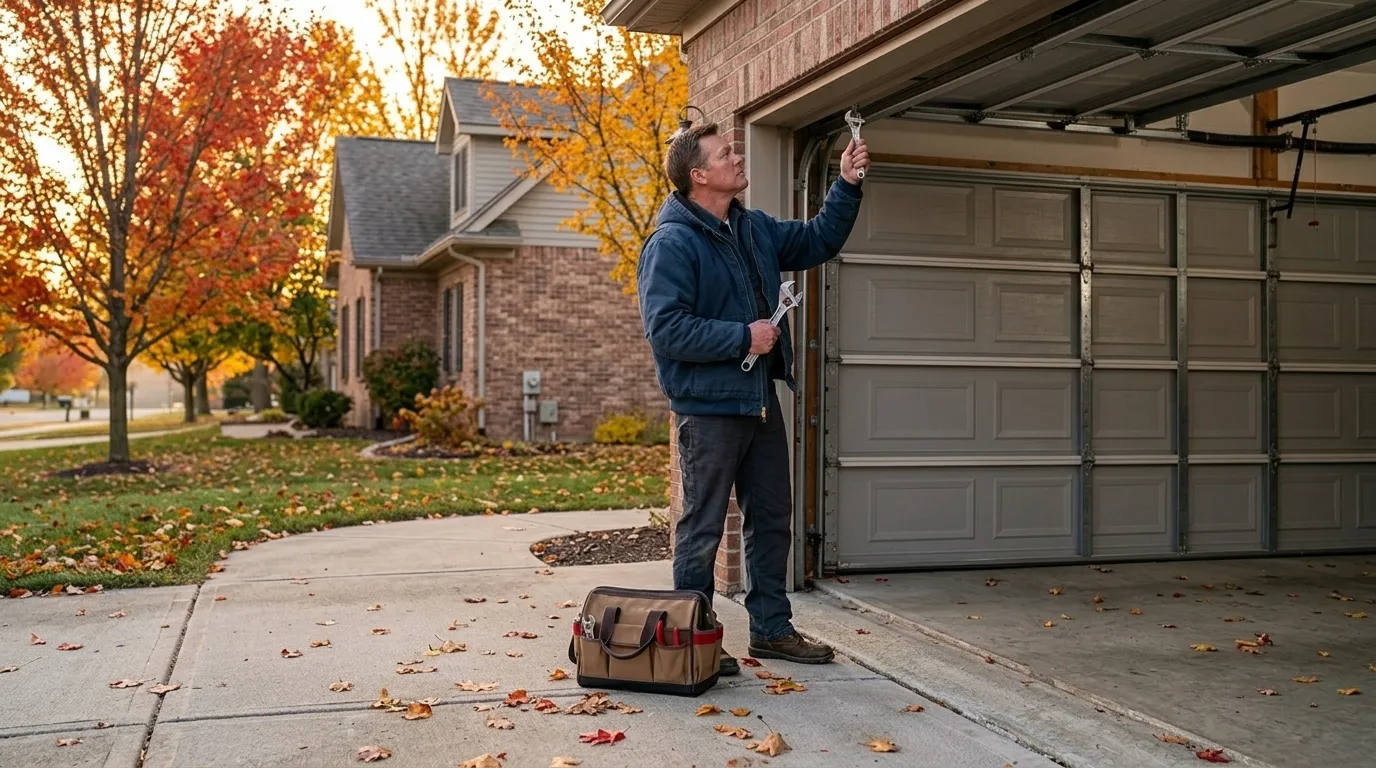
Not every noise means trouble. A door that's suddenly a little louder after a long stretch of 100-plus-degree days, but still opens smoothly and stays level, is often just dry hardware reacting to heat - a light lubrication call, not an emergency. A single squeak on an otherwise smooth cycle, especially on a house built within the 2000s wave common across this city, is usually a hinge pin, not a spring.

Given a median household income of $74,764 across the area, most owners are weighing a repair against a replacement, and a door that's merely noisy but still tracks straight, seals at the bottom, and reverses properly on obstruction is not a door that needs same-day attention.

Wait if: the noise is new, isolated to one point in the cycle, and the door still moves the same speed it always has. Don't wait if: the noise is a bang, a loud pop, or the door has started to hang unevenly - those point to a spring or cable failure, and on a double door especially, that's not a wait-and-see.

How it works

From “it’s stuck” to “it’s fixed”

Tell us what’s wrong - Phoenix garage door service

Tell us what’s wrong

Describe the symptom - won’t open, loud bang, opener runs but the door won’t move.

On-site diagnosis - Phoenix garage door service

On-site diagnosis

A technician tests the door under power and by hand and finds what actually failed.

Clear, up-front plan - Phoenix garage door service

Clear, up-front plan

You get the fix that’s needed and what drives the cost - before any work starts.

Repaired & tested - Phoenix garage door service

Repaired & tested

The repair is done, the door is set true and tested, and the work area left clean.

Serving Phoenix, AZ - tell us what your door’s doing and we’ll take it from there.

7areas covered
How we work

What to expect

A straight, honest approach on every Phoenix job - diagnosis first, the right parts, and clean work.

01

Diagnosis first

Every visit starts by finding what actually failed - not a pre-written parts list.

02

The right part for the door

Springs and openers matched to the door’s weight and age, so the fix holds up.

03

Straight answers

When a repair makes more sense than a replacement - or the reverse - you hear it plainly.

04

Clean, careful work

Tension released safely, hardware set true, the door tested under power before we leave.

What we do

Garage Door Services

Repair and installation work for Phoenix homes and businesses.

Garage Door Repair in Phoenix

Garage Door Repair

Garage door repair for Phoenix houses built 1979-2007. We fix broken springs, worn opener gears, and heat-damaged tracks common across the valley's builder-grade stock.

Learn more
Garage Door Installation in Phoenix

Garage Door Installation

New garage door installation for Phoenix homes built 1979-2007, sized for our severe heat and the steel and insulation choices that actually hold up here.

Learn more
Garage Door Service in Phoenix

Garage Door Service

Garage door service for Phoenix homes built mostly between 1979 and 2007, where severe summer heat wears down springs, rollers, and opener gears faster than the manual says.

Learn more
Spring Repair in Phoenix

Spring Repair

Broken torsion springs are common in Phoenix homes built 1979-2007. We explain what drives it here, what a repair takes, and what you're seeing before the call.

Learn more
Off-Track Repair in Phoenix

Off-Track Repair

A garage door off track in Phoenix is rarely random. Here's what causes it, what you'll notice first, and why the valley's heat and housing stock make it common.

Learn more
Maintenance in Phoenix

Maintenance

Garage door maintenance for Phoenix homes built mostly between 1979 and 2007, where summer heat bakes lubricant and hardware faster than almost anywhere else.

Learn more
Commercial Garage Door in Phoenix

Commercial Garage Door

Phoenix Garage Door Co repairs and services commercial garage doors across the Phoenix metro area, from aging 2000s-era steel doors to heat-worn openers.

Learn more
Emergency Garage Door Repair in Phoenix

Emergency Garage Door Repair

24/7 emergency garage door repair across Phoenix, AZ. We know why doors built in the 1979-2007 boom fail in the heat and what a same-day fix actually runs.

Learn more
Questions

Frequently asked

Straight answers about garage door repair in Phoenix. Still unsure? Ask us directly.

My door makes a loud bang and won't move - is that the spring?

A single loud bang followed by the door refusing to open or feeling heavy to lift by hand is the classic sign of a broken torsion spring. This is not a DIY fix - the spring is under heavy tension. Don't run the opener again until it's replaced.

Why does my garage door only creak in the afternoon?

Phoenix's severe heat swings cause metal track and hardware to expand during the hottest part of the day, which can create binding or drag that eases off once temperatures drop. If it only happens in the heat, it's likely alignment or lubrication, not a spring problem.

My house was built in the early 2000s and the opener is getting loud - is it dying?

A lot of Phoenix openers date to that same building wave, and motor whine or a labored sound on lift is a common sign they're nearing the end of their duty-cycle rating. It doesn't always mean immediate failure, but it's worth having checked before it strands the door partway.

Is WD-40 okay to use on a squeaky door?

No - it's a solvent, not a lubricant, and it strips existing grease. Use a garage-door-rated lithium or silicone lubricant on rollers, hinges, and the spring coil instead.

Ready to get your garage door sorted?

Tell us what it’s doing and where you are in Phoenix - we’ll take it from there.

Request a QuoteCall