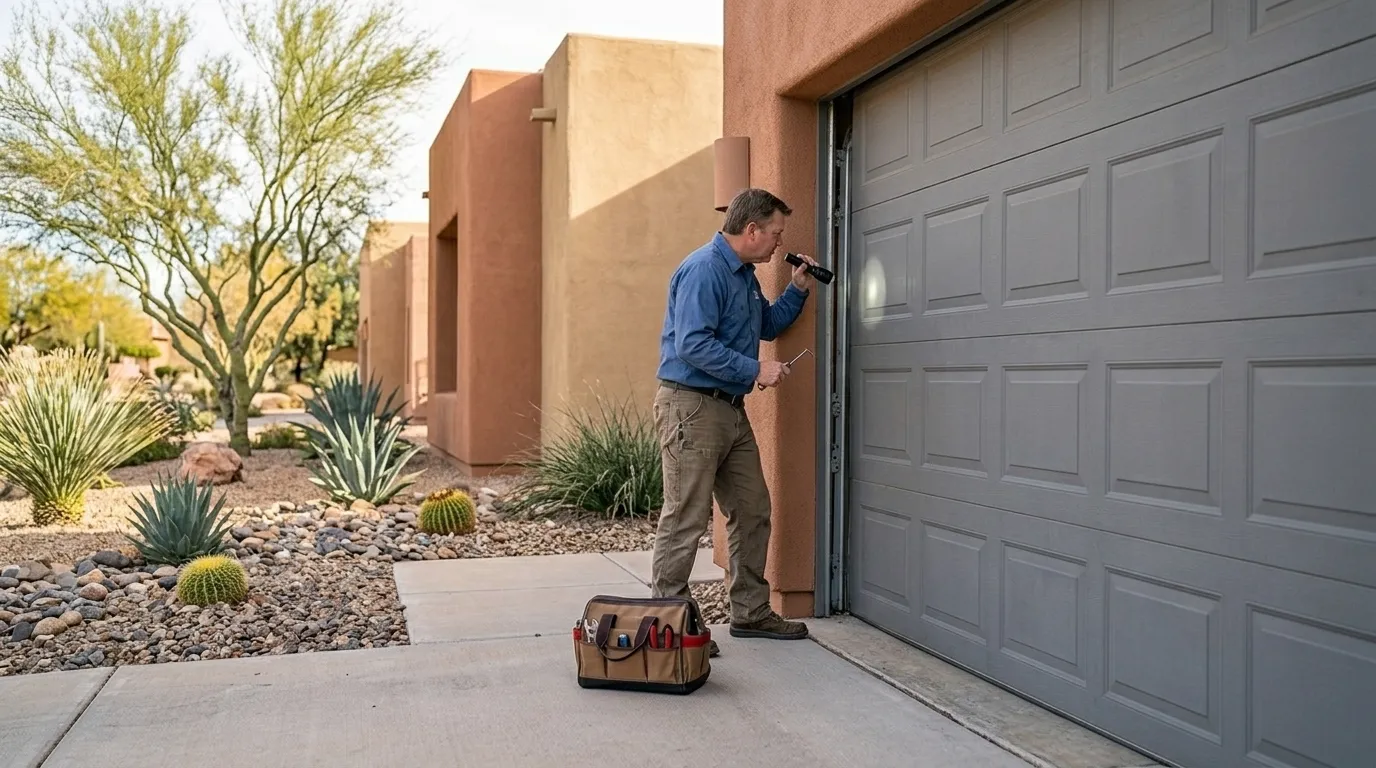
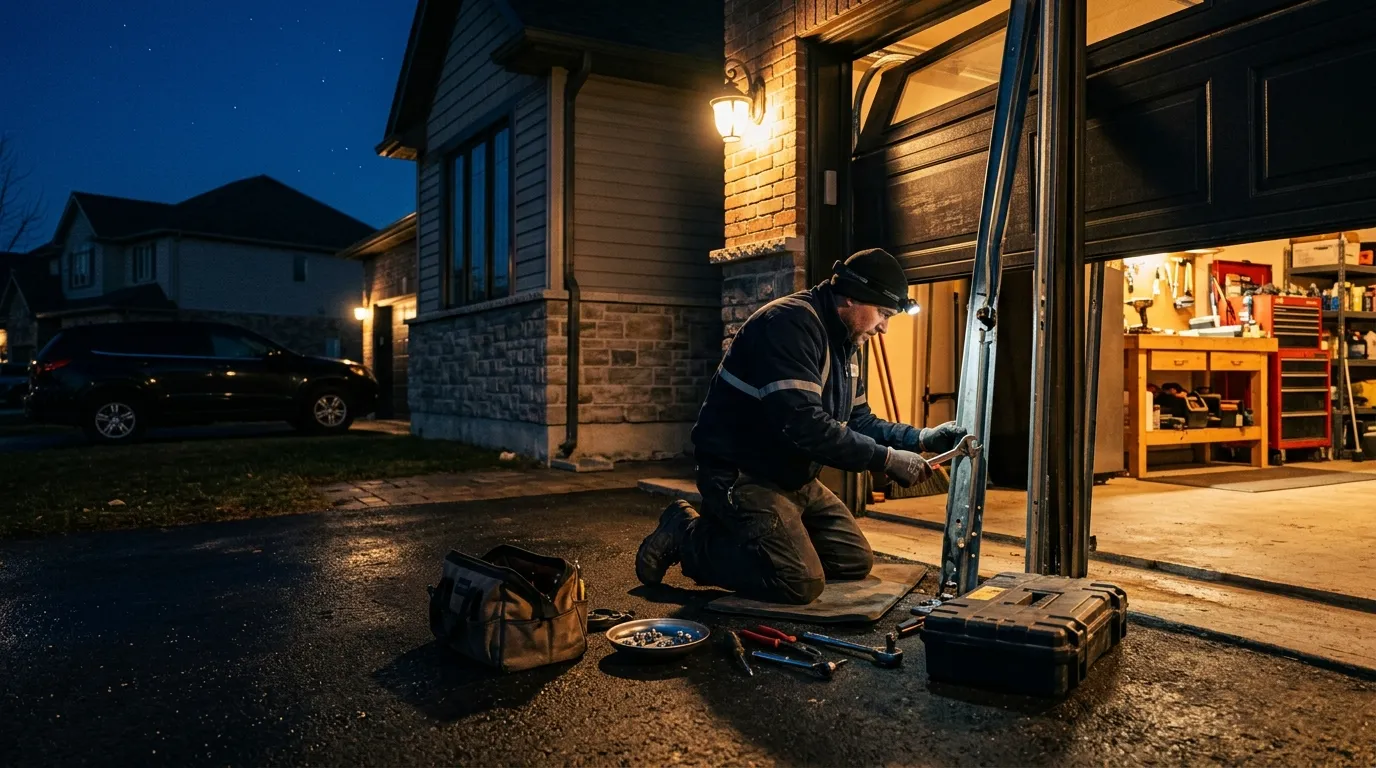
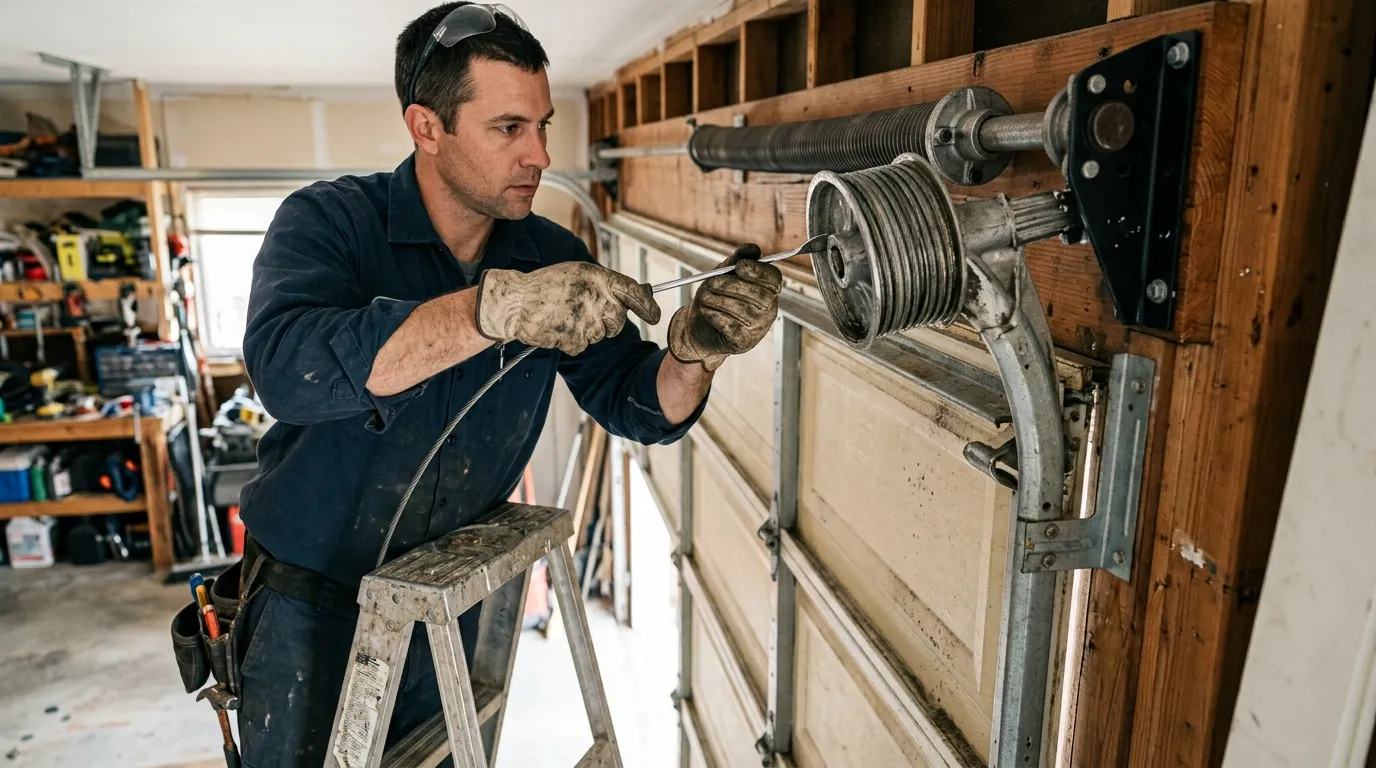
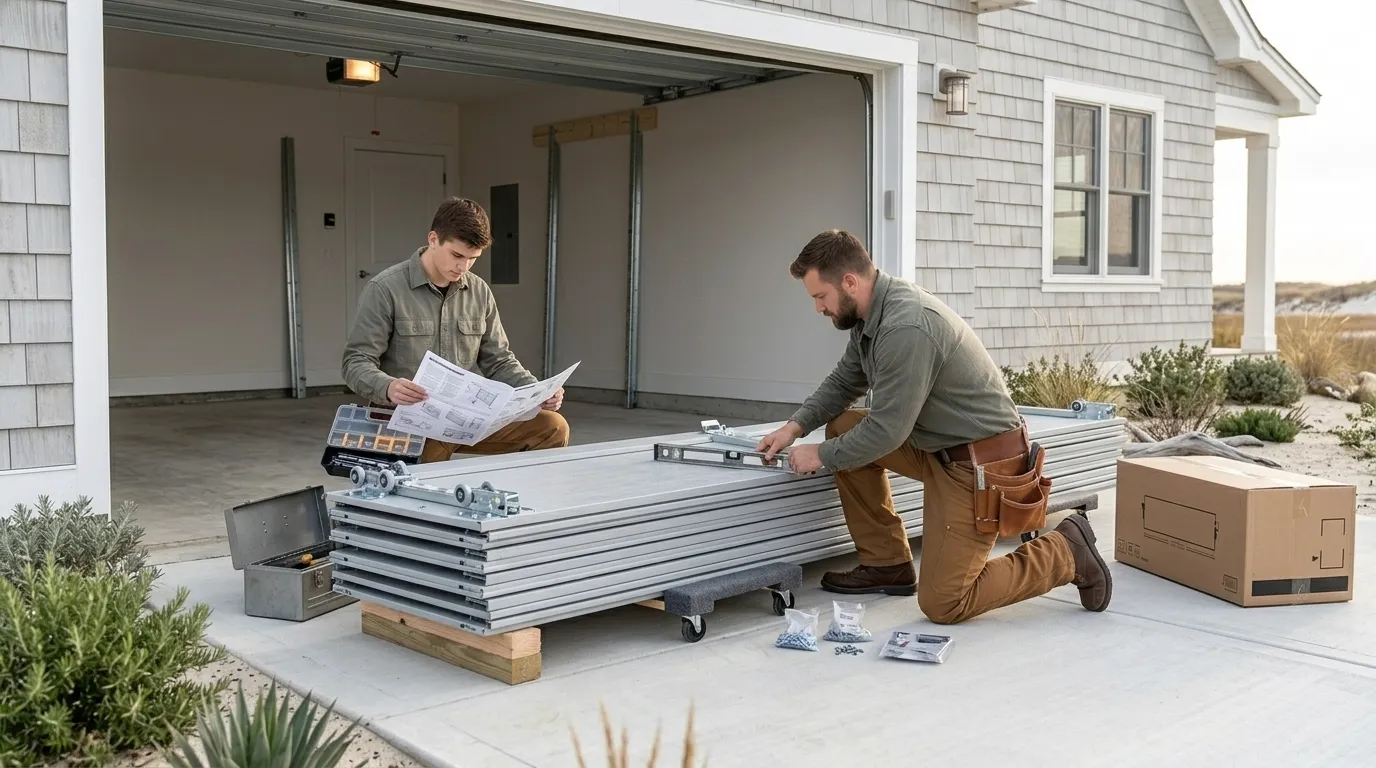
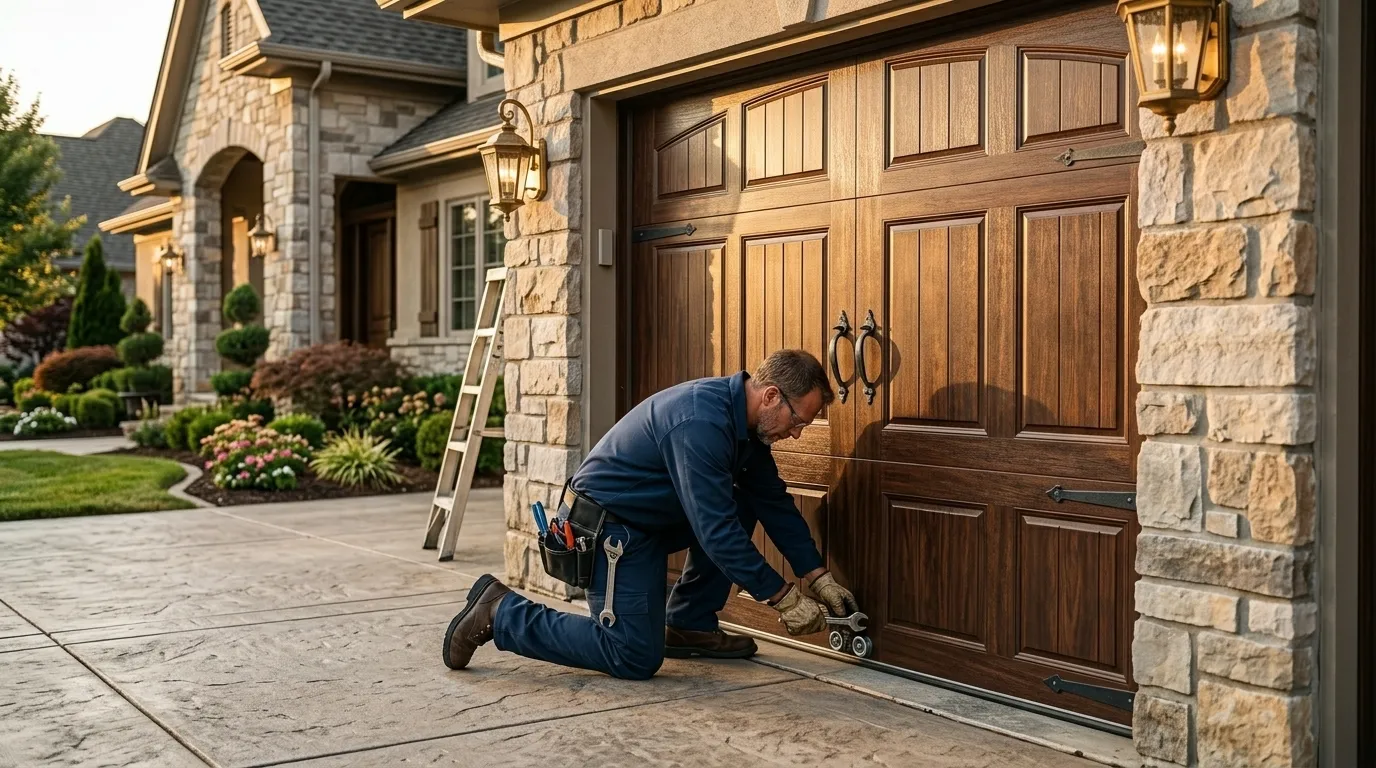
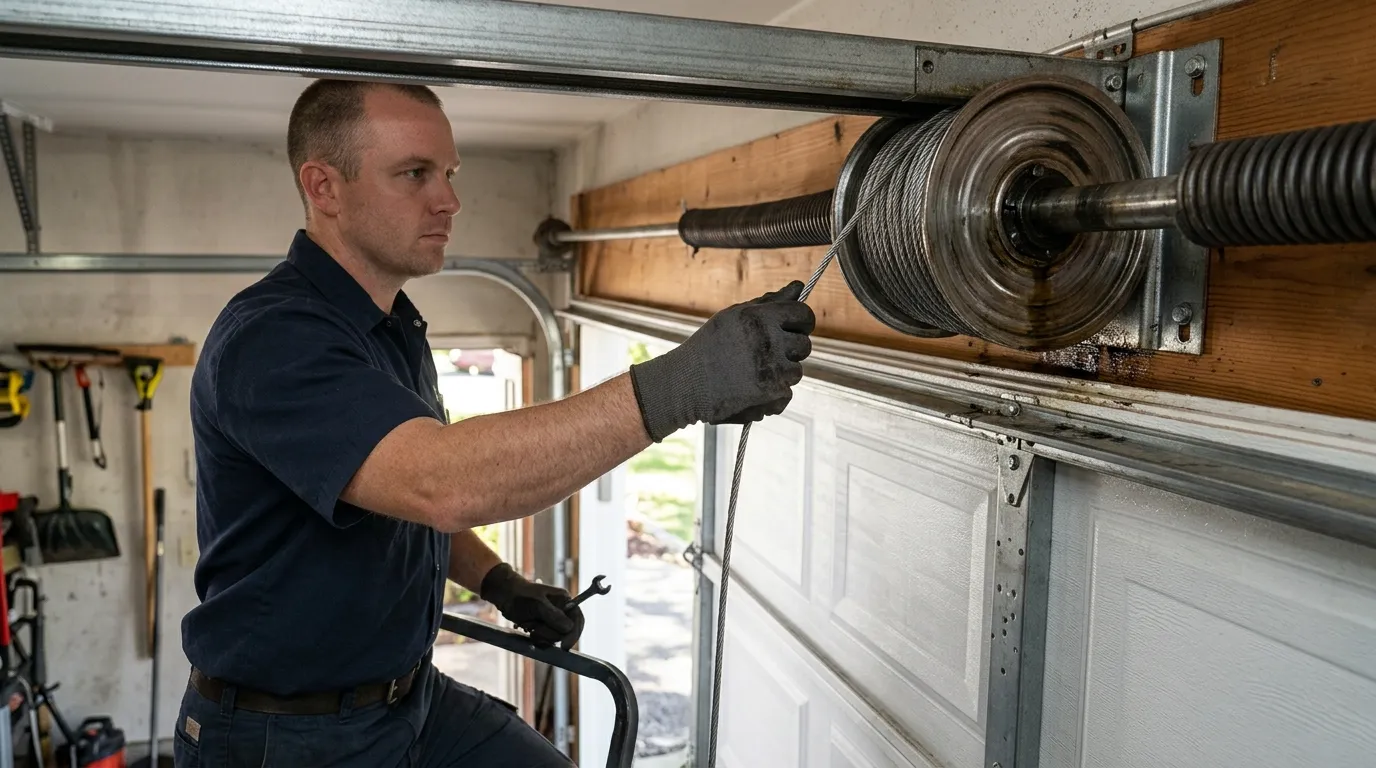
Most houses we get called to were built between 1979 and 2007, with the median landing around 2001. That means the door and opener on the wall are almost always the builder-grade setup that shipped with the house: a steel sectional door, standard torsion springs sized for that door's original weight, and an opener from whatever brand the builder had a contract with that year. A service call starts with figuring out which of those three things is actually the problem, because homeowners usually call about one and the real issue is another. Someone reports "the opener stopped working" and the tech finds a broken spring that's been overloading the motor for weeks. Someone else reports "the door won't close" and it turns out to be a track bent from a bike handlebar, not the opener at all. The call covers a full check of the door, the springs, the cables, the rollers, the track alignment, and the opener's force settings and safety sensors - not just the one part the homeowner noticed. Because so much of the housing stock here landed in the same twenty-year window, we see the same failure patterns show up in waves across a neighborhood rather than scattered randomly by house age.
How Local Conditions Play In
Phoenix sits in a severe heat band, and that changes what wears out first compared to milder climates. Steel torsion springs lose tension faster when they're cycling through triple-digit garage temperatures for months at a time - the metal fatigues quicker than the spring's rated cycle count would suggest in a cooler market. Nylon rollers get brittle and crack instead of just wearing smooth. Opener logic boards mounted in an attached garage that regularly hits well over 100 degrees fail electronically more often than they fail mechanically, which is why a call for "the opener is dead" sometimes ends with a board replacement instead of a motor swap. A service call here has to account for heat as a wear factor, not just age or use. That's part of why we check spring tension and roller condition on almost every visit regardless of what the homeowner called about - in this climate, the parts that are about to fail often aren't making noise yet. We also look at the weatherstripping and bottom seal, since UV and heat break down rubber here faster than in most parts of the country, and a gapped seal lets more heat into the garage, which speeds up wear on everything else in there.
The Common Mistake
The mistake we see most is treating an aging opener or a tired spring as a lubrication problem. With most of the local stock running fifteen to over forty years old now, WD-40 on a noisy roller buys a homeowner a couple of quiet weeks and nothing else. The spring or the roller was already near the end of its service life; the noise was the symptom, not the cause. Because so much of the area's housing came up in the same 1979-2007 stretch, a lot of these components are aging out at roughly the same time, which means a quick fix now often just delays a full failure by a season, not a year. The other version of this mistake is calling about the opener when the real problem is the door itself binding on a bent track or worn rollers, which forces the opener motor to work harder and shortens its life. A service call should separate those two things clearly - what's wrong with the door mechanically, and what's wrong with the opener electrically - instead of assuming the loudest symptom points to the actual cause.
When Waiting Is Fine
Not everything needs a same-day fix. A door that's a little noisy but still opens, closes, and reverses properly on the safety sensors can usually wait for a scheduled visit rather than an emergency one - noise alone isn't a safety issue. Cosmetic panel dents that don't affect the door's balance or the track alignment are a fine thing to live with for a while, especially if the door still opens smoothly. If a spring is still holding tension and the door isn't sagging or slamming down, replacing it proactively is a reasonable maintenance call, not an urgent one. We'll say plainly when a repair can be scheduled instead of rushed, and when a part just needs to be watched for a few more months. The one thing we won't tell you to wait on is a door that won't reverse when it hits resistance, or a cable that's frayed - those are the two failure points that can actually hurt someone, and they don't get better with time. Everything else is a judgment call based on how the door is behaving day to day, and we'd rather tell you honestly that it can wait than sell a repair that isn't due yet.
How it works
From “it’s stuck” to “it’s fixed”
01
Tell us what’s wrong
Describe the symptom - won’t open, loud bang, opener runs but the door won’t move.
02
On-site diagnosis
A technician tests the door under power and by hand and finds what actually failed.
03
Clear, up-front plan
You get the fix that’s needed and what drives the cost - before any work starts.
04
Repaired & tested
The repair is done, the door is set true and tested, and the work area left clean.
Serving Phoenix, AZ - tell us what your door’s doing and we’ll take it from there.
If the door is heavy to lift by hand with the opener disconnected, that points to the spring. If the door moves fine by hand but the opener won't run it, that points to the opener or its wiring. A service call checks both, since a bad spring left alone will eventually burn out the opener motor too.
Why do springs seem to wear out faster here than people say online?
Phoenix runs in a severe heat band, and steel spring tension degrades faster with sustained high heat cycling than it does in milder climates. Online estimates for spring lifespan are usually national averages and don't account for a garage that regularly sits well over 100 degrees for months.
My house was built in the early 2000s - is the opener original?
It's possible, since a lot of the area's housing stock dates to that window. An opener that old is past most manufacturers' expected service life, especially with heat-related board wear factored in, so it's worth having it checked even if it still seems to work.
Do you replace or repair rollers and track?
Both, depending on condition. Cracked nylon rollers get replaced outright since a partial fix doesn't hold up in this heat. A bent track section can sometimes be straightened if the damage is minor, but a track that's badly warped usually needs replacing rather than repairing.
Ready to get your garage door sorted?
Tell us what it’s doing and where you are in Phoenix - we’ll take it from there.