Broken torsion springs are common in Phoenix homes built 1979-2007. We explain what drives it here, what a repair takes, and what you're seeing before the call.
We don't post a flat number here because spring repair cost swings on a few things: whether you've got one torsion spring or two, the door's weight and wire gauge, and whether the cable or drum got damaged when the spring let go. A single-spring setup on a lighter door is a different job than a two-spring system on a heavier insulated door, and heat-cycled springs sometimes take the cable or bearing plate down with them when they snap.
What we can tell you: across the Phoenix service area, most of the houses we get called to were built between 1979 and 2007, with the bulk of that stock going up in the 2000s. That means a lot of doors are still running original torsion hardware from a build era that didn't plan for 20+ years of triple-digit summers baking the garage. Spring steel loses temper faster under sustained heat, so on these homes the spring is often the actual cause of a dead opener, not the opener itself.
We give you the number before we touch the door, not after. If the cost of parts and labor gets close to what a full opener-and-track job would run, we'll say so plainly rather than sink money into a system that's on its way out anyway.
How Long It Takes
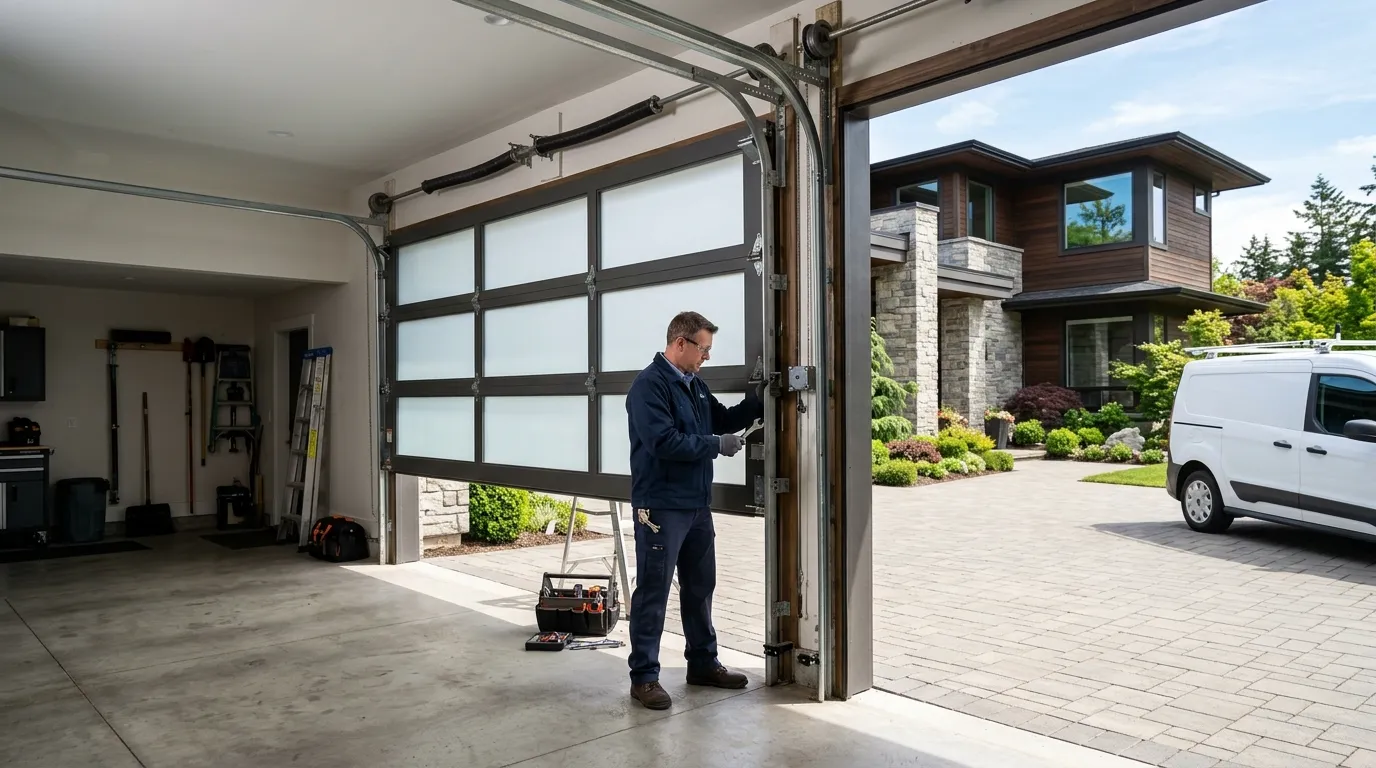
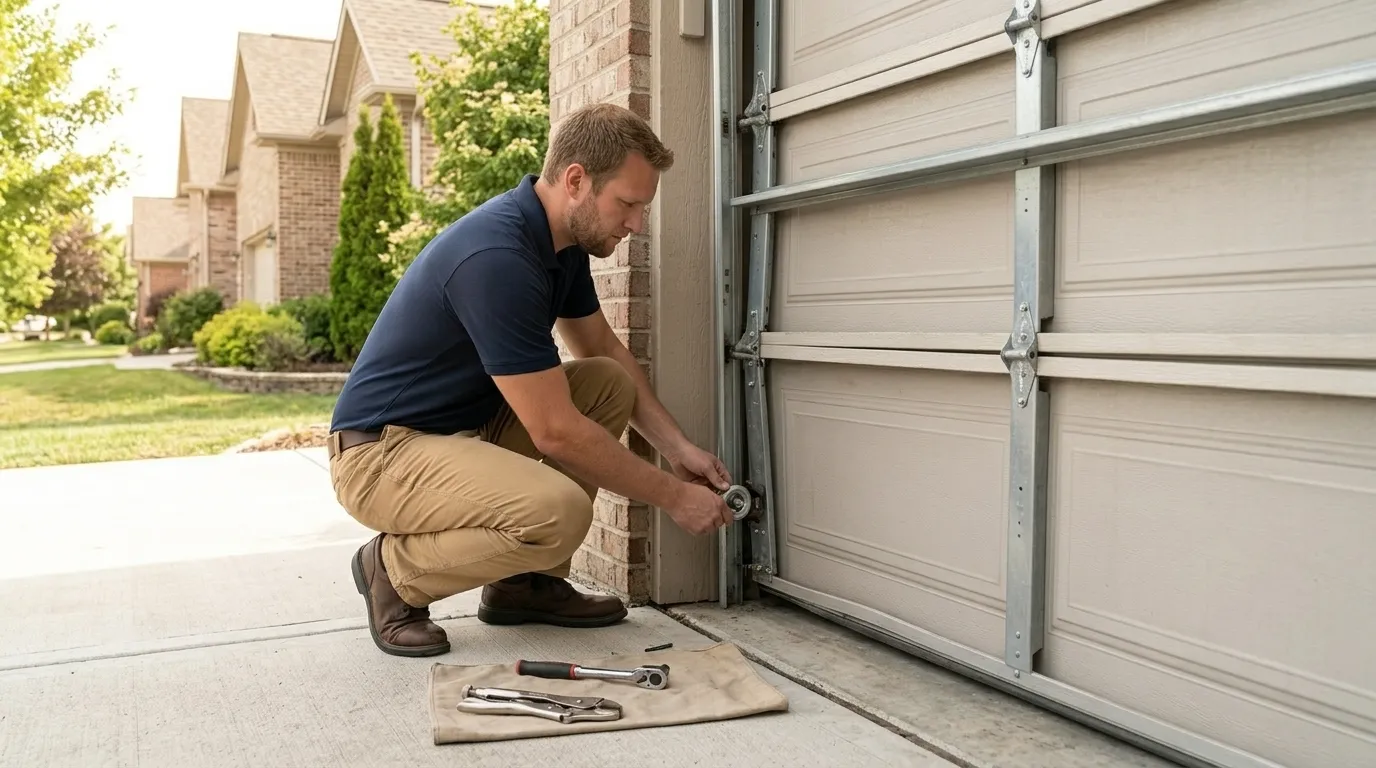
A straight torsion spring swap, once we're on site with the right size spring for your door, usually wraps in under a couple hours. What stretches the job is diagnosis and matching: torsion springs are sized to the door's weight, width, and drum, and a mismatched spring will either fail again in months or make the door hard to lift by hand if the opener ever cuts out.
We measure wire diameter, coil length, and inside diameter on site rather than guessing off the door's age. Homes built in the same stretch across this service area, 1979 through 2007, don't all get the same spring - garage door weight varies by insulation package and panel material even within a single subdivision.
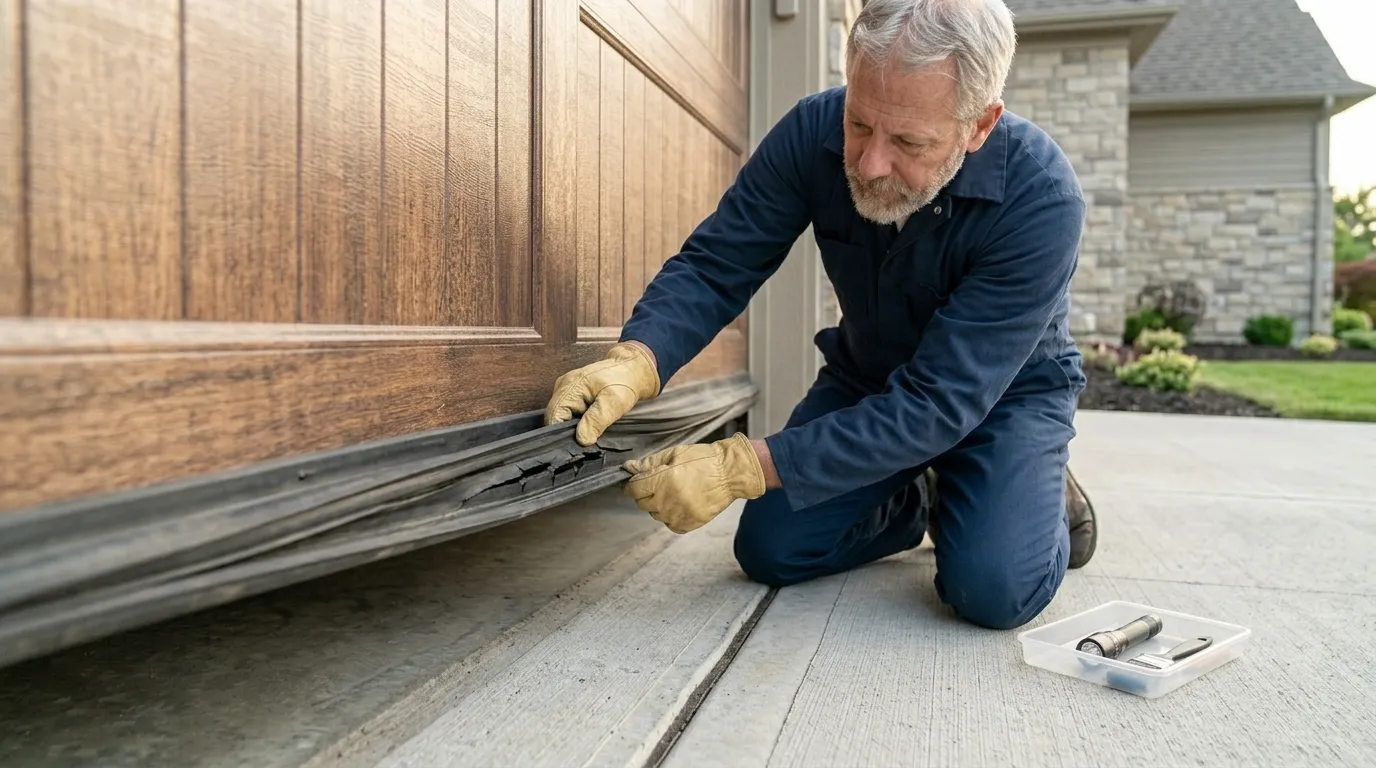
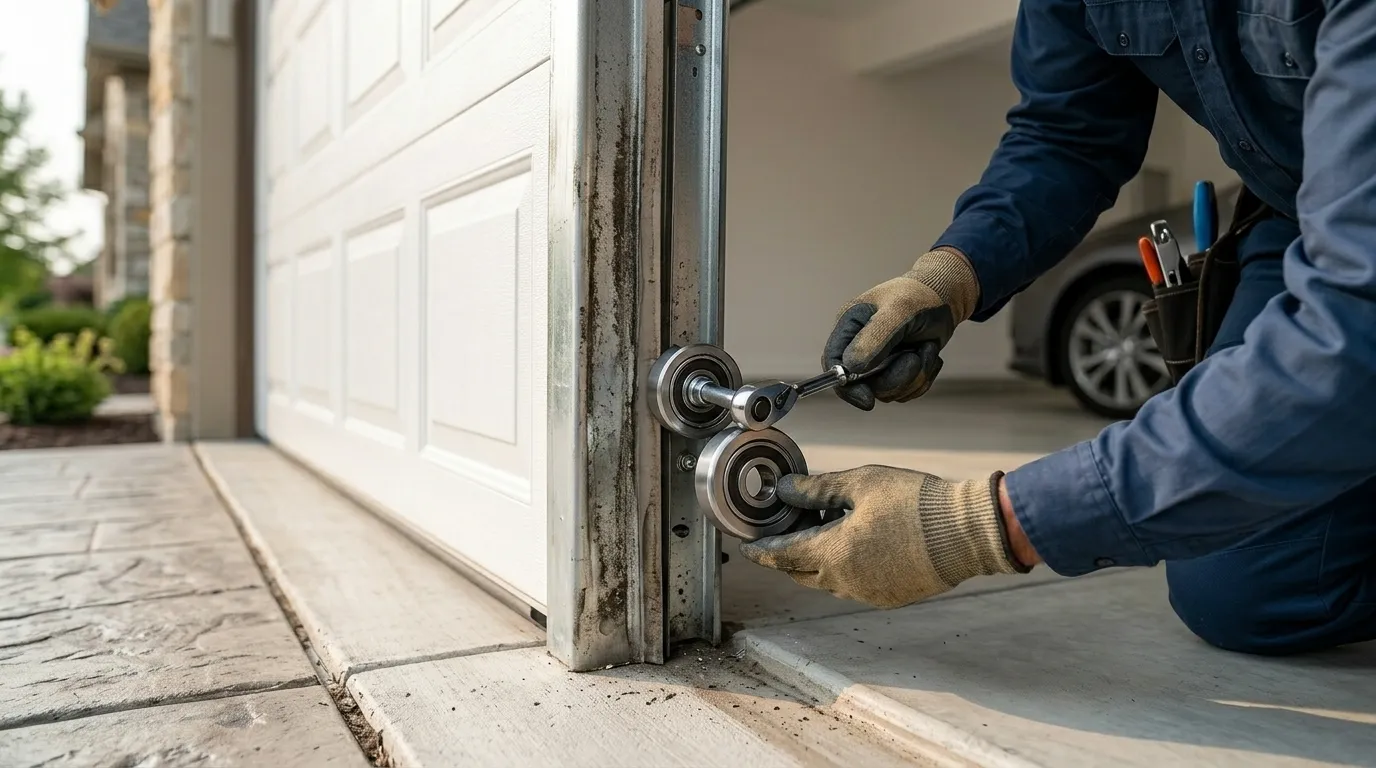
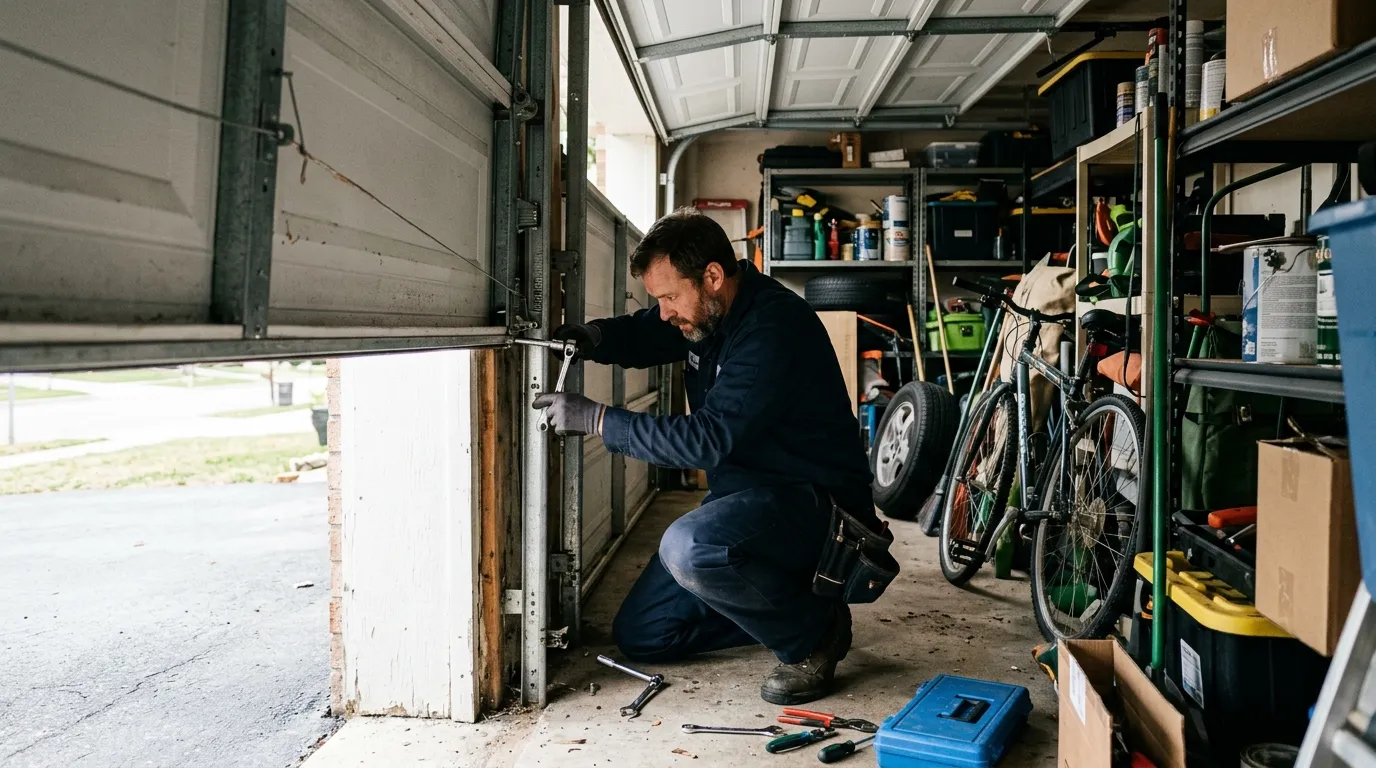
Where it takes longer: if the cable jumped the drum when the spring broke, or if a bottom bracket got bent from the sudden drop, we're looking at extra time to true up the track before the door will run smooth again. We'll tell you on the spot if that's what we're dealing with instead of just handing you a spring bill and hoping the rest holds.
What You Are Seeing
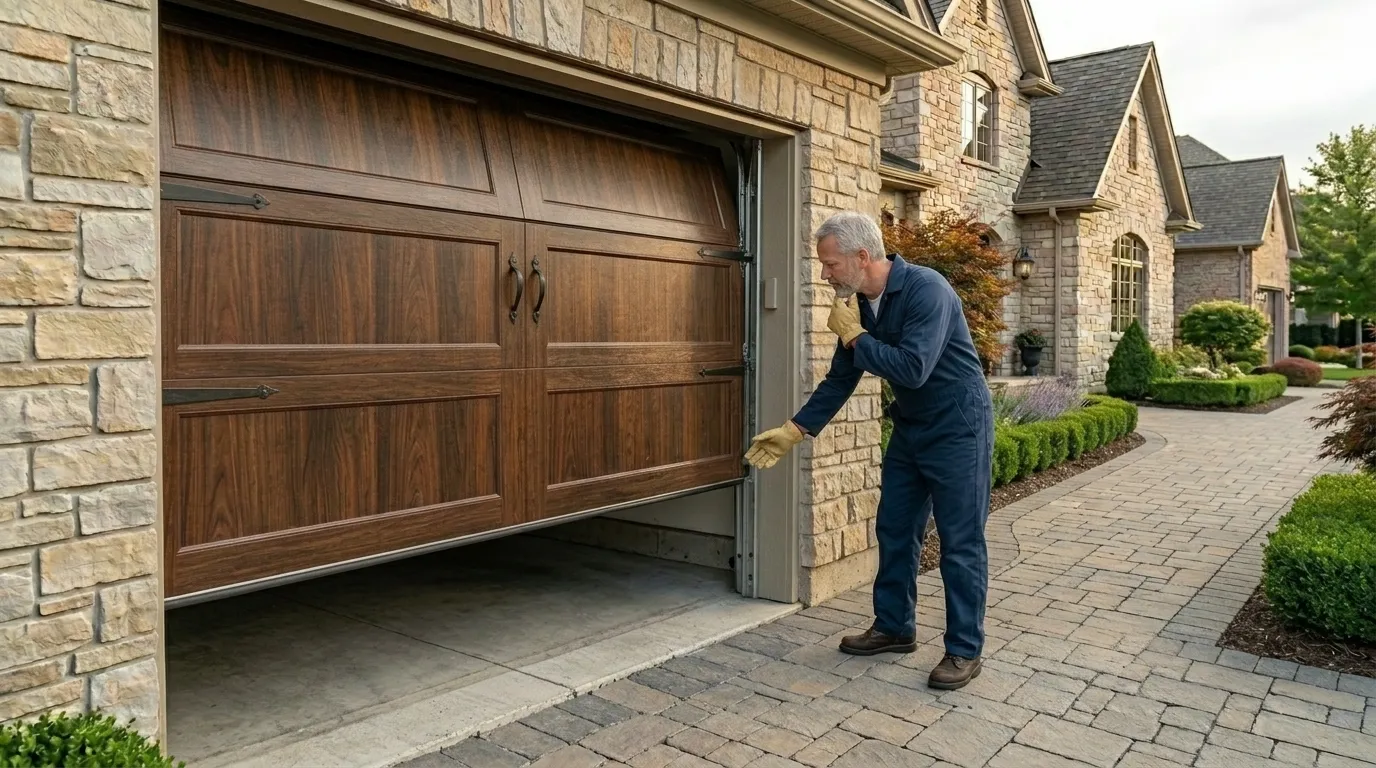
The classic sign is a loud bang from the garage, usually when nobody's touched the door in hours - that's the spring letting go under tension, not the door itself failing. After that, the door either won't budge when the opener runs (motor straining, chain or belt clicking but the door barely creeping) or it drops fast and uneven when you try to lift it by hand.
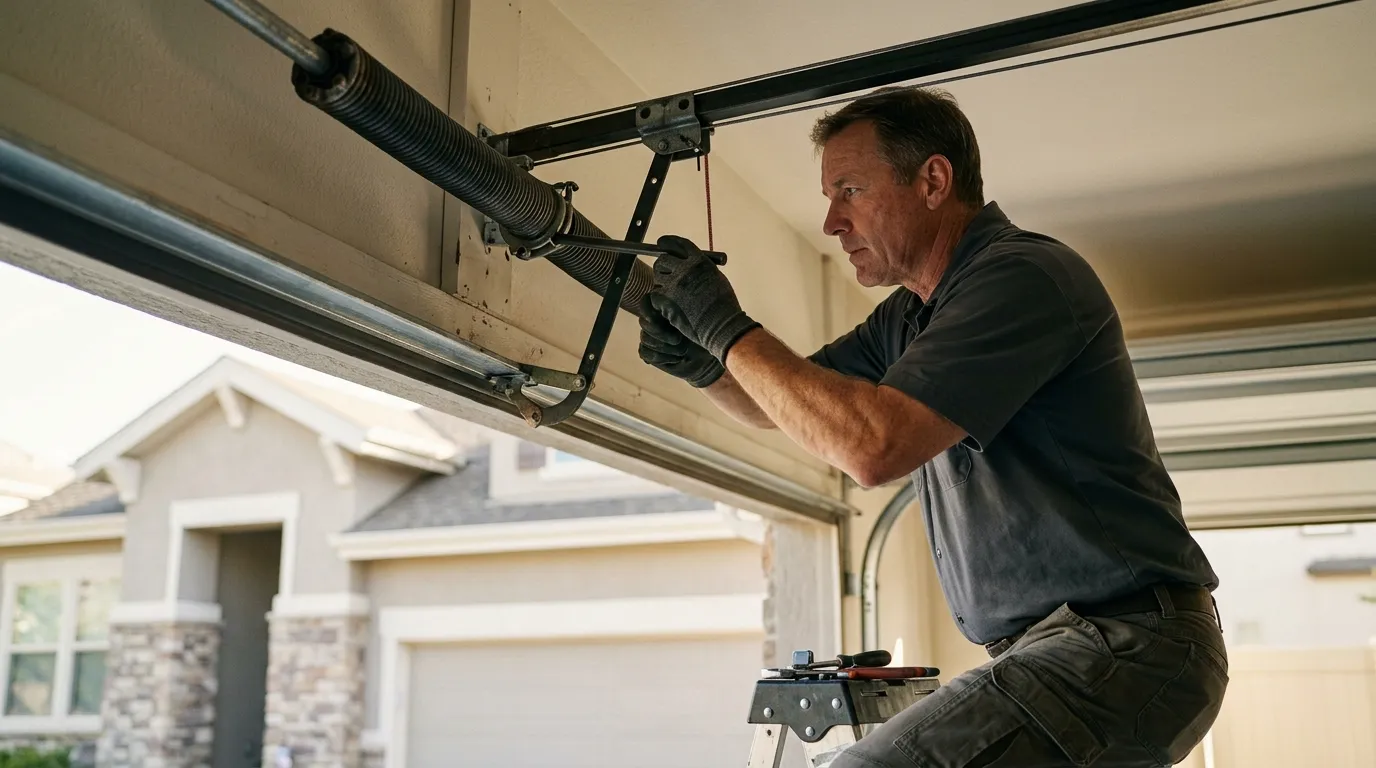
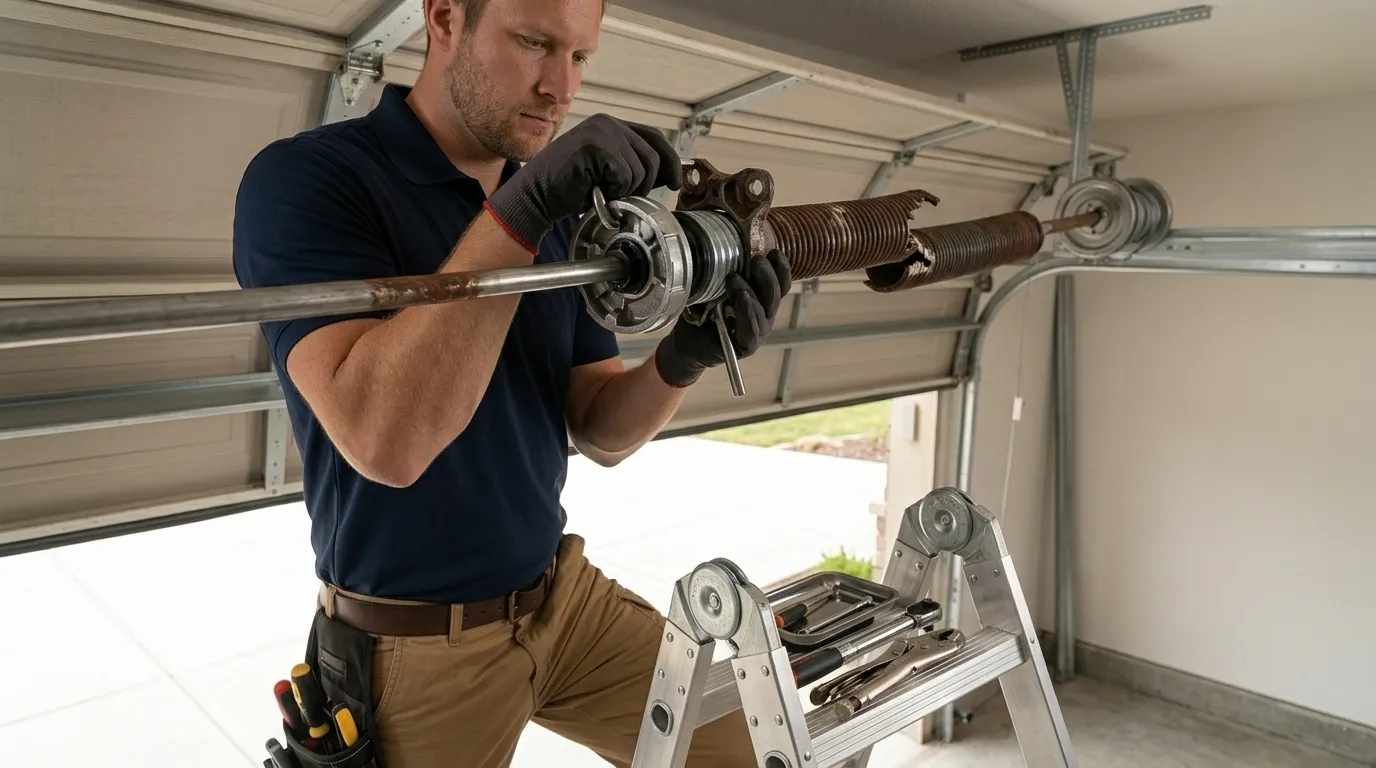
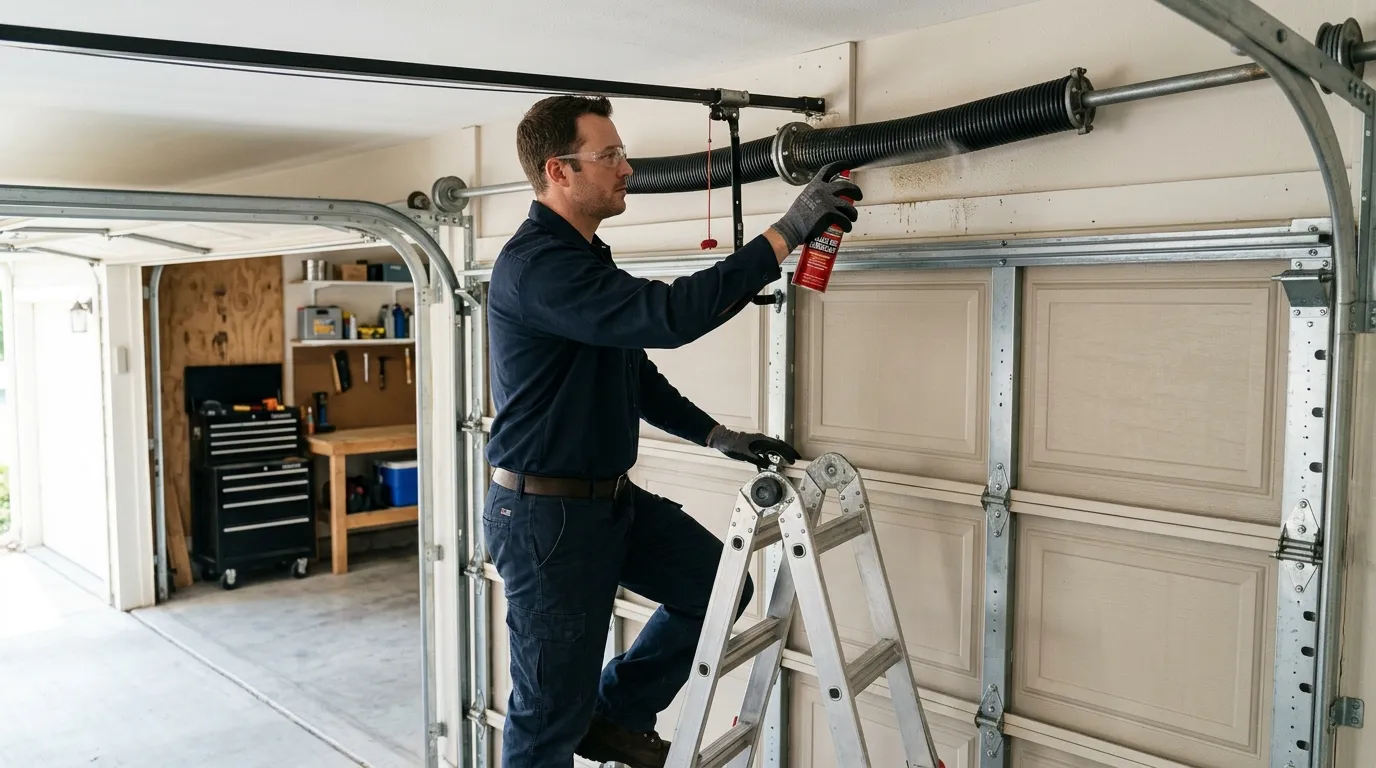
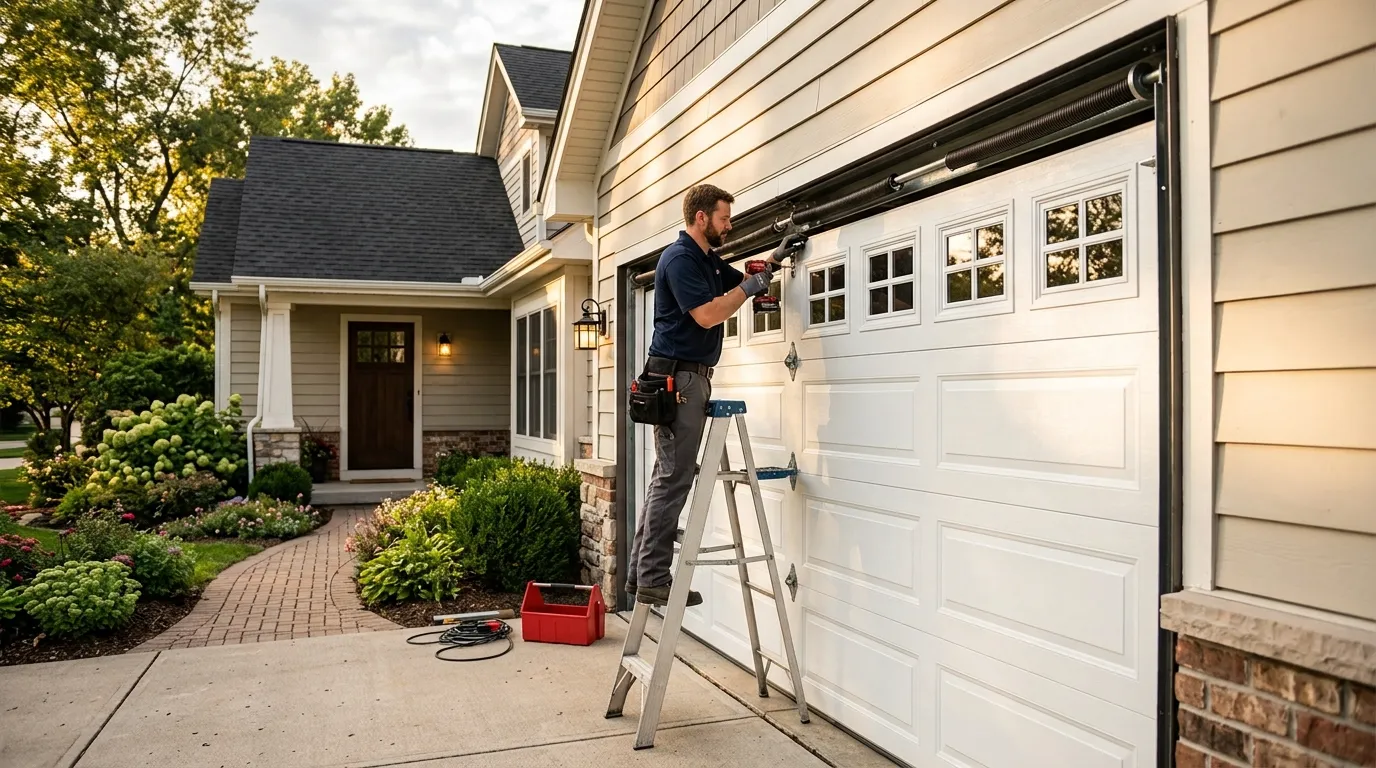
Look at the spring itself, mounted above the door on the horizontal bar. A broken one shows a visible gap in the coil, sometimes with the two halves rotated out of line. If you see that gap, don't run the opener again - a door with a broken spring is being held up entirely by the opener's gearing, and that's a fast way to burn out the motor or drop the door on something.
A slower warning sign, easy to miss, is a door that's gotten noticeably heavier to lift by hand over a few months. That's a spring losing tension gradually rather than snapping outright, and it's worth a look before it fails at the worst possible time.
What Causes It Around Here
Heat is the main driver, and it's a bigger factor here than in most parts of the country. Phoenix sits in a severe heat band, and garages here routinely run well above outdoor temperature in summer since they're an enclosed box against a hot roof and a hot slab. Torsion springs are wound steel under constant load, and repeated heat-cool cycling year after year fatigues that steel faster than it would in a milder climate - the metal loses its temper and the spring's working life shortens.
Age of the housing stock compounds it. With most homes in this service area built between 1979 and 2007, and the bulk of that from the 2000s building boom, a large share of doors are running original hardware from that era. Original springs from a 20-plus-year-old install, combined with two decades of Phoenix summers, are well past the point where failure is a surprise - it's closer to due.
We don't have data tying failure rates to any one neighborhood within the service area, so we won't pretend a spring in one part of town wears differently than another. The pattern we see is tied to the build era and the heat, not the zip code.
How it works
From “it’s stuck” to “it’s fixed”
01
Tell us what’s wrong
Describe the symptom - won’t open, loud bang, opener runs but the door won’t move.
02
On-site diagnosis
A technician tests the door under power and by hand and finds what actually failed.
03
Clear, up-front plan
You get the fix that’s needed and what drives the cost - before any work starts.
04
Repaired & tested
The repair is done, the door is set true and tested, and the work area left clean.
Serving Phoenix, AZ - tell us what your door’s doing and we’ll take it from there.
Why did my garage door spring break with no warning?
Torsion springs fail from fatigue, not a single event - years of heat cycling and normal lift cycles wear the steel down until it snaps, often when the door is just sitting closed. In Phoenix's climate, garage heat accelerates that fatigue, so a spring that seemed fine yesterday can go today with no dramatic cause behind it.
Can I replace just one spring if I have two?
You can, but most shops recommend replacing both at the same time on a two-spring door. The other spring is usually close behind in age and heat exposure, and mismatched tension between an old and new spring puts uneven strain on the door as it opens and closes.
Is it safe to open the door myself after a spring breaks?
Not with the opener, and be careful lifting by hand. A broken spring means the door's full weight is no longer counterbalanced, so the opener motor can strain or fail trying to lift it, and the door can drop suddenly if you're lifting it manually without the spring's support.
How do I know if it's the spring and not the opener?
Check the horizontal spring bar above the door for a visible gap in the coil - that's the clearest sign. If the opener runs but the door barely moves, or makes a loud bang before going quiet, it's almost always the spring rather than the motor.
Ready to get your garage door sorted?
Tell us what it’s doing and where you are in Phoenix - we’ll take it from there.