24/7 emergency garage door repair across Phoenix, AZ. We know why doors built in the 1979-2007 boom fail in the heat and what a same-day fix actually runs.
We don't post a flat number for emergency repair because a snapped cable on a 1990s steel door and a burnt-out opener board on a 2005 build are two different jobs with two different parts lists. What we can tell you is what drives the number: whether the part is a stock torsion spring or something sized for a heavier insulated panel, whether the opener is original to the house or a swap-in from a prior owner, and whether the call comes in during business hours or at 11pm on a Sunday. Across the Phoenix service area, most of the housing stock dates from 1979 to 2007, with a median build year around 2001 - so most of what we're pulling parts for is 20 to 45 years old, not brand new. That age band tends to need springs, cables, rollers, and opener logic boards more than full panel replacement. If a tech tells you on-site that the door itself is warping or the track is bent beyond adjustment, replacement usually costs less over time than repeated emergency fixes - that's the one call where we'll say don't spend more chasing a patch.
How Long It Takes
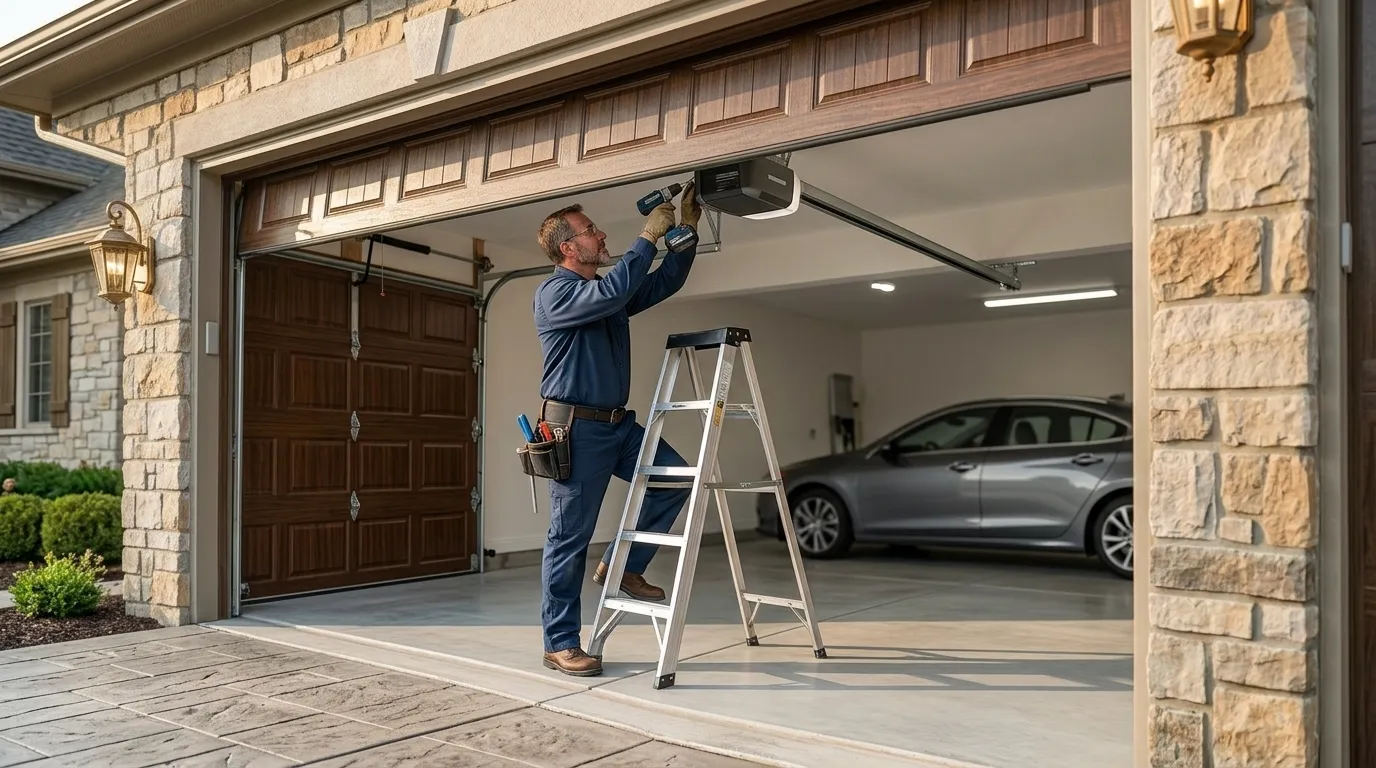
Most emergency calls in the Phoenix area involve a spring, cable, or opener failure rather than a full door replacement, and those are same-visit repairs once the tech has the right part on the truck. What slows a job down is parts availability - if your door is an older build from the 1980s or early 1990s stock still standing in a lot of Phoenix neighborhoods, the hardware sizing sometimes isn't what a newer 2000s-era door uses, and that can mean a return trip. Heat matters here too. In the severe heat this service area sees, springs and lubricant break down faster, and a tech working on a steel door that's been sitting in full sun all afternoon is handling metal that's genuinely too hot to grab bare-handed - that adds real minutes to a job that would move faster in cooler conditions. We won't promise a universal turnaround time because the two variables - part availability and heat load on the equipment - shift too much house to house.
What You Are Seeing
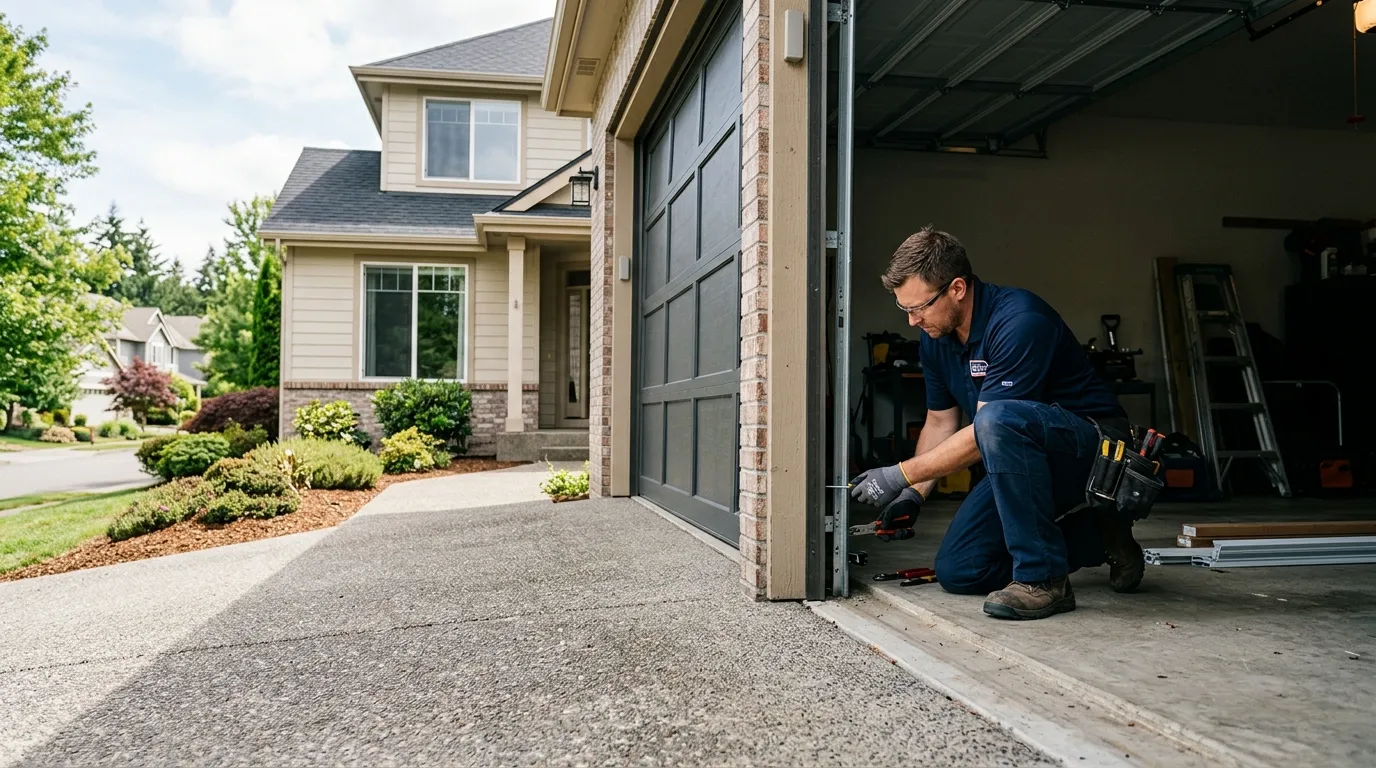
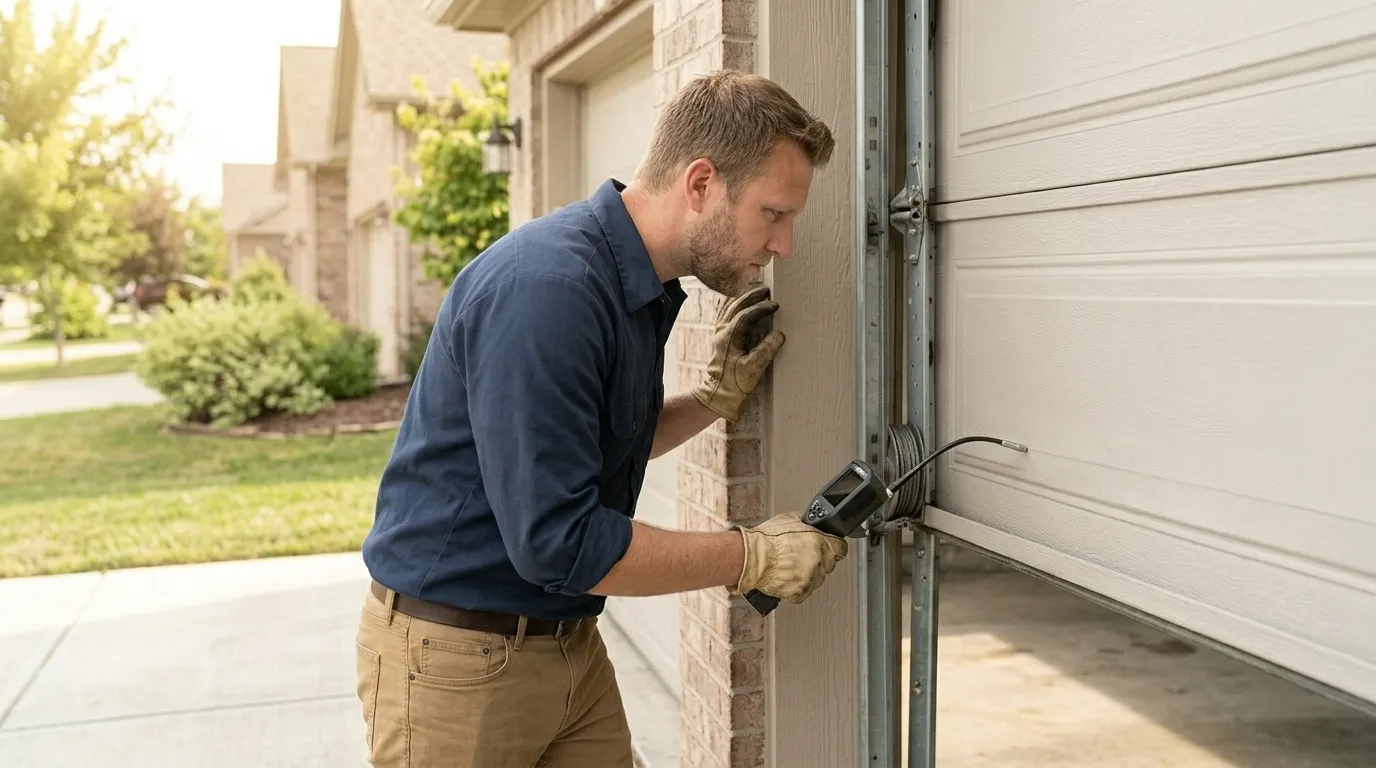
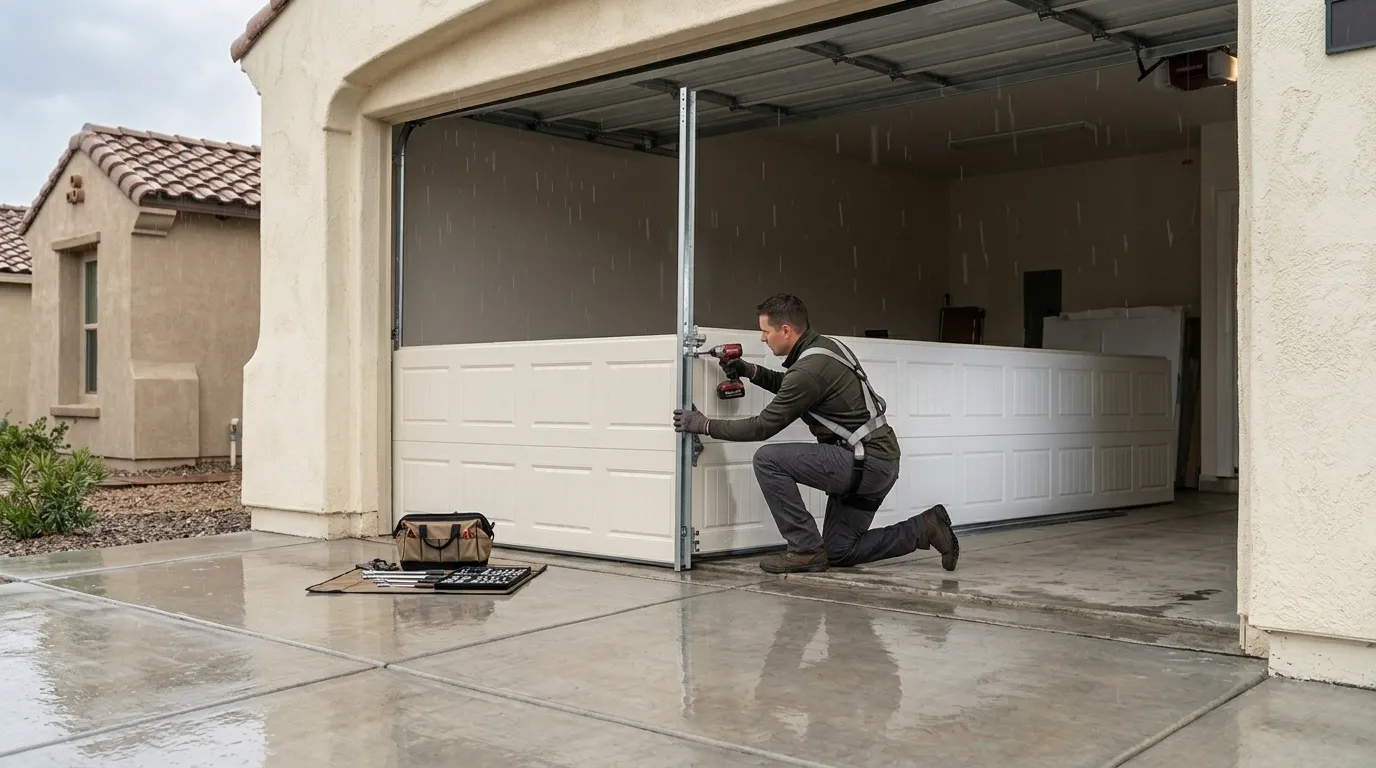
The call we get most from this area is a door that won't move at all, with a loud bang beforehand - that's almost always a torsion spring that let go, and it's not safe to lift by hand afterward. Next most common: the door reverses right after the opener starts closing it, which usually points to a sensor knocked out of alignment or a limit setting drifting off after years of temperature swings. A third pattern - a door that's slow, jerky, or grinding partway through its travel - usually means rollers or a track that's worn from years of expansion and contraction in extreme heat. If your door simply won't respond to the remote or wall button at all, check the opener's circuit before assuming the worst; sometimes it's a tripped breaker, not a broken machine.
What Causes It Around Here
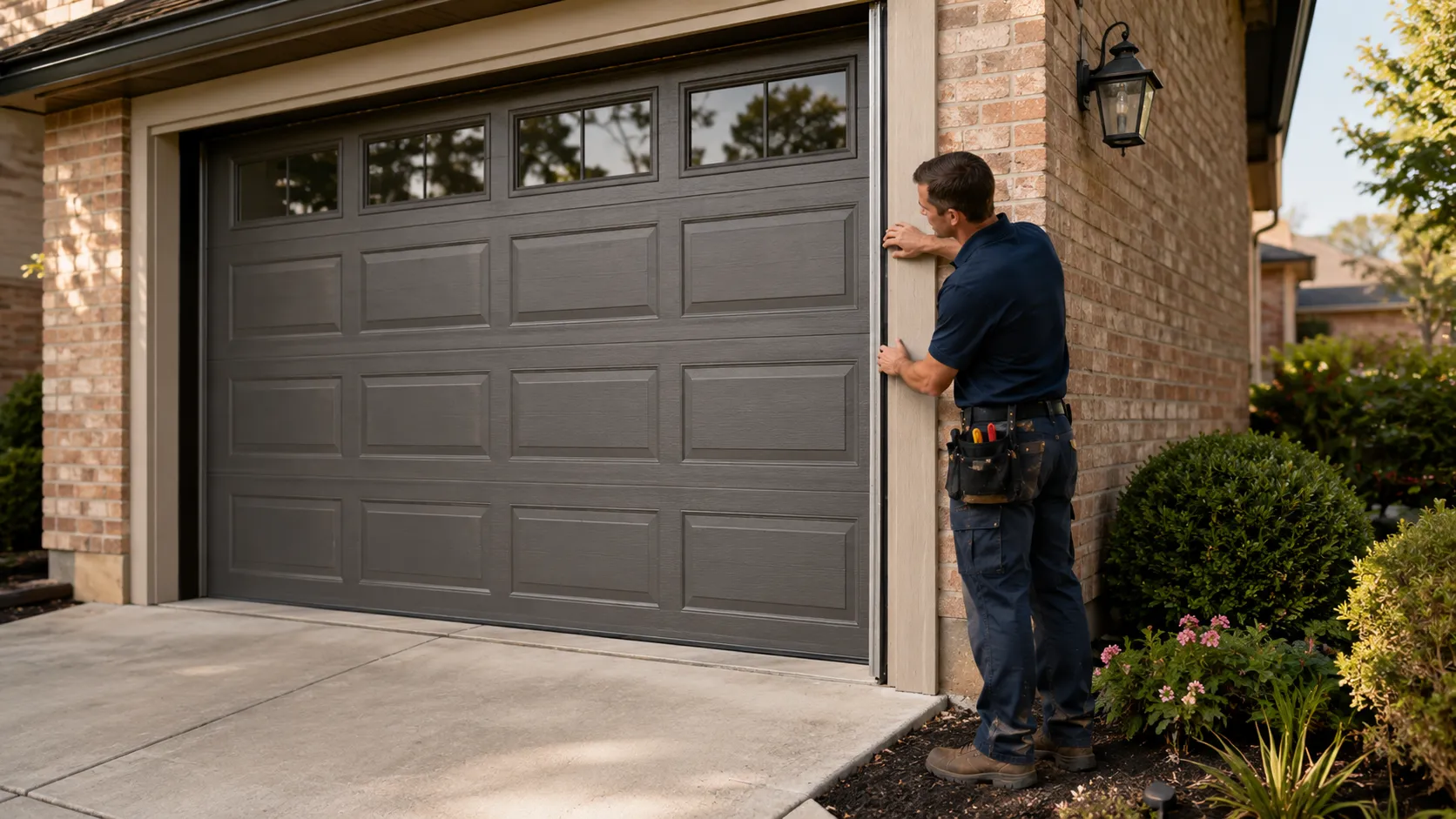
Phoenix's garage doors take a specific kind of abuse. With most homes in the service area built between 1979 and 2007 - a lot of it concentrated in that 2000s stock - the springs, cables, and opener components on a huge share of doors are aging out of their expected service life around the same time, which is part of why emergency calls cluster the way they do. Add the severe heat band this area sits in: metal springs lose tension faster under sustained high temperatures, lubricant on tracks and hinges dries out and gums up instead of protecting moving parts, and opener circuit boards mounted in an unconditioned garage take a beating every summer. None of that is unique to one street or one subdivision - it's a pattern that shows up across the roughly 40,000 owner-occupied houses in this service area, in a housing stock old enough that original hardware is now due, or overdue, for failure.
How it works
From “it’s stuck” to “it’s fixed”
01
Tell us what’s wrong
Describe the symptom - won’t open, loud bang, opener runs but the door won’t move.
02
On-site diagnosis
A technician tests the door under power and by hand and finds what actually failed.
03
Clear, up-front plan
You get the fix that’s needed and what drives the cost - before any work starts.
04
Repaired & tested
The repair is done, the door is set true and tested, and the work area left clean.
Serving Phoenix, AZ - tell us what your door’s doing and we’ll take it from there.
Yes, in the sense that you shouldn't force the door open or closed by hand or by opener. A broken torsion spring leaves the full weight of the door unsupported, and trying to move it can bend the track, strip the opener gear, or hurt someone. It's fine to wait for a scheduled visit if the door is safely down; just don't run it.
Why do openers seem to fail more in summer here?
Circuit boards and sensors mounted in an unconditioned Phoenix garage sit through months of severe heat, and that thermal stress shortens the life of the electronics faster than it would in a milder climate. It's not one bad batch of openers - it's the environment they're bolted into.
Do you charge more for after-hours emergency calls?
We don't publish a flat rate here because the part needed and the time of day both factor into the job. Ask when you call and we'll tell you upfront before any work starts.
My door is from the early 1980s - will you have the parts?
Often yes, but older hardware sized differently than the 2000s-era doors common across this service area sometimes needs a second trip to match. We'll tell you on-site if that's the case rather than guess.
Ready to get your garage door sorted?
Tell us what it’s doing and where you are in Phoenix - we’ll take it from there.