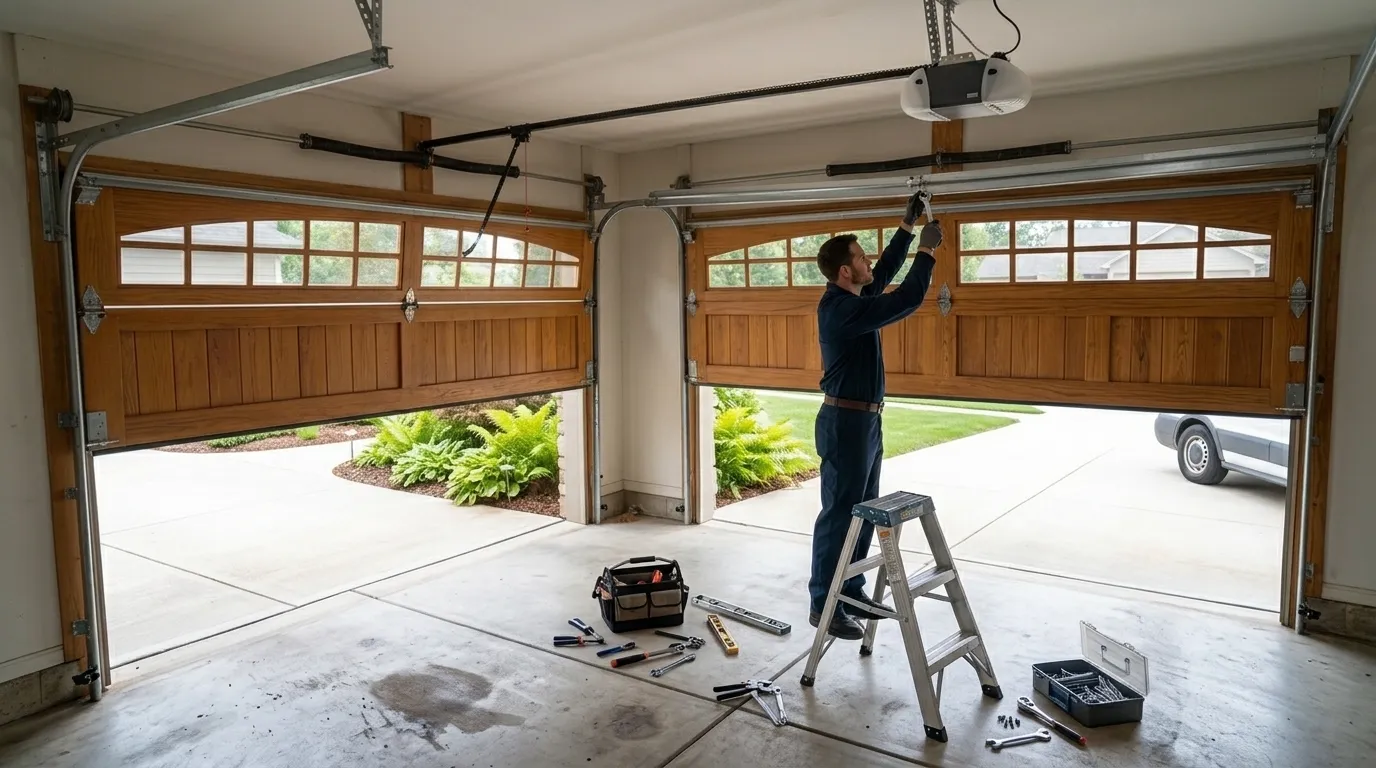
What Heat and Age Do to Garage Door Openers in Phoenix
Phoenix homes built between 1979 and 2007 often run original openers that struggle with summer heat and grid power cuts. Here's what actually fails and why.
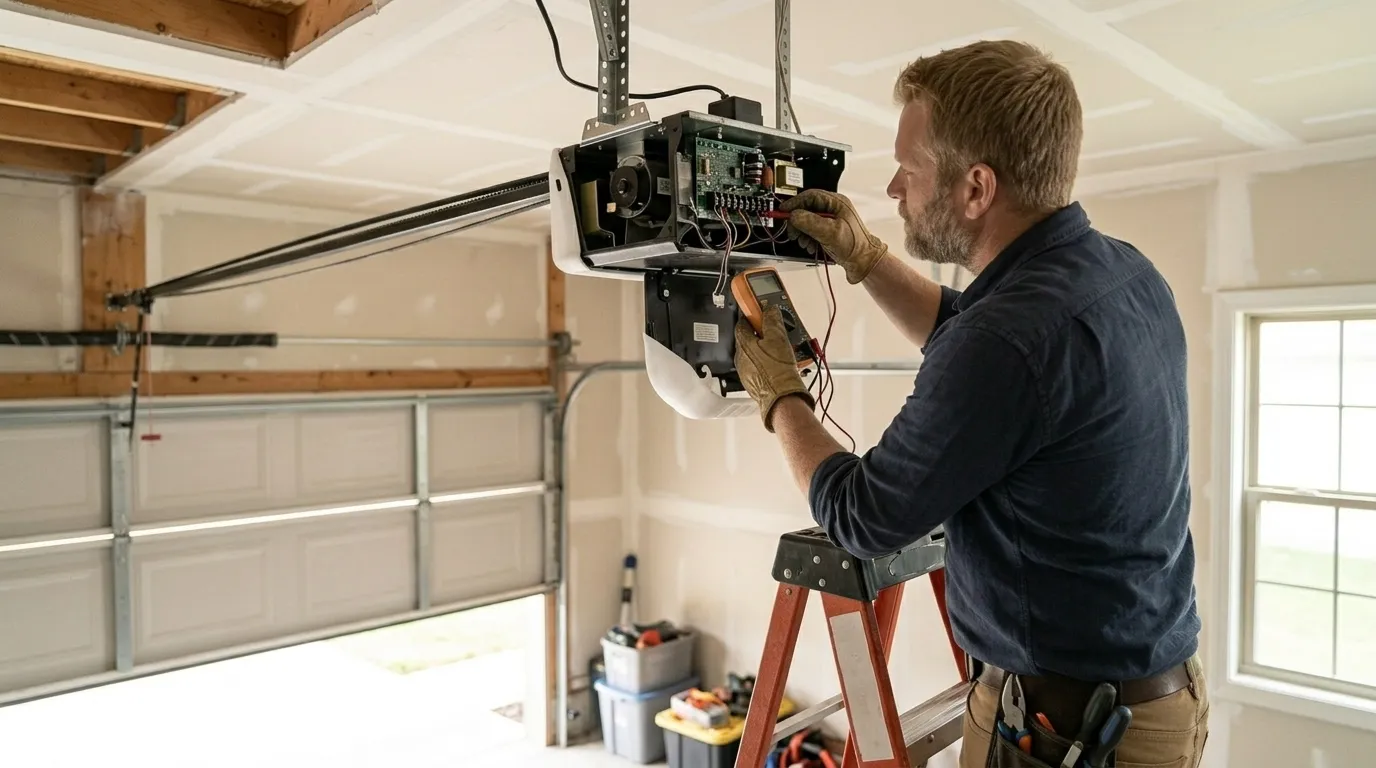
Most houses across this side of Phoenix - Midtown, and the other pockets that make up this service area - went up between 1979 and 2007, with the typical build year landing around 2001. That means the opener bolted to the ceiling in a lot of these garages is original equipment, or the first replacement after it, installed when battery backup wasn't the default feature it is on units sold today. When the power cuts out - and in a city that runs air conditioning hard for months at a time, it does - a door without that backup stays wherever it was when the lights went. If that's mid-cycle over a car in a hot garage, you're stuck until either the power comes back or you find the manual release cord and pull the trolley free by hand. That single gap between build-era hardware and current opener standards is the root of most of the calls we get about openers and power.
How Local Conditions Play In
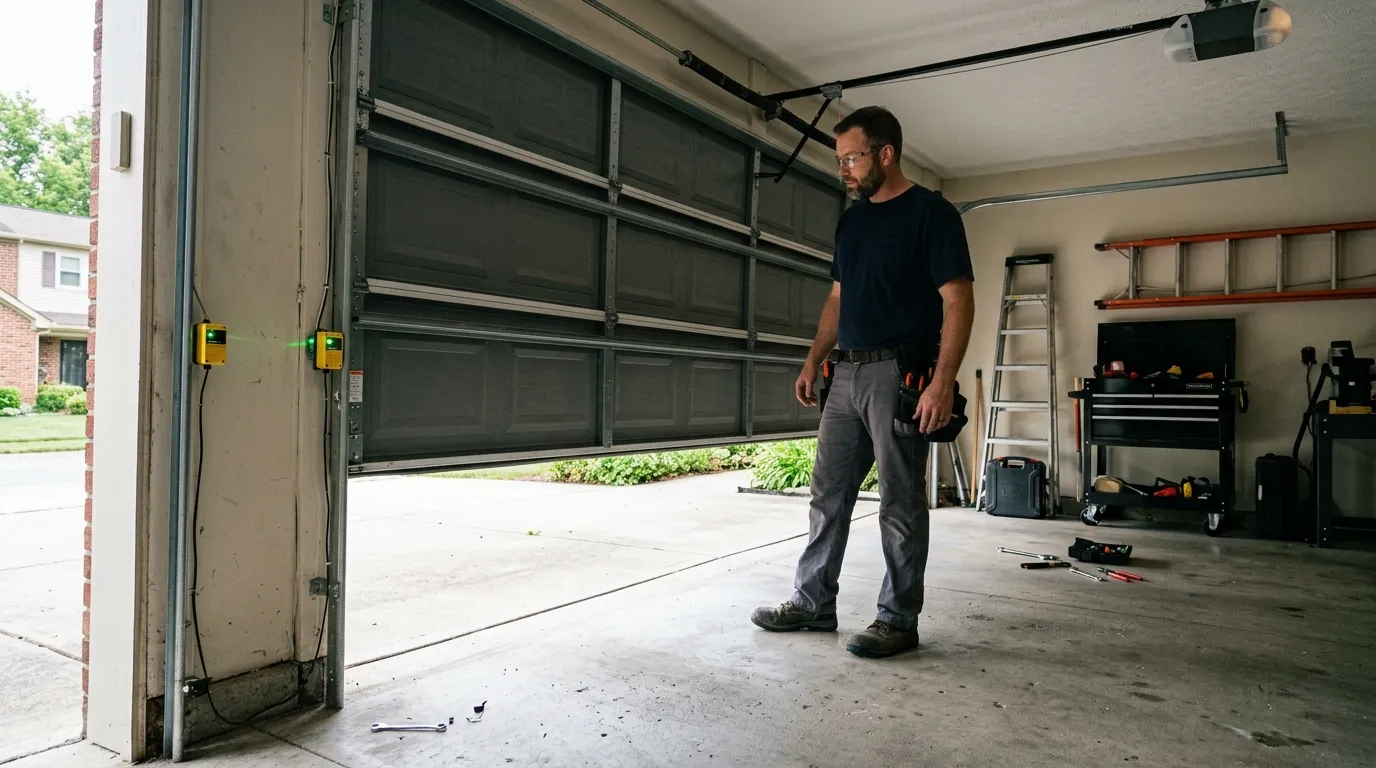
Phoenix's climate band is rated severe heat, and a garage isn't a conditioned space. Circuit boards inside openers sit in that heat all summer, and the capacitors and relays inside them age faster the hotter they run. Same goes for photo-eye sensors mounted low near the floor - the metal brackets expand a fraction with the heat and knock the beam out of alignment, which reads to the opener as an obstruction and refuses to let the door close. None of this is dramatic on its own. It shows up as a door that works fine most of the year and then, in July and August, refuses to close at dusk when the garage is still radiating the day's heat back into the room. If your opener is original to a house built in the early 2000s, it's already logged two decades of that annual cycle, and the wear compounds - it doesn't reset each winter.
The Common Mistake
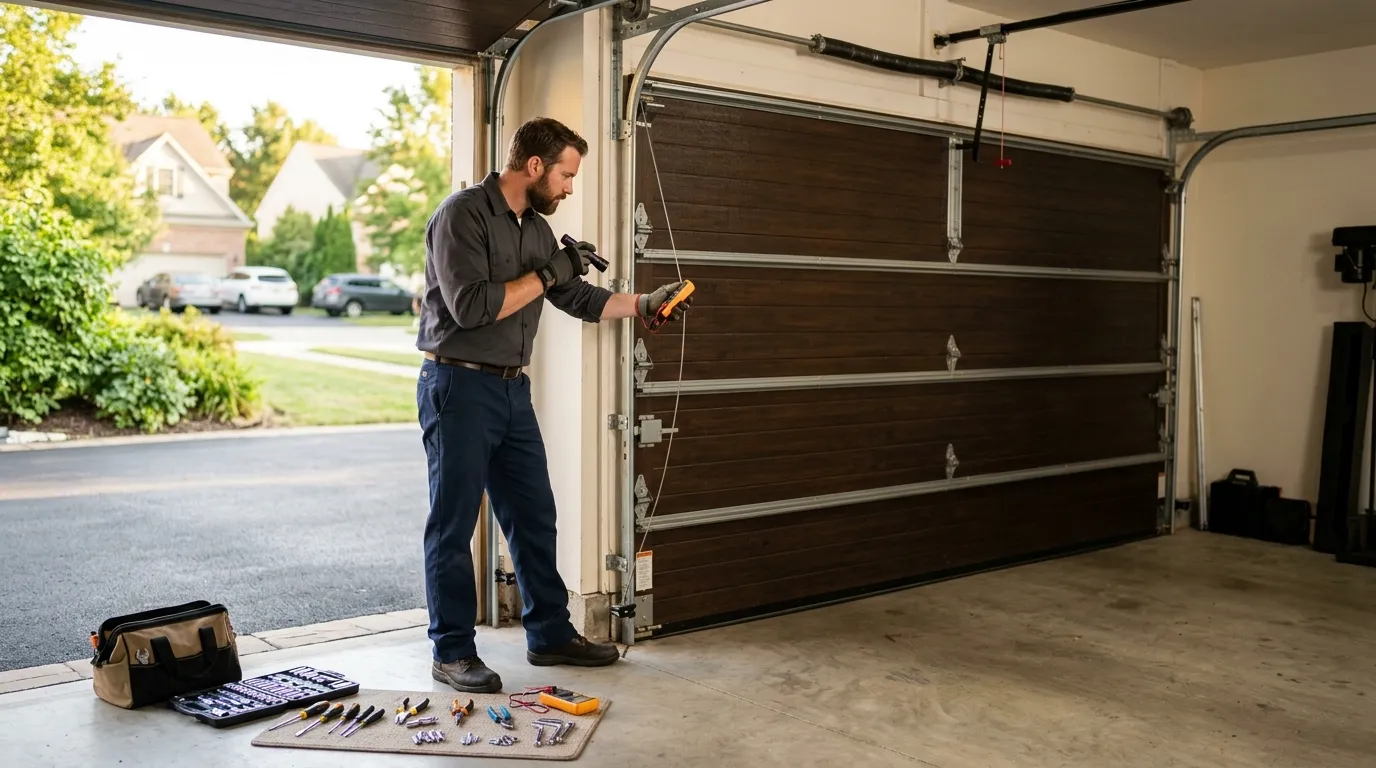
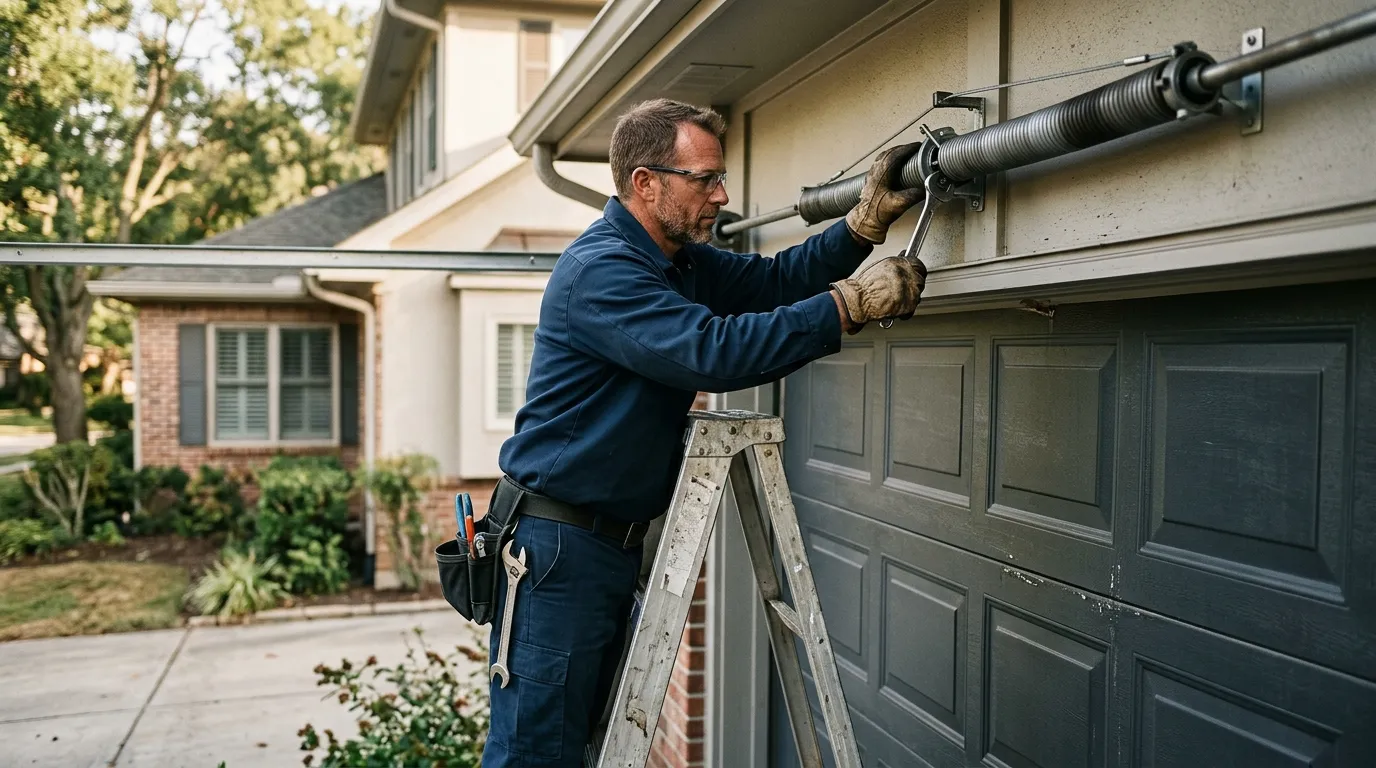
The mistake we see most is homeowners waiting until a power cut actually happens to go looking for the manual release cord. It's usually a red handle hanging from the trolley on the track, and on an opener that's been in place since the house was built, it can be stiff, dusty, or half-buried behind whatever's stacked in the garage. Finding it in the dark, in a hurry, with a car trapped inside, is a bad time to discover it's seized. The other version of the same mistake is replacing the whole opener the moment it starts acting up, without checking whether the real problem is a spring that's lost tension. Phoenix stock from the 1979-2007 build years often still runs its original torsion spring, and a spring near the end of its life will make an opener strain and stall in a way that looks like a motor failure but isn't.
When Waiting Is Fine
Not every hiccup needs a same-day call. If the power cuts and comes back within a few minutes and the door goes right back to working normally, nothing's wrong with the opener - that's just how mains power behaves. If the door closes fine in the cool morning hours but hesitates at the hottest part of a summer afternoon, that's worth watching for a week or two before spending money, since it may settle down as sensor brackets cool and the days shorten. Where we draw the line: if the manual release doesn't move freely when you actually test it, don't wait on that one. We're not going to treat an intermittent, weather-linked hesitation as a same-day emergency if the door still closes and locks the rest of the time - but a release mechanism that won't move by hand is a real safety gap, and that one's worth a call regardless of season.
How it works
From “it’s stuck” to “it’s fixed”
01
Tell us what’s wrong
Describe the symptom - won’t open, loud bang, opener runs but the door won’t move.
02
On-site diagnosis
A technician tests the door under power and by hand and finds what actually failed.
03
Clear, up-front plan
You get the fix that’s needed and what drives the cost - before any work starts.
04
Repaired & tested
The repair is done, the door is set true and tested, and the work area left clean.
Serving Phoenix, AZ - tell us what your door’s doing and we’ll take it from there.
Why does my garage door opener stop working during a power outage?
Because openers installed with houses built in this area's typical 1979-2007 range often don't have battery backup, a feature that wasn't standard then. When power cuts, the opener has no power source, so the door stays put until you release the trolley by hand or the power returns.
Why does my door act up specifically in summer?
Phoenix's severe heat rating means garage temperatures climb well above outdoor air, which stresses opener circuit boards and can shift photo-eye sensor alignment. That combination shows up as a door that works fine most of the year and hesitates or refuses to close on the hottest afternoons.
Where's my manual release cord and why does it matter?
It's the red handle hanging from the trolley on the opener's track. On an opener original to a home built in the early 2000s, it may not have been pulled since installation, so it's worth testing it now instead of during an outage when you're in a hurry.
Ready to get your garage door sorted?
Tell us what it’s doing and where you are in Phoenix - we’ll take it from there.