Commercial Garage Door Repair Across the Phoenix Service Area
Phoenix Garage Door Co repairs and services commercial garage doors across the Phoenix metro area, from aging 2000s-era steel doors to heat-worn openers.
We don't publish a flat rate for commercial garage door work here, because the range is wide: a single torsion spring replacement on a light-commercial roll-up bears no resemblance to a full section swap on a high-cycle warehouse door with a heavier motor. What we can tell you is what drives the number up or down. Door size and cycle count matter more than almost anything else - a dock door that opens forty times a day wears differently than a bay door that opens twice. Steel gauge matters too: heavier commercial panels cost more to replace than the light residential-grade steel some smaller shops run.
Most commercial buildings in the Phoenix service area went up between 1979 and 2007, with the bulk of that stock dating to the early 2000s. That means a lot of properties are hitting the point where the original opener motor, the original springs, and the original track are all wearing out close together, which can turn what looks like one repair into three. We'll tell you plainly when a repair isn't worth it - if the door itself has racked or the track is bent past true, sinking money into a new opener on top of it is a waste. Ask for a walk-through and a written number before any work starts; we're not going to guess a price over the phone for a door we haven't looked at.
How Long It Takes
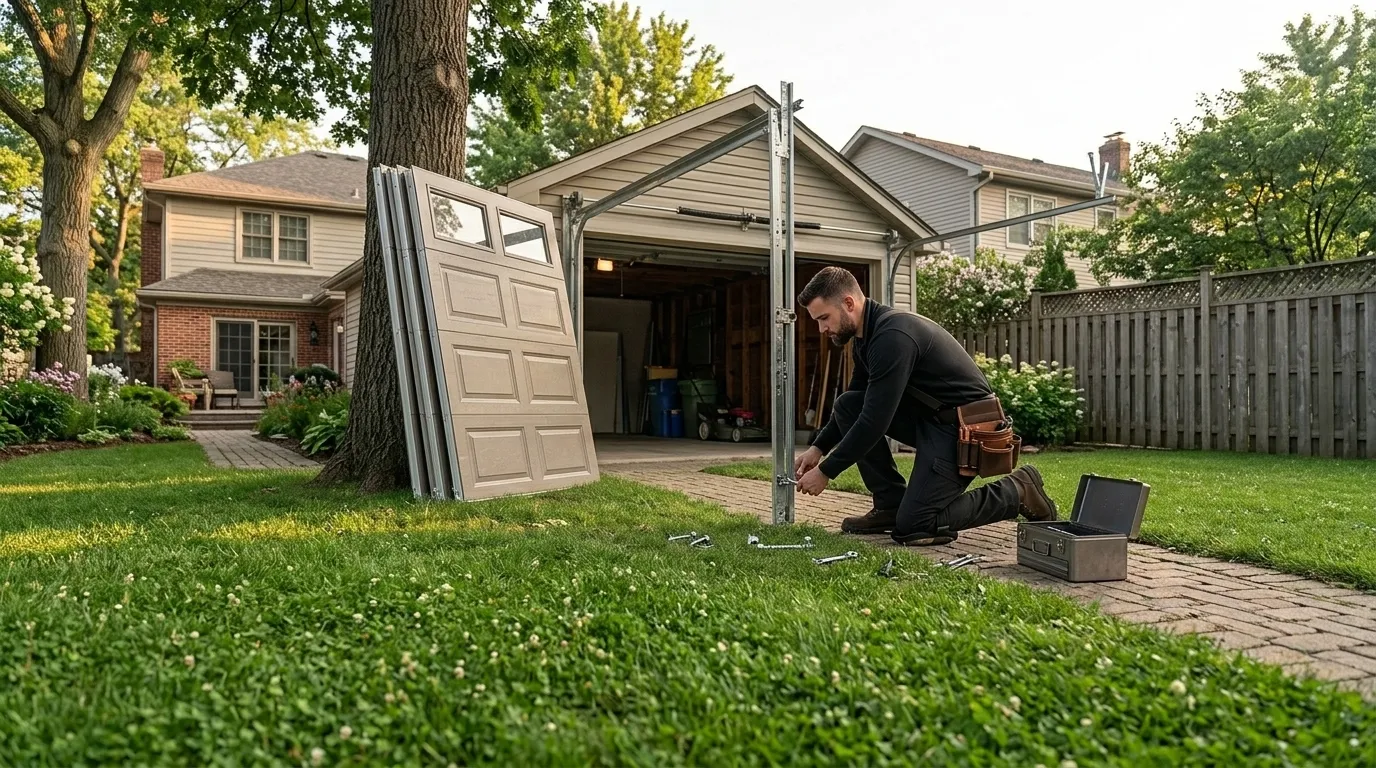
A straightforward spring or cable job on a commercial door usually gets done in one visit, same as it would for a house. Where the time adds up is parts and access. Commercial doors run wider springs, heavier cable, and sometimes proprietary opener boards that aren't sitting on a truck - if your building's door was built to a spec from the 1979-2007 construction window, some of that original hardware isn't stocked anywhere local anymore, and we may need to order it.
That's the honest limitation: we can diagnose a bad gearbox or a cracked panel in one trip, but if the part has to come from a manufacturer, the fix itself waits on shipping, not on us. We'll tell you at the time of the estimate whether we're looking at a same-visit repair or a scheduled return once parts land. Full section replacement on a large commercial door takes longer than a spring swap simply because of the weight involved - these aren't one-person panels, and safe removal of an old high-cycle door takes more hands and more time than a two-car residential door. If your business runs on one bay door, ask us up front what the parts situation looks like before you commit to a shutdown window.
What You Are Seeing
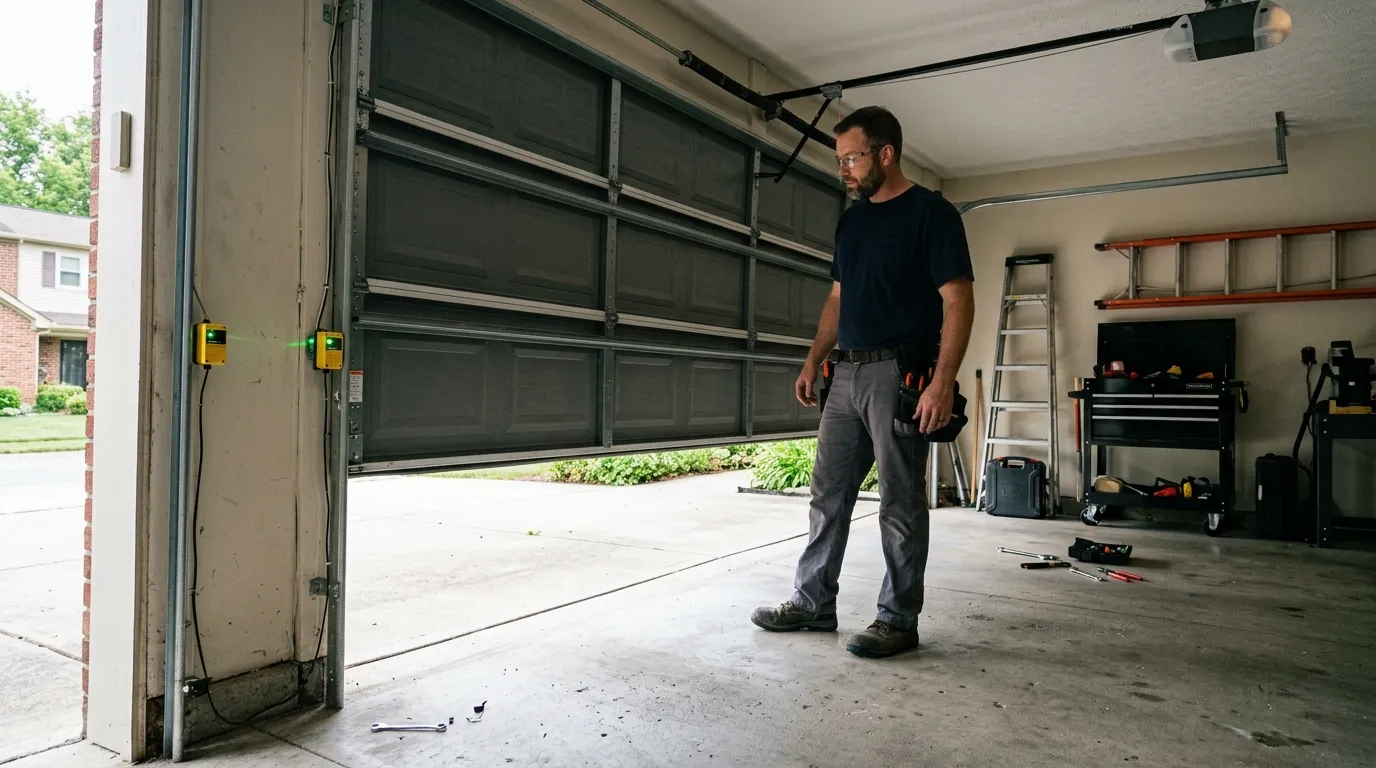
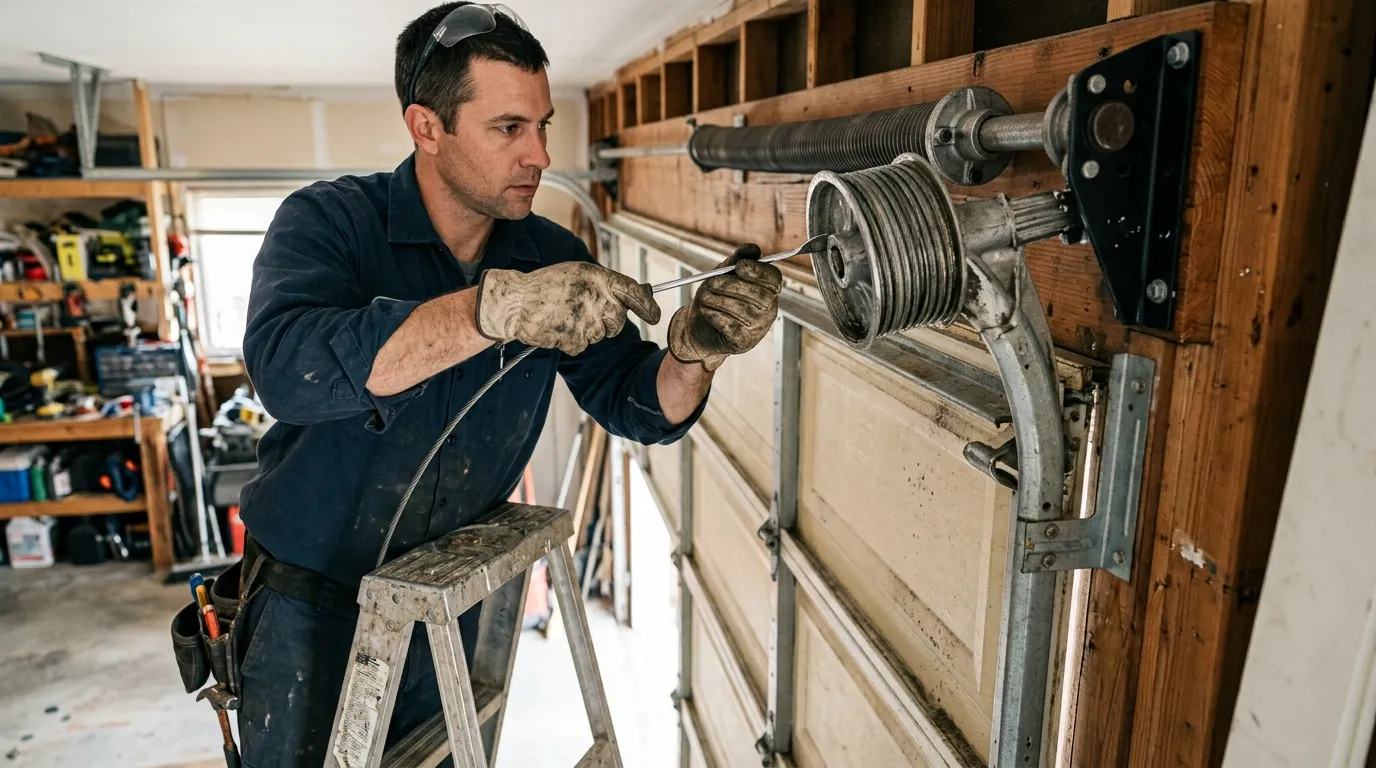
The most common commercial call we get isn't a door that won't open - it's a door that opens crooked, slams the last foot of travel, or grinds on one side. That's usually a spring that's lost tension unevenly, and on a heavier commercial door the imbalance shows up faster and louder than it would on a house.
You'll also see steel that's warped along one panel, usually the side that takes direct sun for most of the day. Phoenix sits in a severe heat band, and that heat is what turns a fine steel door into a warped one over a single summer, especially on darker panels that soak up more heat than light-colored ones. A warped panel doesn't always mean a bad door - sometimes it's just cosmetic - but if it's binding in the track, that's wear on the rollers and the opener that gets worse every cycle.
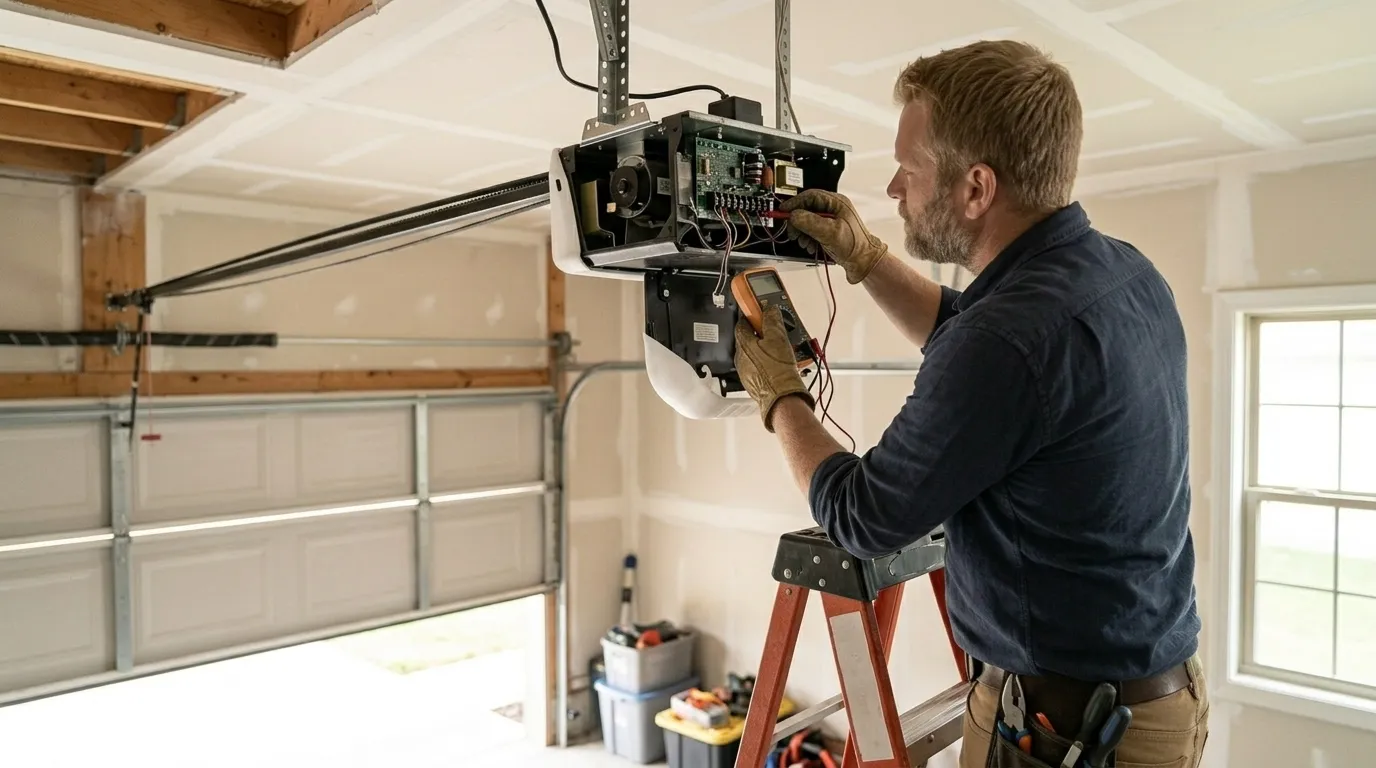
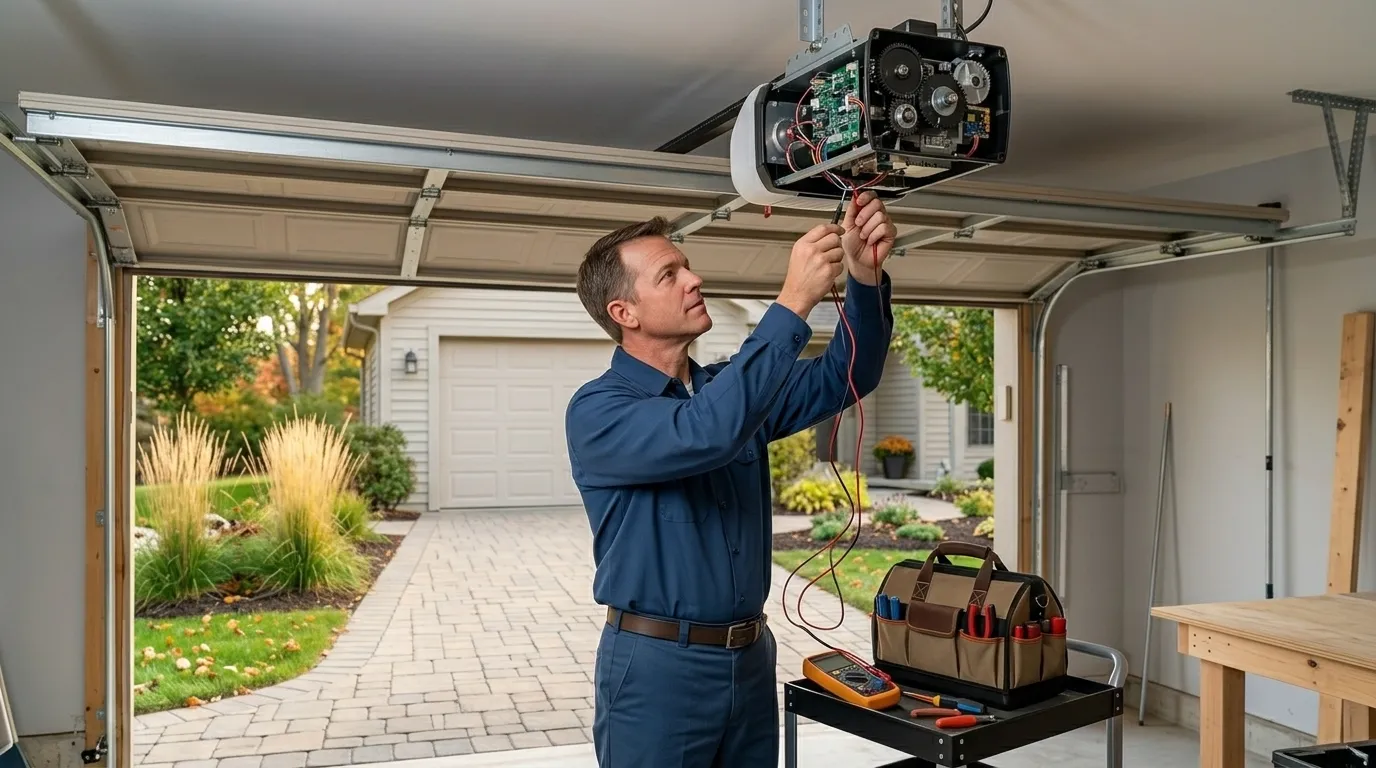
Gear wear inside chain and belt openers is another one we see a lot, especially on doors that cycle dozens of times a day for a business. The plastic gear inside strips out under heat and constant load faster than most owners expect, and once it strips, the opener runs but the door doesn't move - which reads to most people as a dead motor when it's really a small worn part.
What Causes It Around Here
Most commercial buildings in the Phoenix service area went up between 1979 and 2007, with the bulk of that stock dating to the early 2000s, and nine named areas across this territory share the same 2000s-era steel stock. That matters because a door installed in 2001 is now old enough that its torsion springs, cycle-tested for a certain number of openings, are past or near the end of that count on any door with heavy daily use.
Add the heat. Phoenix's severe heat band means steel panels expand and contract every single day, not just in a hot month - and that daily cycling fatigues seams, hinges, and roller brackets faster than it would in a milder climate. Across the service area's roughly 51,258 households, most commercial properties sit in the same 1979-2007 build window, which means the fatigue clock is running on a lot of doors at close to the same time.
The service area stretches from just 3 miles away to Anthem 19 miles out, and the same aging opener boards and springs turn up whether the building is near out toward. It's not bad luck hitting one building - it's the stock and the climate doing what they do everywhere in this territory.
How it works
From “it’s stuck” to “it’s fixed”
01
Tell us what’s wrong
Describe the symptom - won’t open, loud bang, opener runs but the door won’t move.
02
On-site diagnosis
A technician tests the door under power and by hand and finds what actually failed.
03
Clear, up-front plan
You get the fix that’s needed and what drives the cost - before any work starts.
04
Repaired & tested
The repair is done, the door is set true and tested, and the work area left clean.
Serving Phoenix, AZ - tell us what your door’s doing and we’ll take it from there.
Do you work on high-cycle warehouse doors, or just standard bay doors?
We work on commercial roll-up and sectional doors across the sizes and cycle counts common to this service area, from single-bay shop doors to multi-panel dock doors. What we won't do is guess a fix without seeing the door - opener boards and spring sizes vary enough between commercial jobs that a phone diagnosis isn't reliable. Get in touch and we'll set up a look before quoting anything.
Why did my opener strip its gear so fast?
Plastic drive gears inside chain and belt openers wear out faster under heat and heavy daily cycling, and Phoenix's severe heat band pushes that wear along quicker than it would in a cooler climate. A door that opens dozens of times a day for a business puts more cycles on that gear in a year than a house door sees in five.
Is it worth repairing an old commercial door or should I replace it?
It depends on what's actually failed. If the springs, cable, or opener gear are worn but the door panel and track are still straight, repair is usually the cheaper path. If the track is bent past true or the panels have racked, you're often better putting that money toward a new door instead of patching an old one twice.
Ready to get your garage door sorted?
Tell us what it’s doing and where you are in Phoenix - we’ll take it from there.