Garage Door Service Built for Phoenix Heat and Housing Stock
Garage door service for Phoenix homes built mostly between 1979 and 2007, where severe summer heat wears down springs, rollers, and opener gears faster than the manual says.
We don't post a flat number here because what your door needs depends on what's actually broken and what's already on the truck. A torsion spring swap is a different job than an opener gear kit, and a bent track from a car bump is different again. What we can tell you is that most of the houses we work on across this service area were built between 1979 and 2007, with a lot of that stock going up around 2001 - so hardware sizing tends to fall into a predictable range, and we stock accordingly. That keeps a lot of jobs from turning into a second visit. Where it does turn into a return trip is specialty parts: an odd-width door, a discontinued opener board, or hardware from a builder that didn't standardize. We'll tell you upfront if that's the situation instead of guessing at a number over the phone. One honest limitation: if your opener logic board is the failure and the model's been out of production a while, we may need to order the part before we can finish the job, and that adds days, not hours.
How Long It Takes
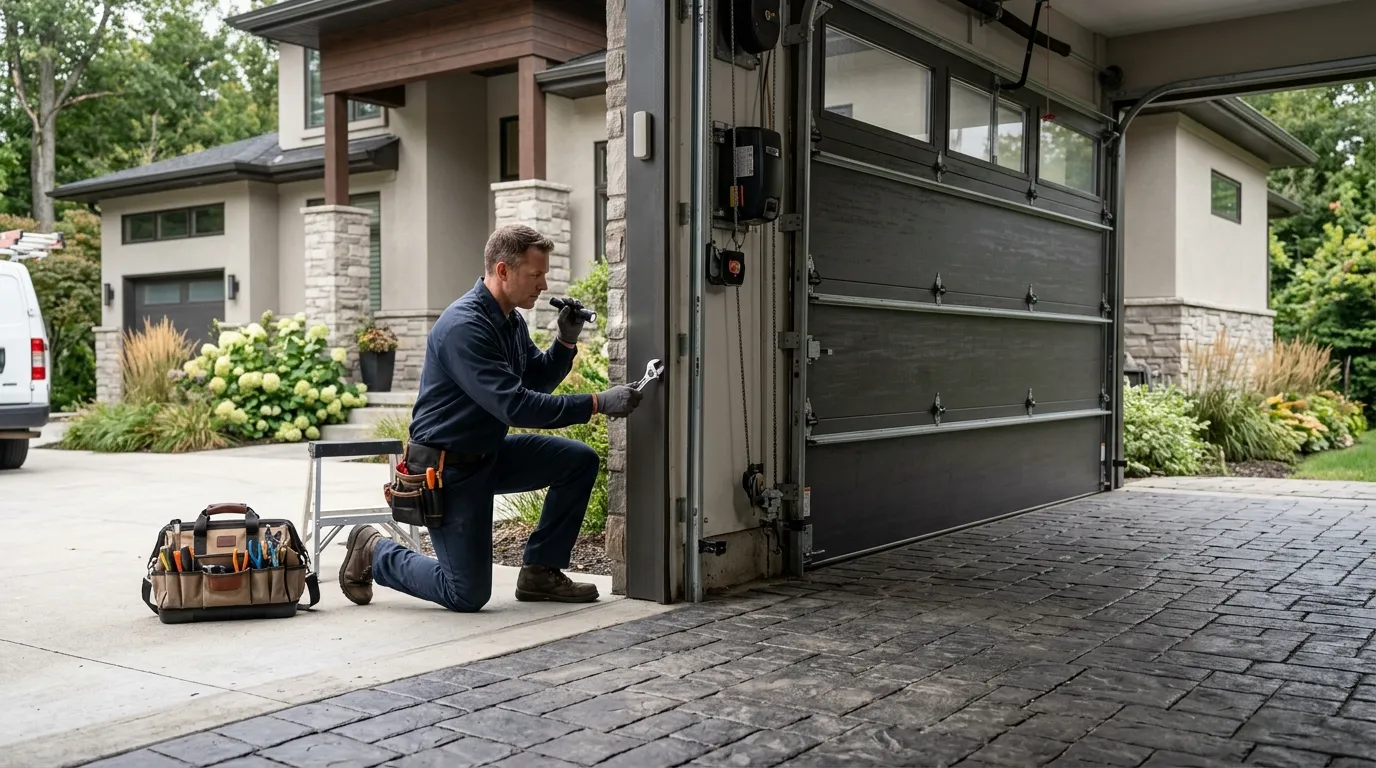
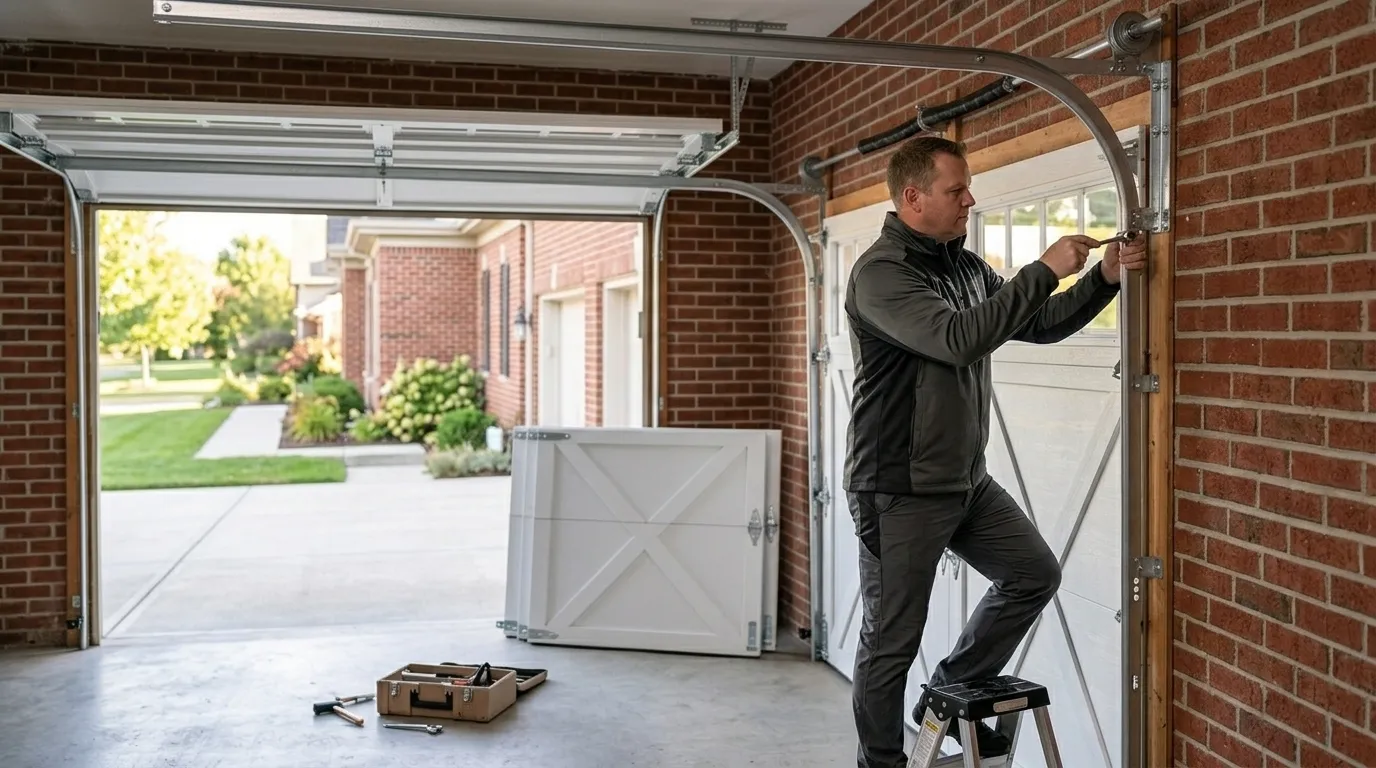
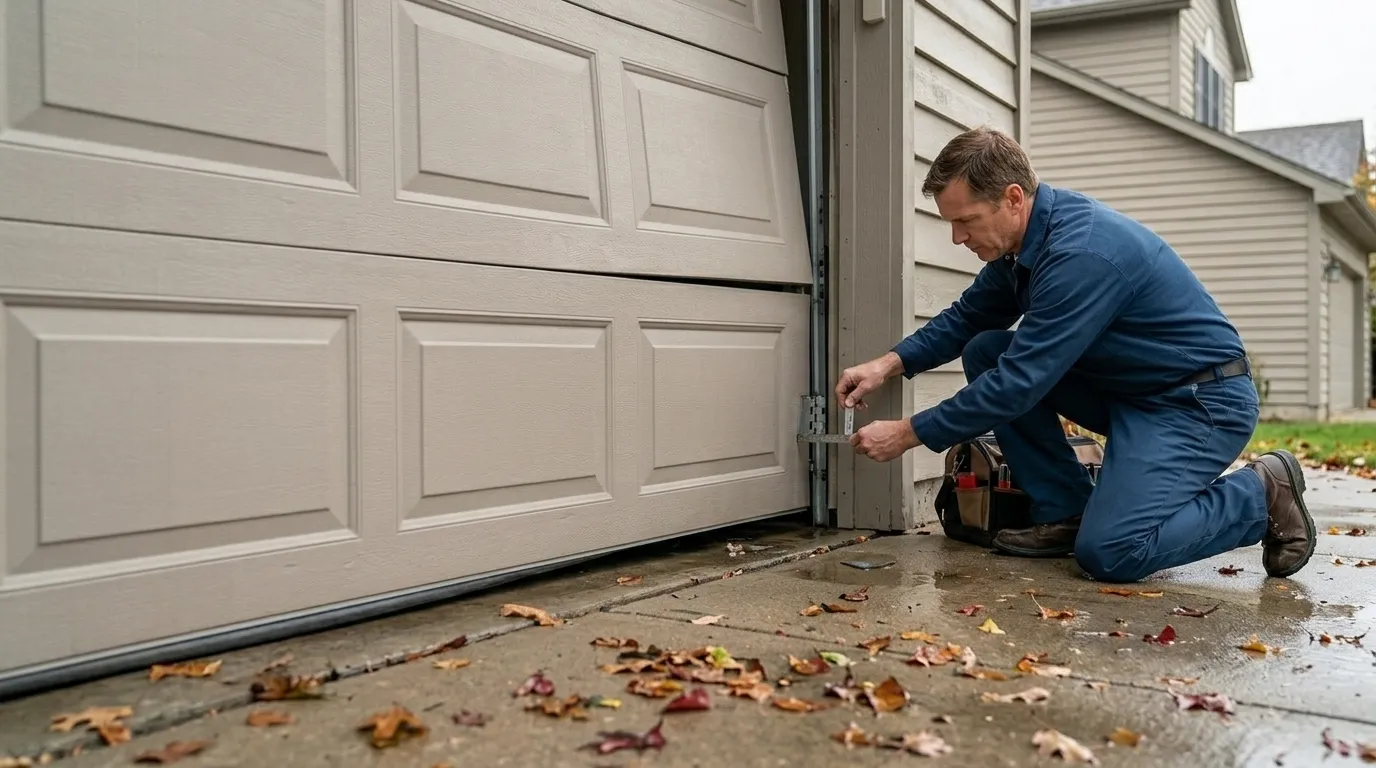
Opener repairs and spring jobs are not the same kind of work. A dead opener is often a sensor, a gear, or a board issue we can diagnose and usually resolve in one visit if the part is common. A broken spring or a cable off the drum is more physical labor - pulling the door apart, resetting tension, checking the drums and bearing plates while everything's open. Given how much of the housing here dates to the late '90s and early 2000s, we see a lot of the same torsion spring and roller setups job after job, which speeds up diagnosis. What slows a job down isn't usually the door - it's parts we don't carry on the truck. If your setup is non-standard for the era, or a previous repair mixed hardware from different manufacturers, expect us to spend more time confirming fit before we touch anything. We'd rather take that extra time on the front end than send someone back a second time for the same fault.
What You Are Seeing
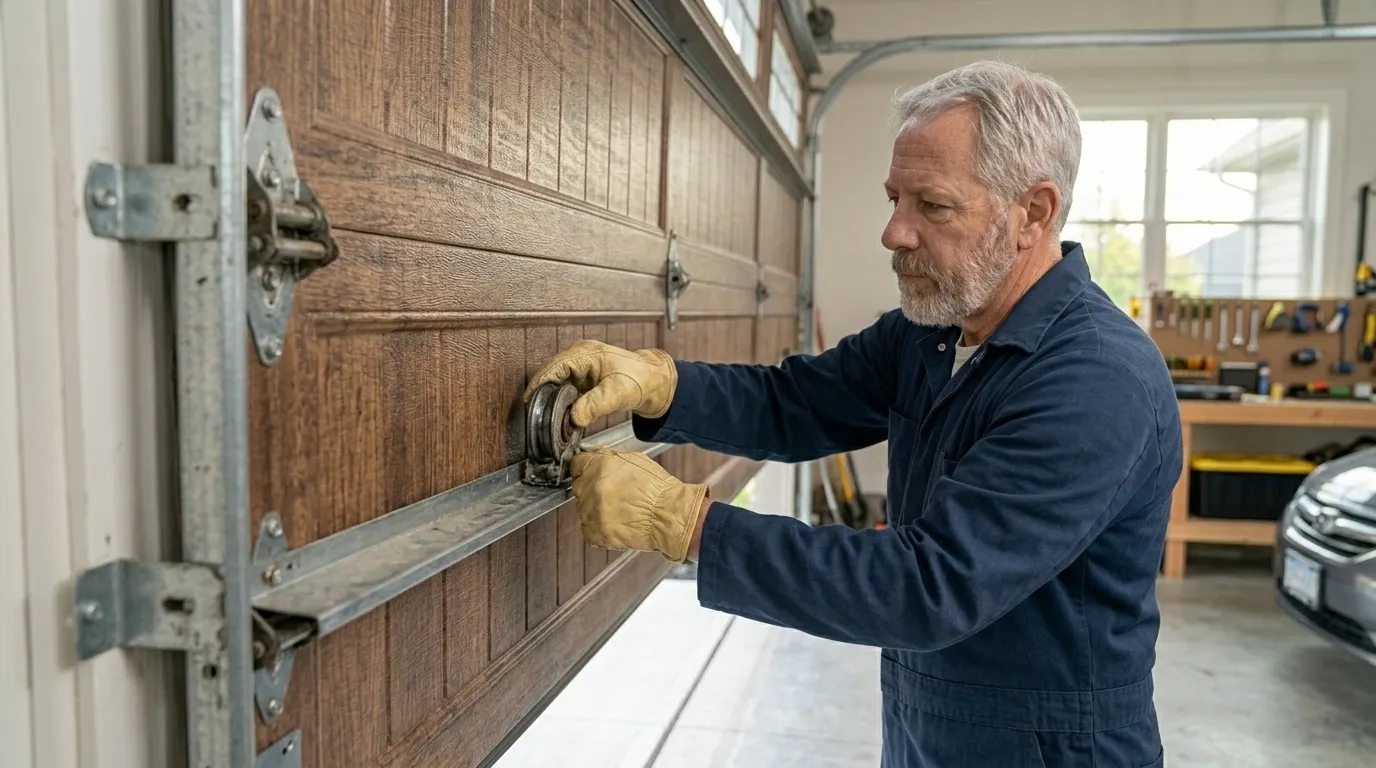
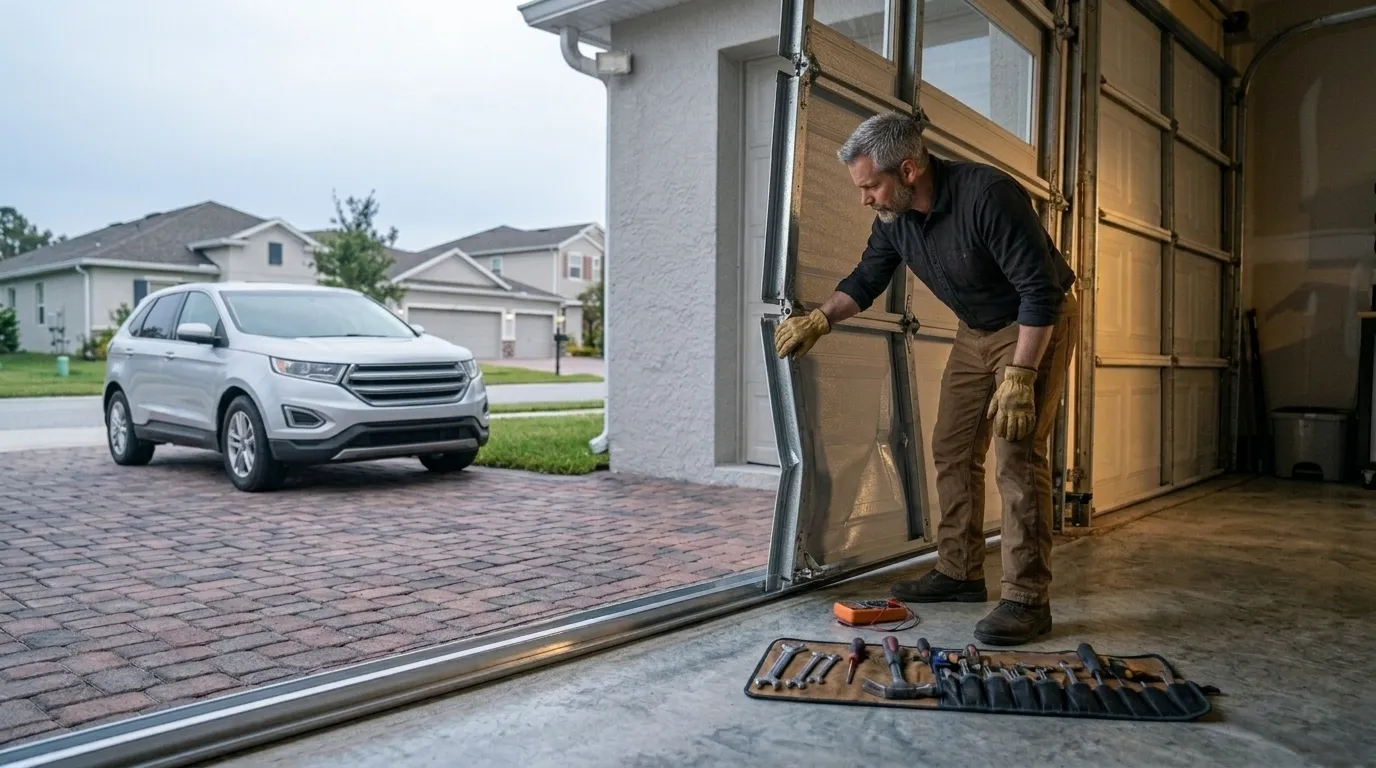
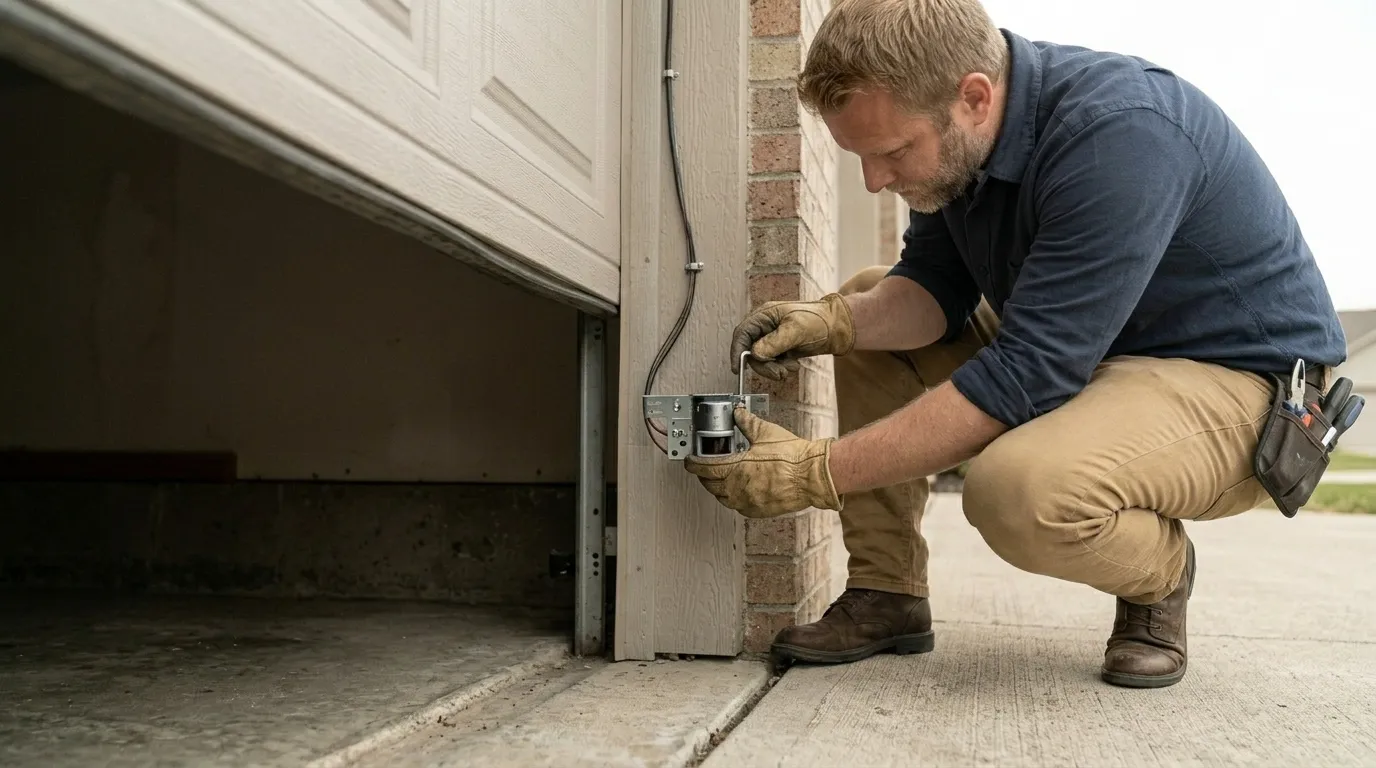
The symptoms we get called out for most often line up with what a 20-to-40 year old door in a severe-heat climate actually does under stress. Springs that were rated for a certain cycle count wear out faster here because summer heat thins the lubricant and speeds up metal fatigue - you'll hear a loud bang, the door won't lift, or it lifts a few inches and stalls. Nylon rollers on original hardware get brittle and start chipping or binding in the track, especially on south- and west-facing garages that take direct afternoon sun for months. Openers from the same building era often show gear-and-sprocket wear or logic board failures tied to years of heat cycling in an unconditioned garage. If your door reverses right after it touches the floor, or the opener runs but the door doesn't move, that's usually a limit switch or a stripped gear - both common on units this age.
What Causes It Around Here
Most of the failures we see trace back to two things layered on top of each other: when the house was built, and how hot it gets inside an attached garage that isn't climate-controlled. With the bulk of local housing dating to 1979 through 2007 and a median around 2001, a large share of doors and openers are old enough that original springs, rollers, and lift cables are near or past their rated life. Pair that with a severe heat climate and the wear accelerates - garage temperatures here regularly run well above outside air in summer, which cooks lubricant out of bearings and hinges faster than in a milder climate, and puts real stress on steel springs through repeated heat-cool cycling. Nine named areas in this service territory, from Midtown up through share this same housing-age profile, so the failure patterns repeat block to block rather than varying much by neighborhood. It's less about bad luck with one door and more about materials from a specific era meeting a specific climate for two decades straight.
How it works
From “it’s stuck” to “it’s fixed”
01
Tell us what’s wrong
Describe the symptom - won’t open, loud bang, opener runs but the door won’t move.
02
On-site diagnosis
A technician tests the door under power and by hand and finds what actually failed.
03
Clear, up-front plan
You get the fix that’s needed and what drives the cost - before any work starts.
04
Repaired & tested
The repair is done, the door is set true and tested, and the work area left clean.
Serving Phoenix, AZ - tell us what your door’s doing and we’ll take it from there.
Why do garage door springs seem to fail more often here than places friends describe up north?
Heat is the difference. Summer temperatures inside an unconditioned garage push well past outside air, and that heat cycling breaks down spring lubrication and accelerates metal fatigue. A spring rated for a certain number of cycles in a mild climate simply doesn't last as long here, especially once it's past the 15-to-20 year mark common on houses built in this area's 1979-2007 boom.
My house was built in the early 2000s - is that why parts are easy to find?
Usually yes. A large share of the housing in this service area, including much of the stock built around the 2001 median year, uses similar torsion spring and roller hardware. That consistency means we carry the common sizes on the truck. It's the outlier setups - non-standard doors or mismatched prior repairs - that require ordering parts.
How do I know if it's the opener or the door itself?
If the door moves freely by hand when disconnected from the opener, the opener is likely fine and the trouble is springs, cables, or track. If the door won't move by hand either, or feels heavy and uneven, the problem is mechanical, not electrical. We check both before quoting any repair.
Is it ever better to replace instead of repair?
Sometimes. If the opener is old enough that boards are hard to source, or the door itself has warped panels on top of failed hardware, patching one part just exposes the next one. We'll tell you when repair cost is chasing a door that's better replaced rather than keep billing for parts.
Ready to get your garage door sorted?
Tell us what it’s doing and where you are in Phoenix - we’ll take it from there.