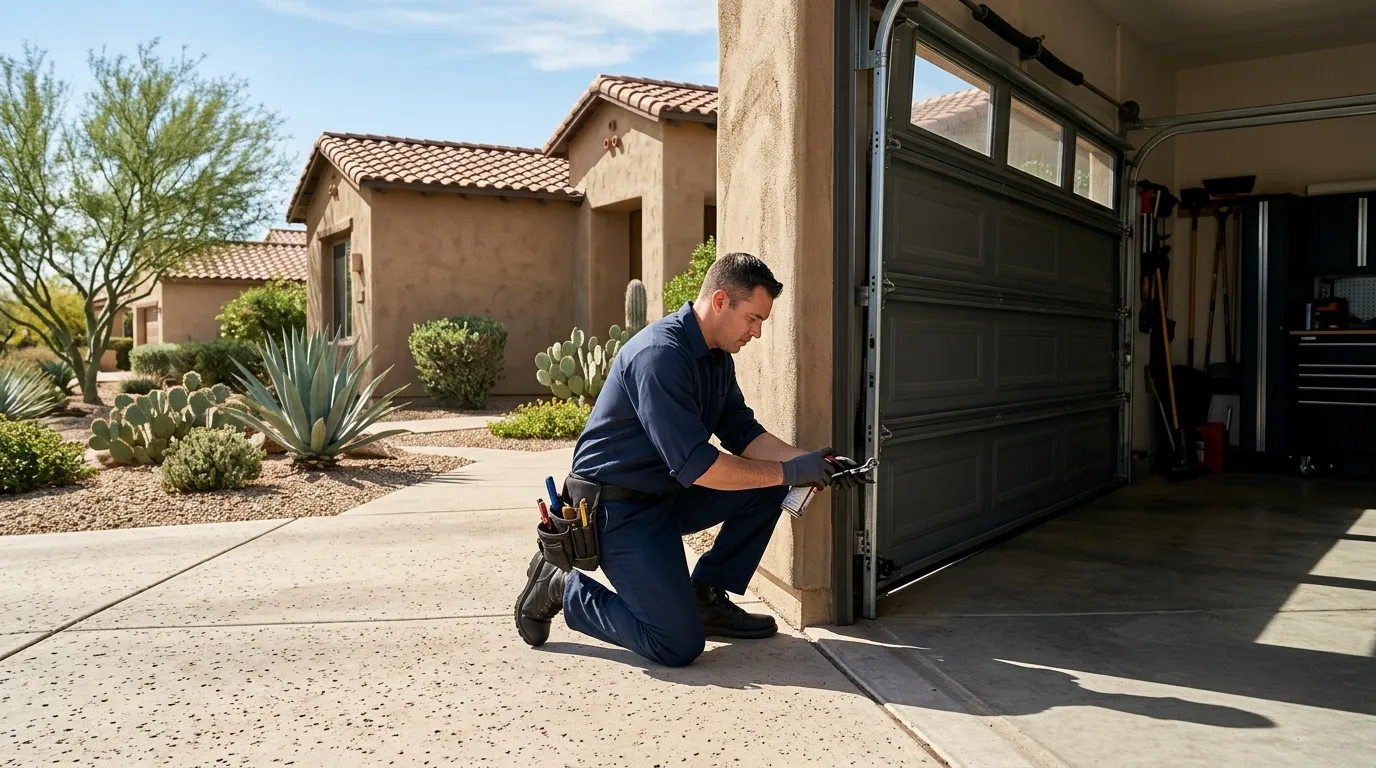
Garage door repair for Phoenix houses built 1979-2007. We fix broken springs, worn opener gears, and heat-damaged tracks common across the valley's builder-grade stock.
We don't post a flat number here because what you pay depends on what's actually broken and what's already on the door. A torsion spring swap is a different job than an opener board replacement, and a door with the original 1980s or 1990s track still on it sometimes needs more than the one part that failed. What we can tell you: across a service area where the median household income sits at $74,764, most of the calls we get are homeowners trying to decide whether a repair is worth it against a full opener or door replacement, not people who see cost as an afterthought. We'll tell you straight if a part is cheap to fix or if you're better off replacing the unit - we'd rather lose a bigger ticket than sell you a patch that fails again in six months. One honest limit: if your door was custom-built or imported, we may need to order a part, and that's on the supplier's schedule, not ours.
How Long It Takes
Most single-fault repairs - a snapped spring, a burned-out opener motor, a bent roller track - are a same-visit job once we're looking at the door, because these are the failure points that show up over and over in houses from this build era. What takes longer is when heat has done secondary damage: a nylon gear that melted and also chewed up the opener's drive assembly, or a track that's been running dry so long the rollers have worn oval instead of round. We check for that before we quote the job, not after we've started it. We won't give you a fixed hours-on-site number here since we don't have that figure locked down for every job type, but we will tell you before we start whether you're looking at a straightforward swap or something with a few more steps.
What You Are Seeing
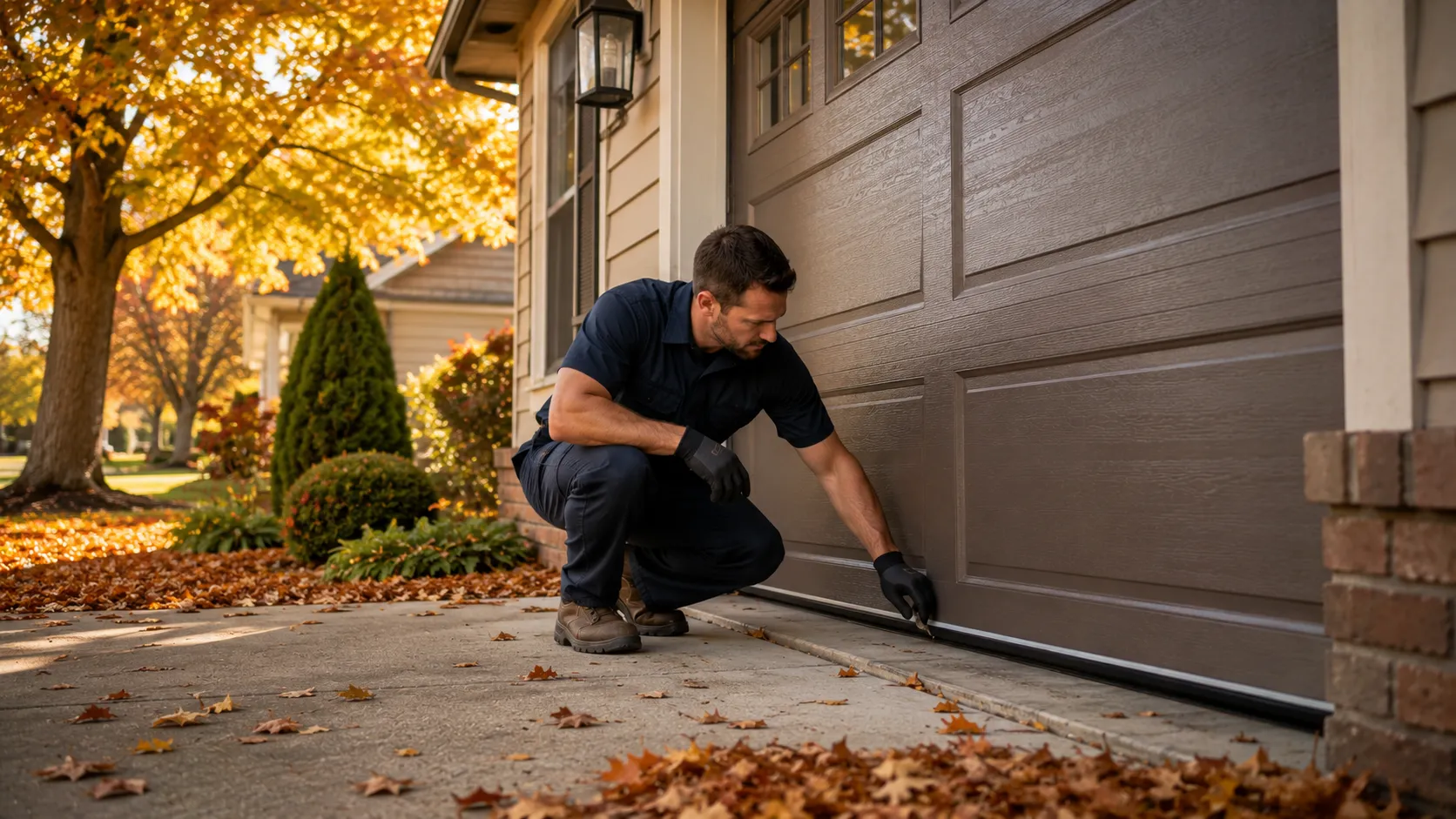
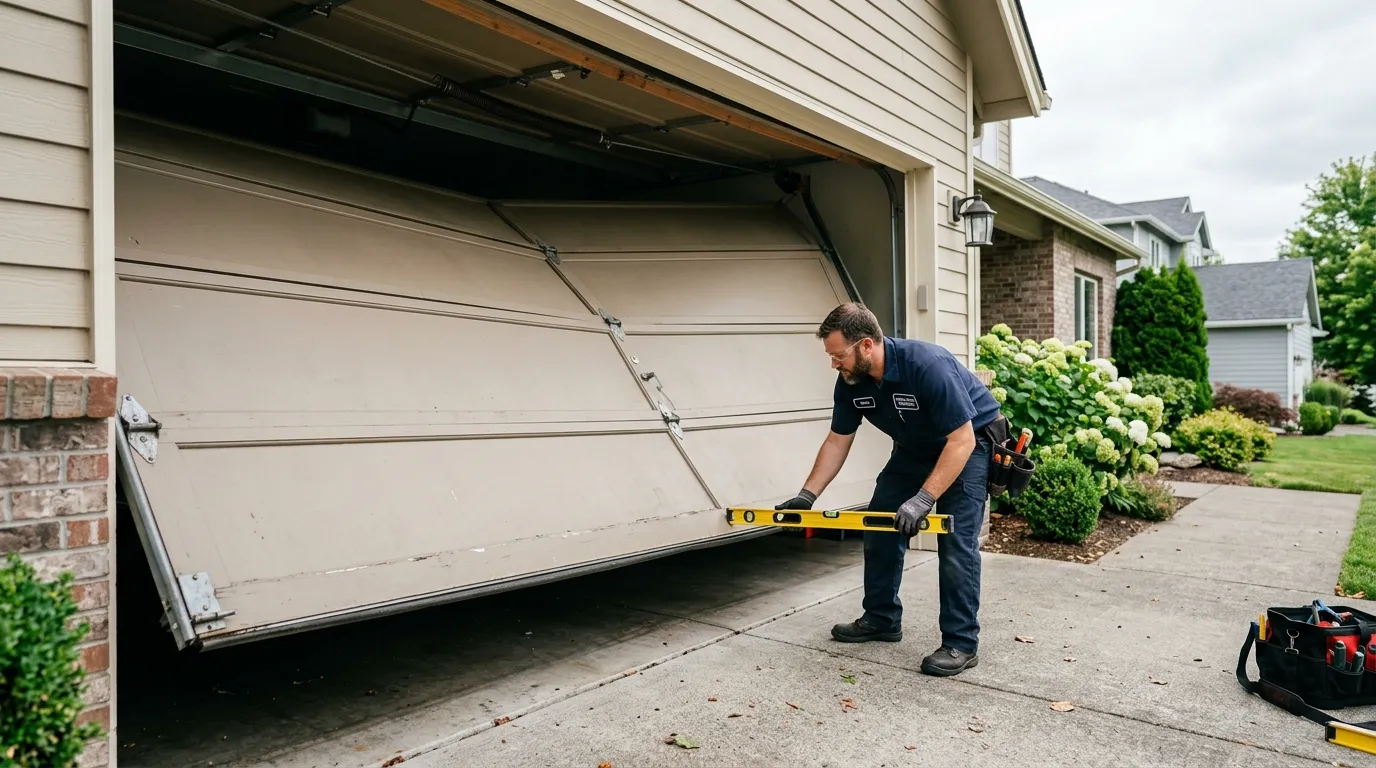
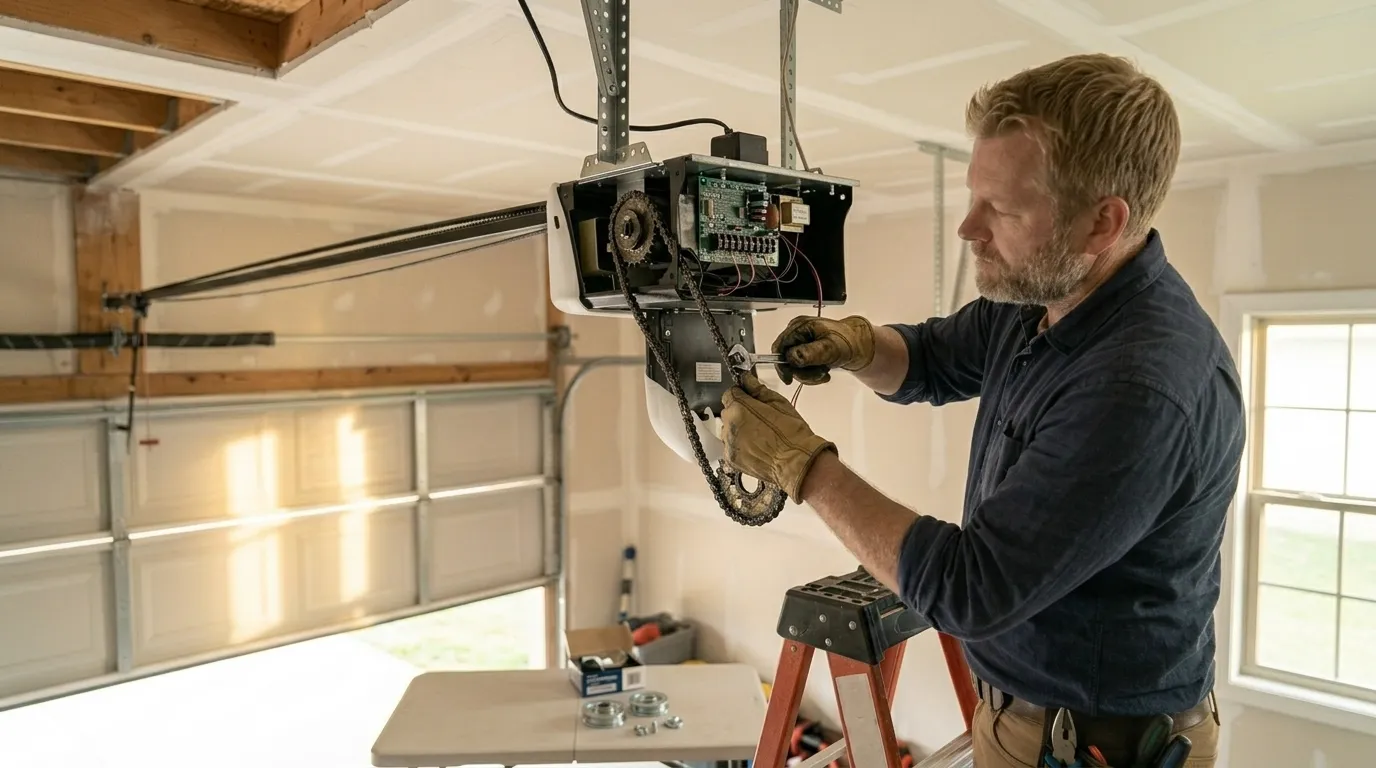
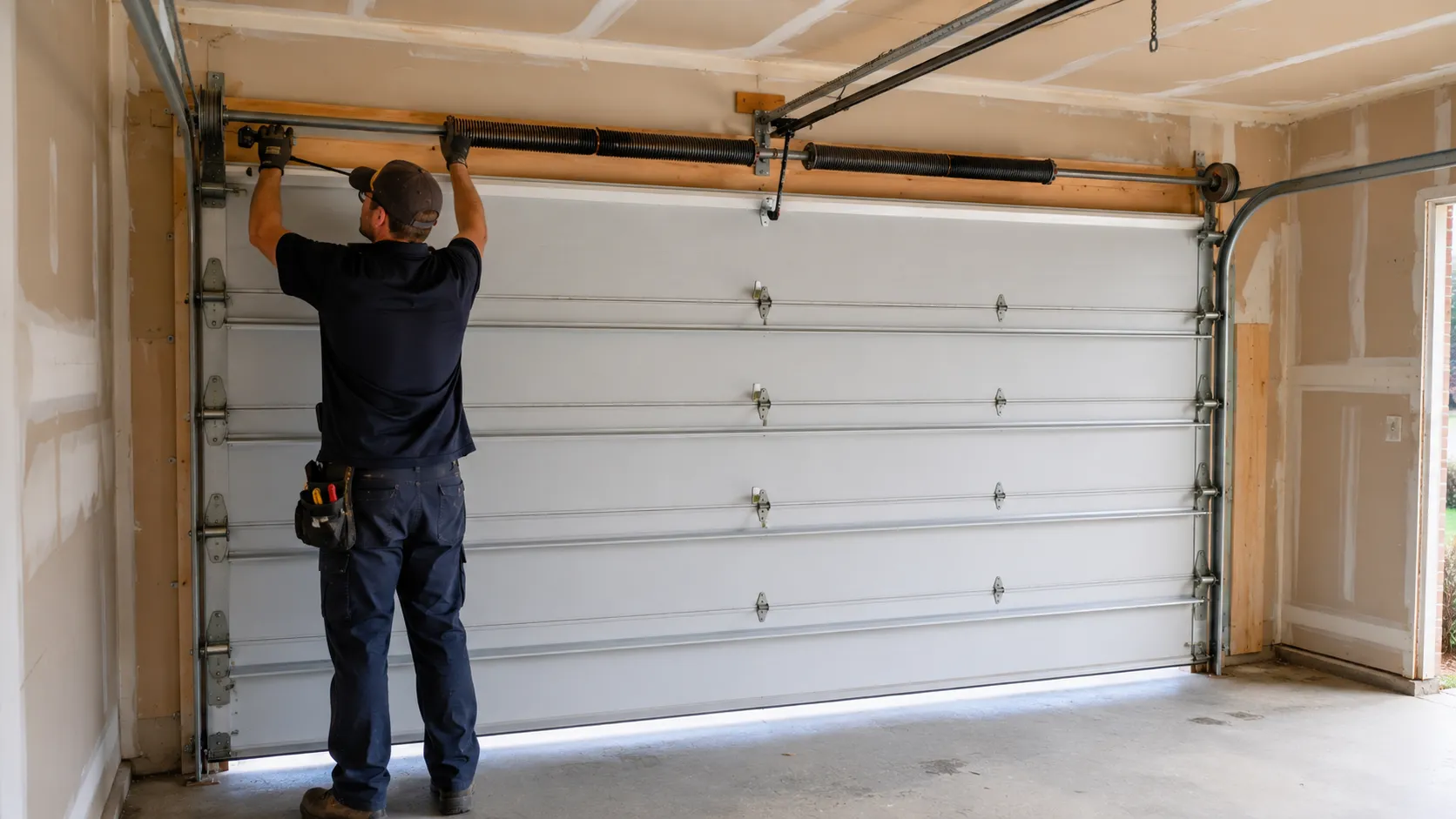
If your door groans, jerks, or reverses partway up, the two most common causes on houses from this build era are a torsion spring losing tension and an opener gear that's worn past its teeth. Springs in this climate don't fail gracefully - they go all at once, usually first thing in the morning when the steel is coldest relative to the day ahead. If the opener runs but the door doesn't move, or moves an inch and stalls, that's almost always the drive gear, and on builder-grade units from the 1980s through the 2000s that gear is nylon, not metal. You'll also see panels that look slightly bowed on the side that catches afternoon sun, and weatherstripping that's cracked and pulled away from the bottom panel. None of these are wiring problems. They're heat and age problems, and they show up in a predictable order once a door passes the fifteen- or twenty-year mark.
What Causes It Around Here
The housing across this service area went up mostly between 1979 and 2007, with the bulk of it dating to the 2000s across the nine named areas that make up the valley - places like all saw the same builder-grade garage hardware go in during that stretch. That hardware wasn't built for this. Phoenix sits in a severe heat band, and a garage door here goes through daily expansion and contraction that steel and nylon in a milder climate never see. Torsion springs fatigue faster under that cycling. Opener gears, most of them nylon to keep noise down, soften and strip under sustained heat exposure. Lubricant that would last years elsewhere burns off in one summer. With 40,039 owner-occupied houses across the area carrying a lot of that same original-era hardware, we see the same handful of failure patterns on doors from two miles out to Anthem nineteen miles away - different distance from the shop, same underlying cause.
How it works
From “it’s stuck” to “it’s fixed”
01
Tell us what’s wrong
Describe the symptom - won’t open, loud bang, opener runs but the door won’t move.
02
On-site diagnosis
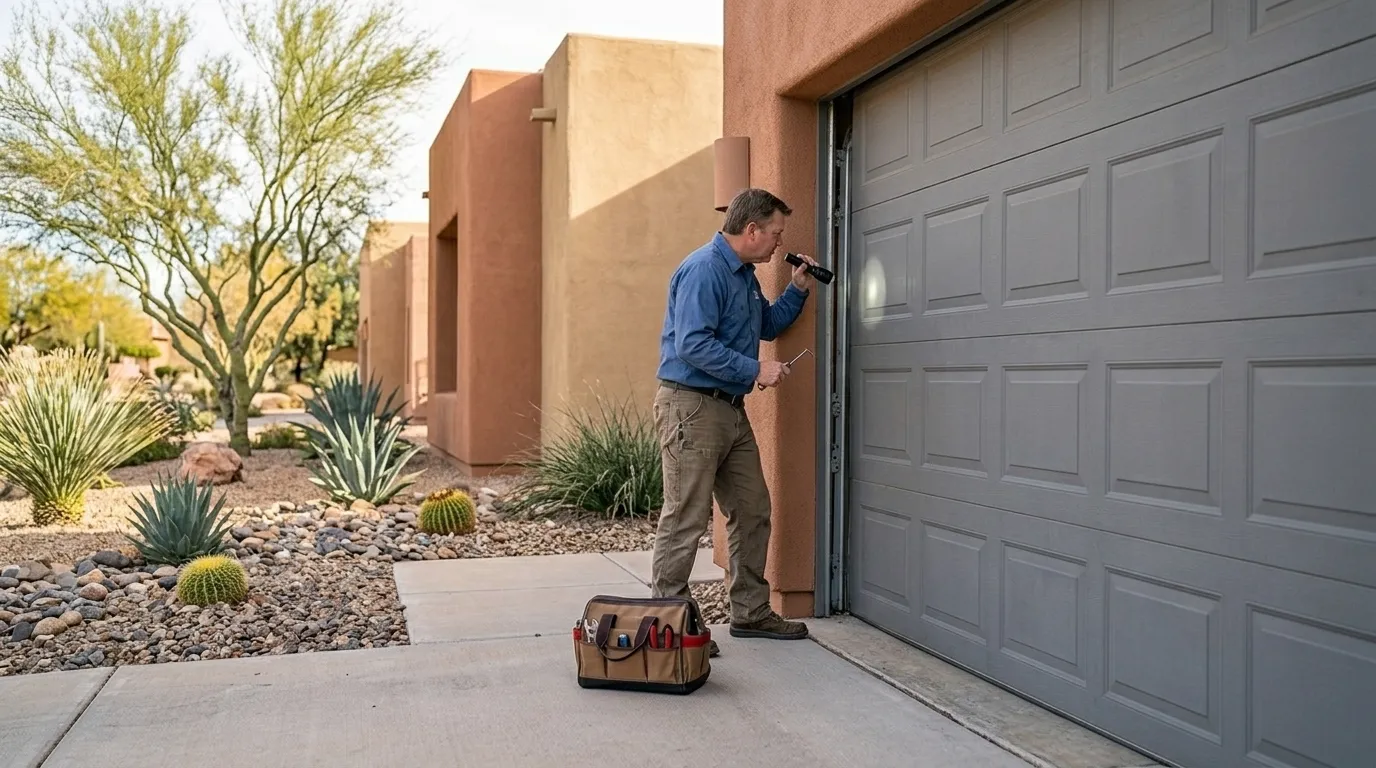
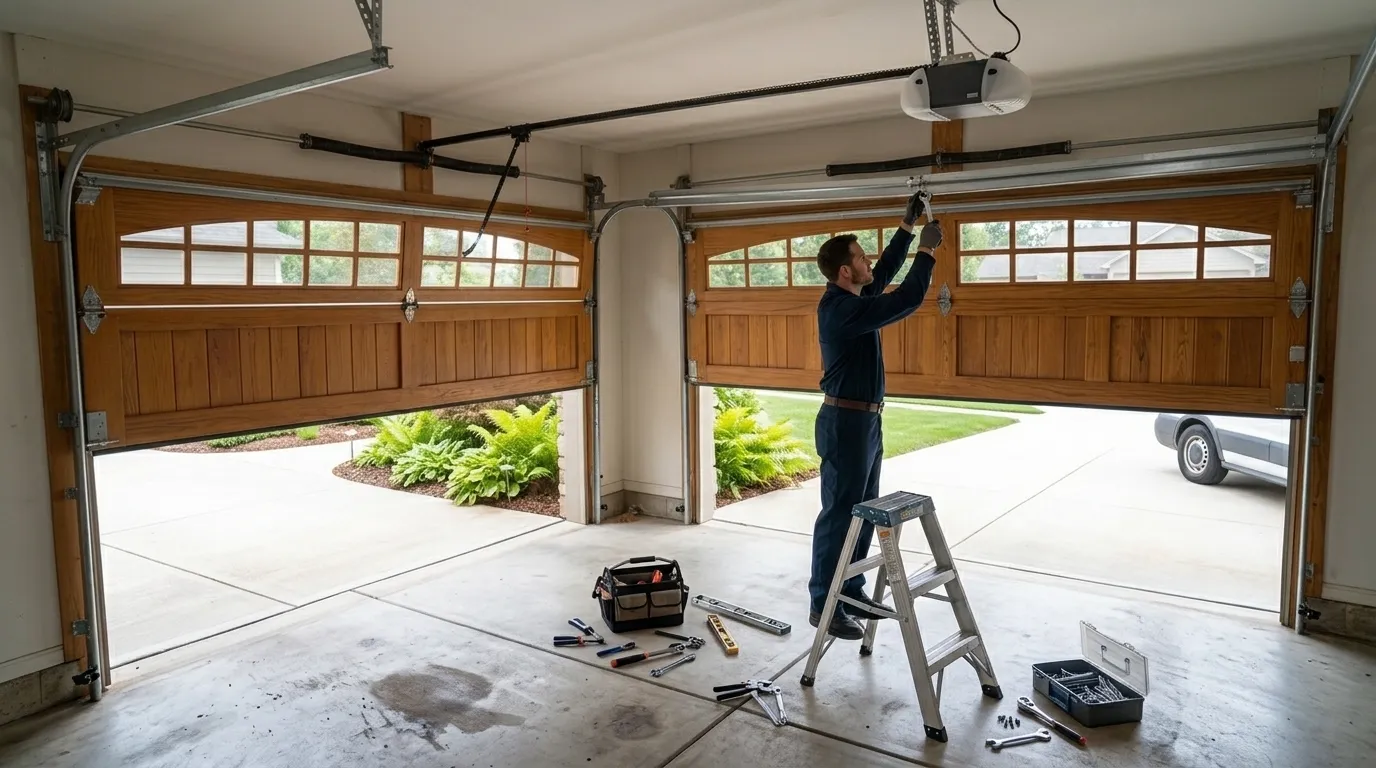
A technician tests the door under power and by hand and finds what actually failed.
03
Clear, up-front plan
You get the fix that’s needed and what drives the cost - before any work starts.
04
Repaired & tested
The repair is done, the door is set true and tested, and the work area left clean.
Serving Phoenix, AZ - tell us what your door’s doing and we’ll take it from there.
Torsion springs don't wear down gradually - they lose tension cycle by cycle and then let go all at once, usually on a cold morning after months of summer heat cycling. If your house dates to the 1980s-2000s builder wave common across this area, the spring is likely original and past the point where a warning sign would show.
Is it normal for the opener to run but the door not move?
Yes, and it's one of the most common calls we get. On opener units from this build era, the drive gear is usually nylon, and Phoenix's heat softens and strips that gear faster than it would in a milder climate. The motor keeps running because it isn't connected to anything anymore.
Should I fix my old door or replace it?
Depends on what's failed and what's still healthy underneath. If the spring or opener is the only issue and the track and panels are sound, repair usually makes sense. If you're already seeing bowed panels and worn rollers on the same door, we'll tell you honestly when replacement is the better use of your money.
Ready to get your garage door sorted?
Tell us what it’s doing and where you are in Phoenix - we’ll take it from there.