El Mirage homes cluster around a 2004 build year, and the heat wears seals and rollers fast. Phoenix Garage Door Co drives 14 miles out to service them.
The failures we see in El Mirage aren't from old age - they're from a specific age. This side of the valley built out fast in the early 2000s, and the housing stock across the service area runs 1979 to 2007 with a median around 2001; El Mirage itself sits right around 2004. That means most doors here are still on their original nylon rollers and steel torsion springs, the parts that were standard-issue hardware twenty-some years ago and are now due for real wear, not replacement panic.
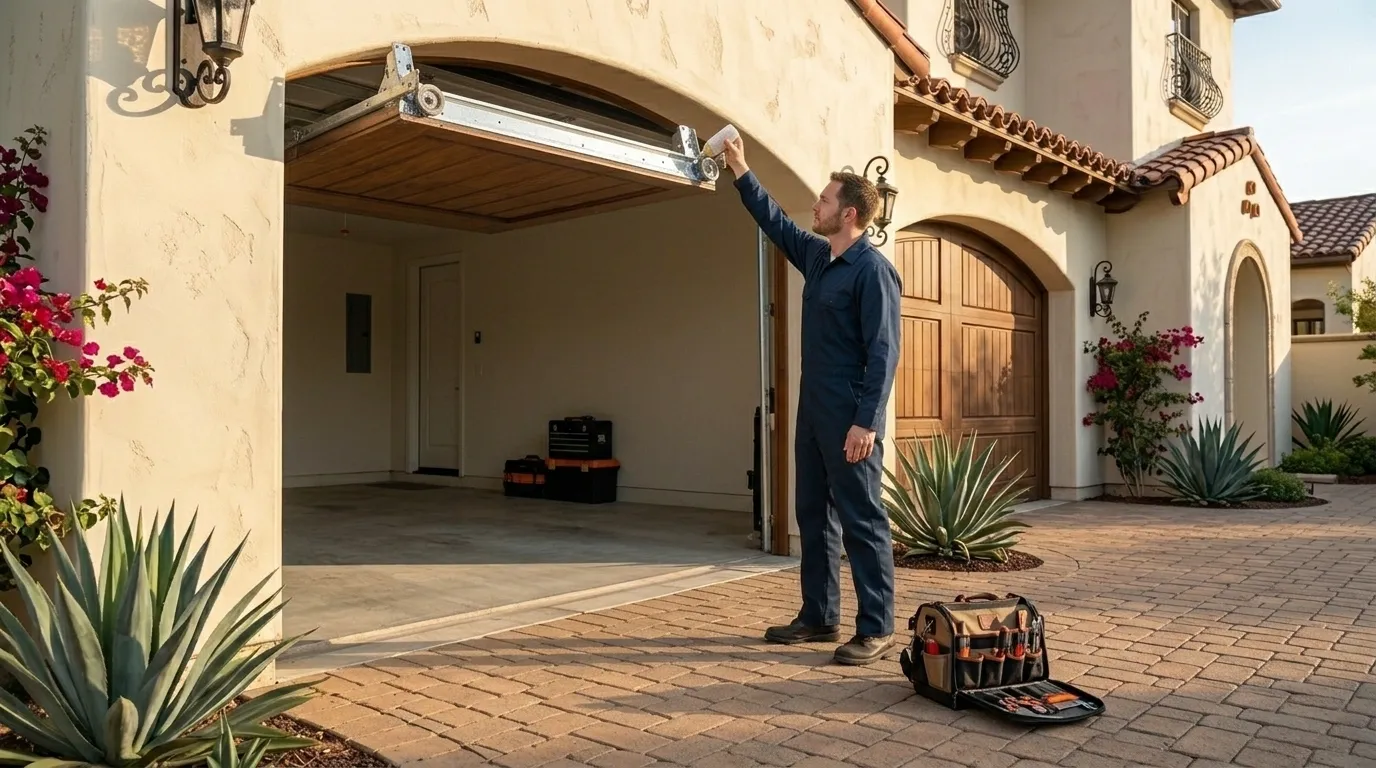
We don't keep a branch in El Mirage - the truck comes from Phoenix, about 14 miles out, so maintenance visits get scheduled rather than same-day. Call ahead and tell us roughly when the door was installed if you know it; that alone tells us what hardware to expect before the tech even pulls up. If a maintenance check turns up a cracked spring or a track out of alignment, that becomes a repair call - see our El Mirage garage door repair page for that side of the job. Maintenance itself is the lube, the tension check, the hardware inspection - not a fix for something already broken.
Booking ahead also means less time standing in a hot garage waiting on us. In this climate that matters more than it sounds like it should.
The DIY Question
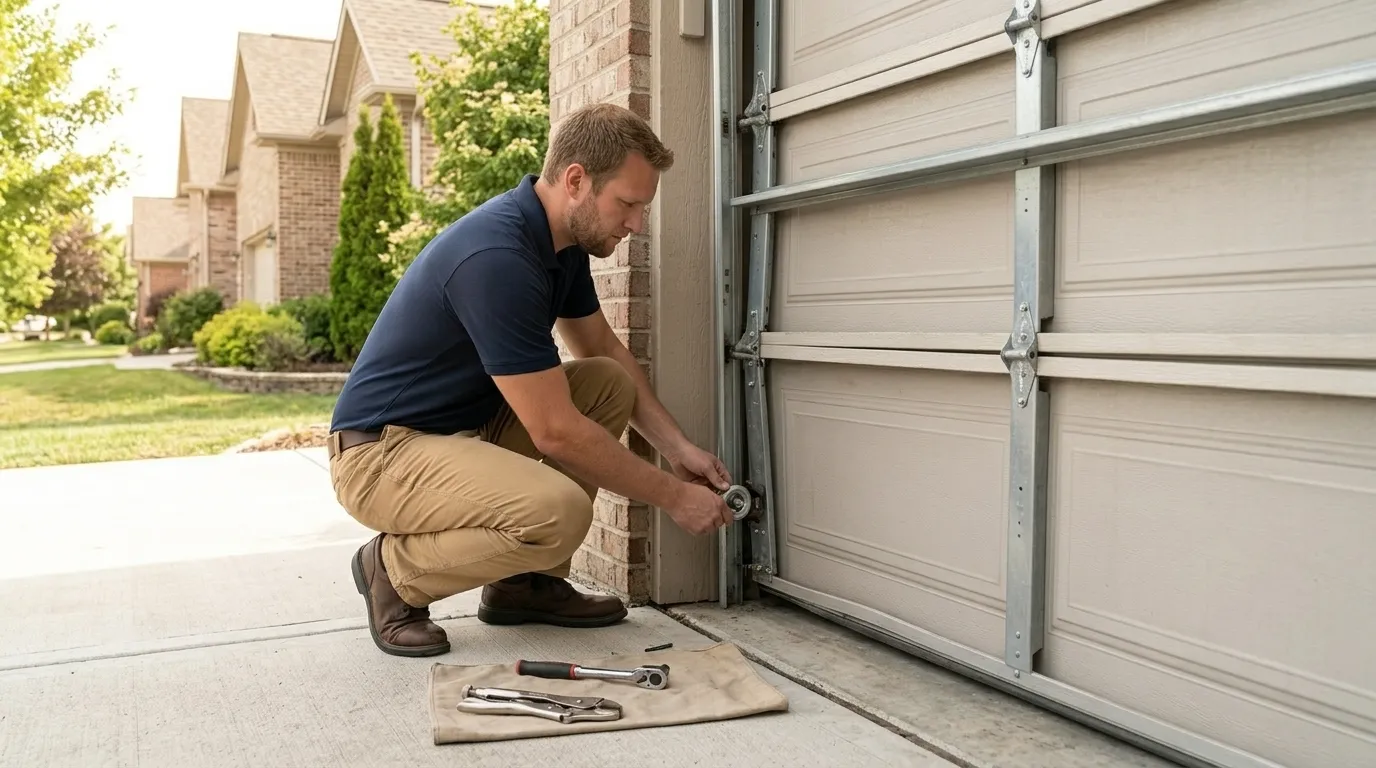
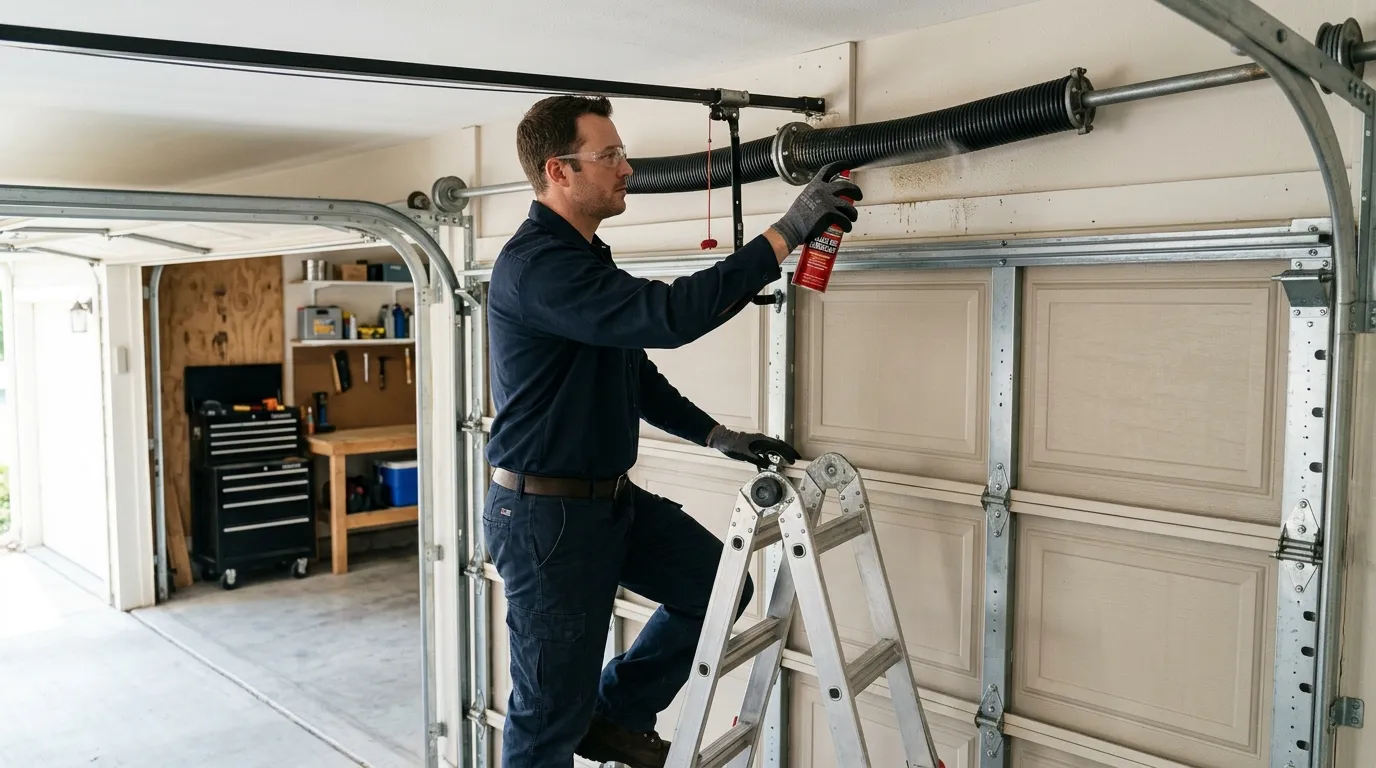
There's real DIY territory here and real not-DIY territory, and the line is the spring. You can, and should, wipe down and visually check the rollers yourself - on a 2004-era door, nylon rollers show flat spots and hairline cracks well before they fail outright, and heat speeds that along. You can also check that the track brackets haven't loosened, since original hardware from that build era has had two decades of thermal expansion and contraction working the bolts loose a quarter turn at a time.
What you shouldn't touch is the torsion spring. It's wound under enough tension to break a hand, and on doors from this era the springs are original, meaning they've done roughly twenty years of cycles in a climate that's hard on steel coatings. If a spring looks rusted, sags visibly, or the door feels heavier than it used to when you lift it manually, that's a call, not a project.
Our honest limit here: we're not going to talk you through spring adjustment over the phone, and we won't sell you a maintenance visit if what you actually need is a repair - we'll tell you which one it is and book accordingly. A ten-minute roller check twice a year is worth doing yourself. Anything involving the spring or the opener's force settings isn't.
What It Costs
We don't have a flat number to hand you here, and we're not going to make one up. What we can tell you is what drives the cost of a maintenance visit on an El Mirage door: the age and condition of the original hardware more than anything else. A 2004-built door that's had lubricant and adjustment along the way costs less to maintain than one that's never been touched, because the rollers and cables are still within their working life instead of needing early replacement.
El Mirage's median household income sits at $74,764, in line with the rest of the service area we cover from Phoenix, and most owners here are keeping their original door rather than replacing it early - which is exactly what routine maintenance is for. It's cheaper to service a spring and set of rollers than to replace a door that failed because nobody checked it.
For a broader look at how we price maintenance across the service area, including what's covered in a standard visit, our Phoenix garage door maintenance page has that detail. El Mirage doesn't have its own separate menu - the numbers there apply here too, plus the drive.
What You Are Seeing
On the doors we open in El Mirage, the pattern repeats: PVC or rubber weather seals gone brittle and cracking along the bottom edge, nylon rollers with flat spots from sitting under load through repeated heat cycles, and torsion springs showing surface rust on the coil even when the tension still holds. This is the direct result of a severe heat climate acting on hardware that's now roughly twenty years into its service life - nothing exotic, just steady wear that shows up earlier here than it would in a milder climate.
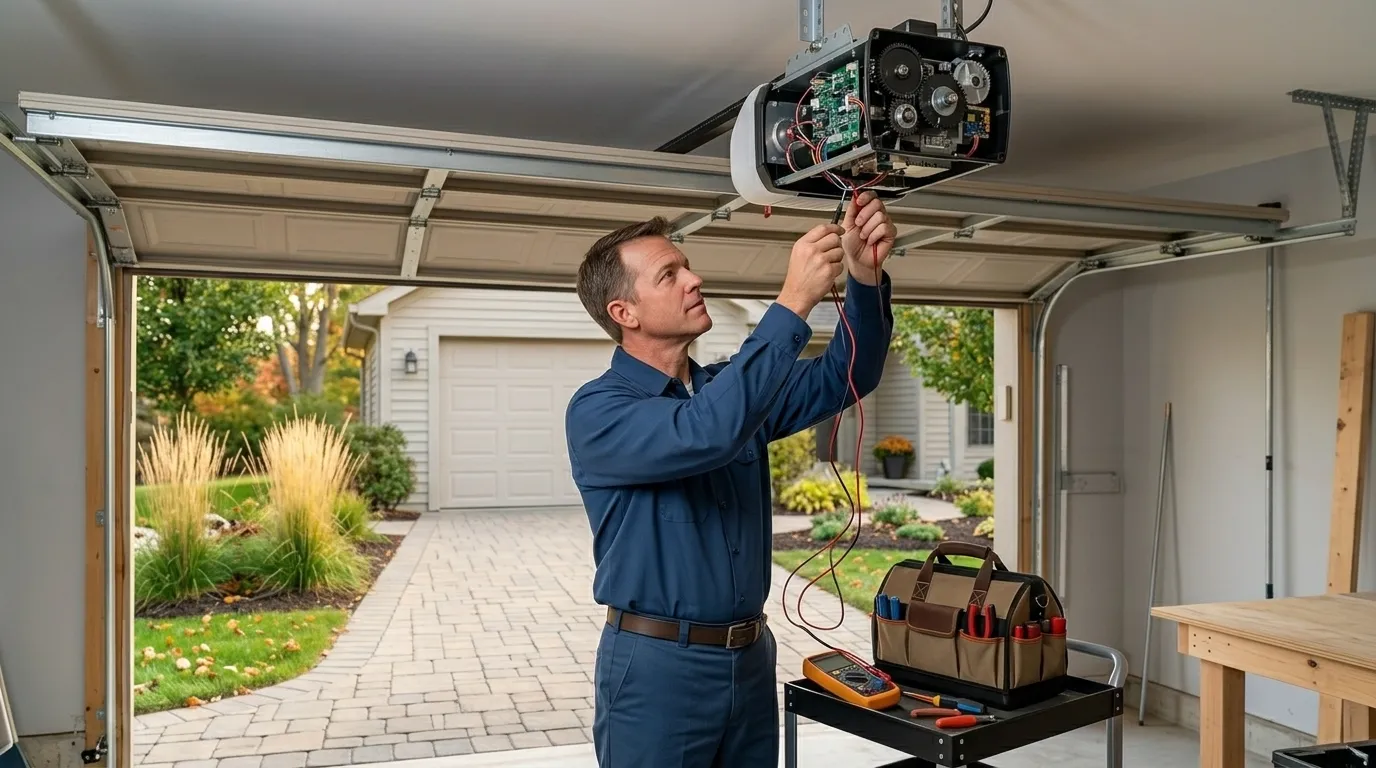
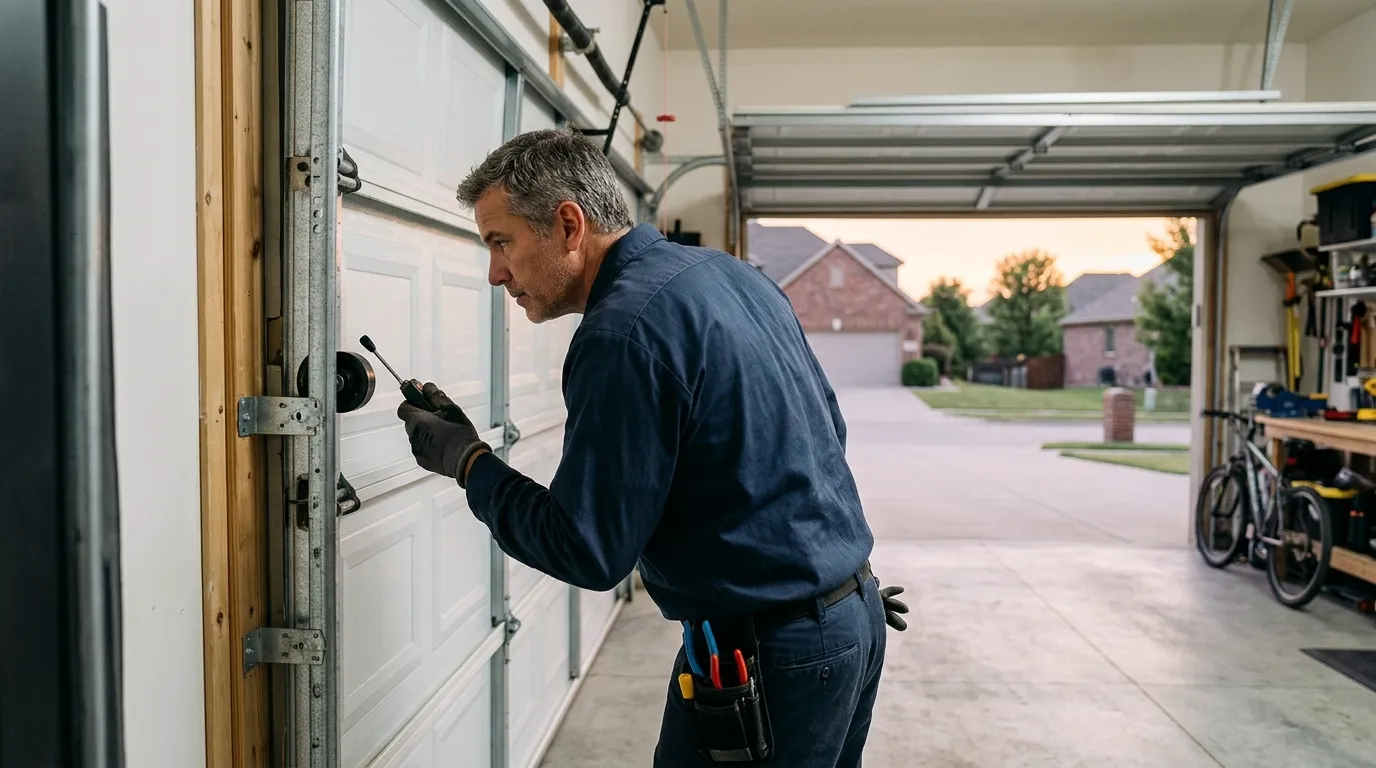
Opener sensors are the other recurring issue. Photo-eye alignment drifts as brackets loosen over the years, and on 2000s-era openers the circuit boards themselves are old enough that a maintenance visit sometimes turns into a conversation about opener replacement rather than opener repair - we'll tell you straight if that's where things stand rather than keep patching a board that's on its way out.
What we don't see much of in this age bracket is structural panel failure - the doors themselves have held up fine. It's the moving parts and the seals that give out first, which is good news: those are the cheaper, more predictable things to stay ahead of.
How it works
From “it’s stuck” to “it’s fixed”
01
Tell us what’s wrong
Describe the symptom - won’t open, loud bang, opener runs but the door won’t move.
02
On-site diagnosis
A technician tests the door under power and by hand and finds what actually failed.
03
Clear, up-front plan
You get the fix that’s needed and what drives the cost - before any work starts.
04
Repaired & tested
The repair is done, the door is set true and tested, and the work area left clean.
Serving Phoenix, AZ - tell us what your door’s doing and we’ll take it from there.
How often should a garage door in El Mirage get serviced?
We don't have a fixed interval to hand you as a hard rule, but given the heat load here, checking rollers, hinges, and weather seals at least once a year catches most of what fails early. Springs and opener hardware on doors from the early-2000s building wave are old enough now that an annual look is worth more than it would be on a newer install.
Do you have a branch in El Mirage?
No. We work out of Phoenix and drive out to El Mirage, about 14 miles, for scheduled maintenance and repair calls. There's no walk-in counter here, so visits get booked ahead rather than handled same-day.
Why do seals and rollers wear out faster here than somewhere cooler?
The service area sits in a severe heat climate band, and rubber and PVC seals, along with nylon rollers, degrade faster under sustained high heat than they would in a milder region. Combined with hardware that's now roughly twenty years old on most El Mirage doors, that wear shows up earlier than owners expect.
Is it worth fixing an old opener or just replacing it?
Depends on what's failed. If it's a sensor alignment issue, that's a cheap fix. If the circuit board itself is going on a 2000s-era opener, we'll usually say straight out that replacement makes more sense than another repair - we won't keep billing you to patch a board that's near the end of its life.
Ready to get your garage door sorted?
Tell us what it’s doing and where you are in Phoenix - we’ll take it from there.