Anthem's commercial buildings mostly date to the early 2000s. We service the doors, springs, and openers from that build wave, traveling from our Phoenix shop.
Anthem is a newer town by Phoenix-area standards. Most of its commercial buildings, the retail strips, the business park units, the warehouse bays, went up around 2004, a few years past the overall service area's 2001 median. That matters because a door installed when a building was new has usually never been touched since. Nobody swapped the springs. Nobody re-torqued the track brackets. The opener is the same unit that came with the building.
On a residential door, that kind of neglect is annoying. On a commercial door cycling forty or eighty times a day, it's a liability. A torsion spring rated for a certain cycle count doesn't care how good it looks; it cares how many times it's opened and closed. If your building is pushing twenty years on original hardware, the spring is closer to the end of its life than the middle, no matter how quiet it still sounds.
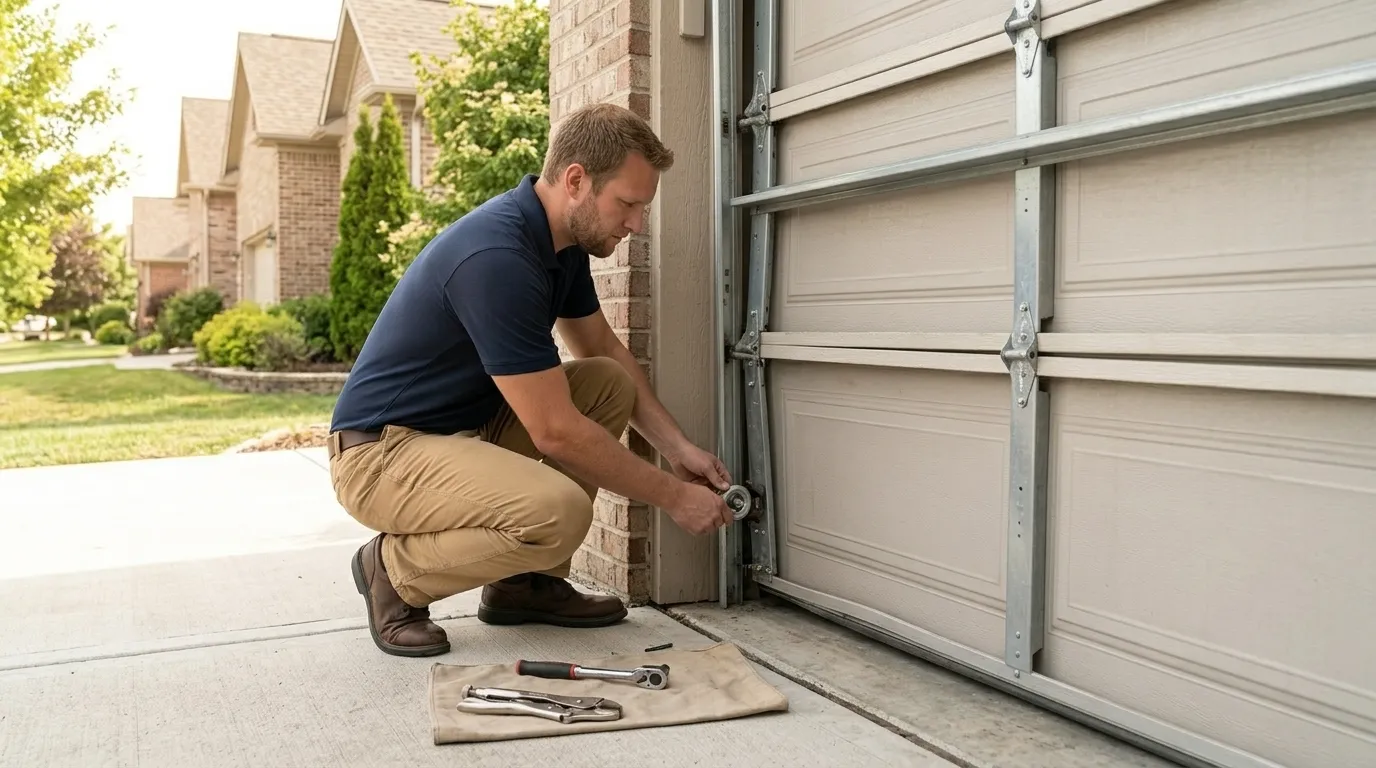
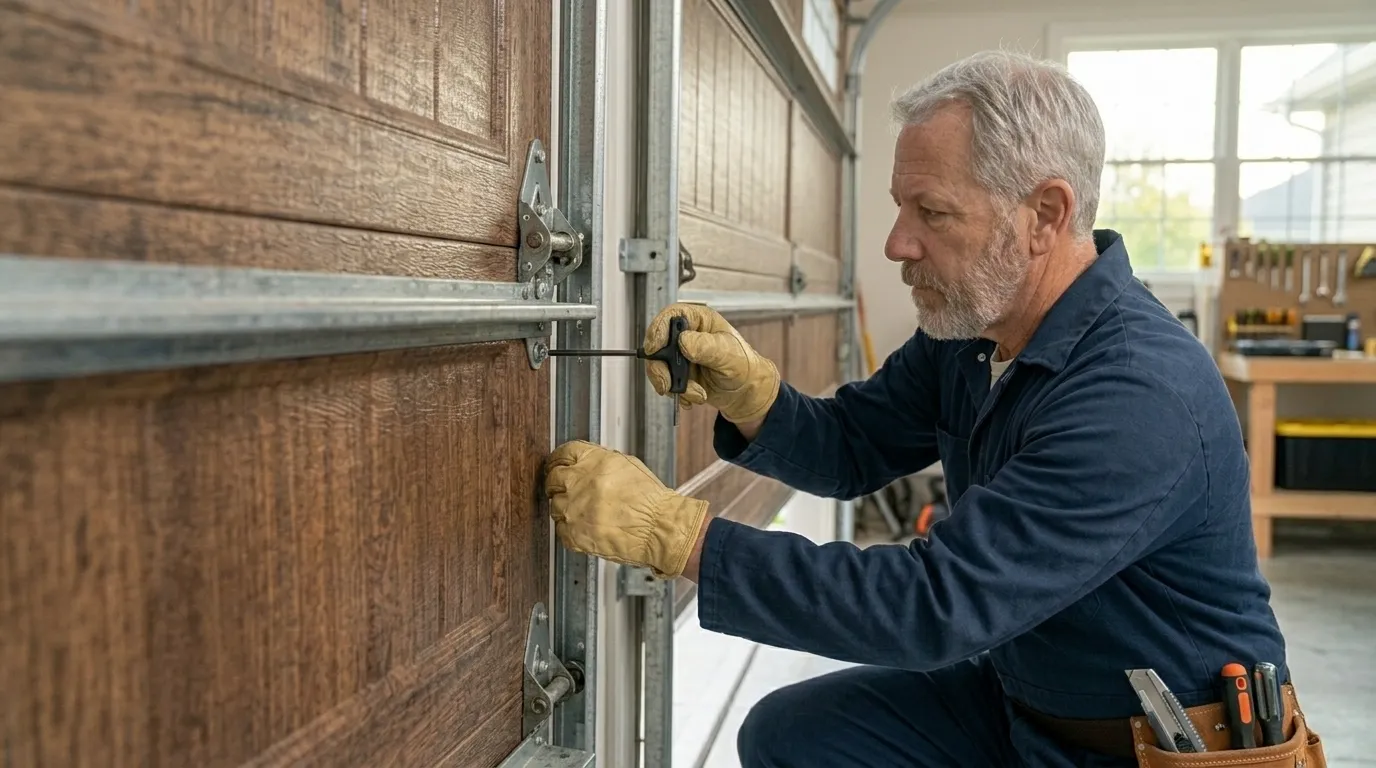
Here's the honest part: you can grease a hinge or a roller yourself, and you should, on a regular schedule. What you should not do is touch a wound torsion spring or try to re-tension a cable under load. That's not a DIY savings, that's a trip to the ER. If the door is slow, noisy, or off-track, that's a call, not a weekend project.
What Is on the Truck
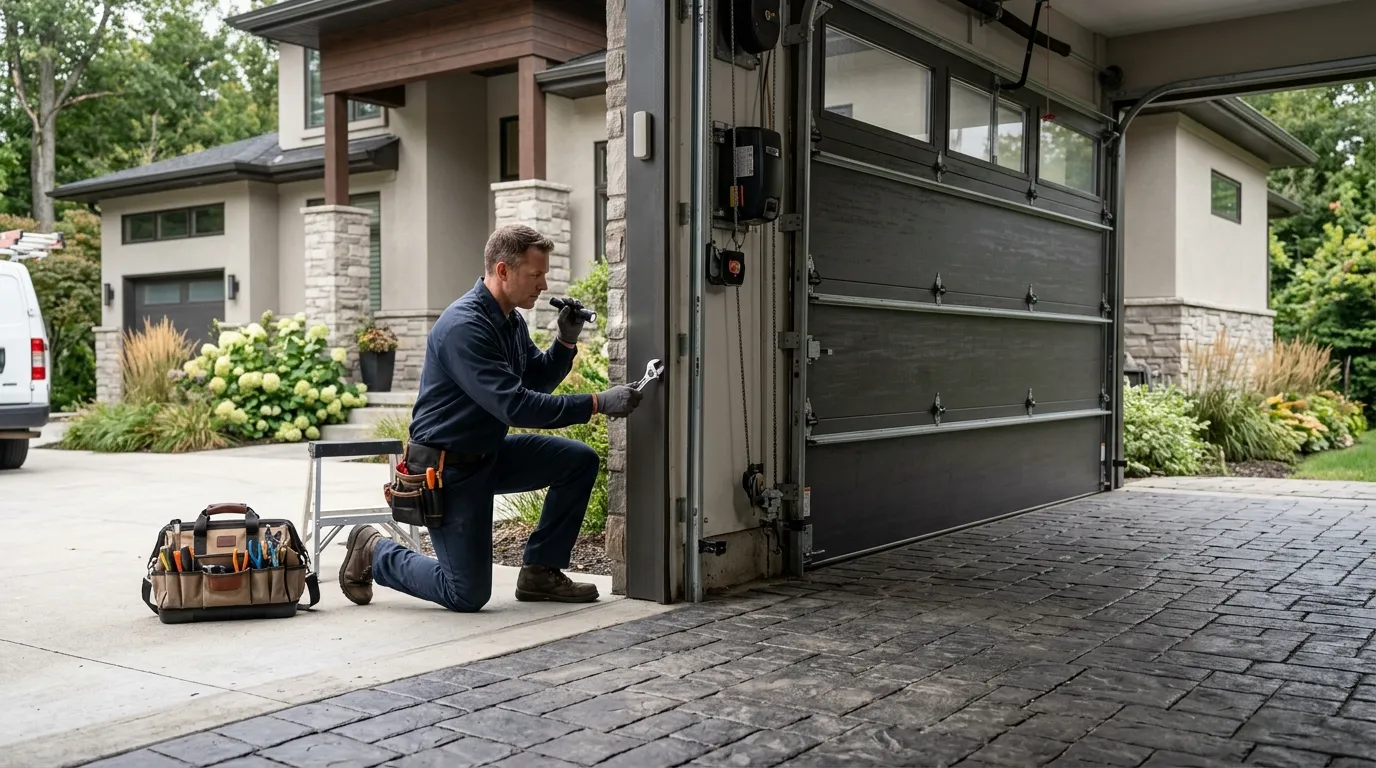
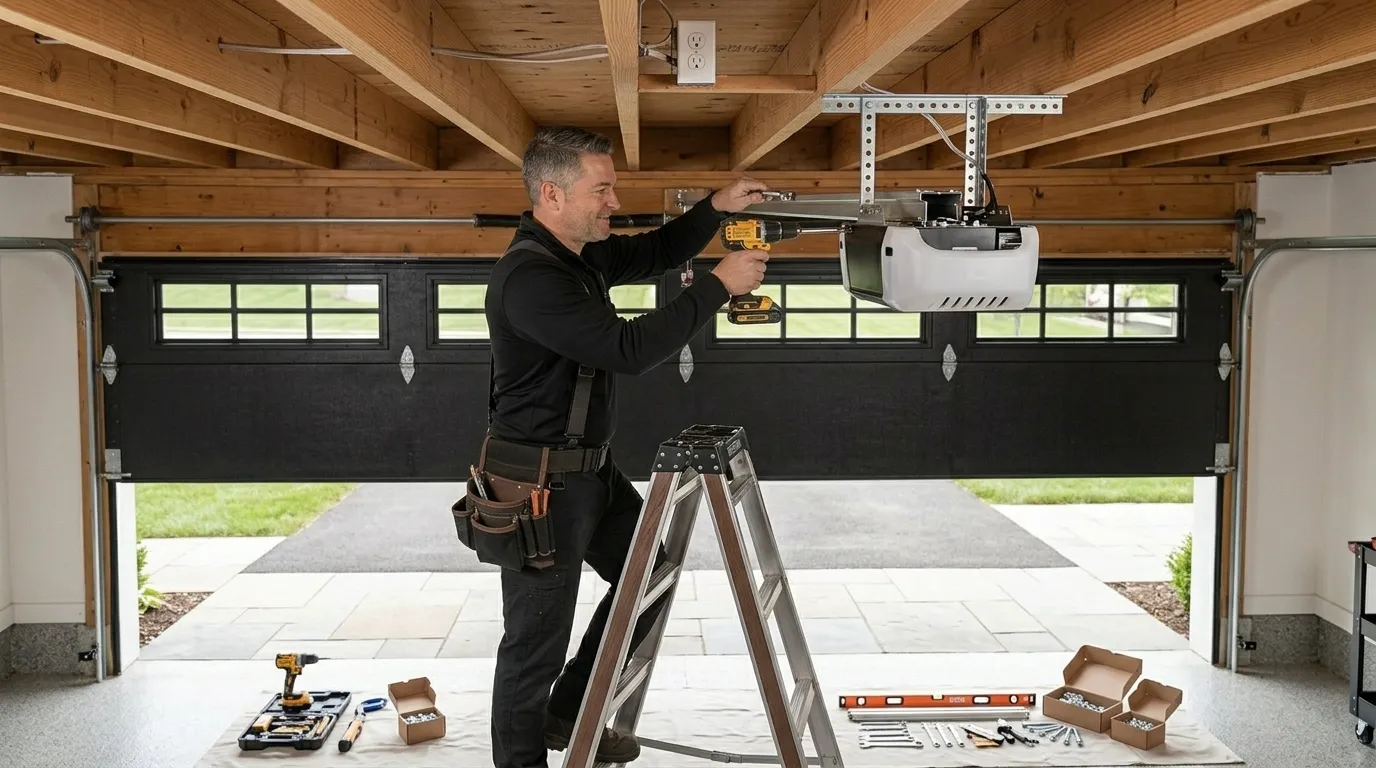
Commercial doors in Anthem tend to be heavier-duty than a standard residential double, and the hardware reflects that. We carry torsion springs sized for commercial cycle counts, not just residential ones, along with the heavier-gauge cable and shafting that pairs with them. Given how much of Anthem's commercial stock dates to the same early-2000s build wave, we also stock the openers and drive components that were common on buildings from that era, since replacing a single failed part is usually cheaper than a full unit swap if the rest of the door is sound.
We do not carry every obscure opener board or every discontinued panel style. If your building has a specialty door, an oversized bay, or a proprietary commercial system, we'll tell you straight if it's a same-visit fix or a parts-order job. That's the one limit worth naming up front: not every commercial door gets fixed on the first trip, and we'd rather say that than pretend otherwise.
How to Book
We run this service out of our Phoenix shop, which puts Anthem at about a nineteen-mile drive, longer than most of the towns on our route. We don't keep a branch or a depot in Anthem, so there's no walk-in counter here, but the truck comes out for commercial calls the same as anywhere else in the service area.
For a straightforward look at what we do for houses nearby, see our page on Anthem garage door repair. For the broader rundown on commercial door work across the whole service area, including the sides of the job that aren't specific to any one town, that lives on our commercial garage door Phoenix page. This page is just about what's different here: the age of the buildings, the distance, and what that combination tends to break.
What Causes It Around Here
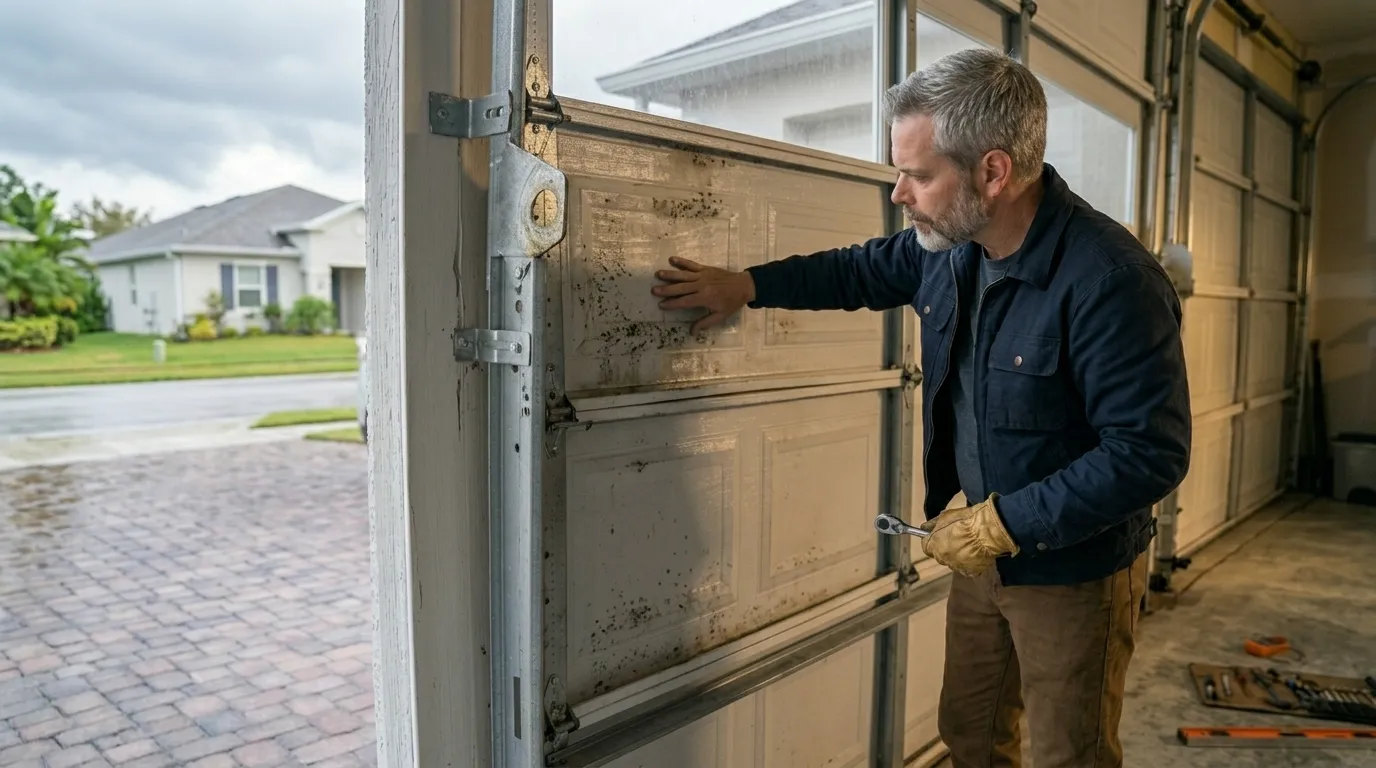
The region runs a severe heat climate, and that alone shortens the working life of lubricant, seals, and nylon rollers faster than a milder climate would. Combine that with hardware that's already been sitting in place since roughly 2004, and you get a specific failure pattern: springs that have absorbed close to twenty summers of thermal cycling, openers with drive gears that have gone brittle from heat rather than use, and weatherstripping that's cracked and stopped sealing years before anyone noticed.
This isn't a general warning about heat and garage doors everywhere. It's about a town where a large share of the commercial building stock shares the same age, so a large share of the doors are hitting the same failure points at close to the same time. If your building went up during Anthem's early buildout, don't be surprised if the spring, the opener, and the seals are all asking for attention within a year or two of each other. That's not bad luck, that's just the hardware aging out together.
How it works
From “it’s stuck” to “it’s fixed”
01
Tell us what’s wrong
Describe the symptom - won’t open, loud bang, opener runs but the door won’t move.
02
On-site diagnosis
A technician tests the door under power and by hand and finds what actually failed.
03
Clear, up-front plan
You get the fix that’s needed and what drives the cost - before any work starts.
04
Repaired & tested
The repair is done, the door is set true and tested, and the work area left clean.
Serving Phoenix, AZ - tell us what your door’s doing and we’ll take it from there.
How old is the typical commercial garage door in Anthem?
Most of Anthem's commercial buildings date to around 2004, which is a few years newer than the service area's overall median of 2001. If your building hasn't had door work done since it was built, the hardware is close to twenty years old, which is old for a torsion spring under commercial use.
Do you have a branch in Anthem?
No. We work out of our Phoenix shop and drive out to Anthem for commercial calls, about nineteen miles each way. There's no local depot or walk-in counter here, just the truck coming out for the job.
Can I service the opener myself?
Lubricating hinges, rollers, and tracks is fine to do yourself on a regular schedule. Adjusting a torsion spring, re-tensioning a cable, or working on anything under load is not a DIY job. That's where the risk of injury is highest.
Why do heat and building age matter together?
The area's severe heat climate wears out lubricant, seals, and nylon rollers faster than a milder one would. When a large share of Anthem's commercial buildings share the same early-2000s age, a lot of doors hit that wear point around the same time, which is why failures tend to cluster.
Ready to get your garage door sorted?
Tell us what it’s doing and where you are in Phoenix - we’ll take it from there.