Garage Door Service for Anthem's Newer Housing Stock
Anthem's homes went up mostly after 2000 - newer stock than the rest of the Phoenix service area. Here's how that changes the repair, and how we book the 19-mile trip out.
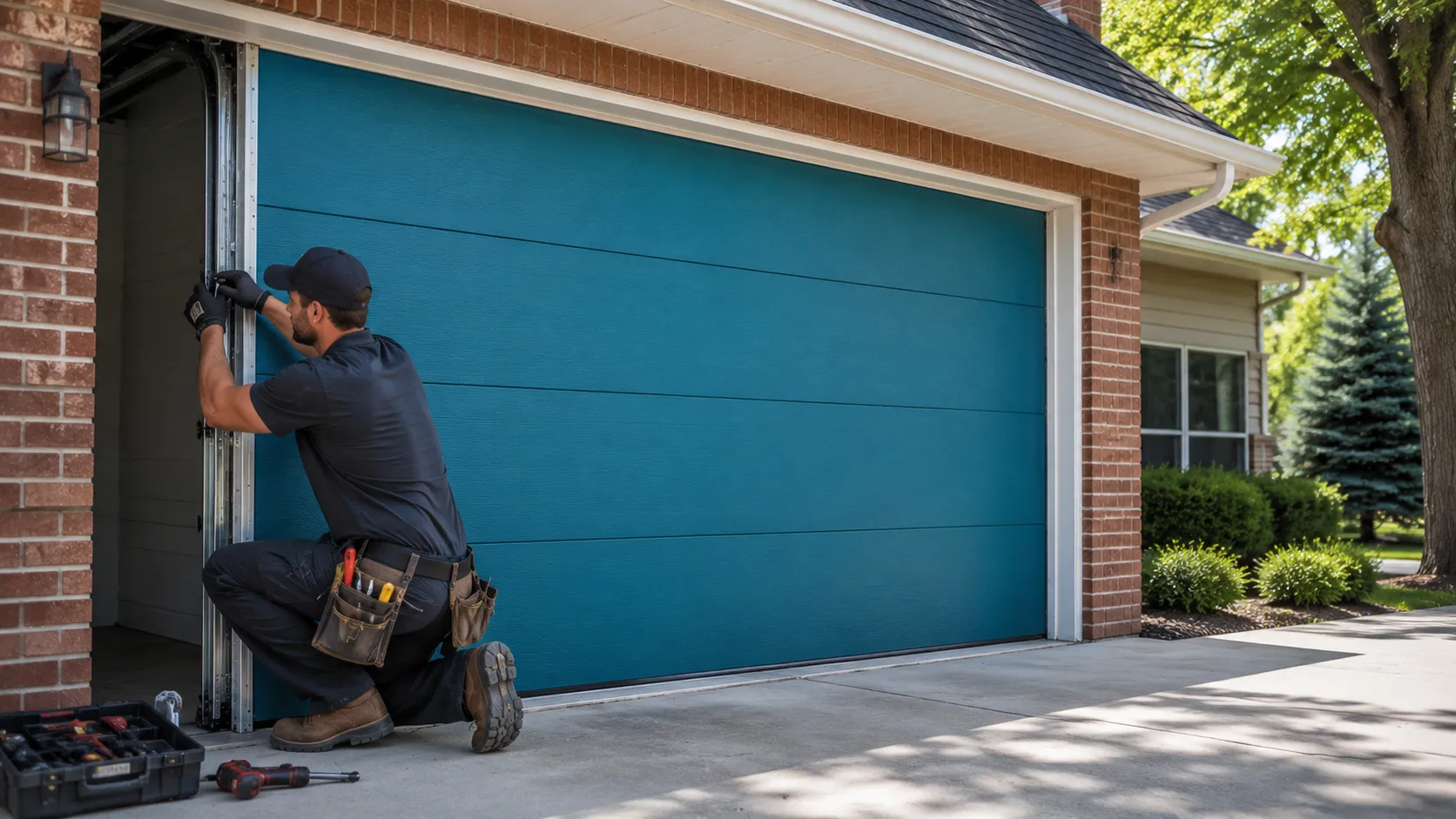
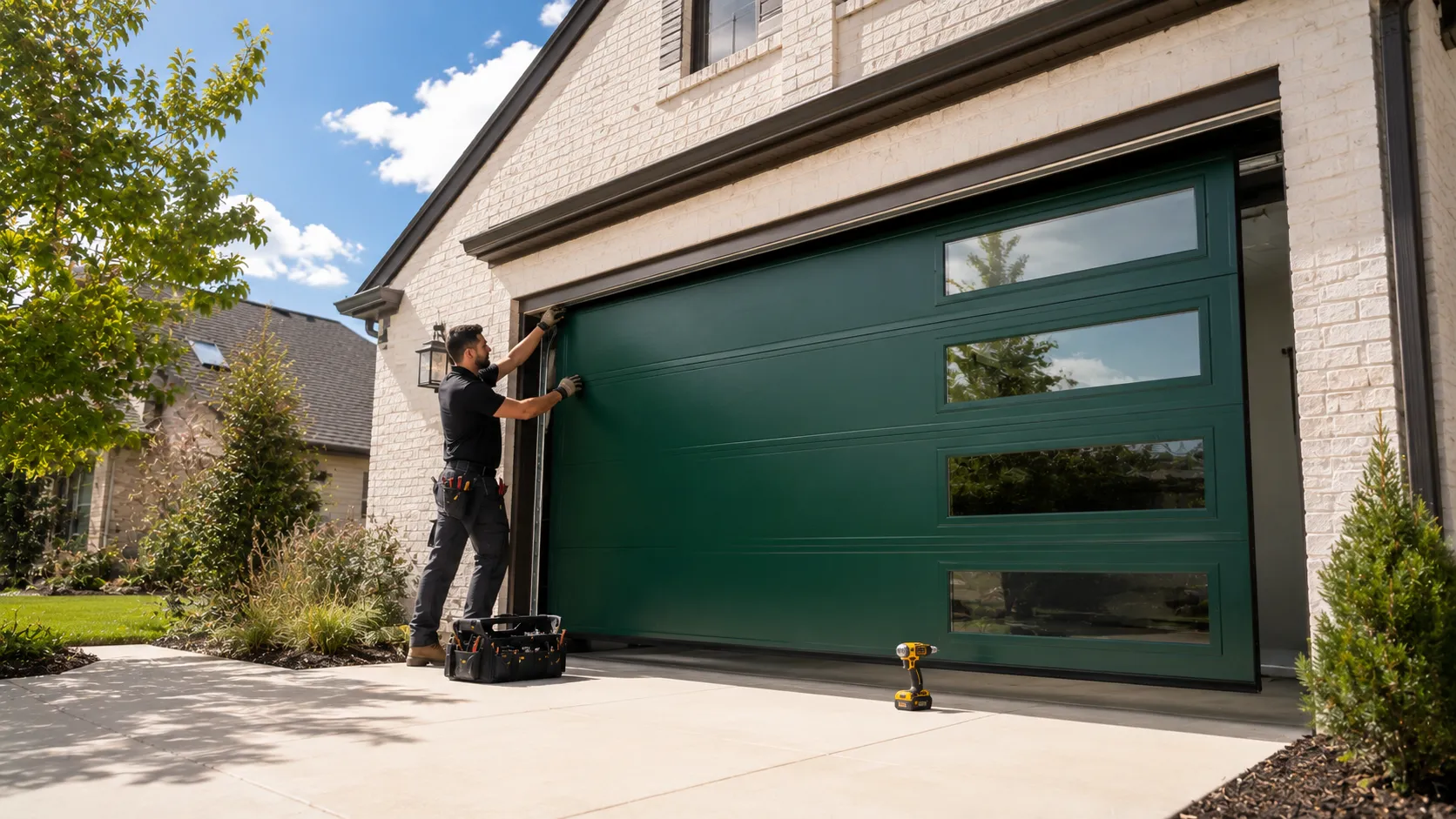
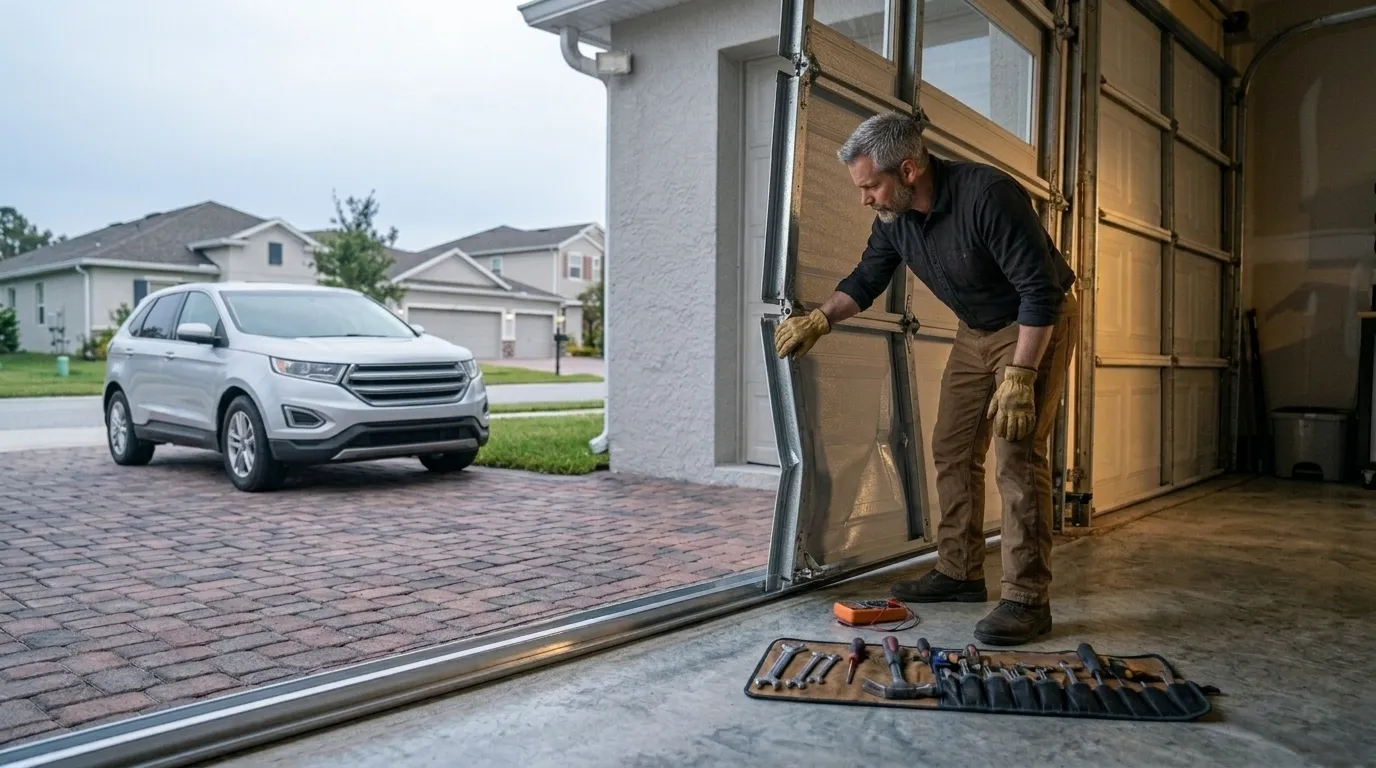
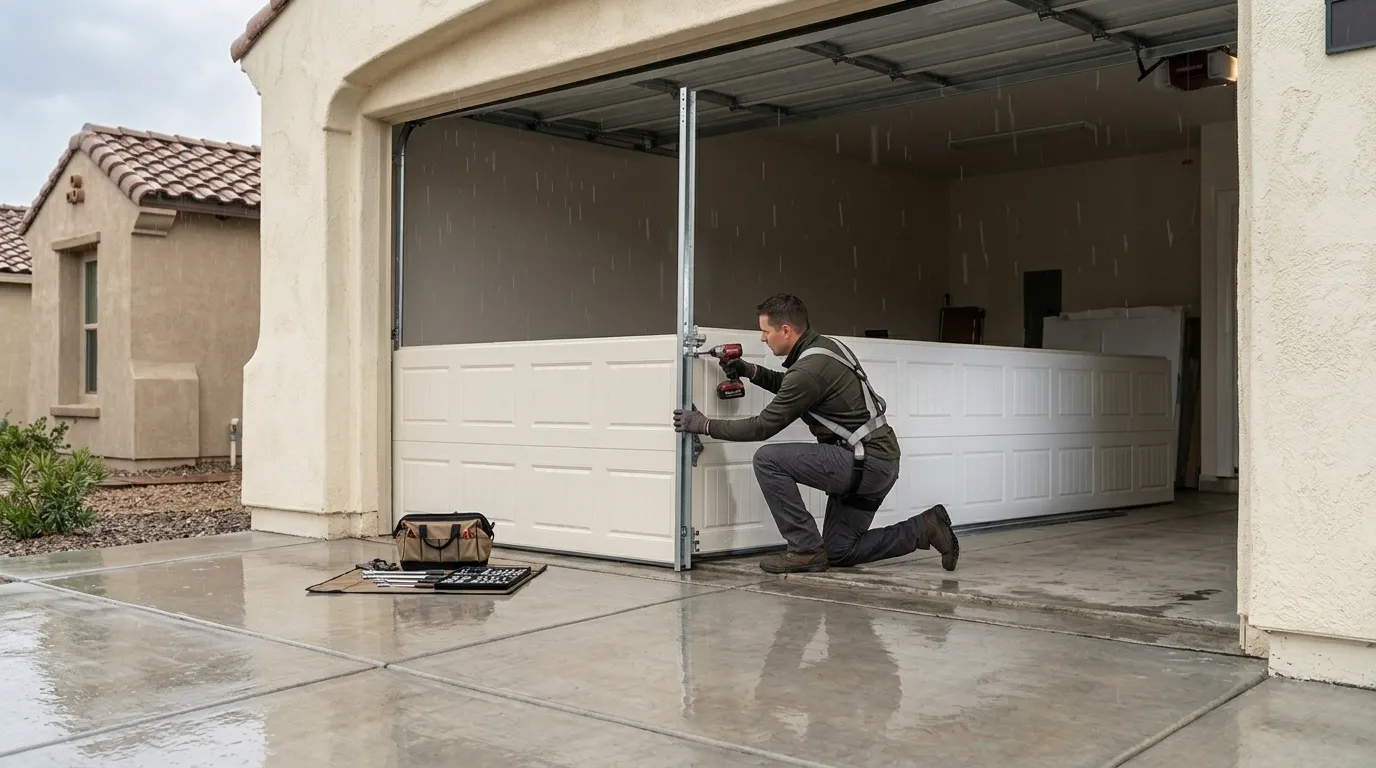
Anthem's median build year sits at 2004, which puts most doors here well inside the era of standardized torsion hardware and factory steel panels - not the mixed bag of extension springs and one-off brackets you find on older stock closer to the city center. That's good news if you're the type who wants to try something yourself: a worn weatherstrip, a bent bottom bracket, or a sensor that's drifted out of alignment on a 2000s-era opener are jobs with parts that are still in production and hardware that hasn't been discontinued.
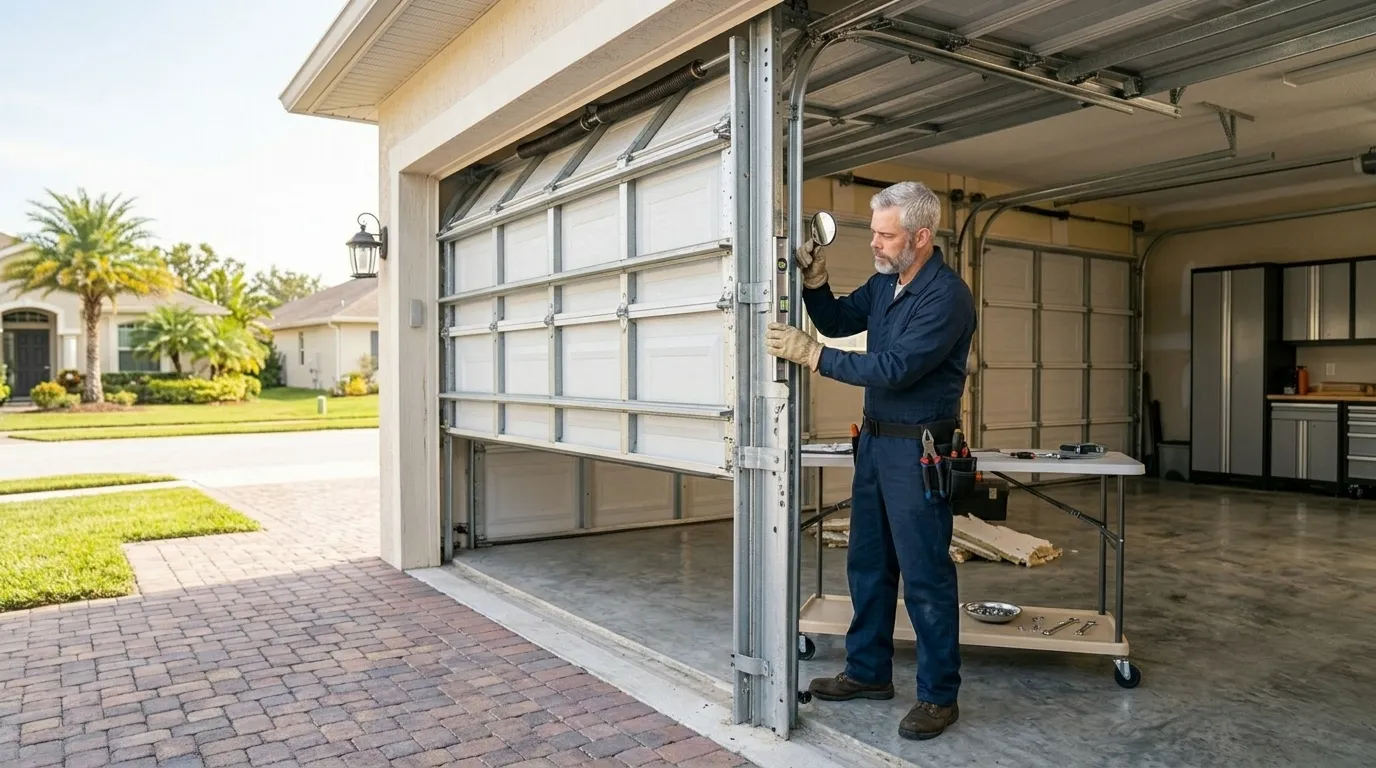
What doesn't change with a newer build is the spring. Torsion springs under tension don't care what year the house was built, and pulling one off its shaft without the right bars is how people end up in the ER, not the garage. If your door won't open and you can see the spring has separated or the coil looks stretched wrong, that's a call, not a project.
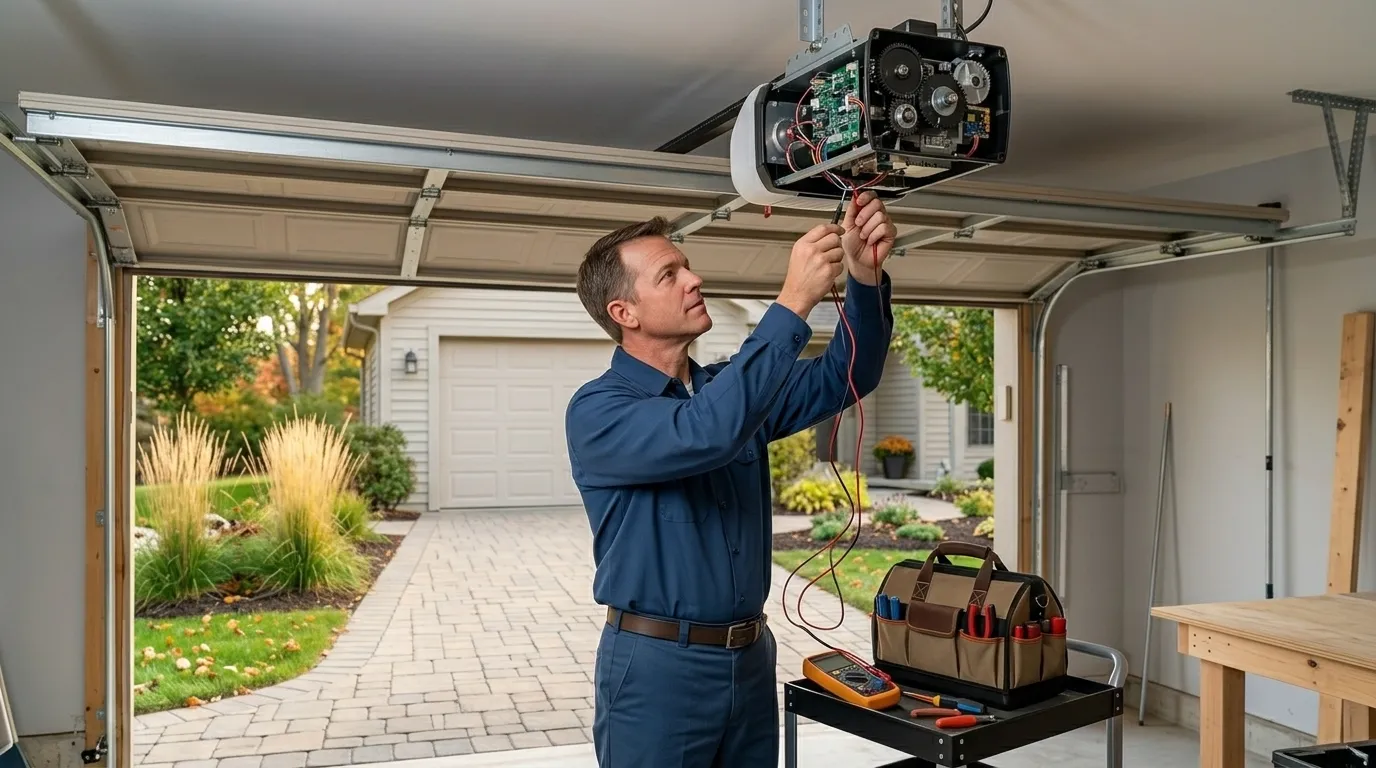
One honest limit: we can't diagnose an opener logic-board fault over the phone. If your opener clicks, hums, or the lights blink a pattern, that's a truck visit, not a five-minute fix - but it usually is a five-minute fix once someone's standing in front of it.
What Is on the Truck
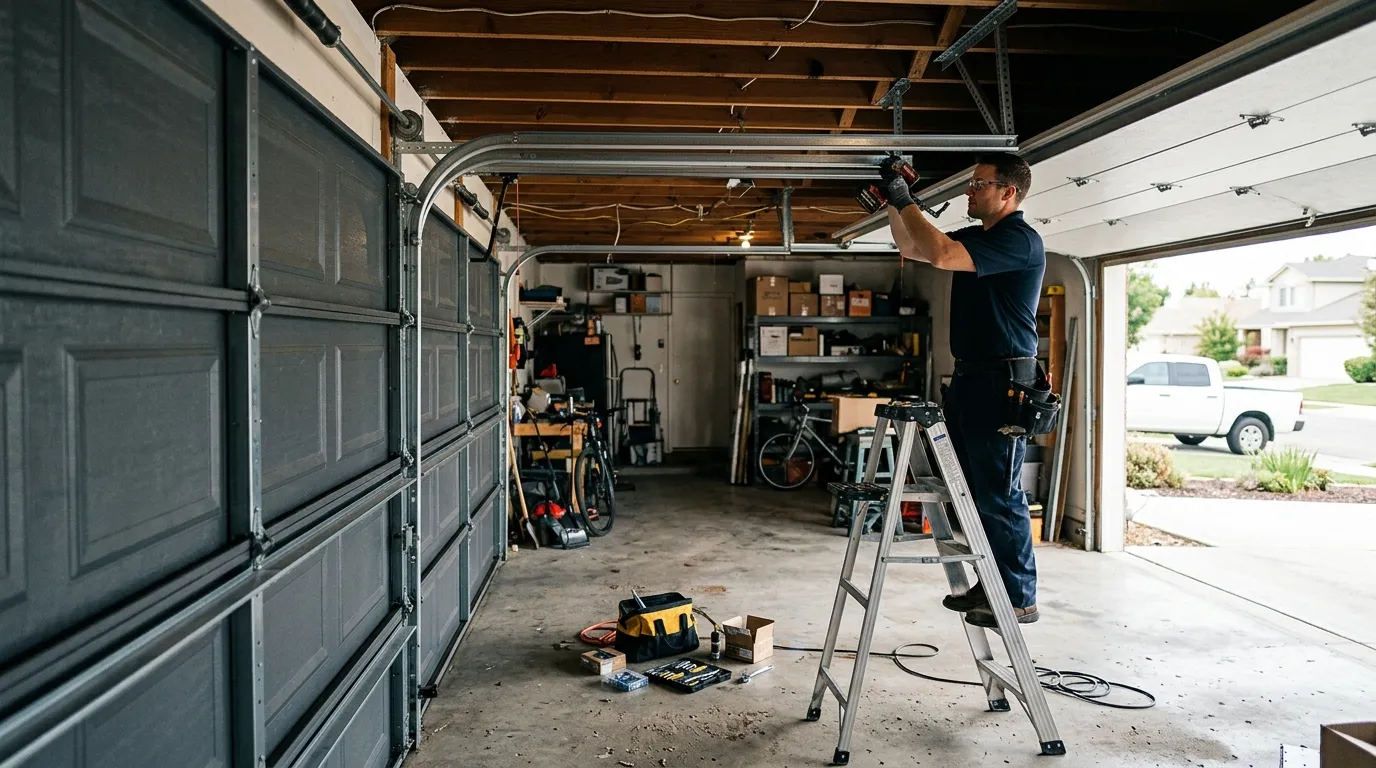
Because Anthem's houses cluster tightly around a 2004 median build year, the truck carries torsion springs sized for that generation of door rather than the wider range of hardware needed for the older 1979-2001 stock elsewhere in the service area. That means fewer trips back for a spring we didn't expect to need, and it means rollers, cables, and standard-width torsion tube brackets that match what's actually installed on these doors rather than a guess.
We also carry openers and belt-drive components suited to the newer construction typical of this stretch, since houses built in this window were more often wired for a garage opener from the start rather than retrofitted later. What we don't stock on the truck are parts for doors outside that build era - a 1980s wood-panel door with obsolete hardware might need a special order, and we'll tell you that up front rather than pretend otherwise.
How to Book
Anthem sits about 19 miles out from where the truck runs, the farthest stretch of the route we cover. That distance doesn't change what we can fix, but it does mean same-day slots fill from the middle of the route outward, so booking ahead rather than same-morning gives you a better shot at a window that works.
The fastest way in is the Anthem repair page, which routes straight to scheduling for this area. If you're not sure whether what you're dealing with is a repair or a full replacement, the Phoenix service overview covers the broader range of what we do across the service area, spring jobs, opener swaps, and panel replacement included.
What Causes It Around Here
Anthem sits in the same severe-heat band as the rest of the service area, and heat is what ages a torsion spring faster than the calendar does - the metal fatigues with expansion and contraction cycles, and a spring rated for a certain number of cycles gets there sooner in a Phoenix summer than it would somewhere temperate. On a newer door, that spring failure shows up as the most common call, more often than track or panel damage, simply because the rest of the hardware is still holding up fine.
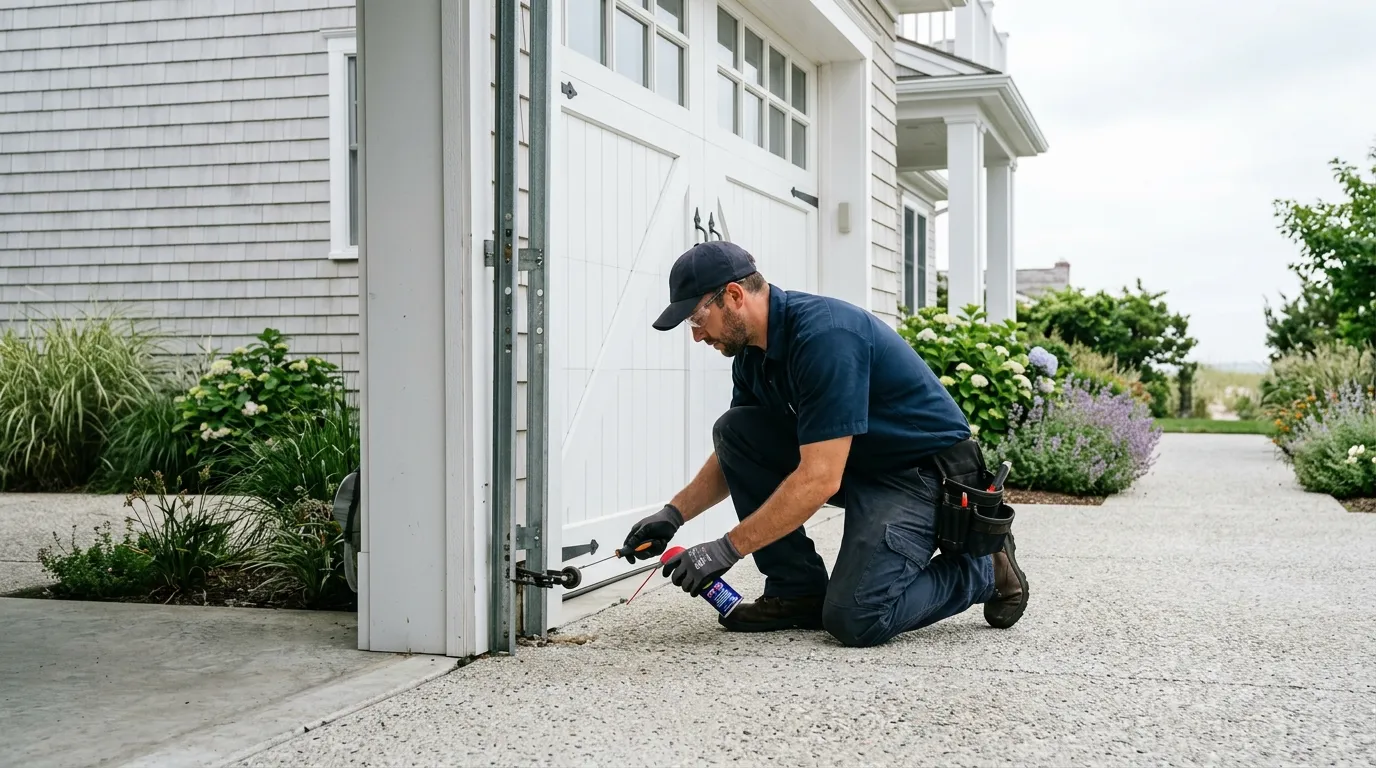
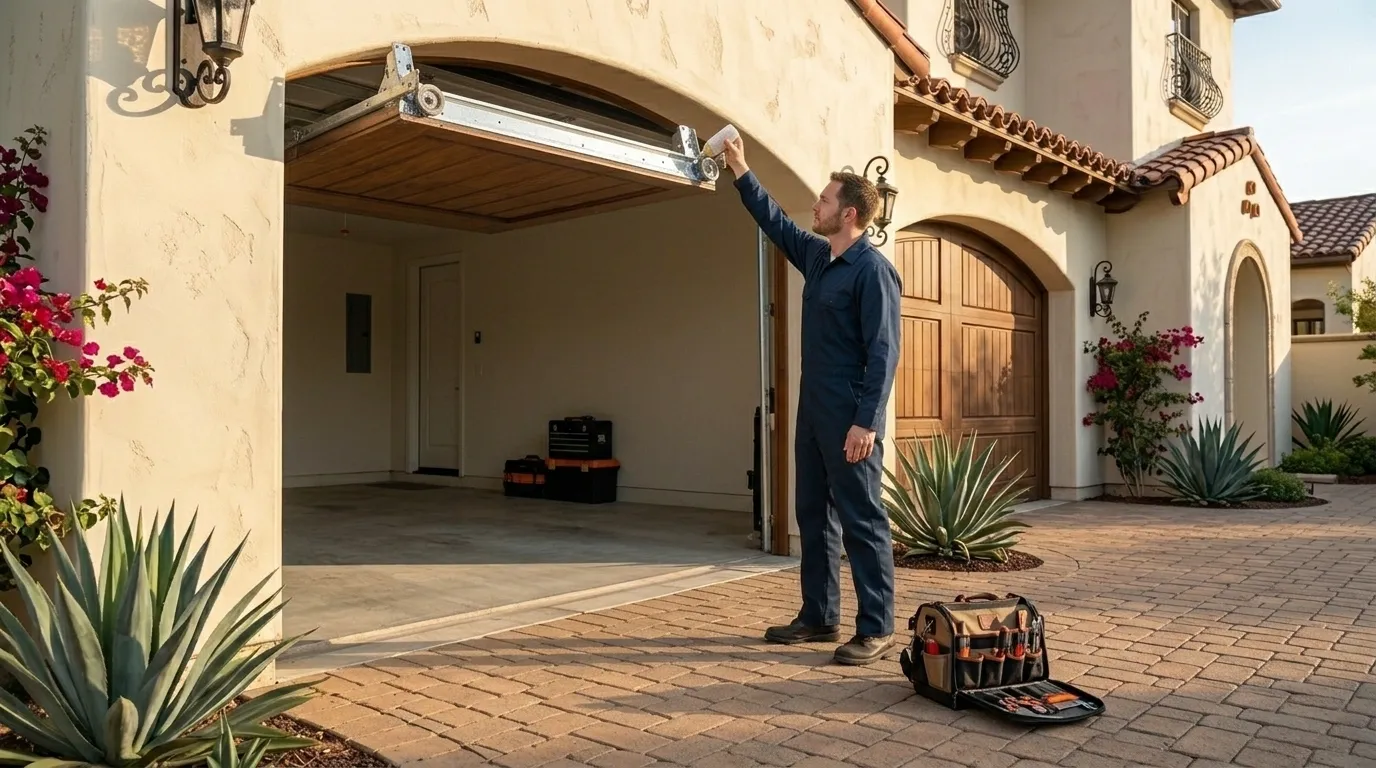
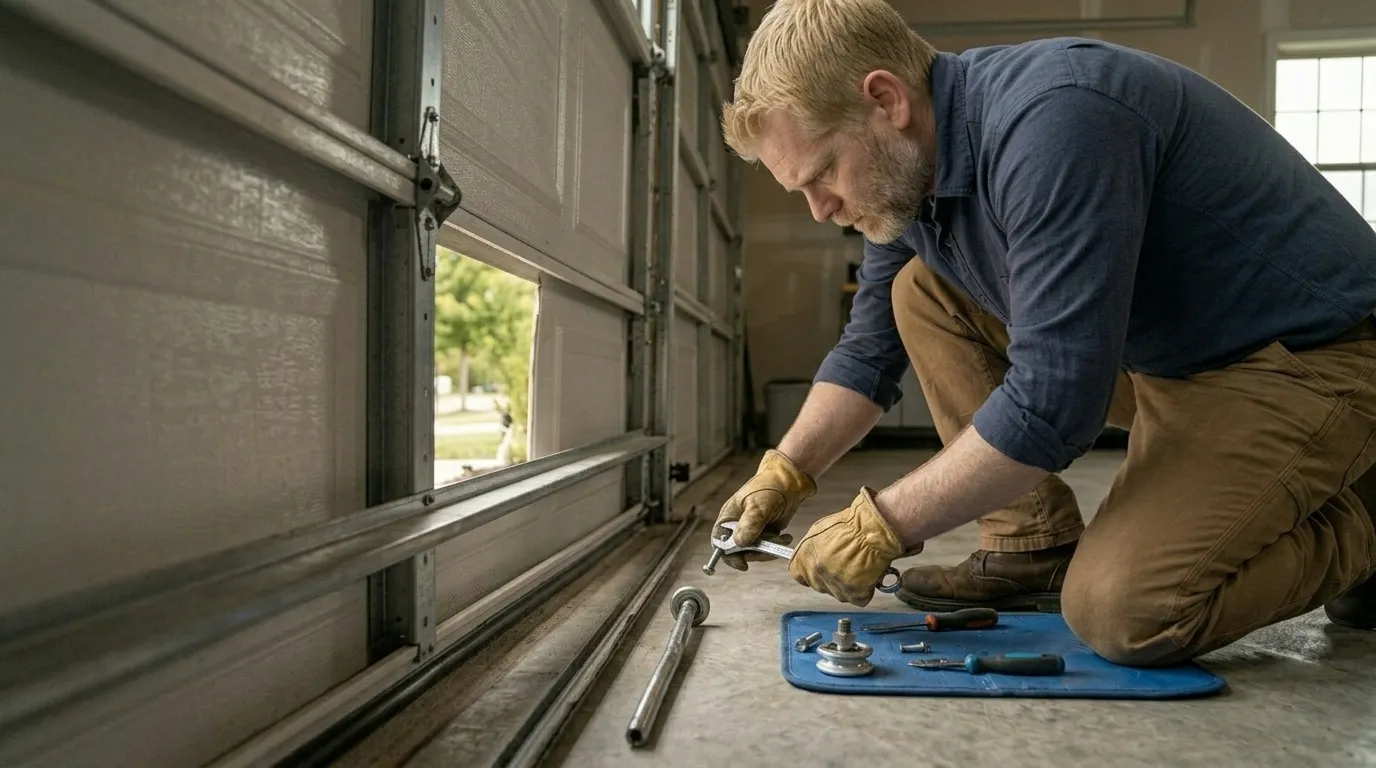
The other pattern tied to the build era: nylon rollers on 2000s-era doors were often the standard-grade kind, not sealed or ball-bearing, and heat-cycled nylon gets brittle and starts chipping years before the rest of the door shows wear. It's a smaller job than a spring, but it's the noise that gets people calling - a grinding or popping sound on the way up that isn't dangerous yet but is worth catching before a roller comes off the track.
How it works
From “it’s stuck” to “it’s fixed”
01
Tell us what’s wrong
Describe the symptom - won’t open, loud bang, opener runs but the door won’t move.
02
On-site diagnosis
A technician tests the door under power and by hand and finds what actually failed.
03
Clear, up-front plan
You get the fix that’s needed and what drives the cost - before any work starts.
04
Repaired & tested
The repair is done, the door is set true and tested, and the work area left clean.
Serving Phoenix, AZ - tell us what your door’s doing and we’ll take it from there.
Are Anthem's garage doors different from ones closer to Phoenix?
Mostly in age. Anthem's median build year is 2004, newer than a lot of the rest of the service area, which runs from 1979 to 2007. That means more standardized torsion hardware and fewer of the older extension-spring setups you find on houses built before 2000.
How far out is Anthem from your truck?
About 19 miles from Phoenix, which is the longest stretch of the route we run. It doesn't change what we can repair, but it does mean booking ahead gets you a better shot at a same-day window than calling in the afternoon.
Why do springs seem to fail faster out here?
Heat. Anthem falls in a severe-heat climate band, and repeated heat cycling fatigues torsion spring metal faster than it would in a milder climate. It's the single most common call across the service area regardless of how new the door is.
Can I replace a roller myself on a newer door?
On most 2000s-built doors, yes - the rollers are standard nylon, not sealed units, and they're not under spring tension the way a torsion coil is. If the track itself is bent or the roller's seized in the bracket, that's when it turns into a call.
Ready to get your garage door sorted?
Tell us what it’s doing and where you are in Phoenix - we’ll take it from there.