Garage Door Maintenance for Anthem's 2000s-Era Homes
Anthem homes date mostly from the early 2000s, so the maintenance issues are heat and lube, not old hardware. Here's what a tune-up actually covers, from Phoenix.
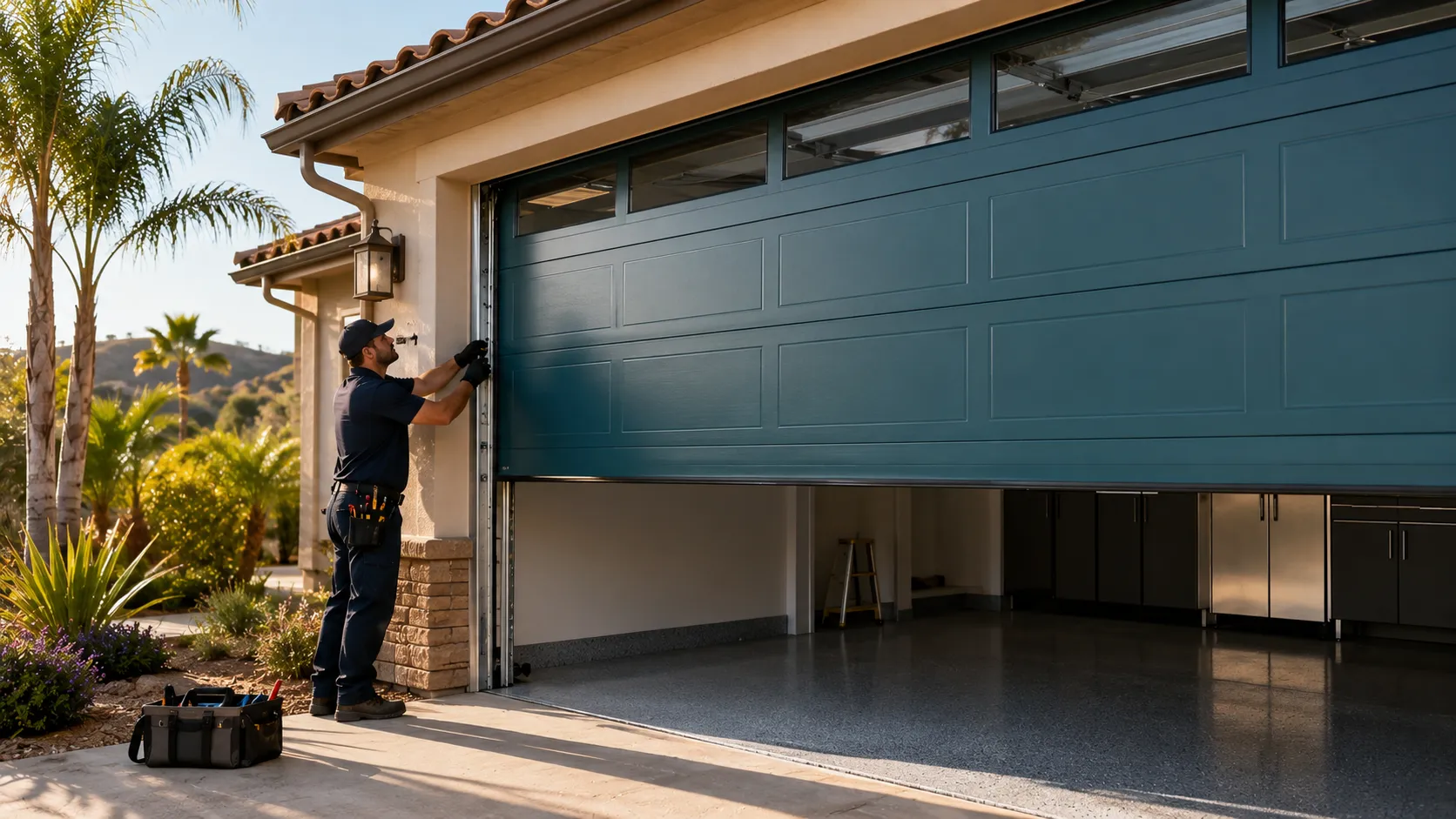
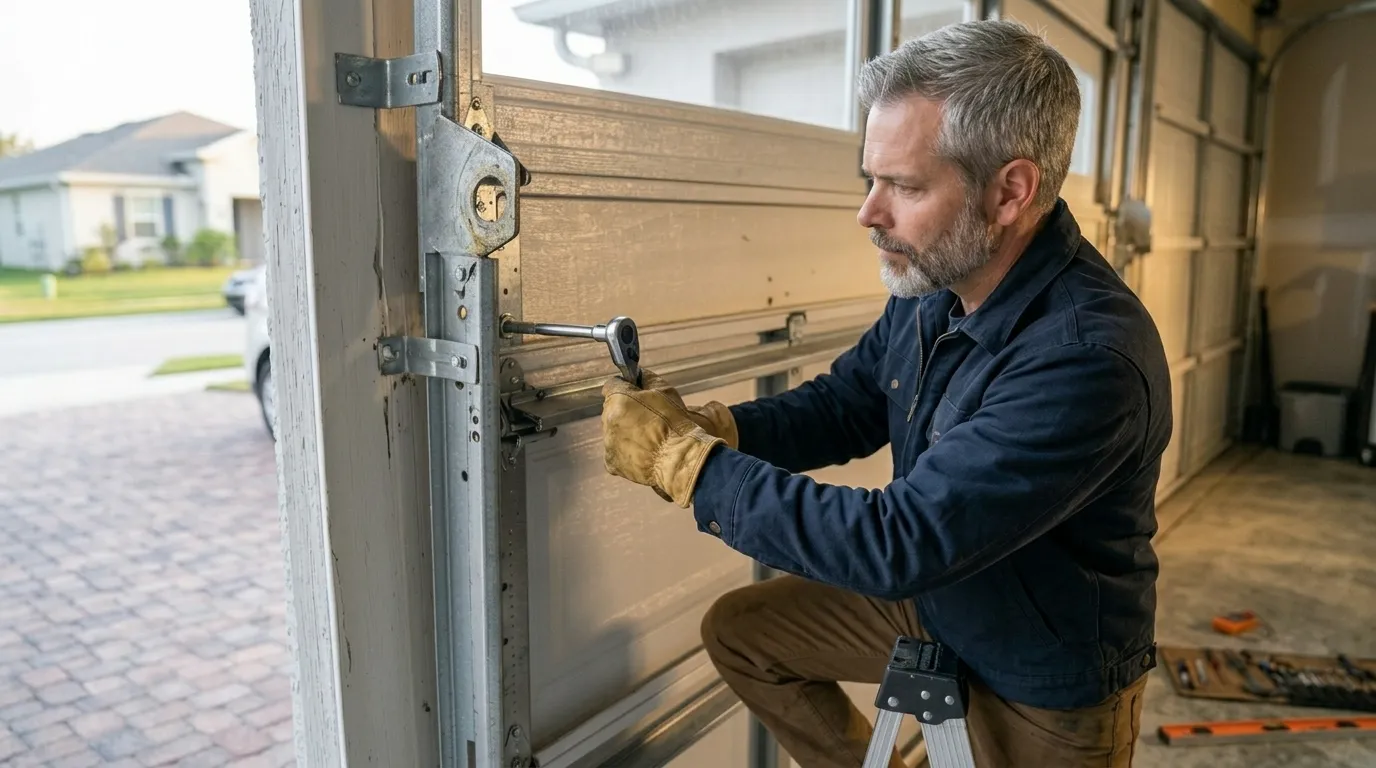
Most houses in Anthem went up around 2004, which puts the whole neighborhood on factory-installed torsion springs and steel doors with sealed ball-bearing rollers - not the exposed extension springs and wood panels you'd find on a 1960s Phoenix build. That matters for what you can safely do yourself. Wiping down tracks and checking the auto-reverse on your opener is fine for anyone. Touching a torsion spring is not, on a 2004 door any more than on an older one - the spring is still wound under a few hundred pounds of tension and it doesn't care how new the bracket is.
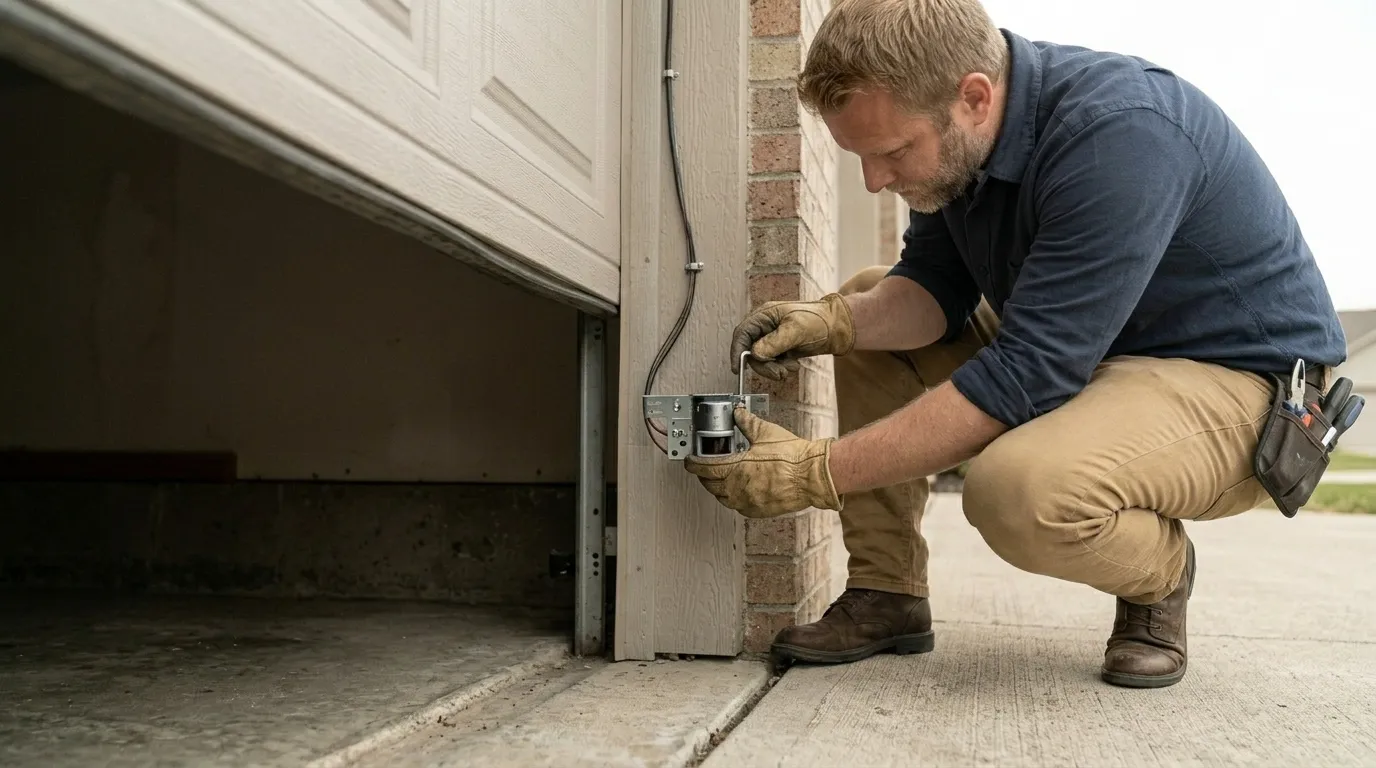
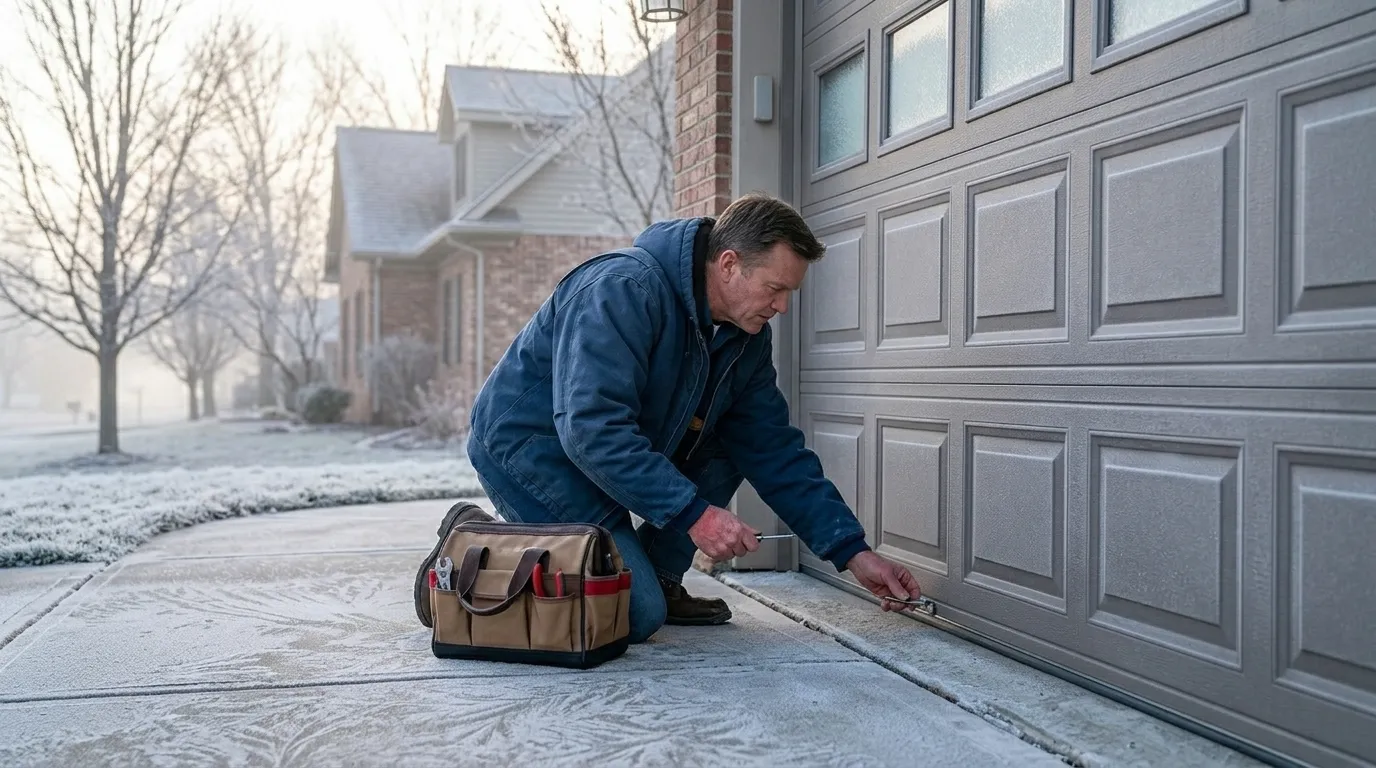
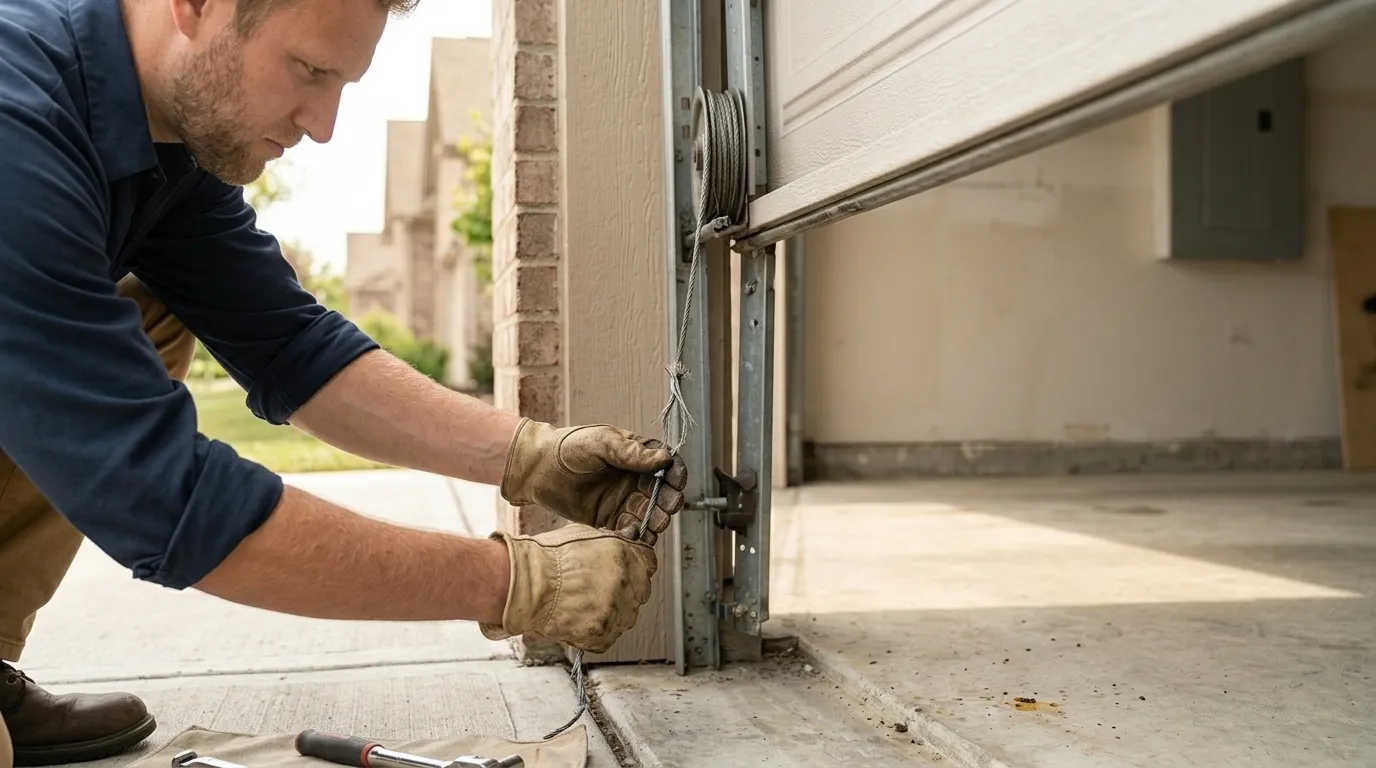
What you can reasonably handle: vacuuming out the track, checking that weatherstripping hasn't cracked from sun exposure, and testing the photo-eye sensors near the floor. What you can't: spring tension, cable replacement, or anything that involves loosening the winding cone. On a door this age, the hardware is usually original, which means it's now old enough that the grease has dried out even though the steel looks fine.
One honest limit here - we don't do same-day emergency calls on this route. Anthem is 19 miles from our shop, so routine maintenance gets scheduled, not squeezed in same afternoon.
What Is on the Truck
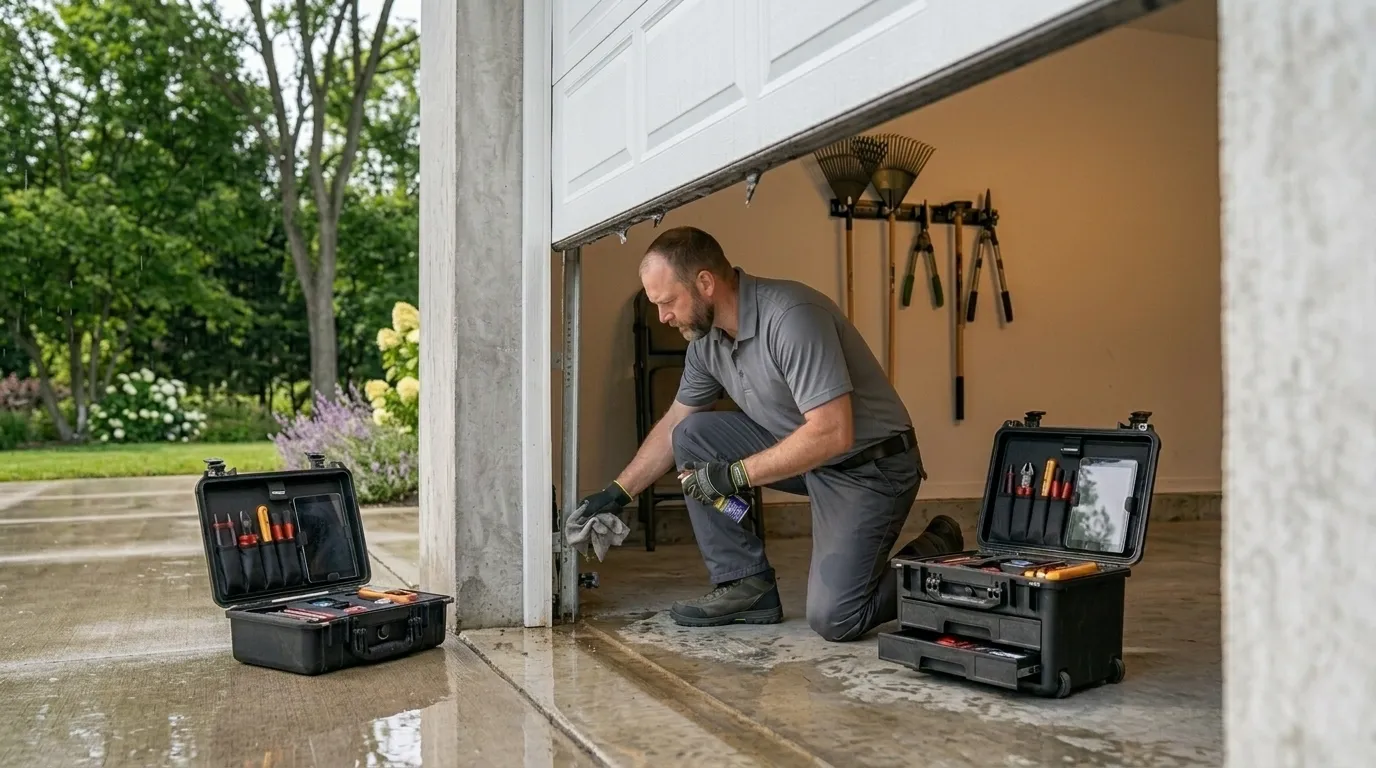
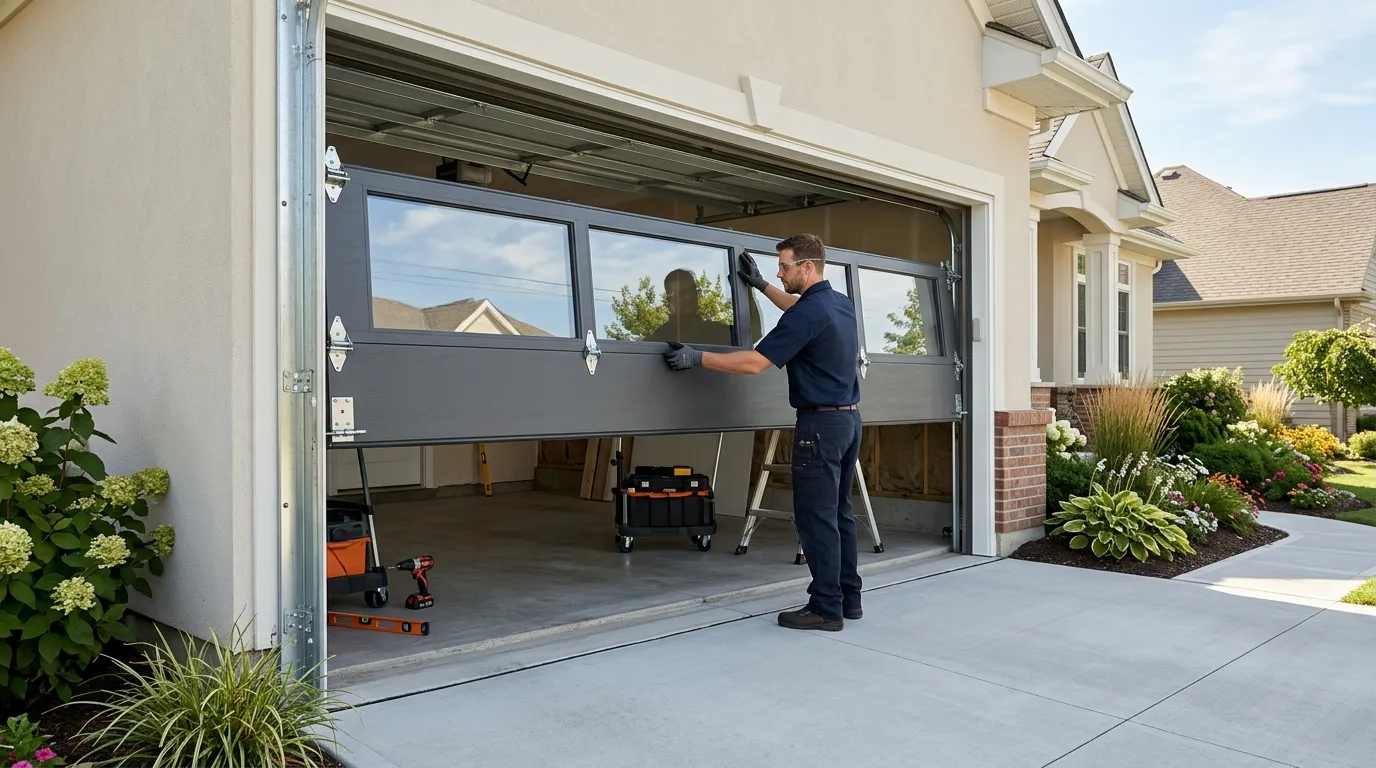
For a maintenance visit on a house built in the early 2000s, the truck carries the parts that actually fail on that generation of door: high-temp lithium grease (not the white lithium that breaks down fast under sustained heat), replacement rollers for the sealed bearings that seize after years of dust, and photo-eye sensor pairs, since those are usually the first electronic part to give out on an opener from that era.
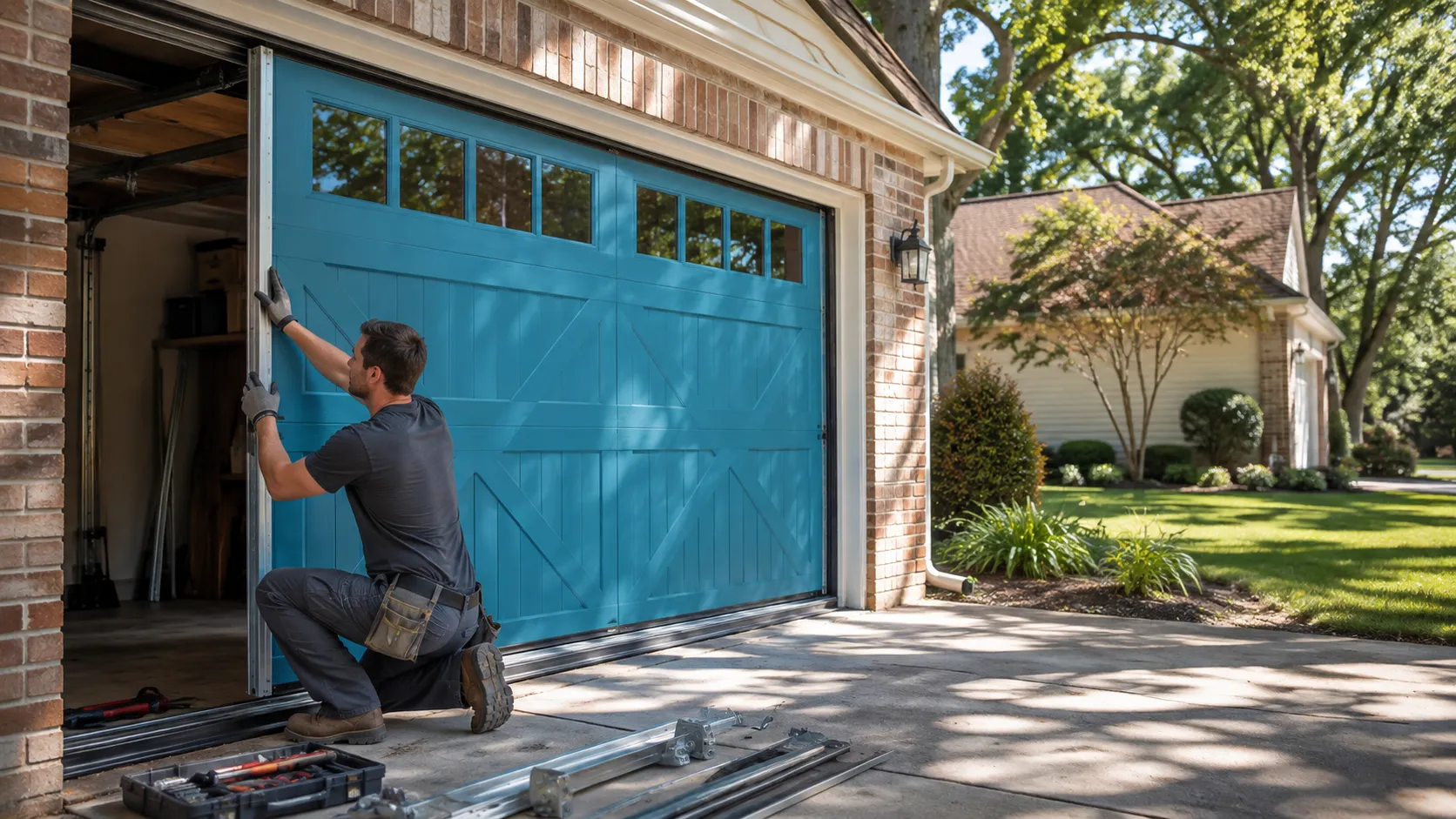
We also carry torsion spring sets sized for the standard 7-foot residential door, since that's what dominates a 2004-era subdivision, along with cable and drum hardware. What's usually not needed on a house this age: full track replacement or panel sections, since steel doors from the 2000s hold their shape better than the older wood or thin-gauge steel doors do.
The one thing we don't stock on the truck is opener logic boards specific to older belt-drive models - if the board itself has failed rather than a sensor or wiring, that part gets ordered and the return trip gets scheduled around it. It's not common on a door this age, but it happens.
How to Book
Since the crew comes out from Phoenix, roughly 19 miles south, maintenance visits to Anthem get scheduled rather than run same-day. Book through the Anthem repair page below if something's already making noise or sticking, or use general contact for a routine tune-up. Tell us the door's approximate age when you call - for most houses in Anthem that's early-to-mid 2000s - and whether it's a single or double door, since that changes which spring and cable sizes we load before we leave the shop.
We don't run a branch or drop-in counter in Anthem itself. Every visit is dispatched from Phoenix, so the appointment window accounts for the drive. If you're not sure whether what you're hearing is a maintenance item or a repair, describe the sound or symptom when you book - grinding, slow closing, or the door reversing partway are all things worth mentioning up front so the right parts are on the truck the first trip.
What Causes It Around Here
Heat is the recurring cause on Anthem's newer stock, more than age. Doors and openers here sit through the same severe summer heat load as the rest of the valley, and on a steel door that's been up for close to twenty years, that means the factory lubricant has dried out well before any of the metal parts show wear. Dried lube on a torsion spring or a roller shows up as a grinding noise or a door that hesitates partway through its cycle, even though nothing is visibly broken.
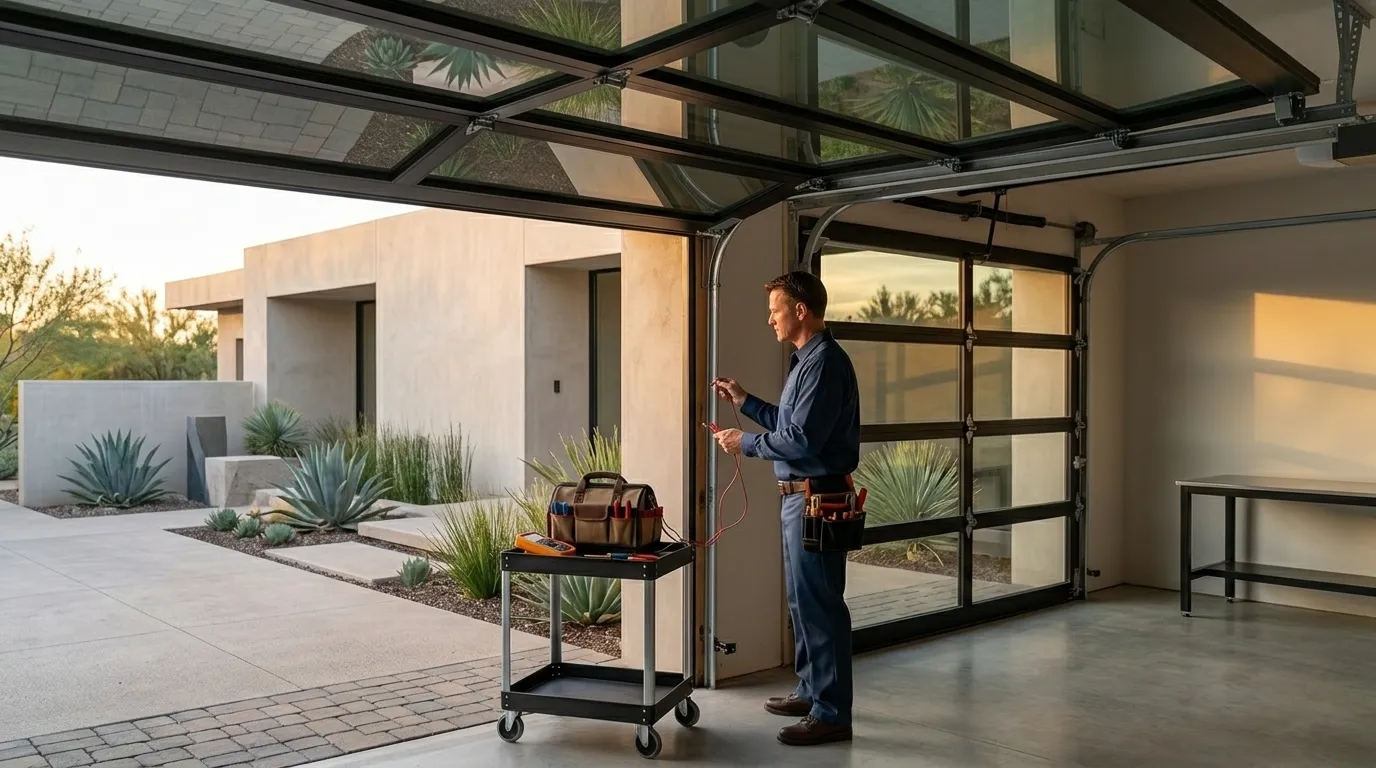
The other pattern tied to the build era is opener electronics. Houses from the early 2000s came with openers that are now old enough for the sensor units and control boards to be the weak point, rather than the motor itself. A photo-eye sensor knocked slightly out of alignment, or corroded contacts from years of heat cycling, causes more no-close and reversing calls out this way than any mechanical failure does.
What doesn't apply here: the rotted wood panels and rusted-through track brackets that show up on much older housing stock closer to central Phoenix. Anthem's doors are steel, and steel this age holds up fine structurally - the failure point is almost always lubrication or electronics, not the door itself.
How it works
From “it’s stuck” to “it’s fixed”
01
Tell us what’s wrong
Describe the symptom - won’t open, loud bang, opener runs but the door won’t move.
02
On-site diagnosis
A technician tests the door under power and by hand and finds what actually failed.
03
Clear, up-front plan
You get the fix that’s needed and what drives the cost - before any work starts.
04
Repaired & tested
The repair is done, the door is set true and tested, and the work area left clean.
Serving Phoenix, AZ - tell us what your door’s doing and we’ll take it from there.
How often should I get my garage door serviced in Anthem?
Once a year is reasonable for a house this age, mainly because the summer heat here dries out lubricant faster than in milder climates. If the door is starting to sound rougher than it did a year ago, that's usually the lube, not a structural problem, and it's worth catching before it turns into a spring or roller failure.
Can you come out the same day for a maintenance check?
Not for routine maintenance. We dispatch from Phoenix, about 19 miles away, so Anthem visits get scheduled rather than handled same-day. If something's actively broken - the door won't close or is stuck - book through the repair page instead and describe the symptom so we can plan the trip.
My opener sensors seem finicky - is that normal for a house this age?
It's common. Openers installed when these houses were built in the early 2000s are old enough that photo-eye sensors and control boards are usually the first thing to act up, well before the motor or the door itself shows wear. Realigning or replacing a sensor pair is a standard part of a maintenance visit.
Ready to get your garage door sorted?
Tell us what it’s doing and where you are in Phoenix - we’ll take it from there.