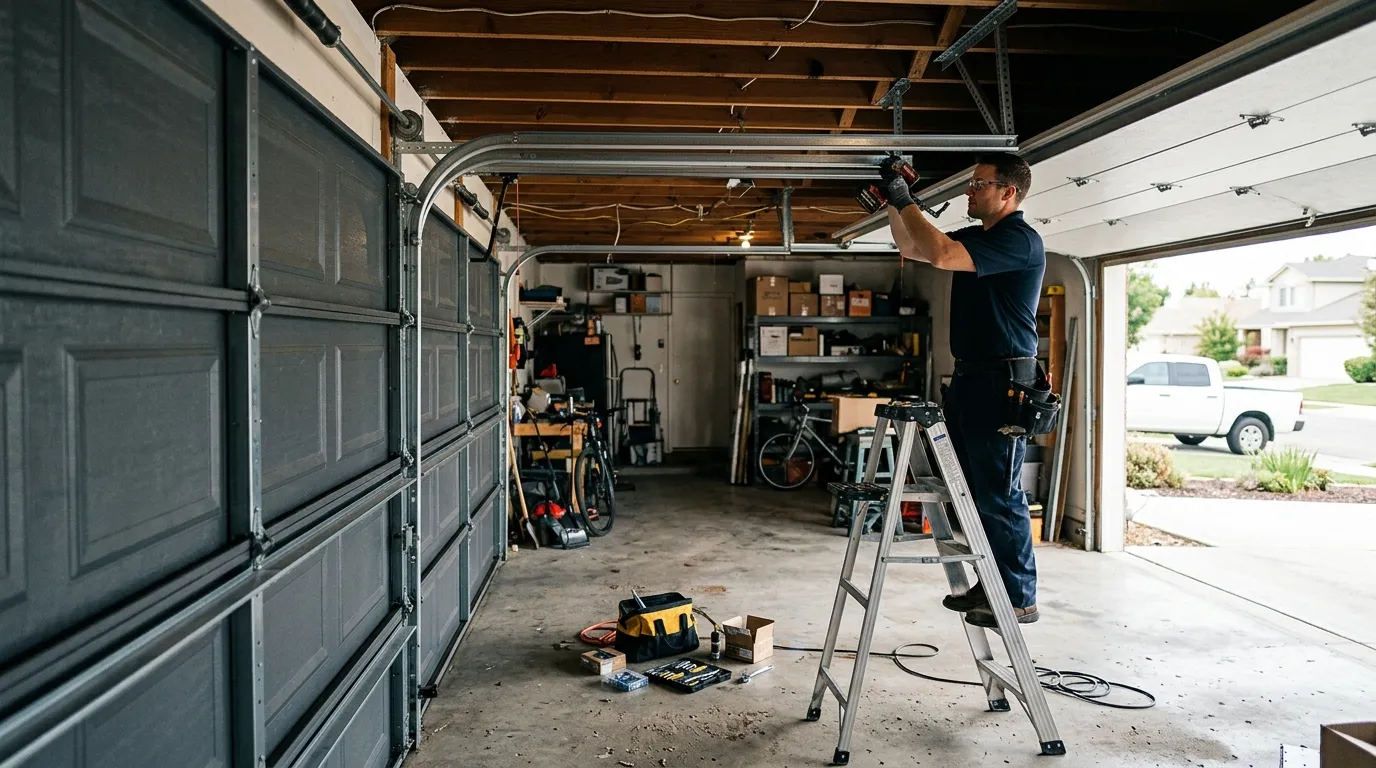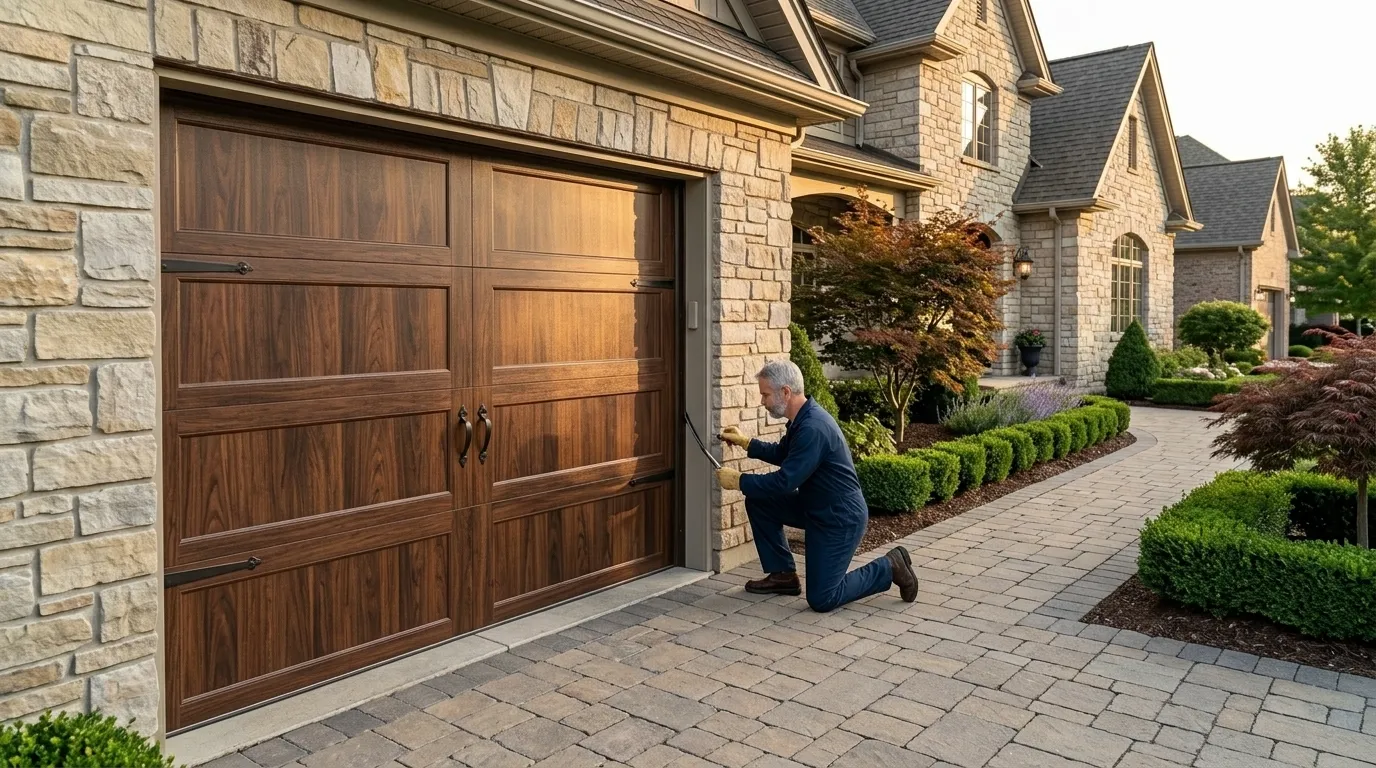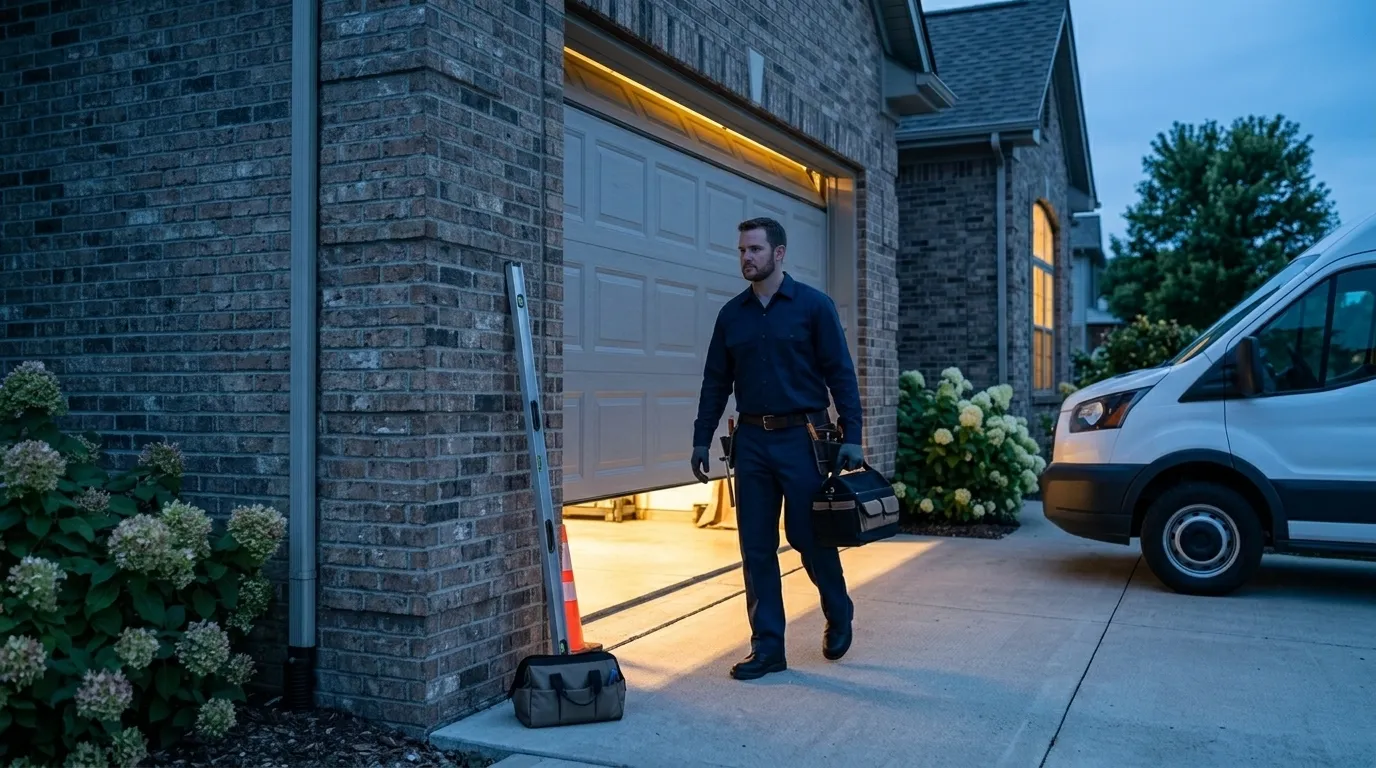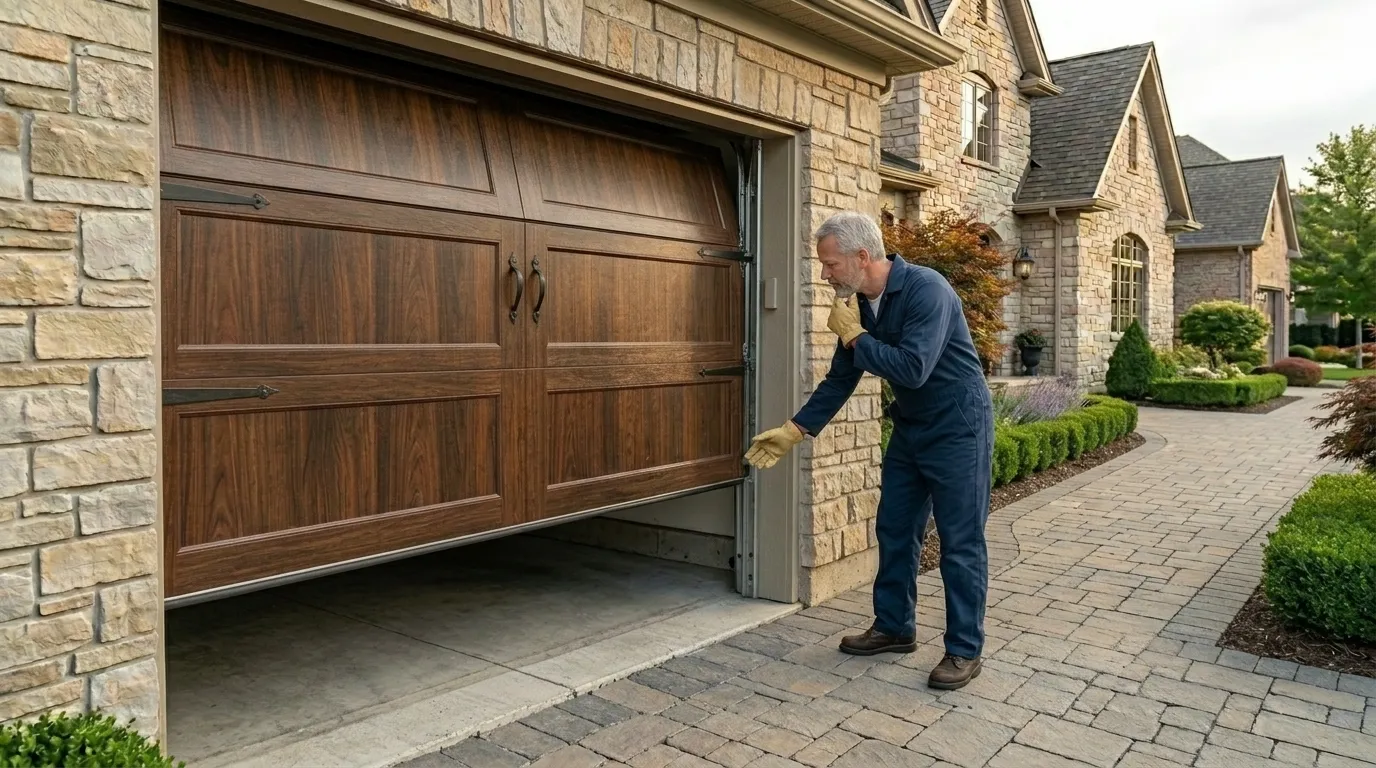

What You Are Seeing
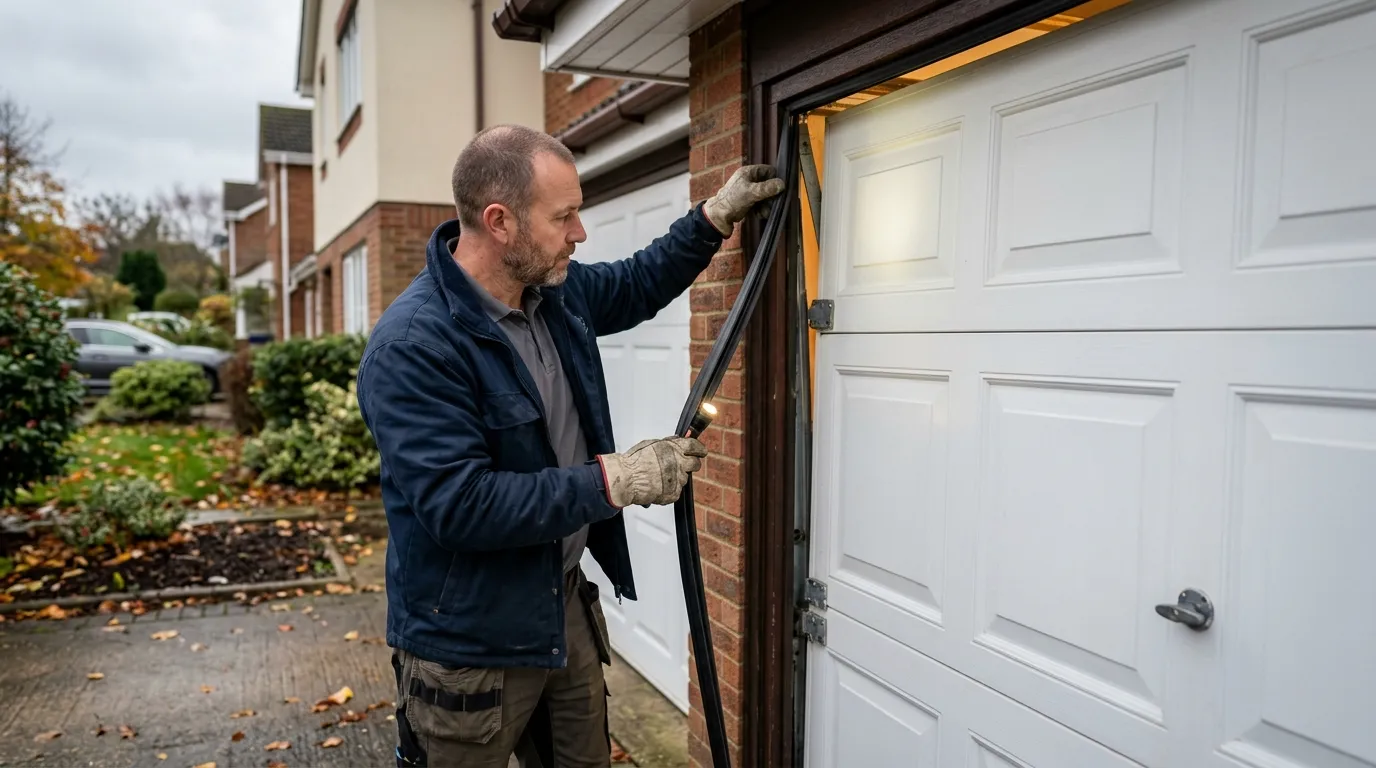
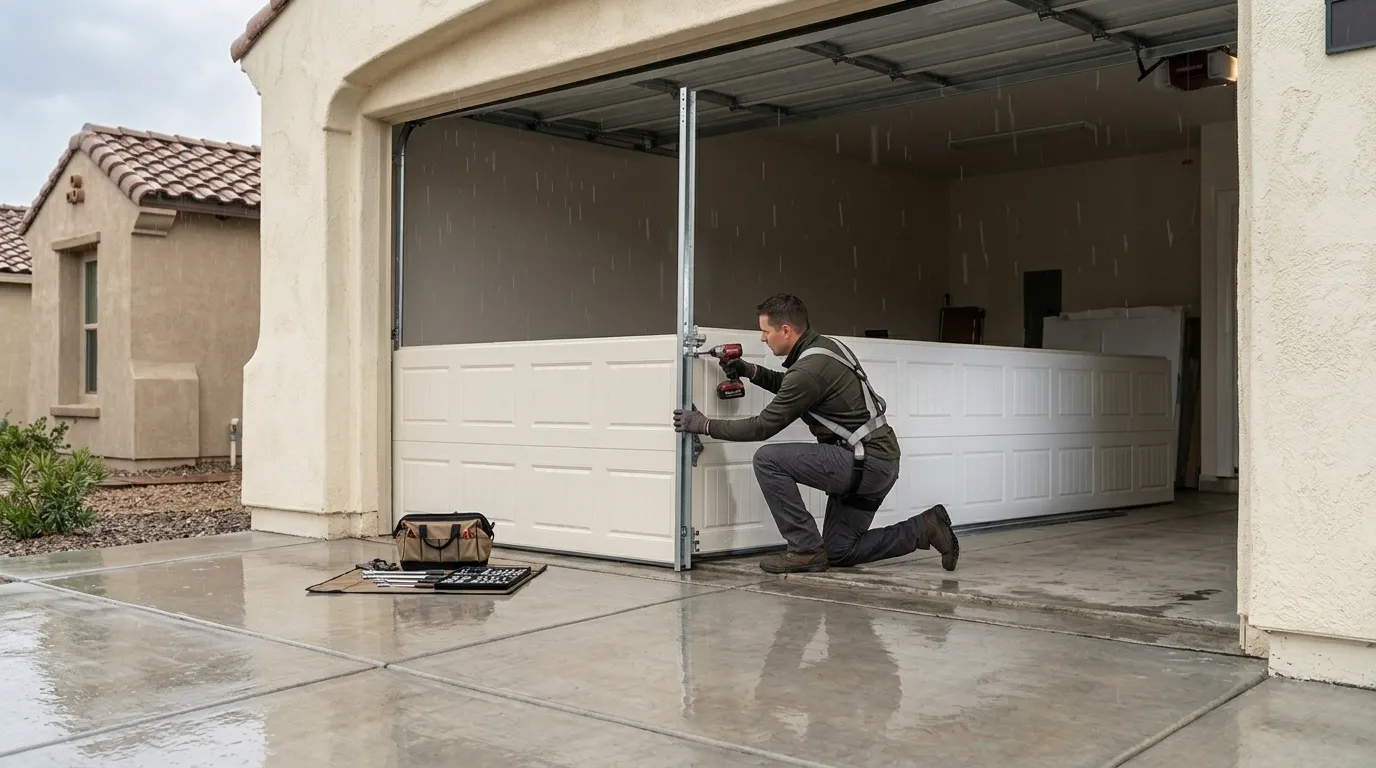
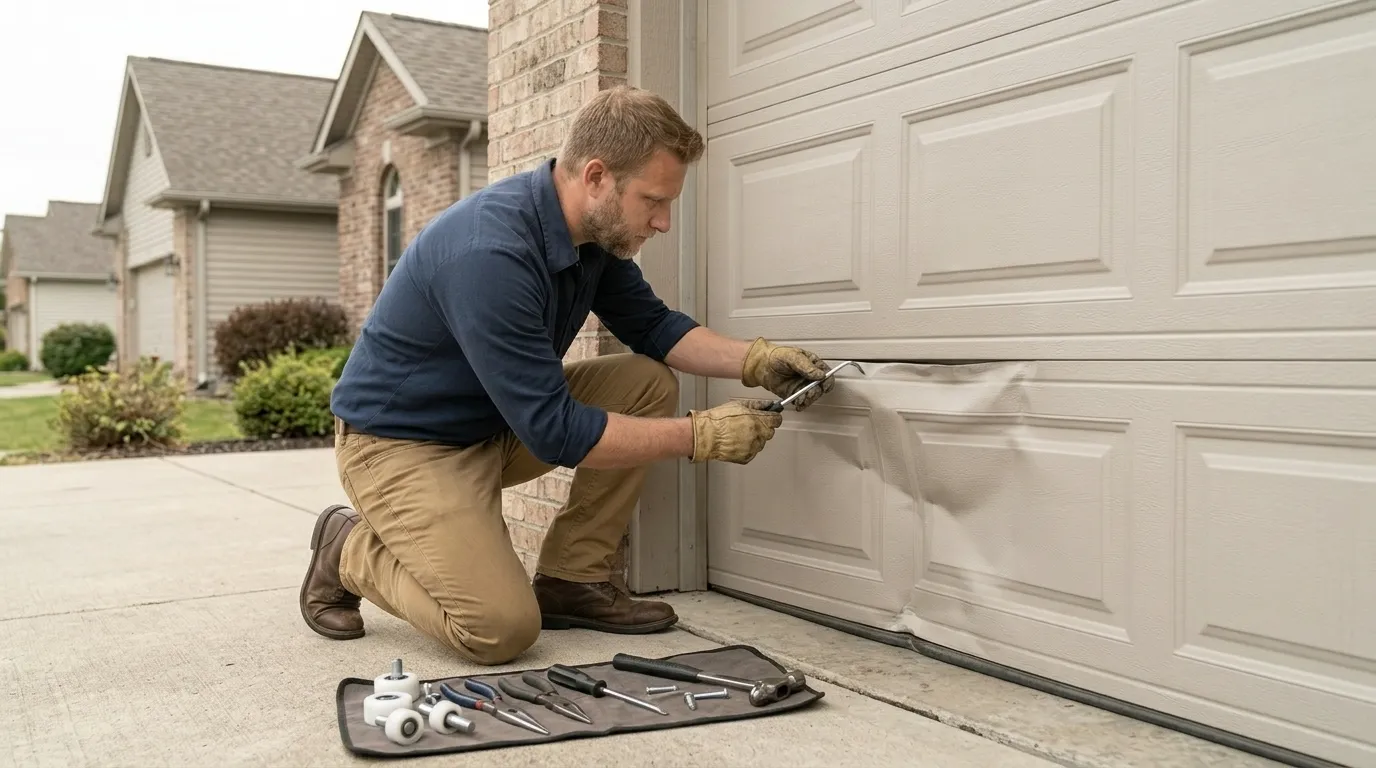
A door that won't move at all, usually with the opener motor still running or humming, points to a broken torsion spring - common on doors from this era once the spring has done its 10,000-plus cycles. A door that reverses right after it touches the floor is almost always a photo-eye or sensor issue, which is common on installed hardware that's been swapped or upgraded since the original 1985-era build. A door that's off track on one side, with a visible gap or a bent track rail, is a cable or roller failure, not a spring problem, and it needs a different fix.
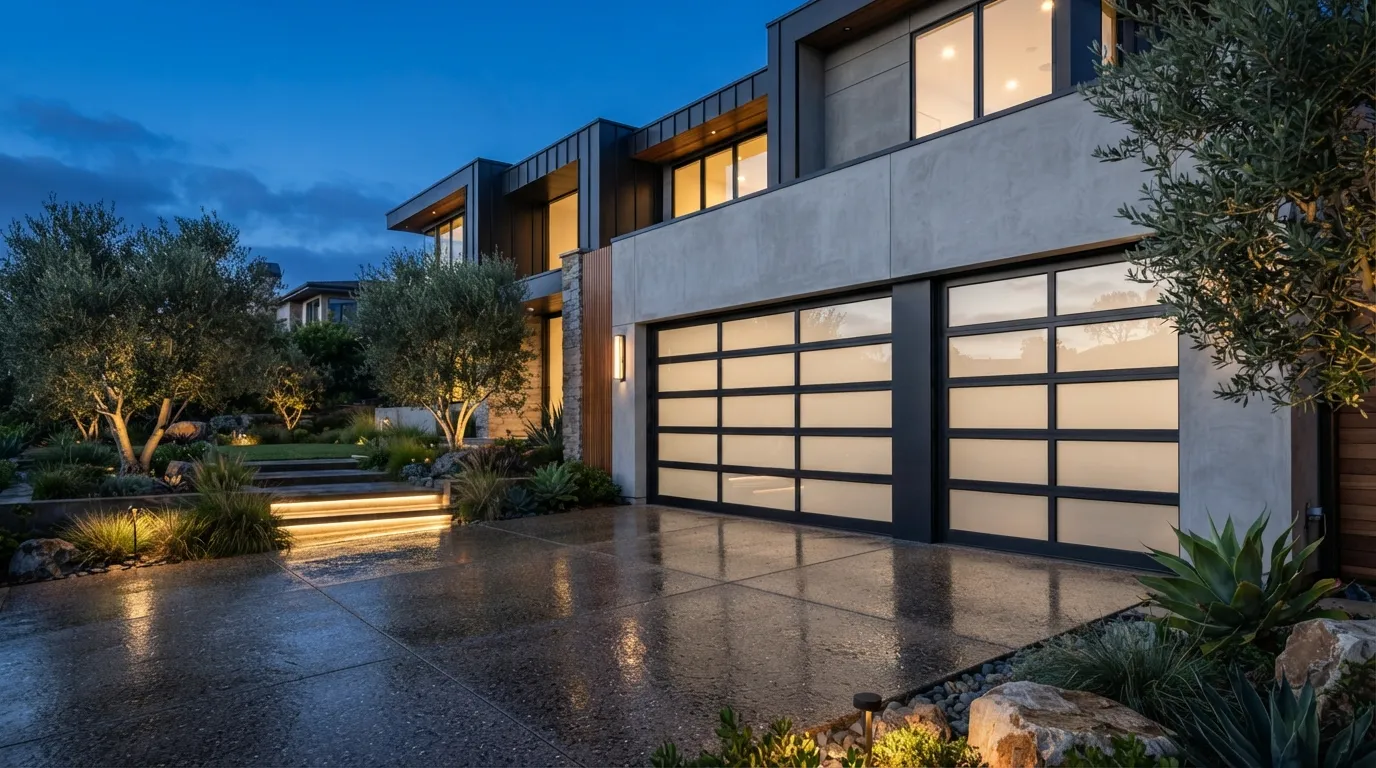
If the door is heavy for its size - thicker, insulated, a custom finish - and it drops fast when the spring goes, treat it as more dangerous than a standard builder door. Don't try to lift it by hand. Call before you touch the release cord.
The DIY Question
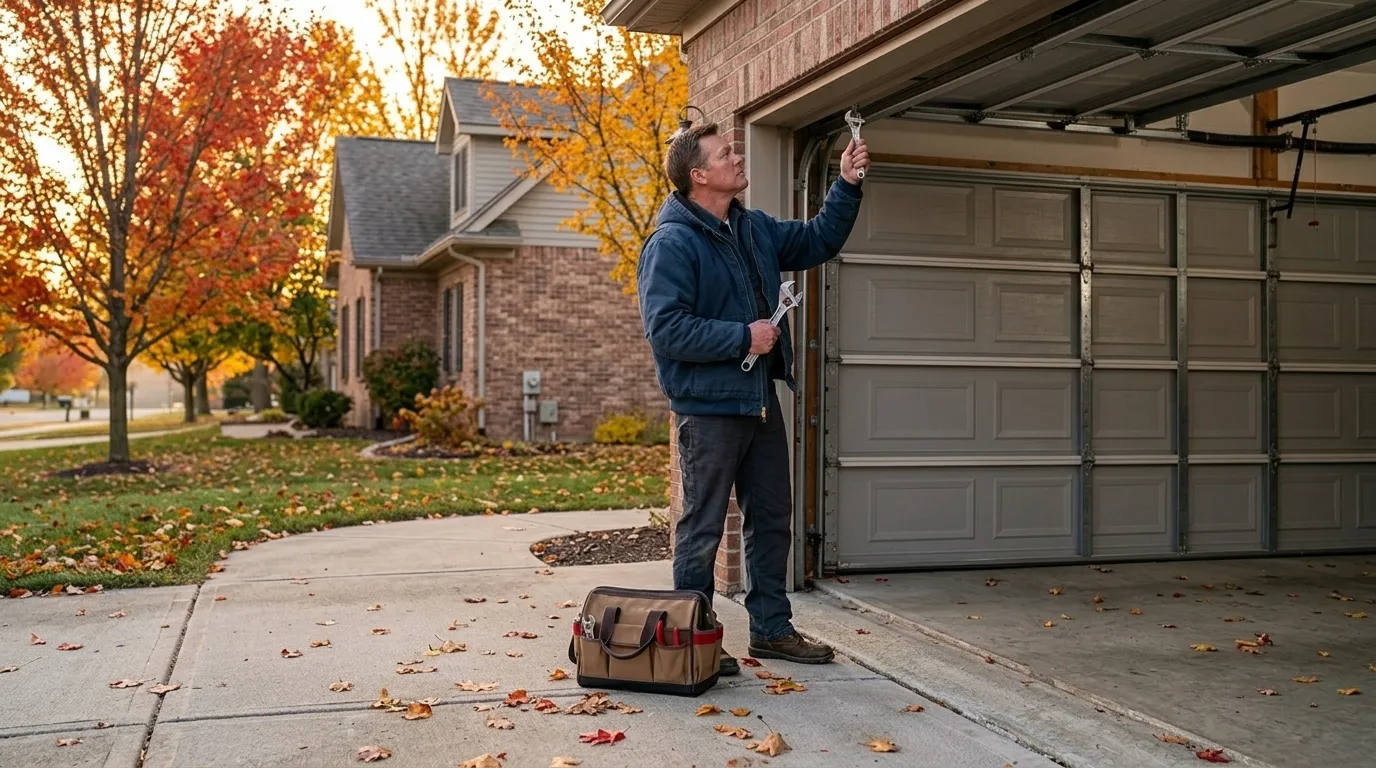
A torsion spring on a garage door is under enough tension to break a finger or worse if it lets go while you're working on it - that's true everywhere, not just here, but it's worth saying because we still get calls after someone tried anyway. Sensor alignment, a stuck remote, a loose track bolt - those are fair DIY territory if you're comfortable with a ladder and a screwdriver.
What we don't recommend: adjusting spring tension yourself, replacing cables under load, or forcing a door that's binding on a bent track. On the higher-end insulated doors common in Paradise Valley, the panel cost of a mistake is also higher than on a standard door, so the math on "just try it first" doesn't favor you the way it might on a builder-grade door elsewhere.
What Is on the Truck
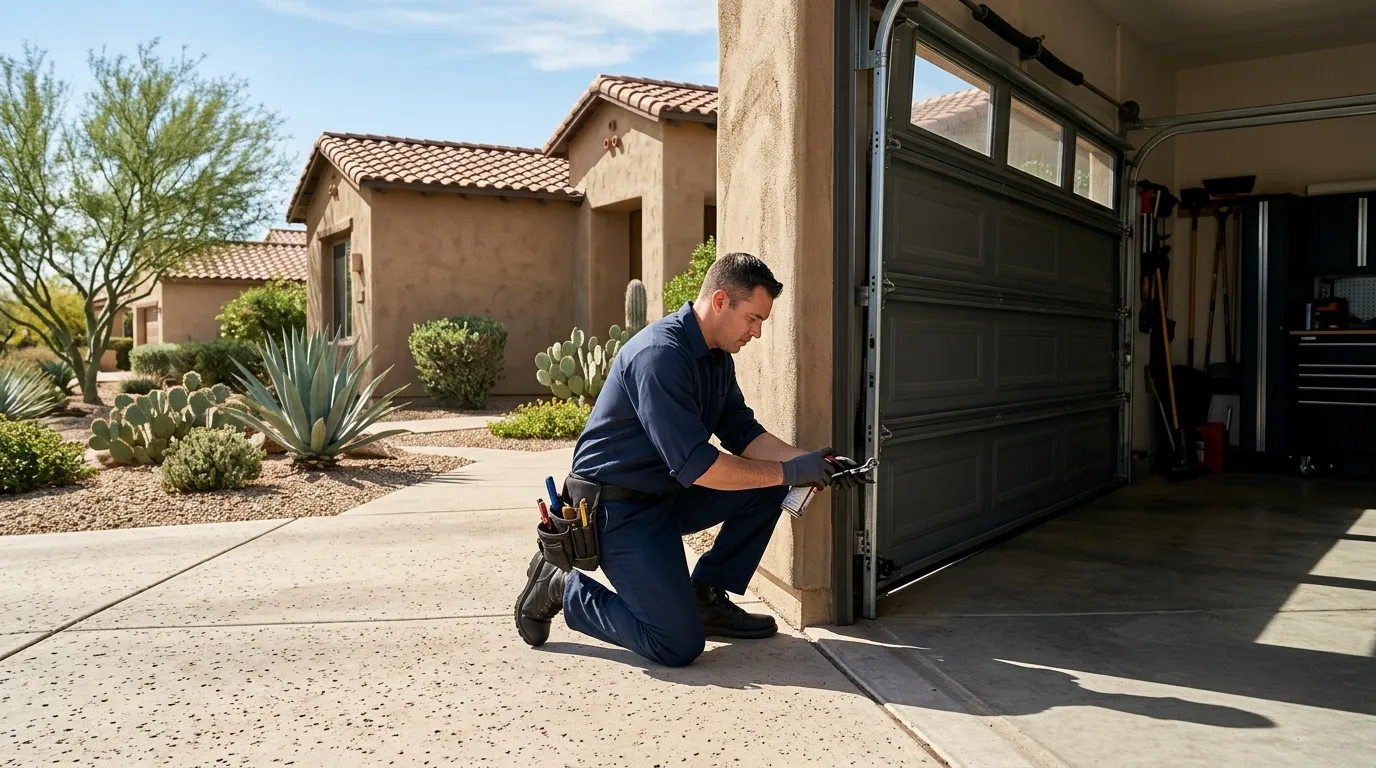
Standard stock covers common torsion spring sizes, rollers, cables, and photo-eye sensors, which handles most of what breaks on doors from the 1980s through the 2000s that make up this part of the valley. What we don't always carry stock for: specialty insulated panels or custom finish hardware on higher-end doors, which sometimes means a return trip once the part's confirmed and ordered.
Given Paradise Valley's income profile and the number of upgraded or custom doors that come with it, that second-trip scenario comes up here more than it would on a street of standard builder doors. We'd rather tell you that up front than promise a one-visit fix we can't back up.