What Can Go Wrong
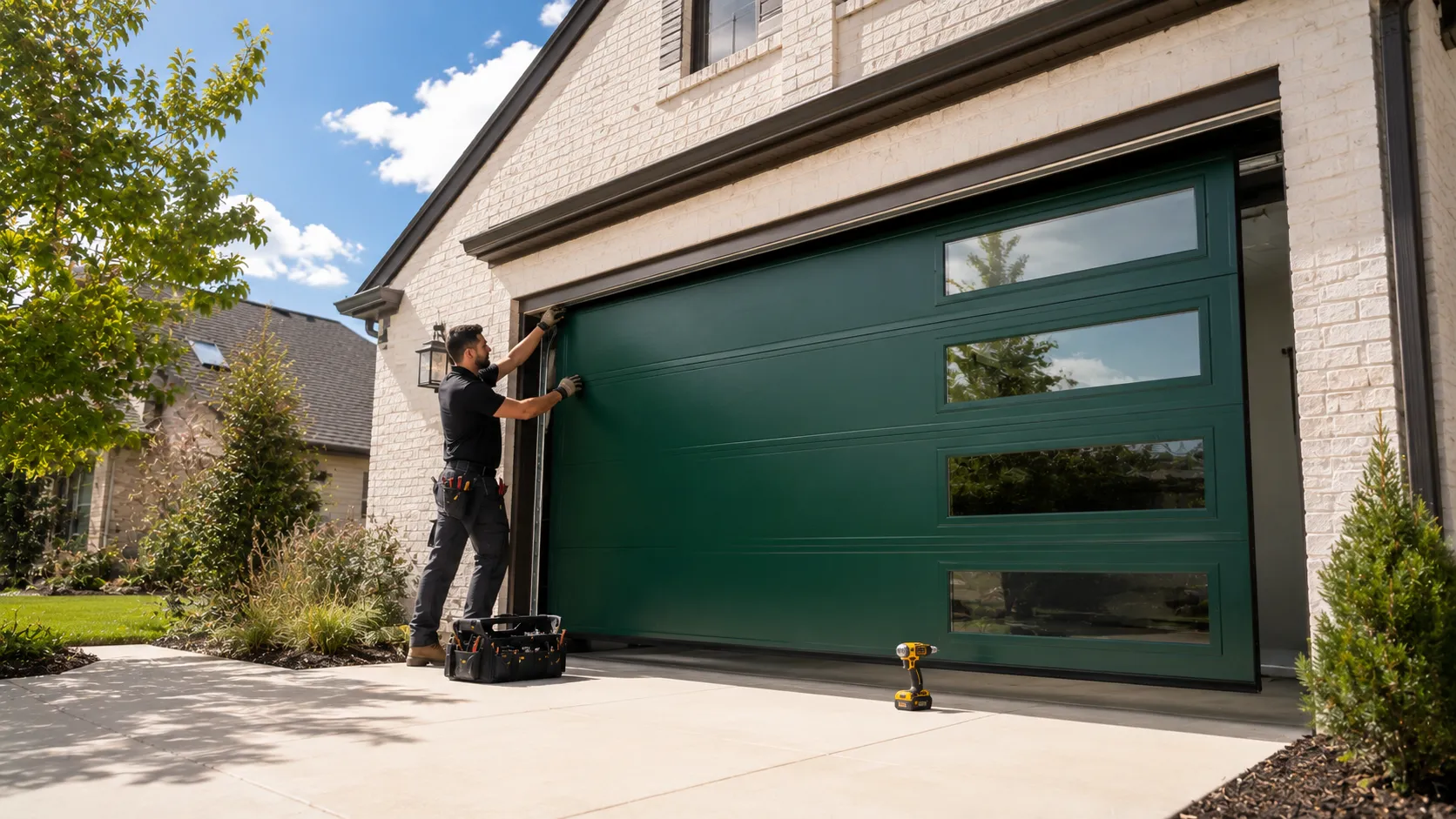
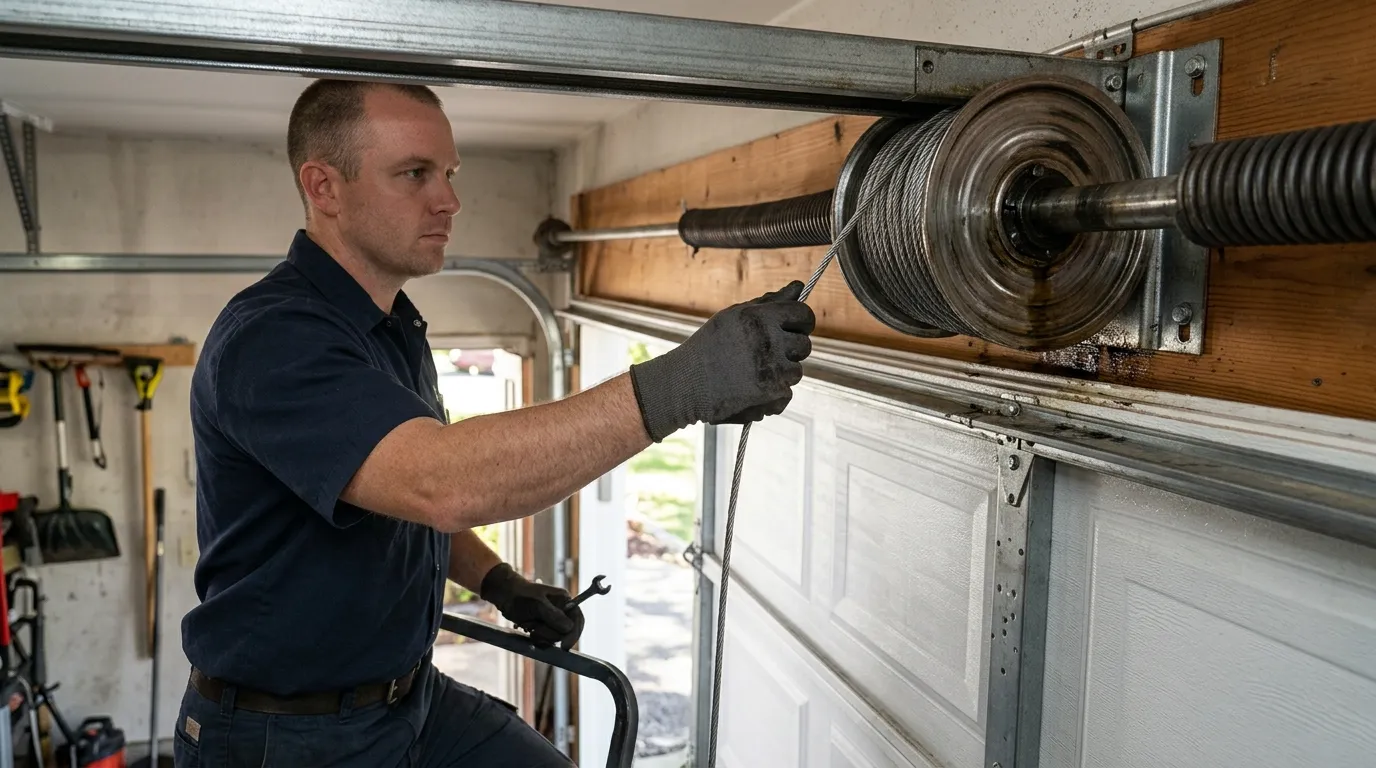
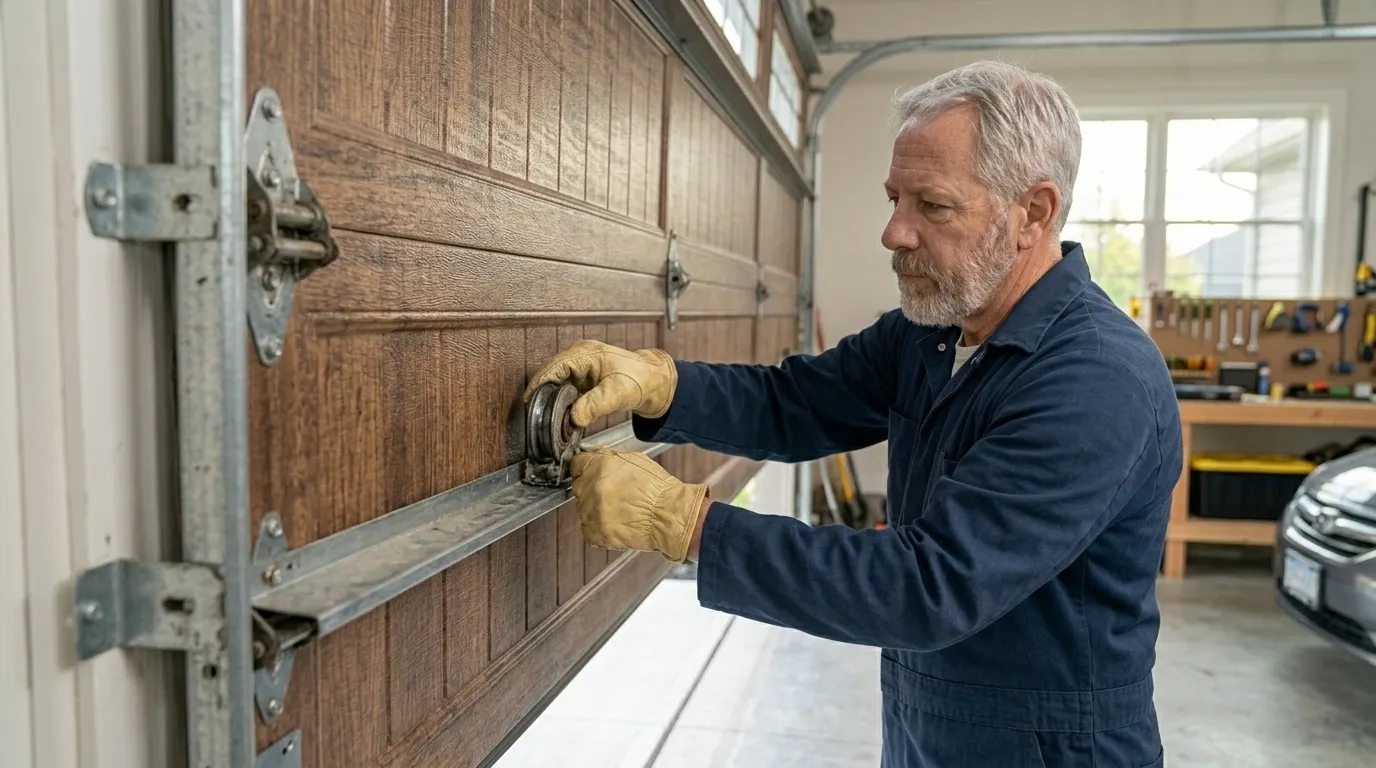
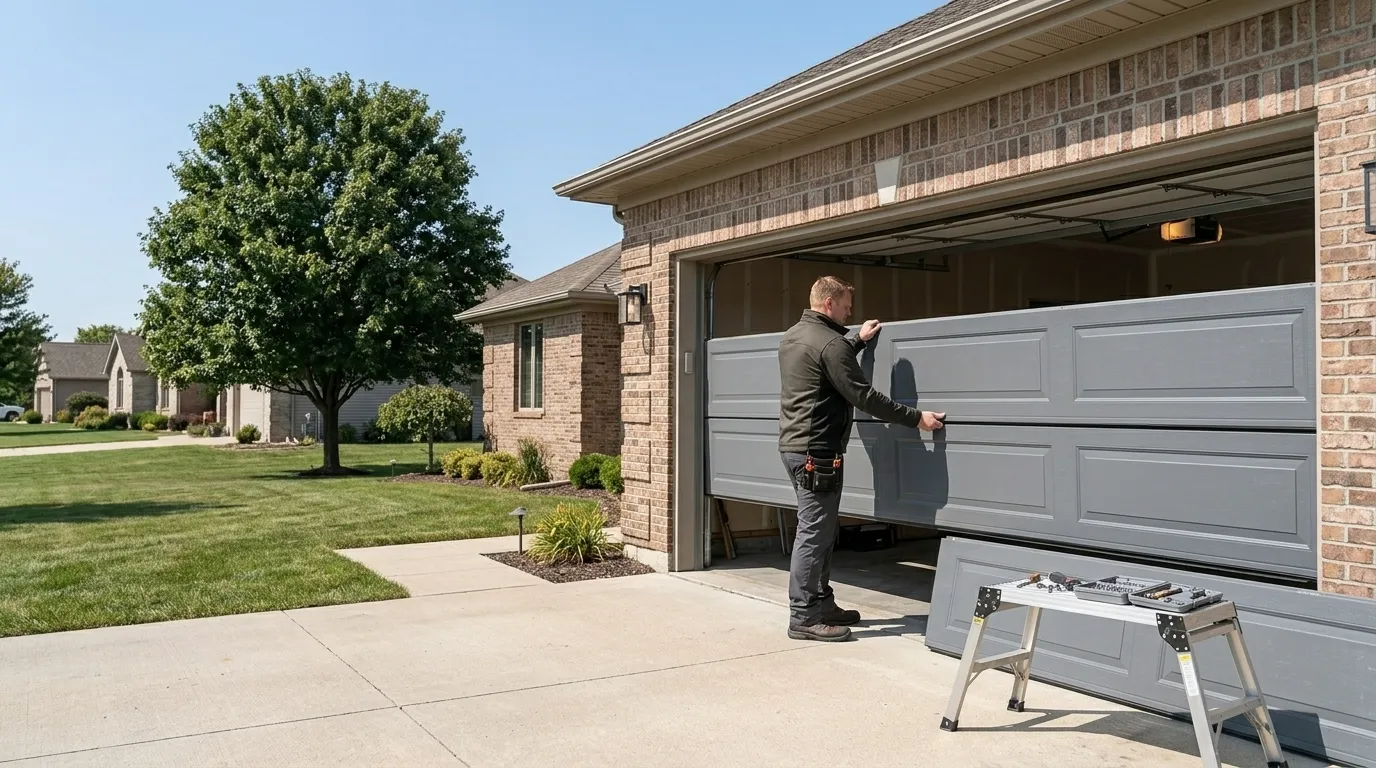
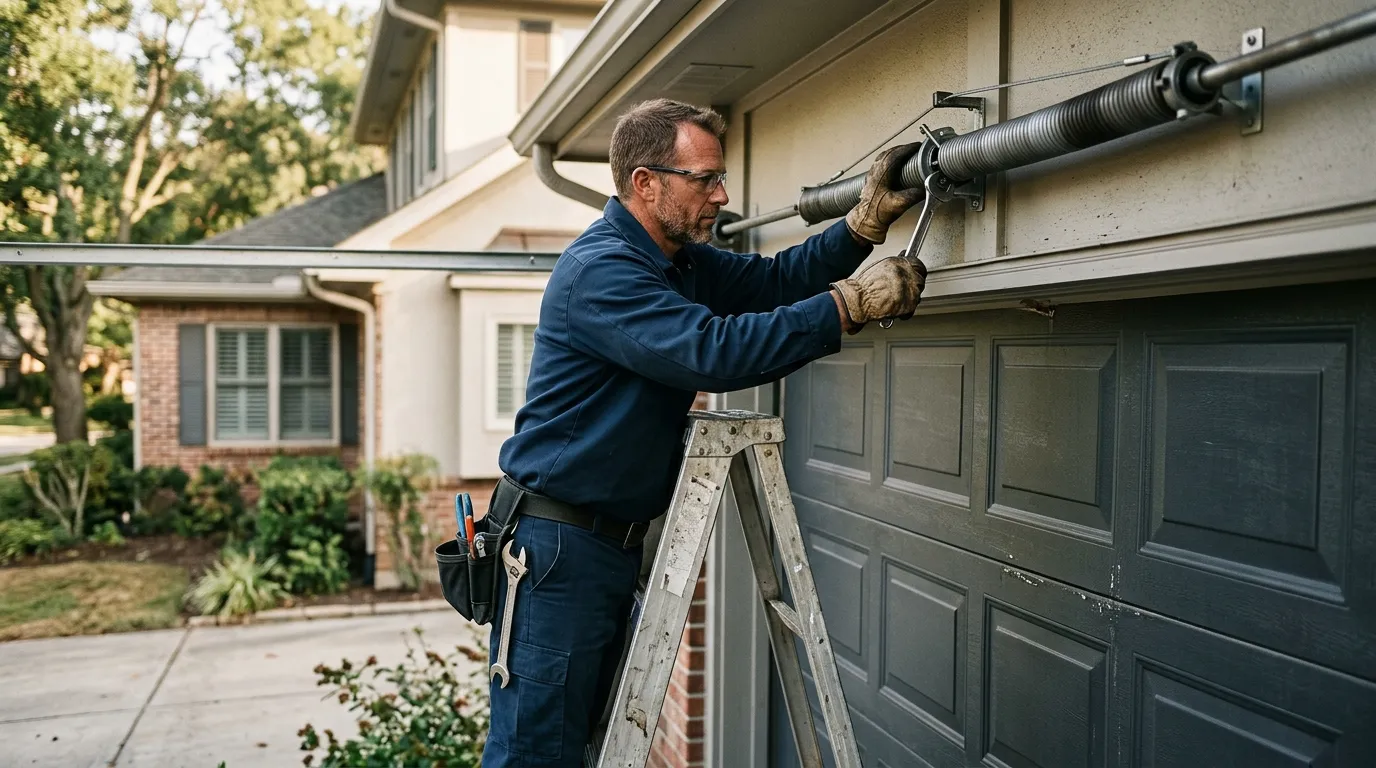
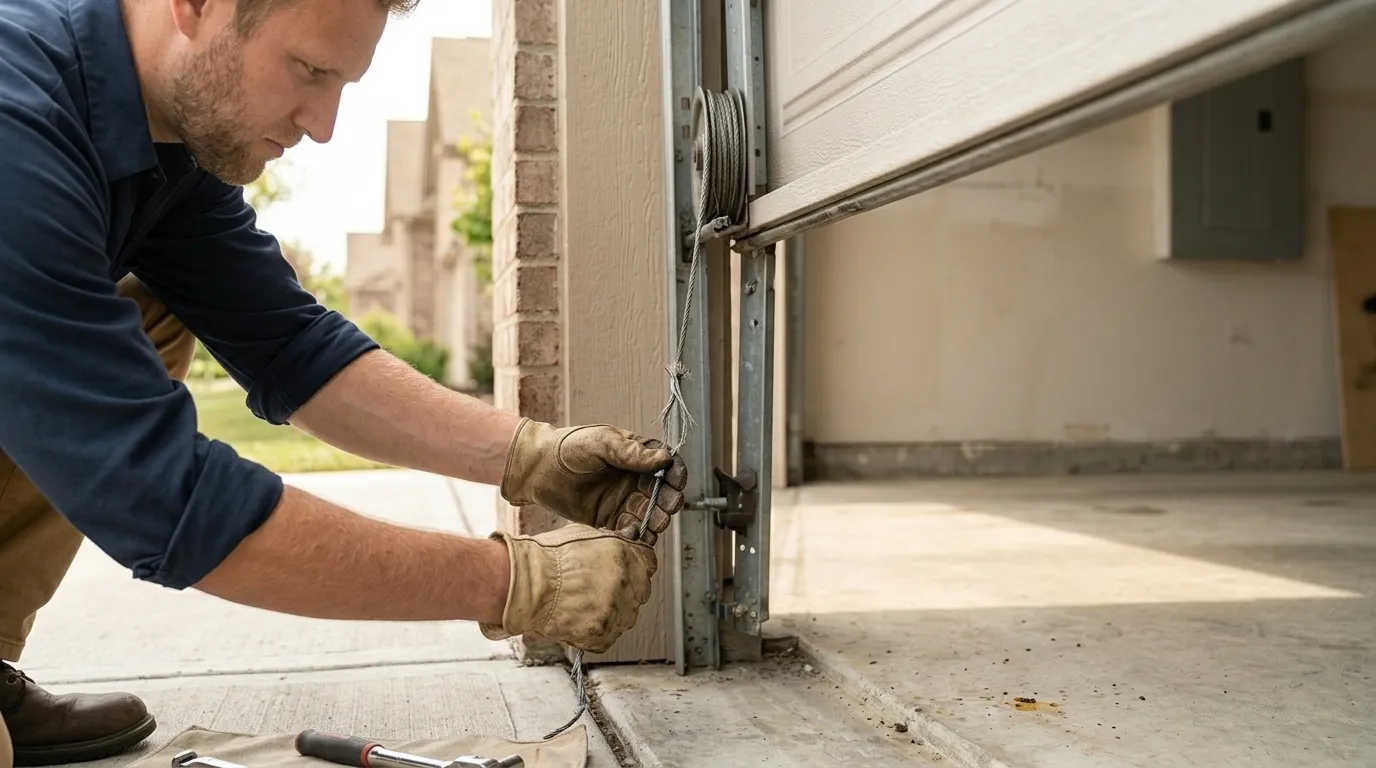
Doors installed when Youngtown was mostly built out, around 1979, tend to run extension springs mounted above the horizontal track rather than the torsion bar setup you'll find on doors from the 2000s stock common elsewhere in the service area. Extension springs stretch and fatigue differently than torsion springs, and on a door this age they're often original or close to it. Rollers on these doors are frequently steel rather than nylon, which means more noise and more wear on the track over four-plus decades. Track brackets loosen from decades of thermal cycling. Aluminum and steel panels from that era pit and corrode faster once the finish starts to go, especially with the heat this area sees. Openers, if they've been swapped even once since 1979, are usually newer than the door itself, which creates a mismatch: a modern opener pulling on old, stretched springs works harder than it should and wears out its own gears faster. None of this is unique to any one house, but it's the pattern we see on doors built to this era's hardware standards rather than the 2000s standards you'd find on newer stock in other parts of the service area.
What the Repair Takes
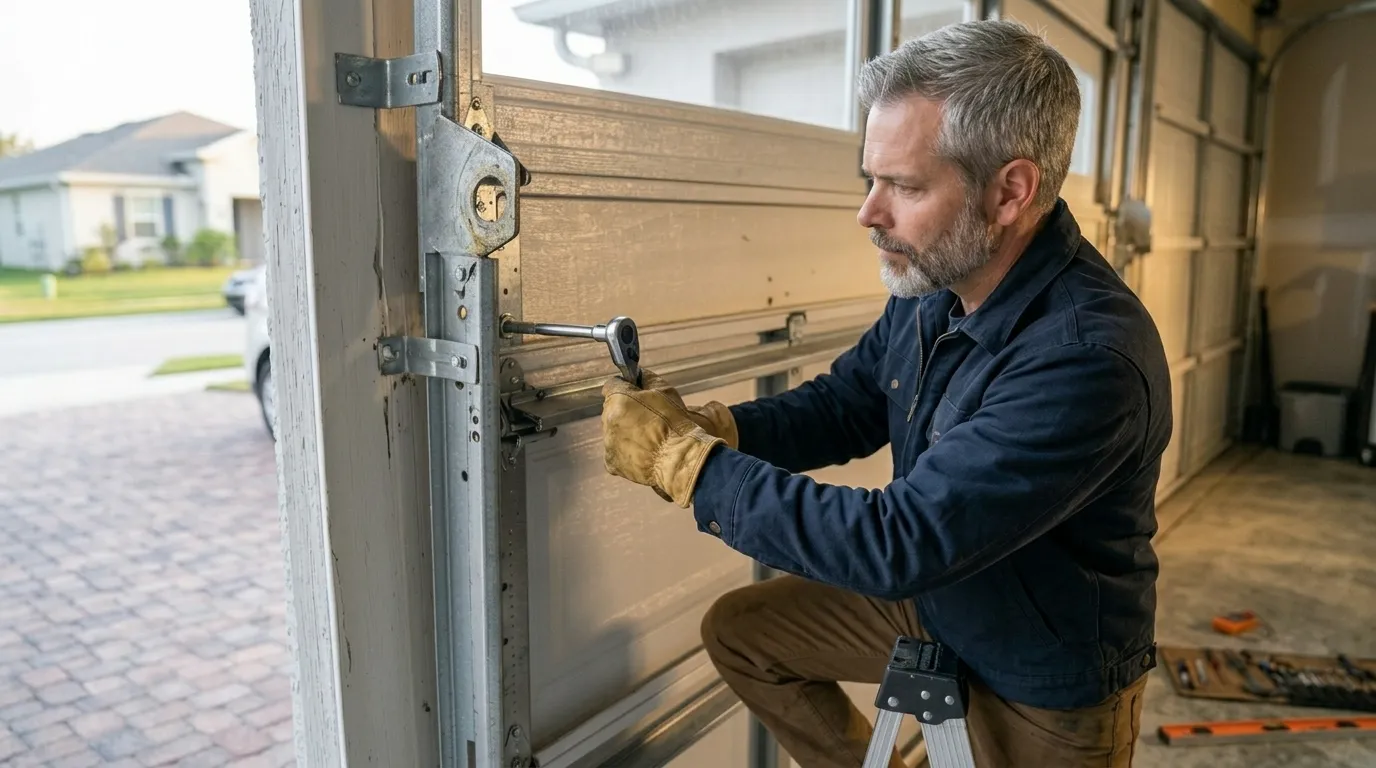
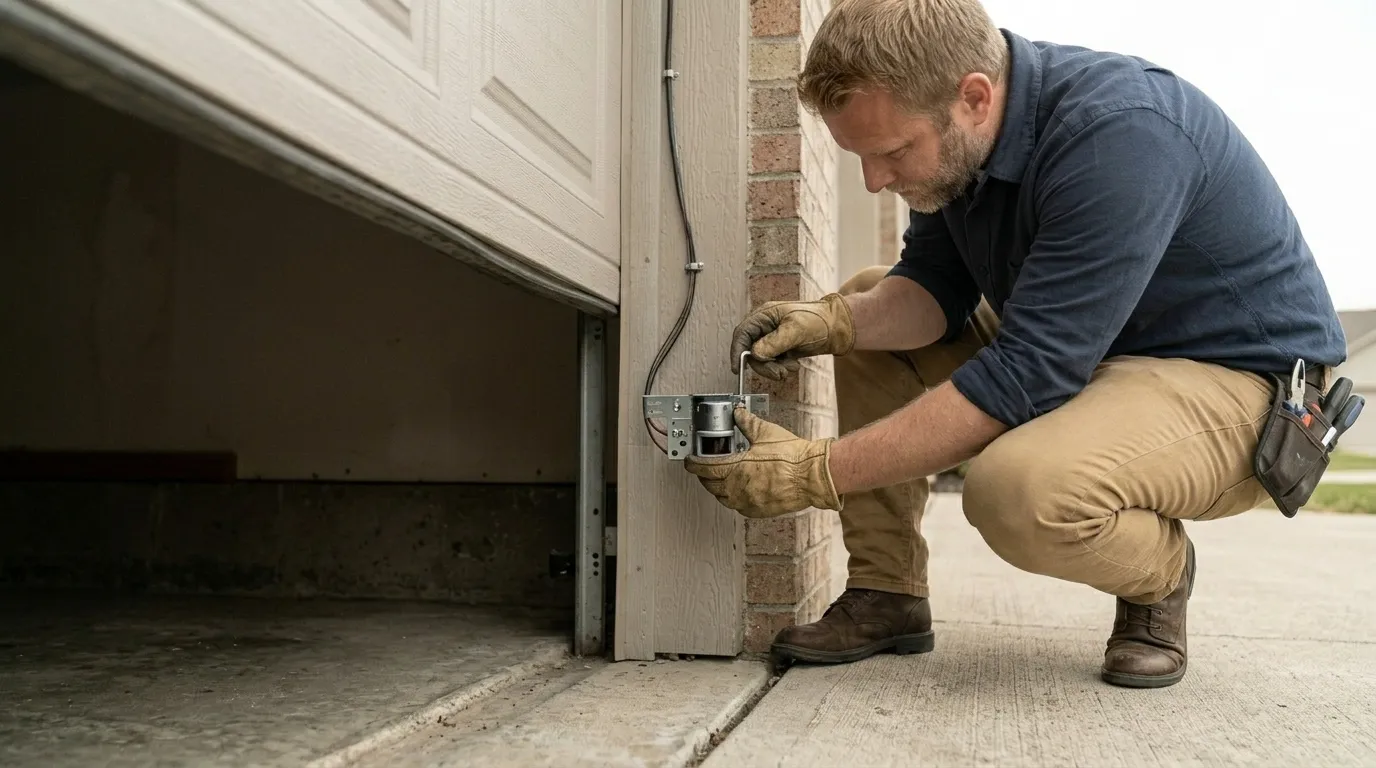
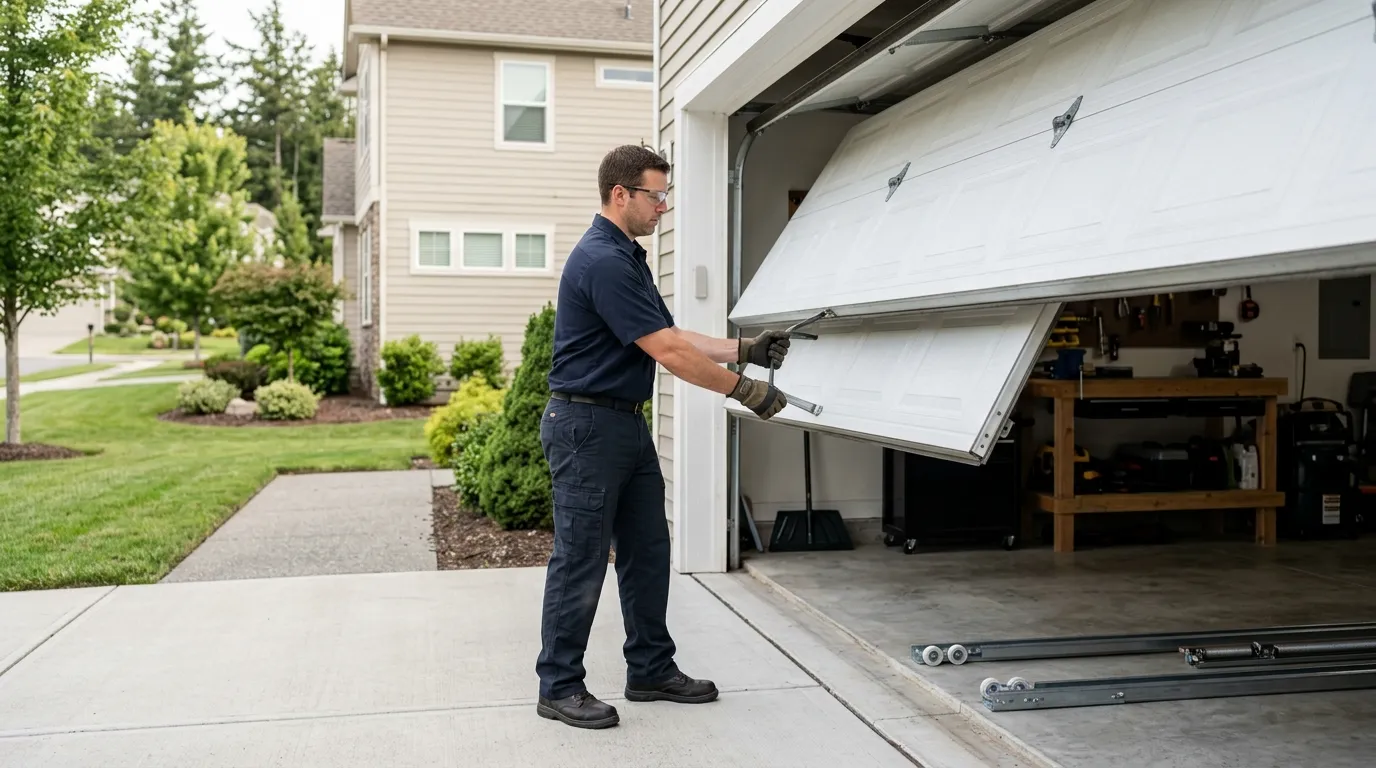
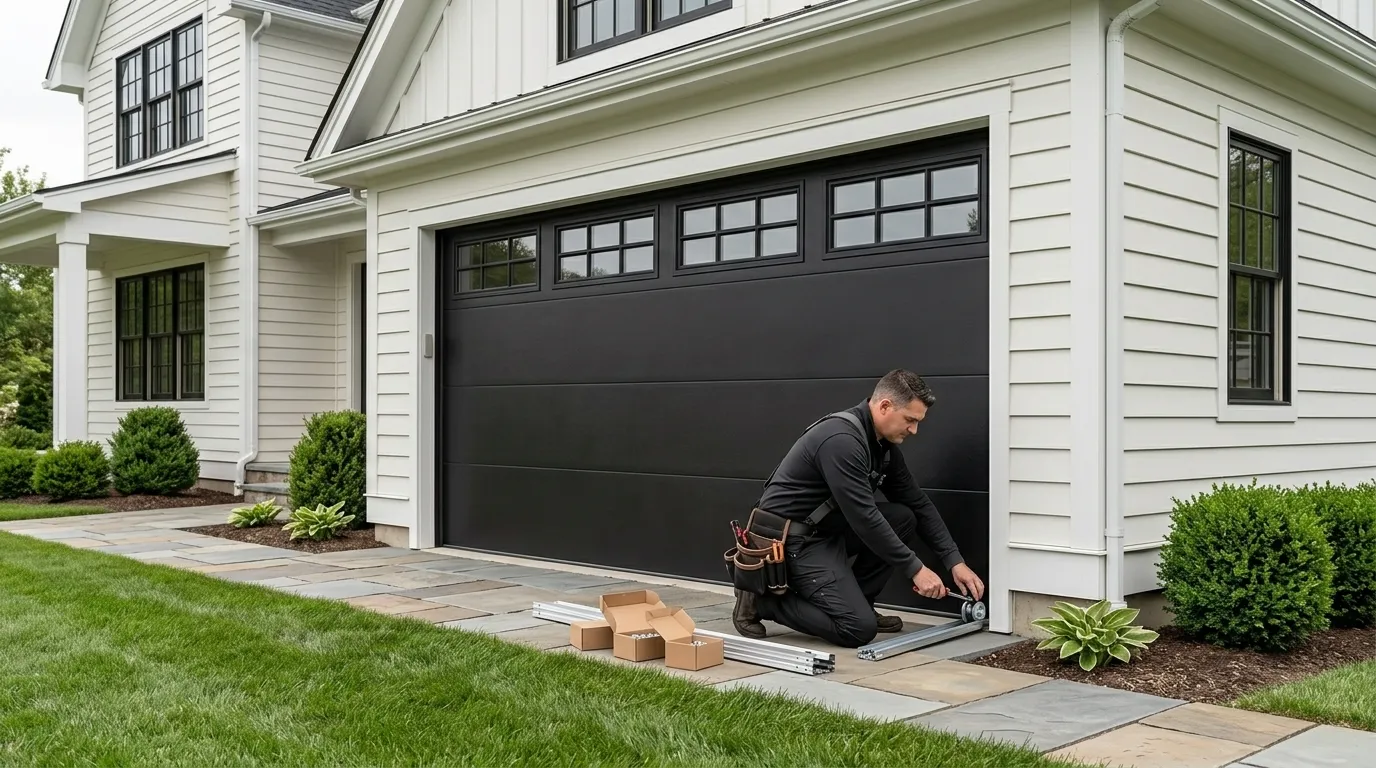
On a door built around 1979, the first part of the job is figuring out what's original and what's been replaced. Extension springs from that era are a known size range, but track width and roller bore aren't always standard against what ships today, so a straight parts swap isn't guaranteed. We carry common sizes on the truck; anything genuinely original sometimes needs an order, and that's a lead-time issue we're upfront about rather than promise around. Balance and travel adjustment take longer on a stretched or mismatched spring setup than on a newer torsion door, because the door has to be brought back to a safe working tension before anything else gets touched. Lubrication and hardware tightening are quick regardless of era. The honest limitation: if the track or spring hardware is original to 1979 and badly worn, we'll usually tell you replacement makes more sense than another repair, because patching forty-plus-year-old hardware only buys a little time before the next call.
How Long It Takes
We run out of Phoenix, and Youngtown is about 12 miles from there, so we build the visit around the drive rather than promise a same-day window we can't back up from across town. Once a tech is on site, a standard maintenance visit on a door this age runs longer than on a newer, 2000s-stock door in other parts of the service area, mostly because of the extra time spent checking and adjusting older spring hardware safely. We're not going to tell you an exact hour count without knowing the door's history first. If the visit turns into a repair because something's found mid-inspection, that adds time on top of the maintenance itself. For anything urgent, like a spring that's already gone, the repair page below is the better fit than a scheduled maintenance visit.
How to Book
If the door's working but hasn't been looked at in a while, a maintenance visit is the thing to book, especially on a house built around 1979 where the original hardware has had decades to loosen up. If something's already broken, or the door won't move at all, the repair page is the faster path to get a tech scheduled for that specific problem. For anything outside garage door work in the Phoenix area generally, the main Phoenix service page covers what else the company handles. We don't keep a branch in Youngtown; every visit comes from the Phoenix crew, so we ask for a little flexibility on timing rather than pin you to a narrow window we can't guarantee from 12 miles out.