Commercial Garage Door Service for Cave Creek Businesses
Commercial garage door repair and install for Cave Creek, AZ businesses, served from Phoenix. Built for late-1990s bays and Arizona heat, not a generic fix.
Cave Creek is a small town by the numbers - about 2,321 households in the whole area - which means the commercial stock is small too: a handful of shops, a few light-industrial bays, some equine or storage buildings with roll-up doors instead of the sectional steel you'd see on a strip mall closer to the city. Most of that commercial building went up around the same stretch as the housing here, median year built 1997, so the doors and openers are getting into the age where springs fatigue and gearboxes wear out rather than just needing an adjustment.
Heat is the other driver. This area sits in a severe-heat climate band, and on a commercial door that means nylon rollers going brittle, lift cables losing tension as steel expands and contracts through the day, and openers with logic boards that fail early from years of attic-level heat above the bay. On a business door that gets opened and closed a dozen times a day, that wear shows up faster than it would on a house door used twice.
We don't stock every gauge of commercial spring or every panel style on the truck - if your bay uses an odd-width door or a older logic board, we may need a day to source the part before we can finish the job.
What the Repair Takes
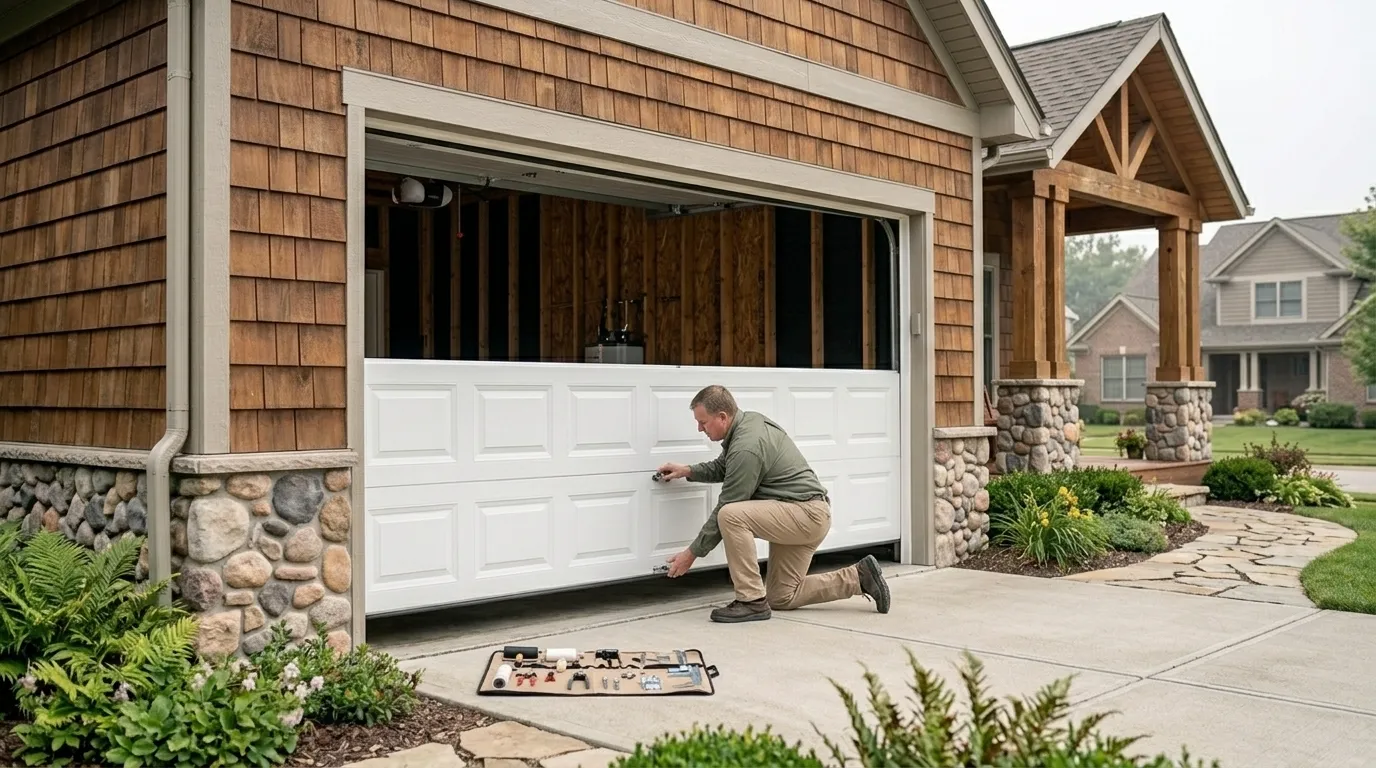
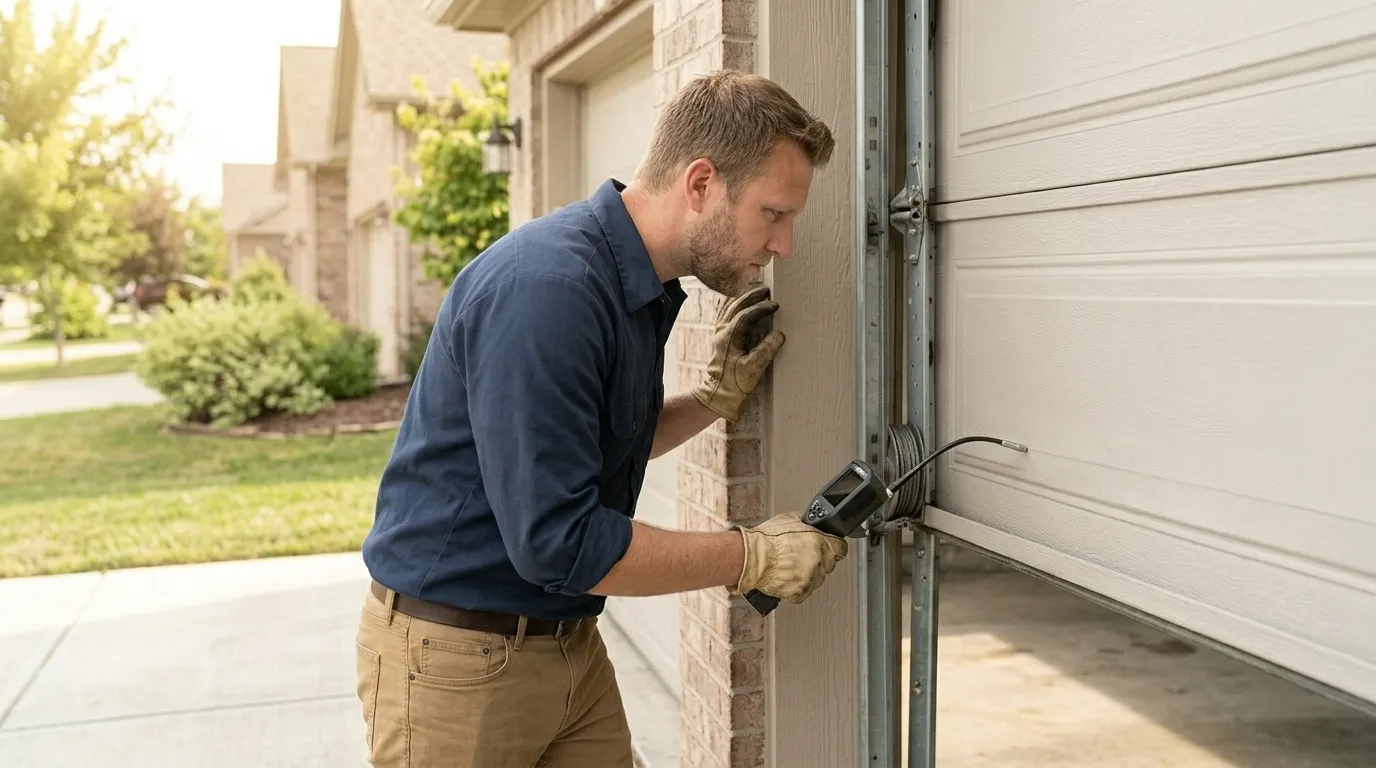
A commercial call in Cave Creek starts the same way any diagnosis should: torque test the springs, check cable wear at the drum, run the opener through a full cycle and listen for where it labors. Given the building age here - 1997 median - the common failure is a torsion spring rated for a door that's now heavier than spec, either from added insulation or a replaced steel panel that doesn't match the original weight the spring was set for.
We travel out from Phoenix for this work; Cave Creek is about 19 miles from our shop, so we schedule the trip rather than treat it as a drop-in. That means most non-emergency commercial jobs get booked for a specific window rather than a same-day dash, and we tell you that up front instead of promising something we can't back up.
Parts availability is the honest limitation. Some commercial openers from that era used control boards that manufacturers no longer stock new. If yours is one of those, we'll tell you straight whether a repair is worth doing or whether the smarter move is replacing the opener rather than chasing a part that's on indefinite backorder.
The DIY Question
A commercial door under torsion spring tension is not a homeowner project, and it's not a maintenance-crew project either unless someone on staff is actually trained on spring-wound doors. The wound bars store enough energy to break a wrist or worse, and on a commercial door - heavier steel, wider span - that energy is higher than on a residential door of the same brand.
What a business owner in Cave Creek can reasonably do without calling anyone: keep the tracks clear of dust and debris (a bigger issue here given the heat and dry conditions than it would be in a wetter climate), listen for new grinding or popping sounds, and watch for a door that's started closing unevenly on one side. Any of those is worth a call before it becomes a stuck door blocking a loading bay during business hours.
What's not worth doing yourself: adjusting spring tension, replacing a broken cable, or swapping a logic board on an opener you don't have documentation for. If the bay serves customers or deliveries, a door stuck half-open is a liability question as much as a repair one.
What You Are Seeing
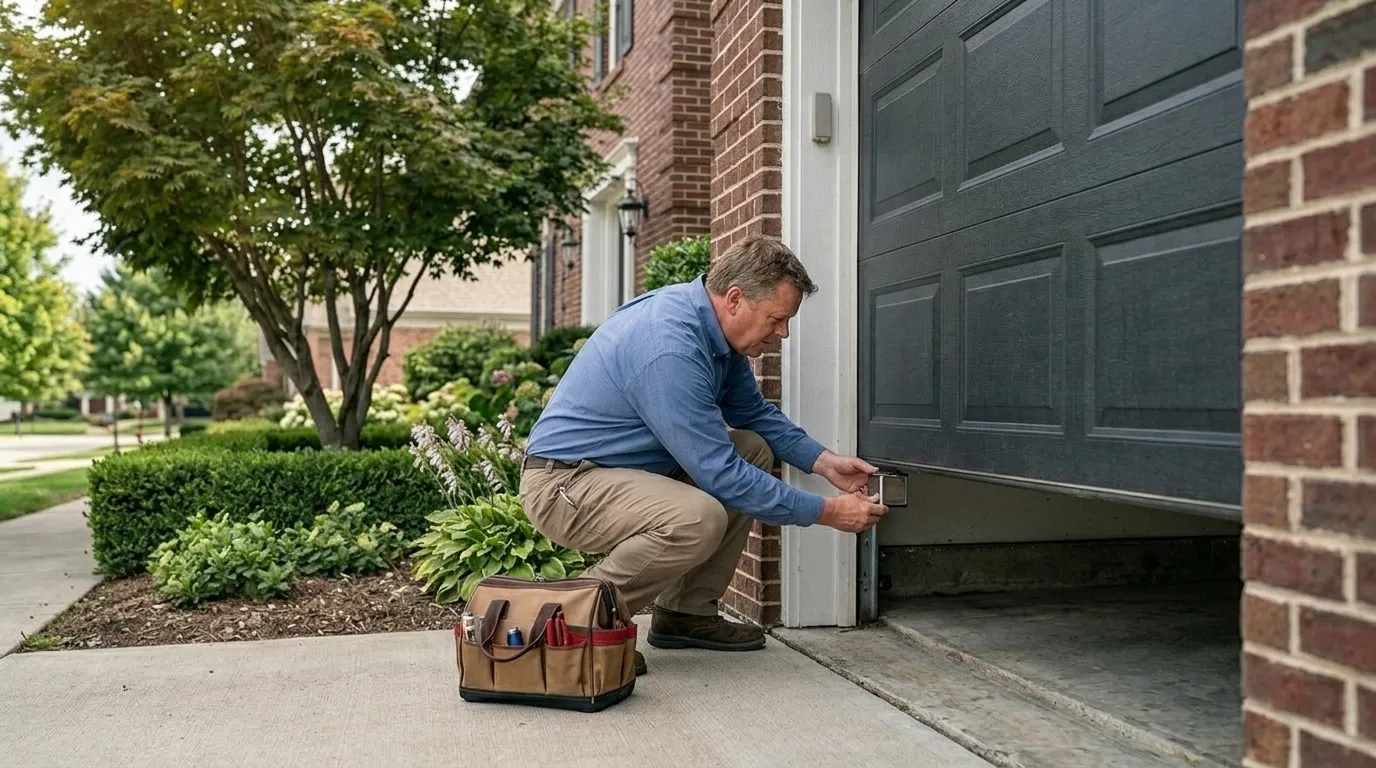
If a bay door in Cave Creek has started sagging on one side, that's usually a cable stretching unevenly or a roller failing on that track - more common here given how many commercial doors are pushing past the 1997 build-median age into their second or third decade of daily cycling. A door that opens fine but reverses partway through closing is often a safety sensor knocked out of alignment, sometimes from heat-driven expansion of the mounting bracket.
An opener that hums but doesn't move the door points to a stripped gear or a capacitor that's given out - again, more likely on the older commercial units still running in this area than on anything installed in the last few years. And a door that's noticeably harder to lift by hand than it used to be is close to a textbook spring failure sign, worth addressing before the spring lets go entirely and drops the door.
Cave Creek's household income runs high for the wider service area - median around $102,589 - which tends to mean businesses here invest in a proper fix rather than a patch job, and that's the approach we bring out with us.
How it works
From “it’s stuck” to “it’s fixed”
01
Tell us what’s wrong
Describe the symptom - won’t open, loud bang, opener runs but the door won’t move.
02
On-site diagnosis
A technician tests the door under power and by hand and finds what actually failed.
03
Clear, up-front plan
You get the fix that’s needed and what drives the cost - before any work starts.
04
Repaired & tested
The repair is done, the door is set true and tested, and the work area left clean.
Serving Phoenix, AZ - tell us what your door’s doing and we’ll take it from there.
No. We work out of Phoenix and travel to Cave Creek for commercial calls - it's about 19 miles each way, so we schedule the trip rather than offer a walk-in or drop-in service. Non-emergency jobs get booked for a set time window.
Why does the age of the building matter for a commercial door repair?
Cave Creek's building stock, including most commercial bays, dates to around 1997 on the median. Springs, cables, and opener gearboxes have a service life measured in cycles and years, and equipment from that era is often past due for replacement parts rather than a simple adjustment.
Can extreme heat really damage a commercial garage door?
Yes. Cave Creek sits in a severe-heat climate band, and heat accelerates wear on rollers, cables, and opener electronics - especially on doors mounted below a hot attic or metal roof that see daily temperature swings well above what the hardware was rated for.
Is it worth repairing an old commercial opener instead of replacing it?
Sometimes not. Some control boards from the late 1990s and early 2000s are no longer made, and chasing a discontinued part can cost more in downtime than a new opener. We'll tell you honestly which way the numbers point once we've seen the unit.
Ready to get your garage door sorted?
Tell us what it’s doing and where you are in Phoenix - we’ll take it from there.