Garage Door Service for Cave Creek's Late-1990s Homes
Cave Creek homes mostly went up in the late 1990s, which means specific opener and spring setups. Phoenix Garage Door Co drives out 19 miles to work on them.
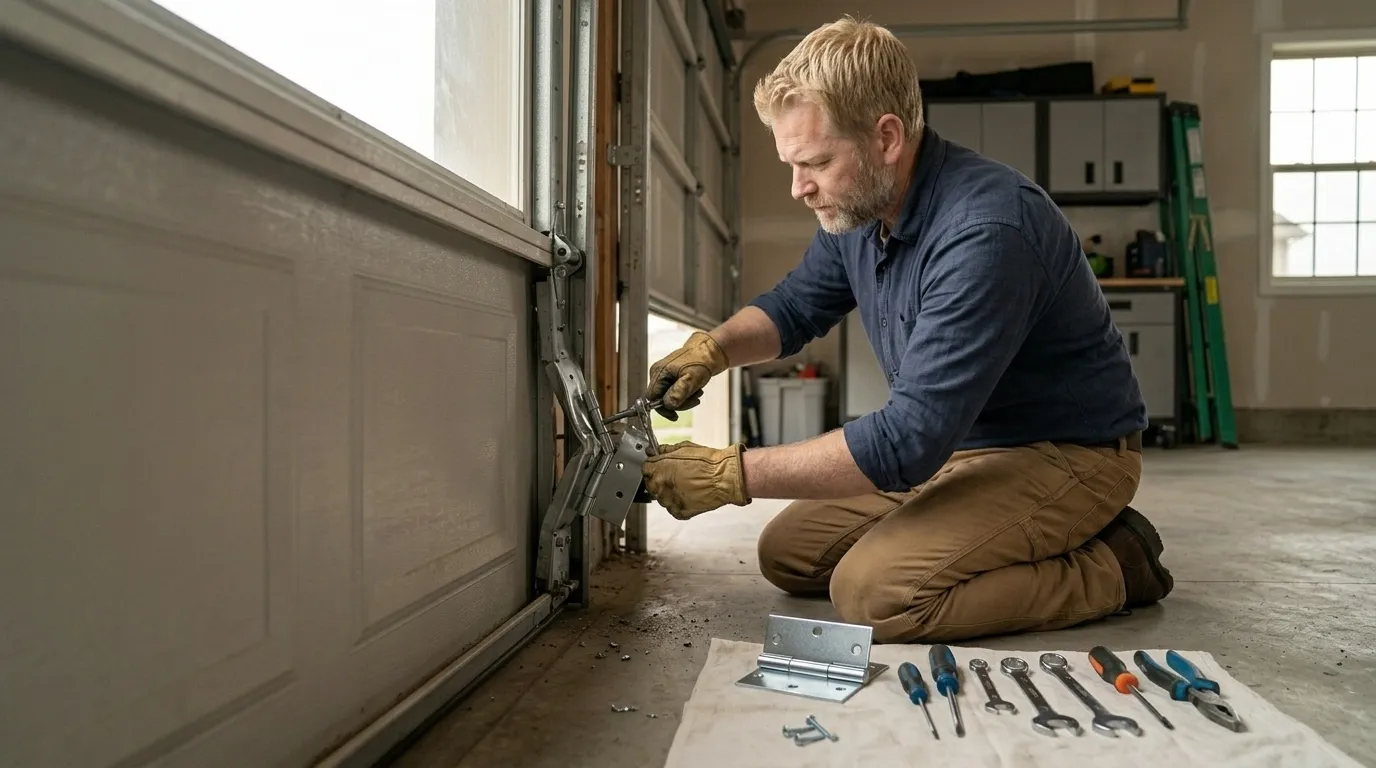
Most houses on this side of Cave Creek were built around 1997, which puts them right in the window when steel raised-panel doors with factory torsion springs became the standard install, replacing the older extension-spring setups. That's mostly good news - torsion is easier to service and safer to work on than the older stretch-spring doors. But it also means a lot of these springs are now over twenty-five years old, well past the cycle count most torsion springs are rated for, and they're starting to go.
Openers from that era are usually 1/2 horsepower chain or belt units with the photo-eye safety sensors that became federally required in 1993. Those sensors sit low on the track, a few inches off the floor, and in a desert yard they collect dust and get knocked out of alignment easily. A door that reverses for no reason, or won't close at all, is very often just a dirty or misaligned sensor pair rather than a failed opener.
Cave Creek's median household income runs well above the wider service area, and that shows up in the calls - more owners here ask about full opener replacement with battery backup rather than patching an old unit, since a extended power outage means a door that won't open by hand either.
What the Repair Takes
A torsion spring swap on a door from the late 1990s is usually a same-visit job - the hardware is standard-size and parts are common. What takes longer is diagnosing an opener from that generation, because some of the boards and logic units are no longer made, and a failed circuit board sometimes means the whole opener gets replaced rather than repaired.
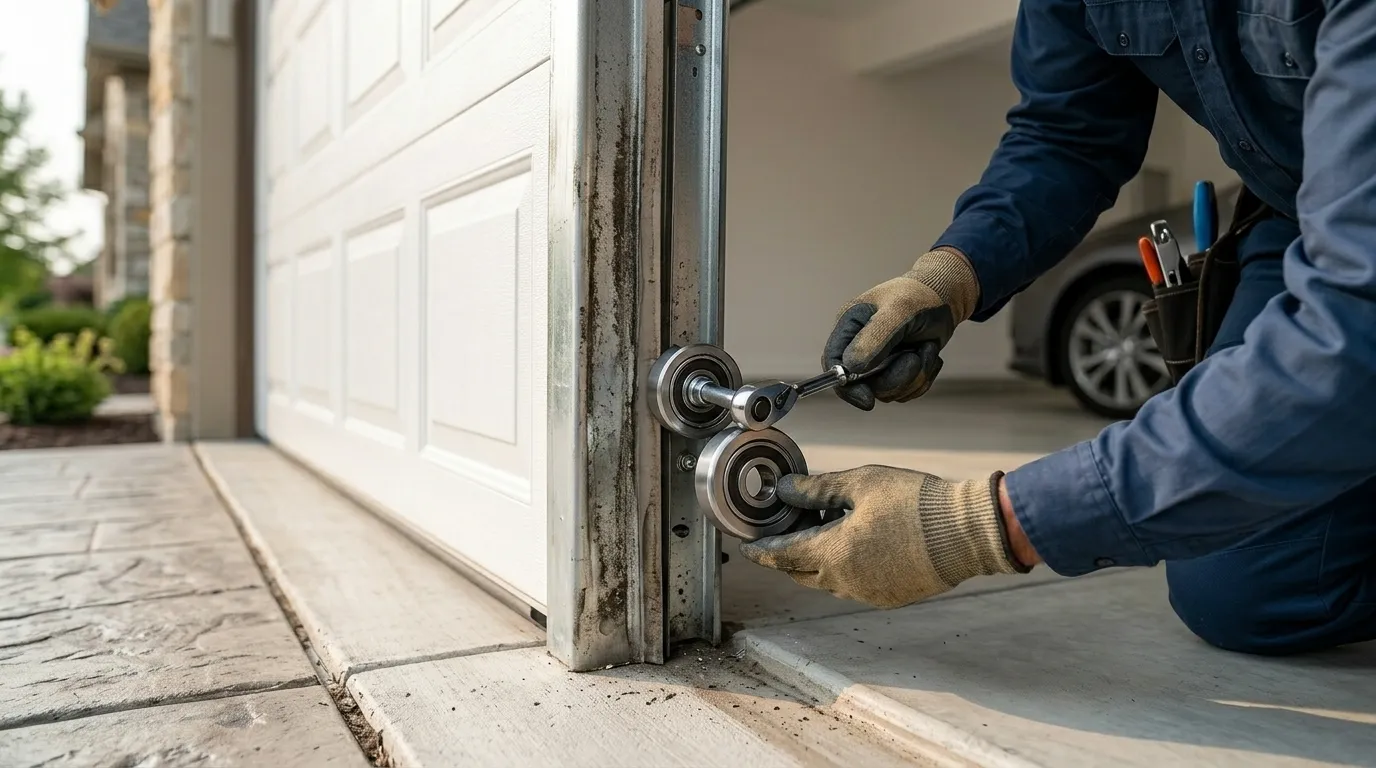
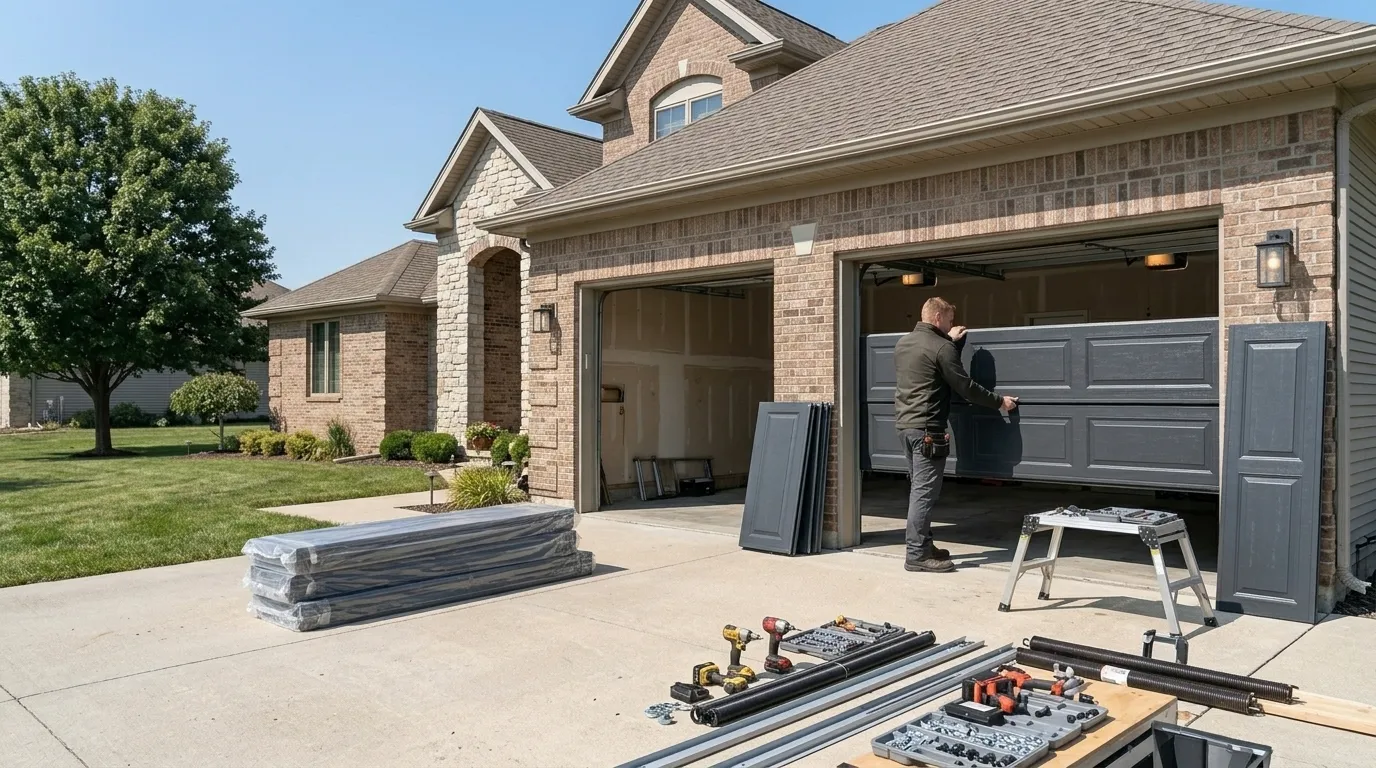
We come out from Phoenix, about 19 miles south, so the visit is planned rather than a walk-up. That's worth knowing before you call: this isn't a shop with a Cave Creek counter, it's a truck that comes to you, and the parts on it cover what late-1990s doors and openers typically need - torsion springs, rollers, photo-eye sensors, and standard drive gears.
Heat is the other factor. Summers here run long and severe, and that shortens the life of both lubricant and the plastic gears inside a chain-drive opener. If your opener grinds instead of running smooth, that's often heat-dried grease inside the housing, not a motor on its way out - worth checking before paying for a new unit.
The DIY Question
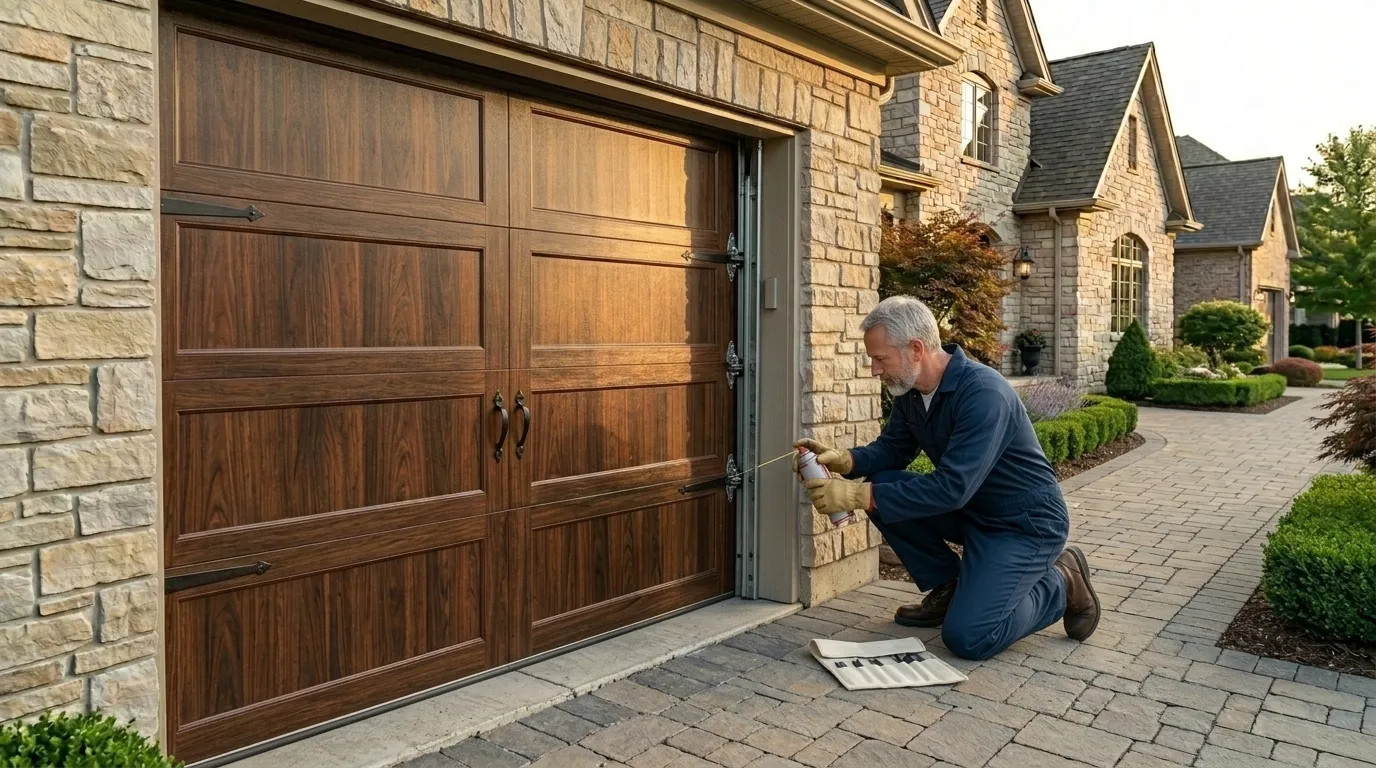
Sensor alignment, tightening loose hardware, lubricating hinges and rollers - these are fine to do yourself, and doing them twice a year will extend the life of a door built in this era more than almost anything else.
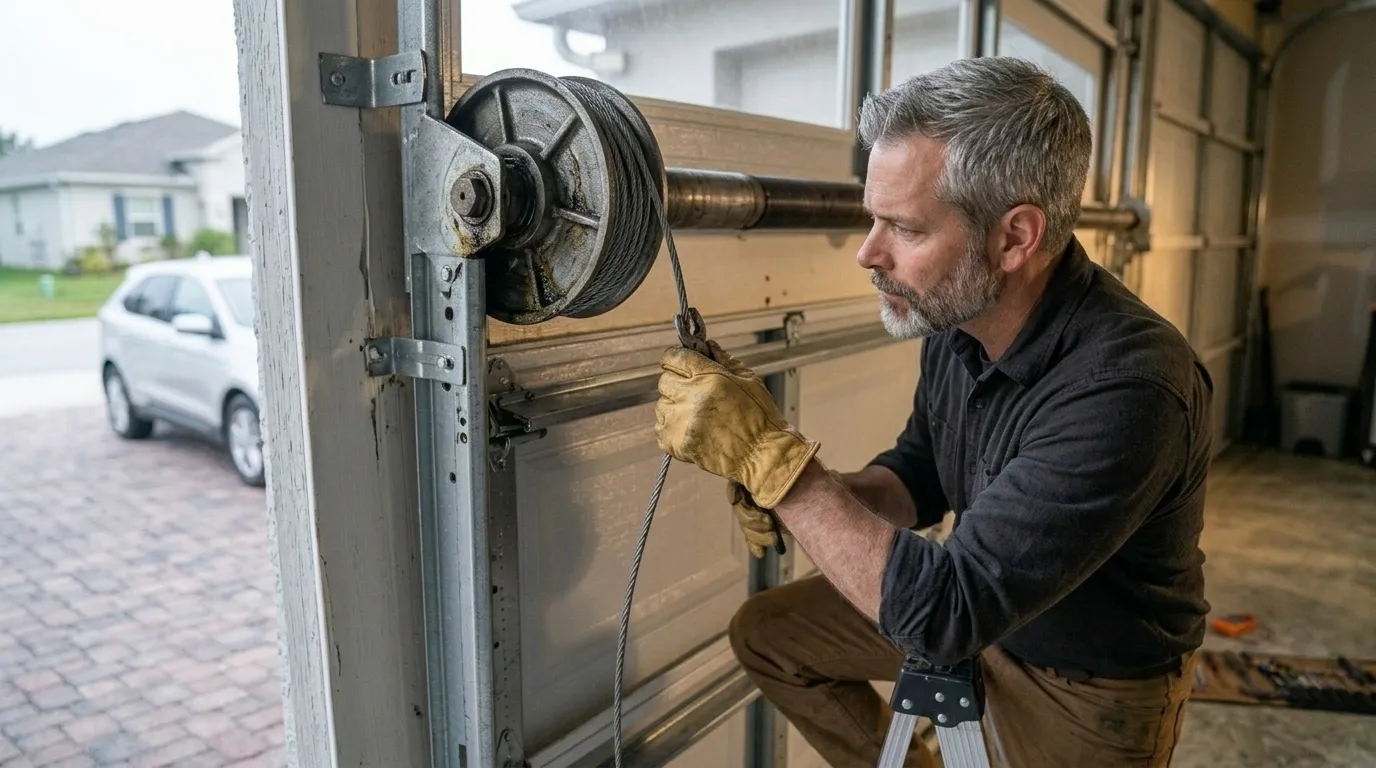
A torsion spring is not a DIY repair. The spring on a standard double door is wound under enough tension to break a wrist or worse if the winding bars slip, and this isn't a place to save a service call. If a cable has frayed or a spring has visibly separated, leave the door closed and call rather than trying to force it up manually.
One honest limit: if your opener board has failed and it's an older model from around when the house was built, we may not be able to get an exact replacement board. In that case the straight answer is a full opener swap rather than a repair, and we'll tell you that up front instead of chasing a part that isn't stocked anymore.
What You Are Seeing
A door that reverses right before it touches the floor, every time, points to the photo-eye sensors - check for dust or a knocked-out-of-alignment lens before assuming the opener itself is bad.
A loud bang followed by a door that won't lift at all is almost always a broken torsion spring, and on a house from this era that spring has likely never been replaced. Don't try to lift the door manually past that point.
A door that lifts a few inches and stalls, or one that feels heavier on one side than the other, usually means one spring is still good and one has lost tension - an uneven load like that will burn out an opener fast if it keeps running against it.
Grinding or a slow start on the opener, especially through the hot months, often traces back to dried lubricant inside the drive unit rather than a failing motor.
How it works
From “it’s stuck” to “it’s fixed”
01
Tell us what’s wrong
Describe the symptom - won’t open, loud bang, opener runs but the door won’t move.
02
On-site diagnosis
A technician tests the door under power and by hand and finds what actually failed.
03
Clear, up-front plan
You get the fix that’s needed and what drives the cost - before any work starts.
04
Repaired & tested
The repair is done, the door is set true and tested, and the work area left clean.
Serving Phoenix, AZ - tell us what your door’s doing and we’ll take it from there.
Most homes in this part of Cave Creek were built around 1997, so the original door and opener are typically pushing 25+ years old. Torsion springs from that install are often at or past the end of their rated cycle life, which is why sudden spring failure is one of the most common calls we get from this area.
Do you have a shop in Cave Creek?
No. Phoenix Garage Door Co is based in Phoenix and drives out roughly 19 miles to reach Cave Creek. We carry the parts that fit late-1990s doors and openers on the truck, but there's no local counter or drop-in location here.
Why does my opener sensor keep failing in summer?
Cave Creek sits in a severe-heat climate band, and heat is hard on both the plastic housings of photo-eye sensors and the lubricant inside chain-drive openers. Dust plus heat-dried grease causes more service calls here than actual electrical failure.
Ready to get your garage door sorted?
Tell us what it’s doing and where you are in Phoenix - we’ll take it from there.