Cave Creek homes average a $102,589 median income and 1997-era doors. See why the repair-or-replace call lands differently here than closer into Phoenix.
Cave Creek sits at a median household income of $102,589, well above the $74,764 median across the wider Phoenix service area we cover. That number matters here more than in most towns we drive to, because it changes the math on a broken spring or a dead opener. At $102,589, a lot of owners don't want to nurse a 1997-era door along for another five years with a patched part - they'd rather replace the opener outright than wait on a second failure. We still fix what's fixable. But when a call comes in from Cave Creek, the conversation about repair versus replace starts earlier and lands on replace more often than it does nineteen miles closer to the city.
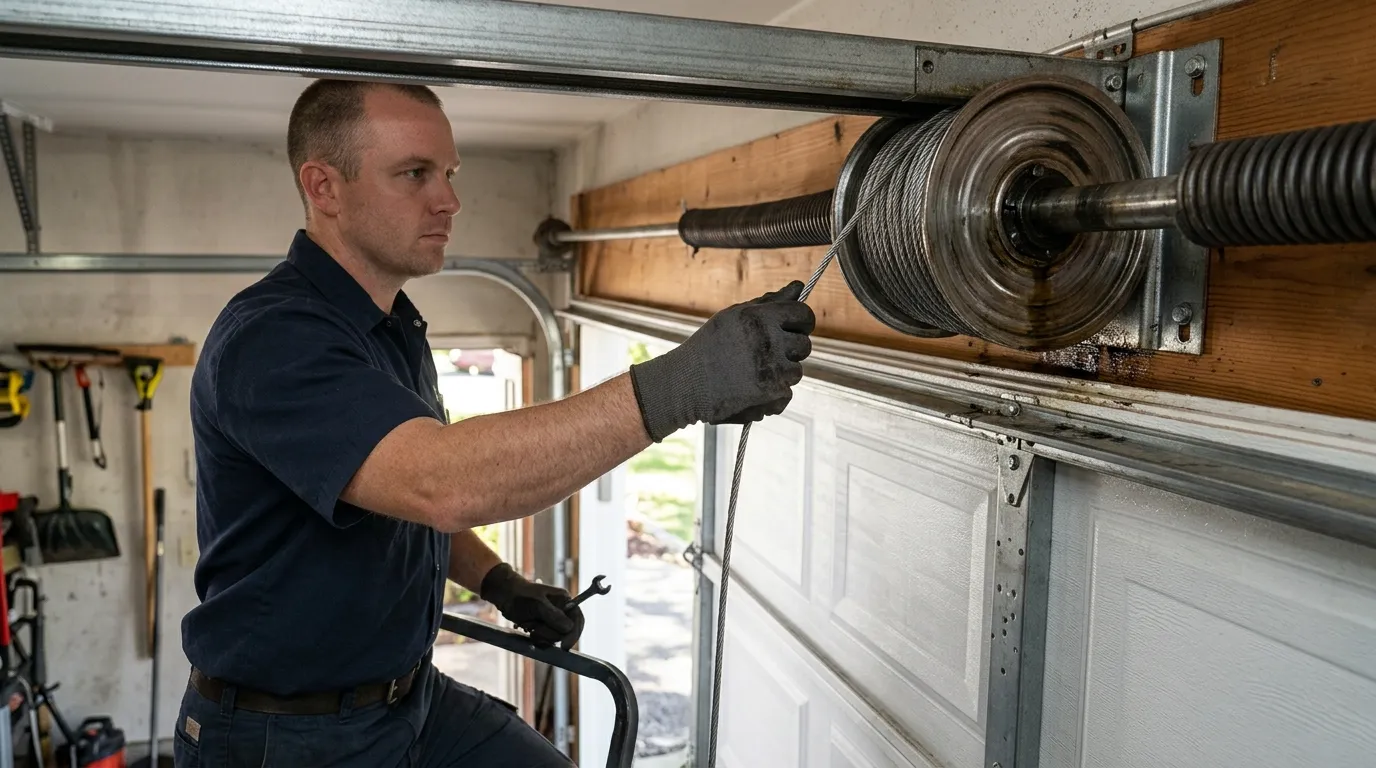
The doors themselves date mostly to the late 1990s, based on the area's housing stock. That means steel torsion springs nearing or past their cycle life, openers with drive belts or chains original to the house, and photo-eye safety sensors that have sat through two decades of Phoenix summers. Heat is the other constant here - this is a severe-heat climate band, and it doesn't spare garage hardware. Lubricant dries out, plastic gears in older openers go brittle, and steel expands and contracts enough over the years to throw a track out of true.
What the Repair Takes
We come out from Phoenix, roughly 19 miles. That drive is worth naming plainly: we don't keep a truck staged in Cave Creek, so we're not going to promise a response time we can't back up from that distance. What we can tell you is what the job itself takes once we're there.
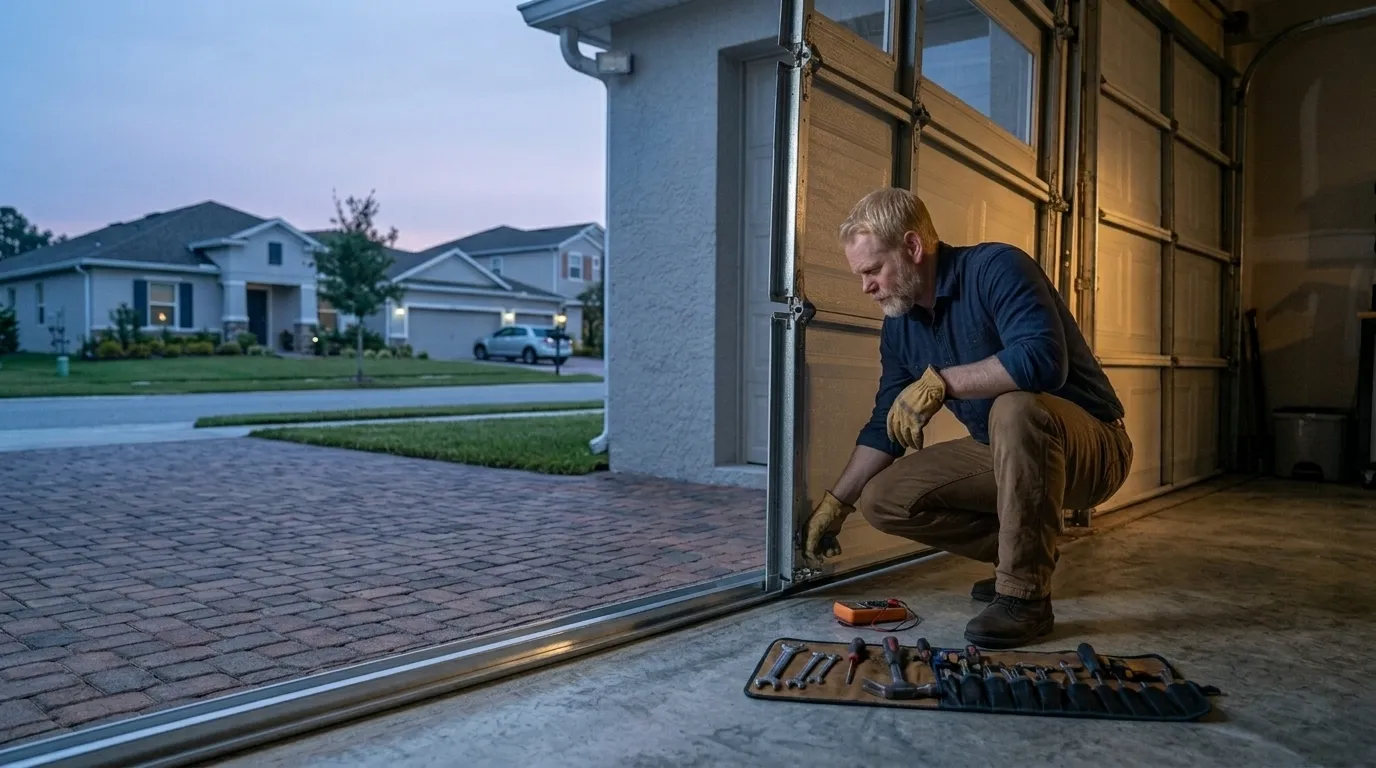
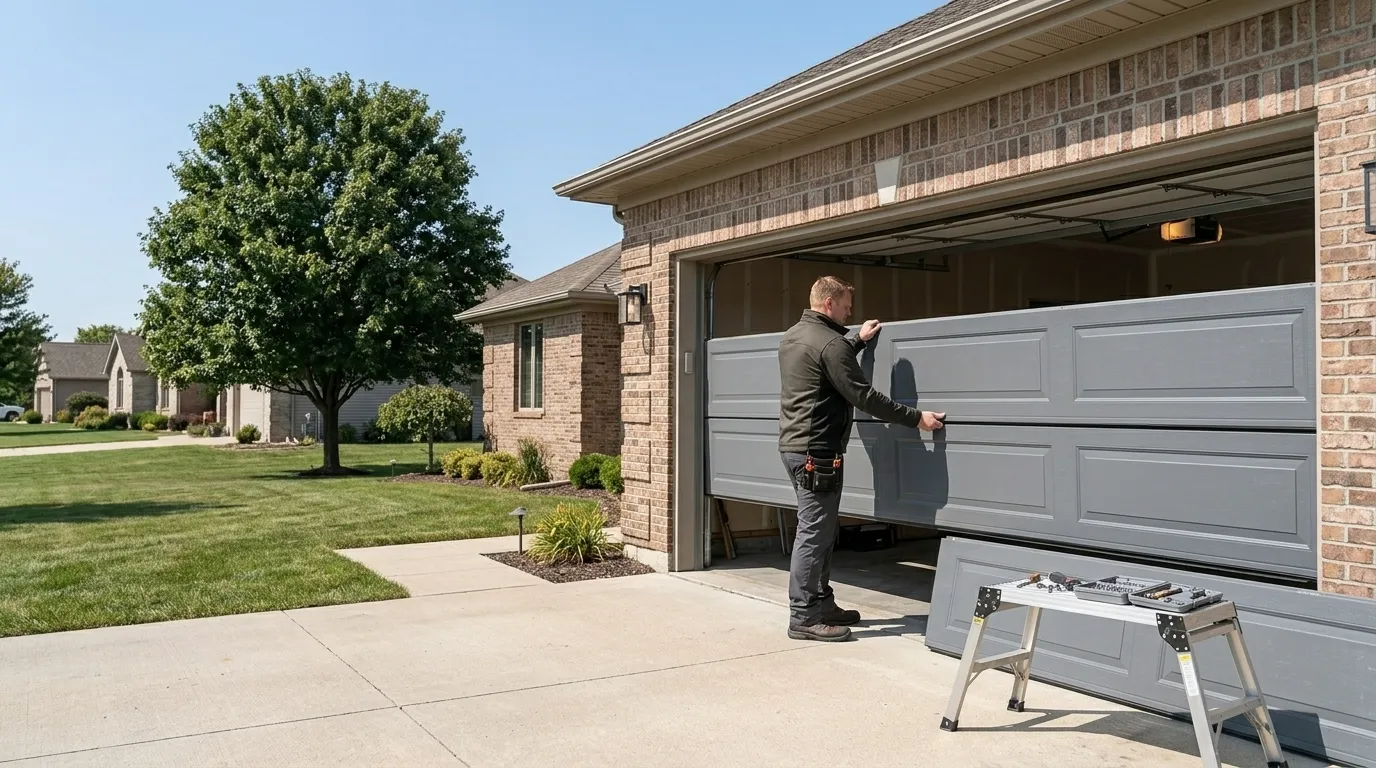
On a 1997-built door, the common jobs are a torsion spring swap, a full opener replacement when the motor or logic board has finally quit, or track and roller work where years of heat-driven expansion have knocked things out of line. Parts availability is the one honest snag: hardware sized for houses from that era is usually still stocked, but if your opener is an obscure brand or a rare drive type, we may need to order the exact part rather than pull it off the truck. We'll tell you straight if that's the case rather than guess and come back twice.
The DIY Question
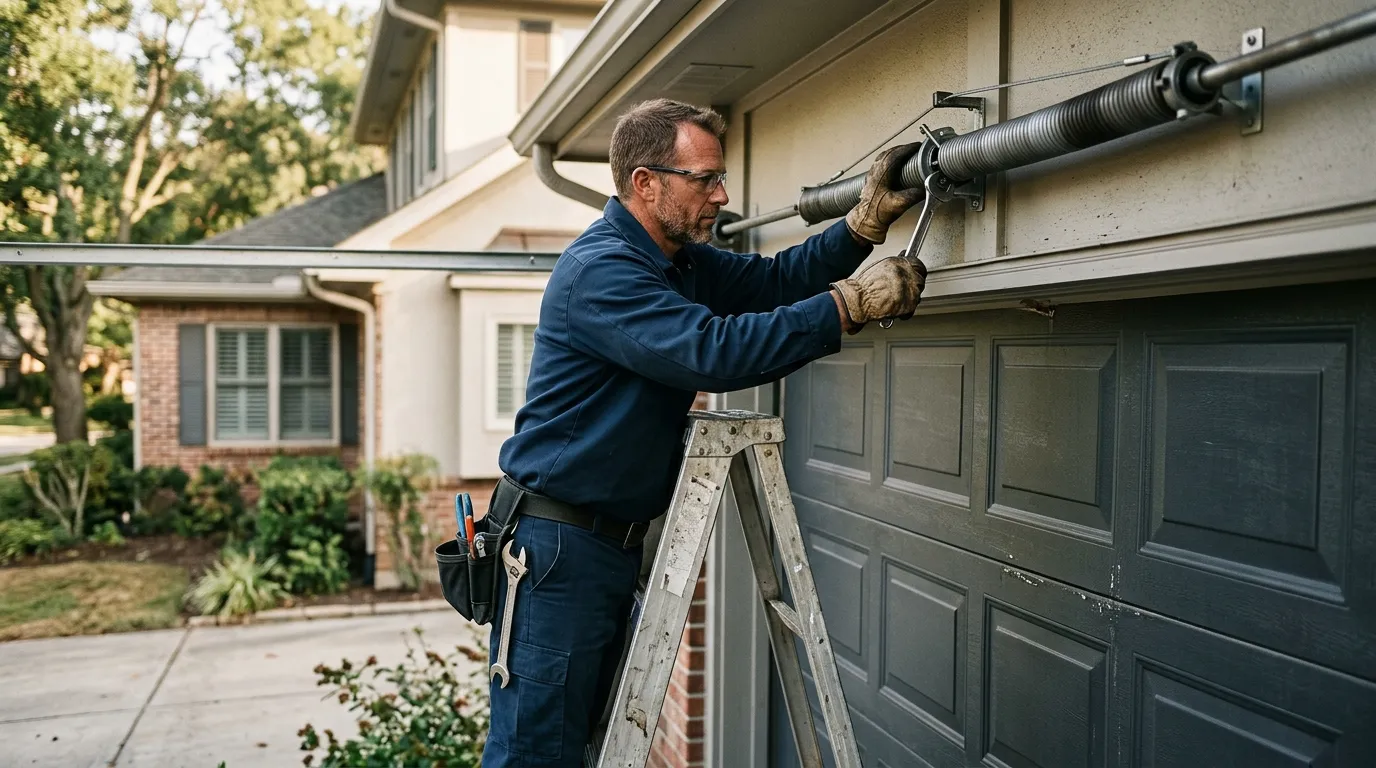
A torsion spring holds enough stored force to break a bone or worse, and that doesn't change because the house is nicer or the income bracket is higher. If your door won't open, won't close, or dropped suddenly, the spring or a cable is the likely cause, and it's not a project for a Saturday with a socket set.
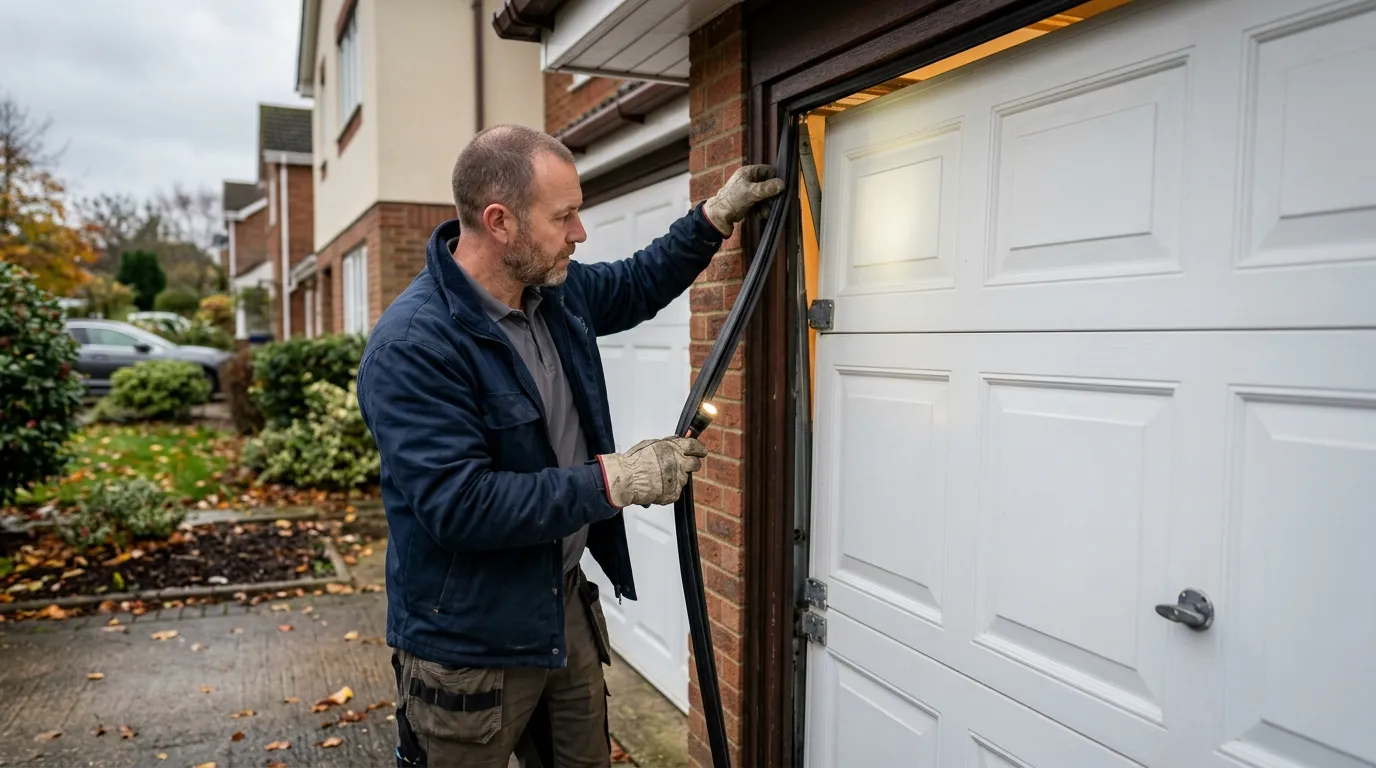
What you can safely check yourself: the photo-eye sensors near the floor on each track, which get knocked out of alignment easily and are a common cause of a door that reverses or won't close at all. Wipe the lenses, check for anything blocking the beam, and see if that clears it. Beyond that - springs, cables, the opener's internal gearing - call it in. The heat-severe climate here also means openers get quietly cooked from the inside over the years; a unit that's merely slow to respond in summer heat isn't a DIY fix, it's usually a sign the motor's on its way out.
What You Are Seeing
A door that reverses right after touching the ground is almost always the photo-eye or a track misalignment, not the spring. A door that won't budge at all, or one side visibly higher than the other, points to a broken torsion spring - don't force the opener to fight it, since that's how you burn out the motor on top of the spring failure. A grinding or popping sound during travel usually means a roller has worn through or a cable has started to fray.
On houses from the late 1990s stock common to Cave Creek, we also see openers that run but won't fully close - often a logic board that's degraded from repeated summer heat cycling rather than anything mechanical. If your opener light blinks in a pattern before it stalls, that's diagnostic information worth mentioning when you call, since it usually points straight to the failing part before we've even opened the panel.
How it works
From “it’s stuck” to “it’s fixed”
01
Tell us what’s wrong
Describe the symptom - won’t open, loud bang, opener runs but the door won’t move.
02
On-site diagnosis
A technician tests the door under power and by hand and finds what actually failed.
03
Clear, up-front plan
You get the fix that’s needed and what drives the cost - before any work starts.
04
Repaired & tested
The repair is done, the door is set true and tested, and the work area left clean.
Serving Phoenix, AZ - tell us what your door’s doing and we’ll take it from there.
No. We run out of Phoenix and drive the roughly 19 miles to reach Cave Creek. We won't promise a same-day response time we can't guarantee from that distance, but we'll give you an honest window when you call.
Is it worth repairing an opener from the late 1990s?
Often yes for the mechanical parts - springs, cables, rollers. Openers are a closer call, since a board that's degraded from years of Phoenix heat can fail again soon after a partial fix. Given the income level and housing age typical here, many owners choose full opener replacement rather than repeat repairs.
Why does my door only act up in summer?
Heat causes steel to expand, dries out lubricant, and stresses aging opener electronics harder than in cooler months. In a severe-heat climate like this one, a door that's marginal the rest of the year often fails outright once temperatures peak.
Can I just replace the photo-eye sensors myself?
Yes, that's one of the safer DIY jobs. They're low-voltage, mount with a simple bracket, and don't involve stored spring tension. If misalignment or a cracked lens is the whole problem, replacing them yourself is reasonable.
Ready to get your garage door sorted?
Tell us what it’s doing and where you are in Phoenix - we’ll take it from there.