What Causes It Around Here
Heat does most of the damage. This area sits in a severe-heat climate band, and a garage that bakes all summer cooks the lubricant off bearings and springs faster than a shaded or attached garage in a milder location would. Steel expands and contracts with the daily swing between a 115-degree afternoon and a cooler night, and that repeated flex is what fatigues torsion springs before their rated cycle count runs out.
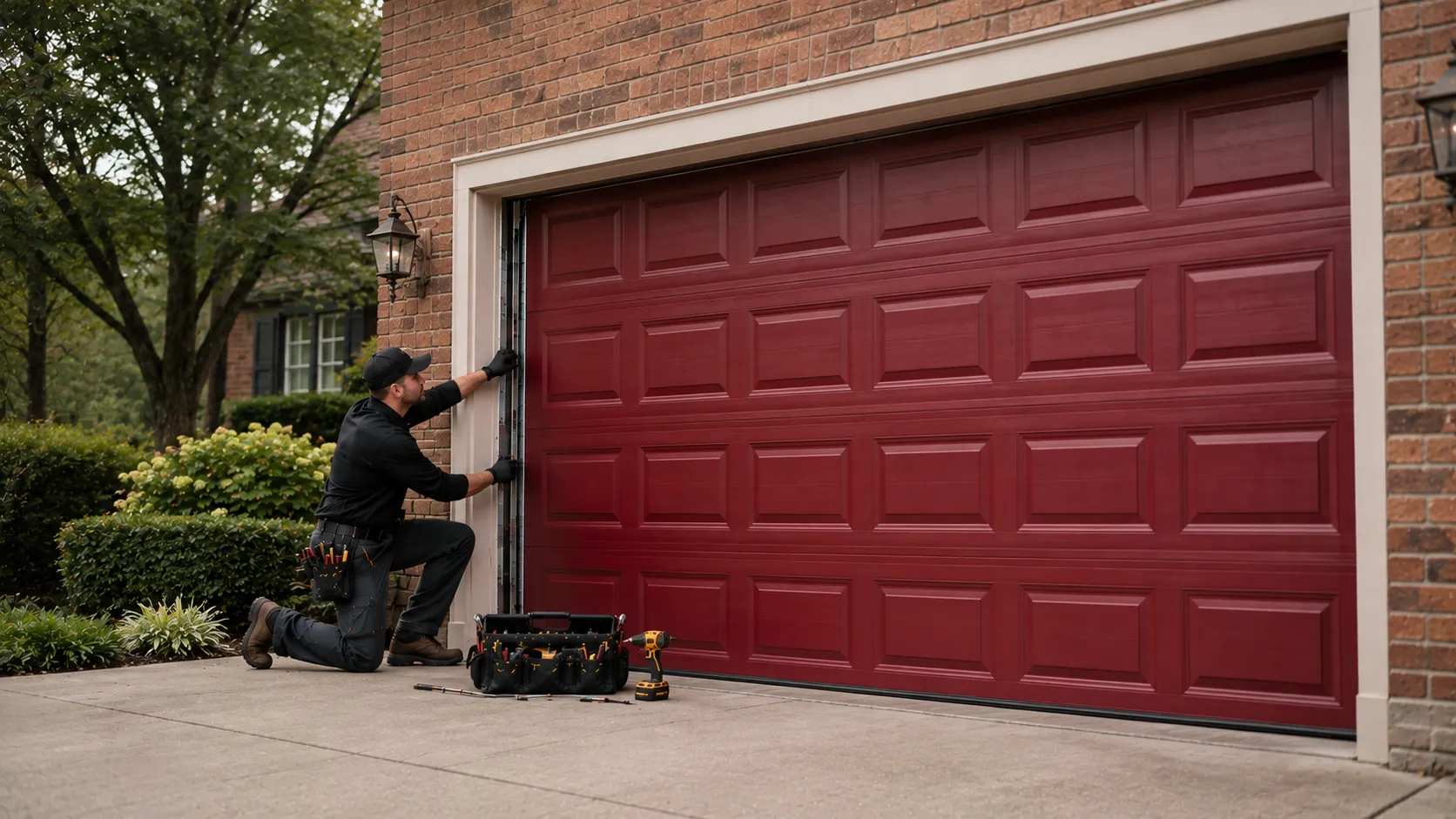
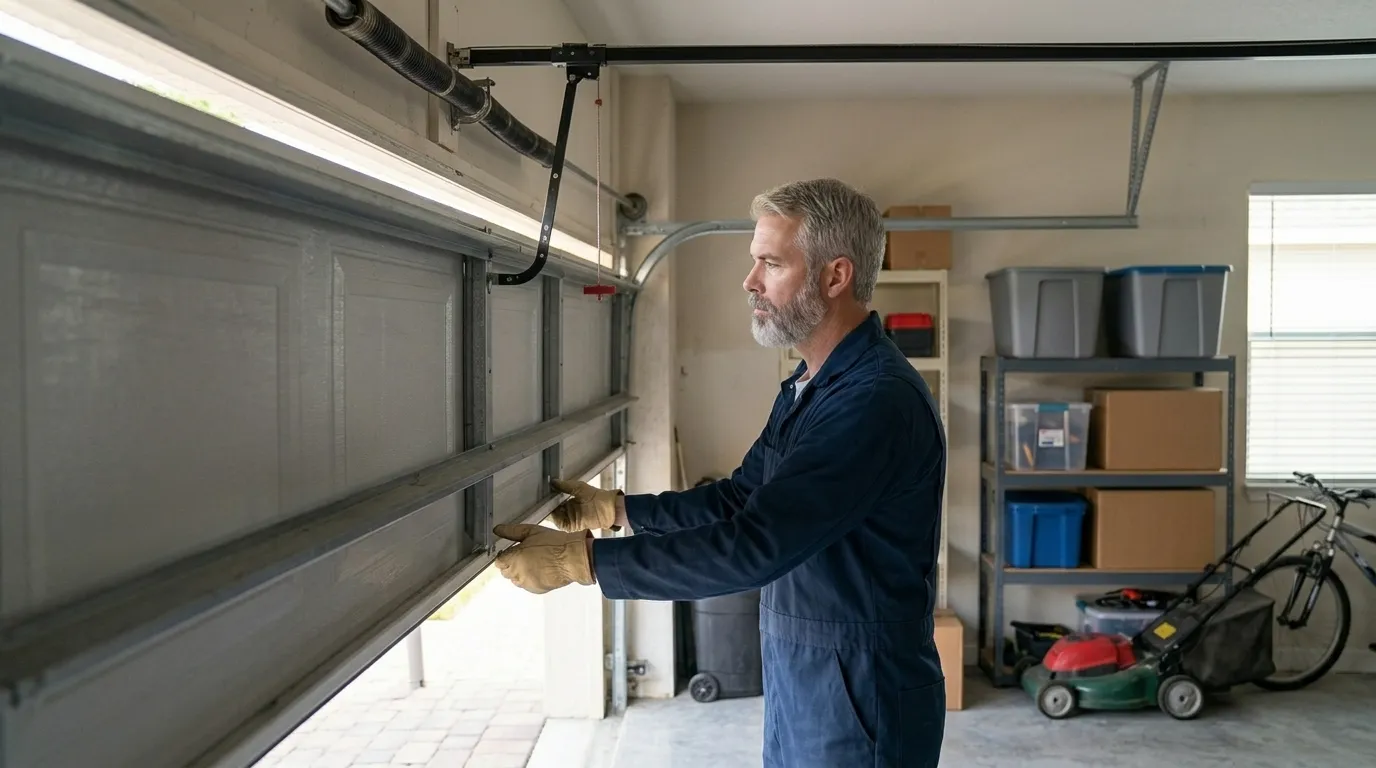
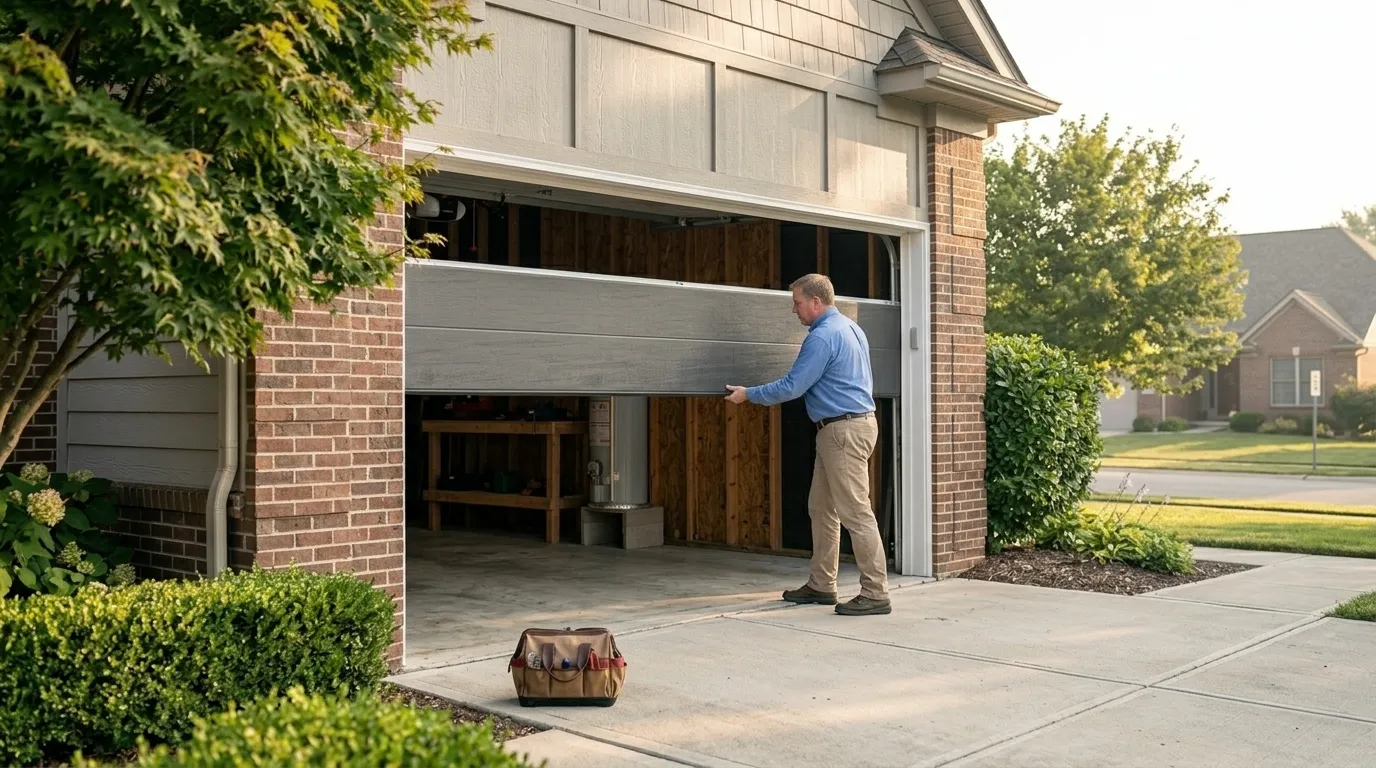
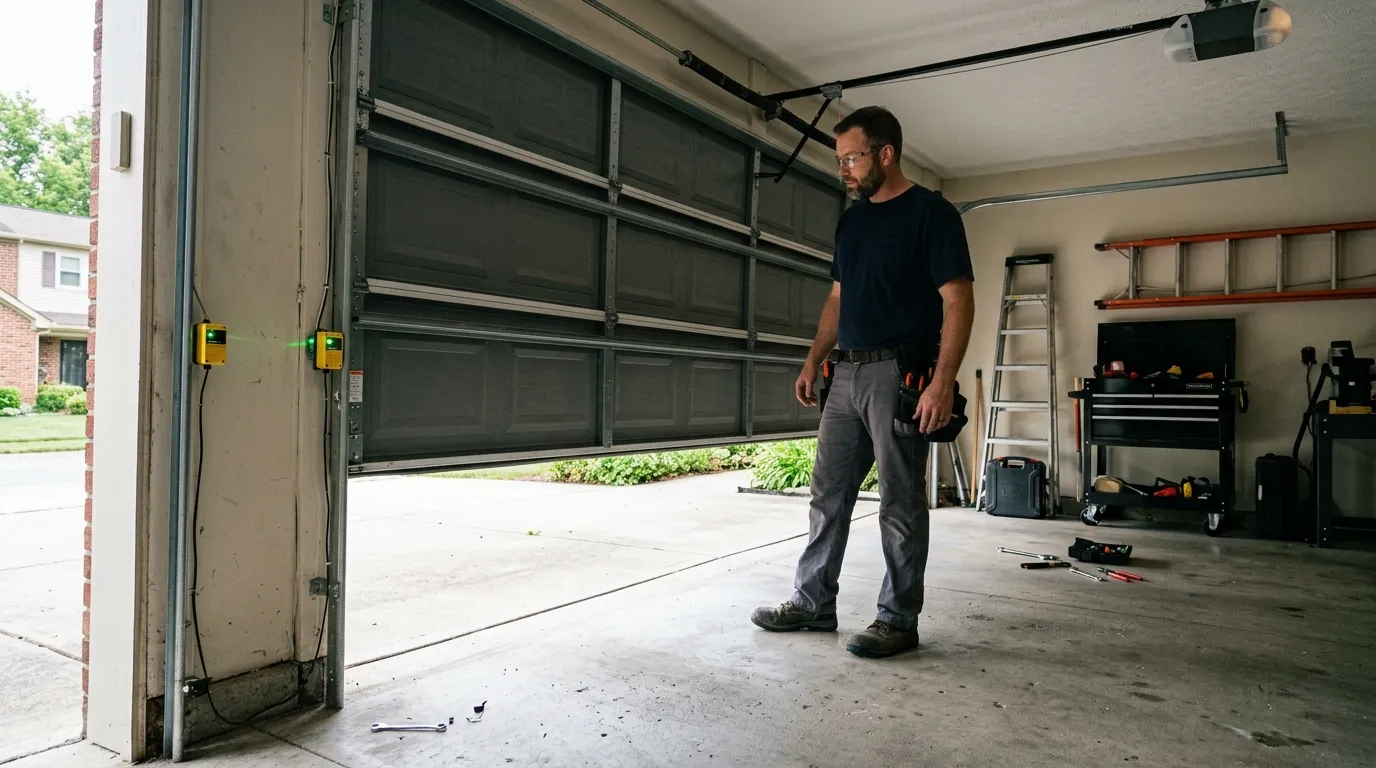
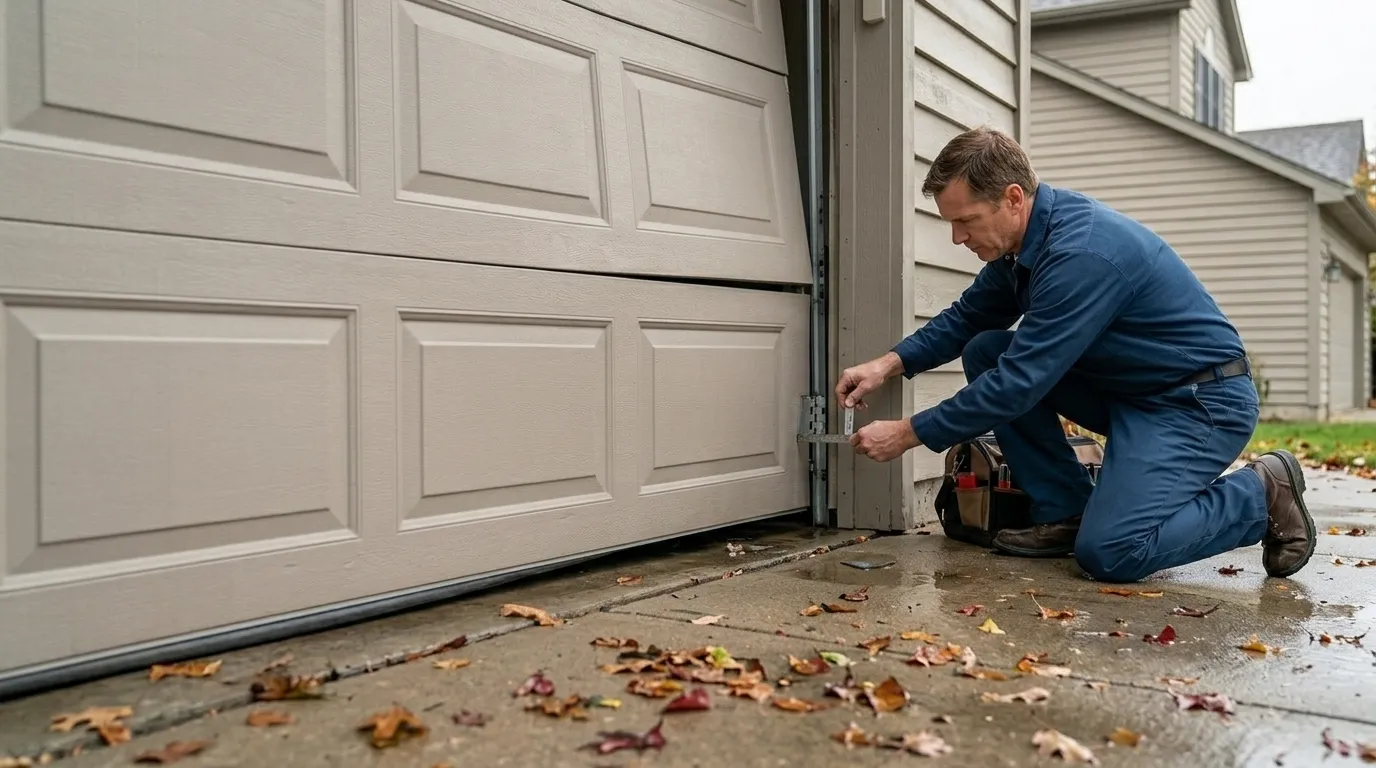
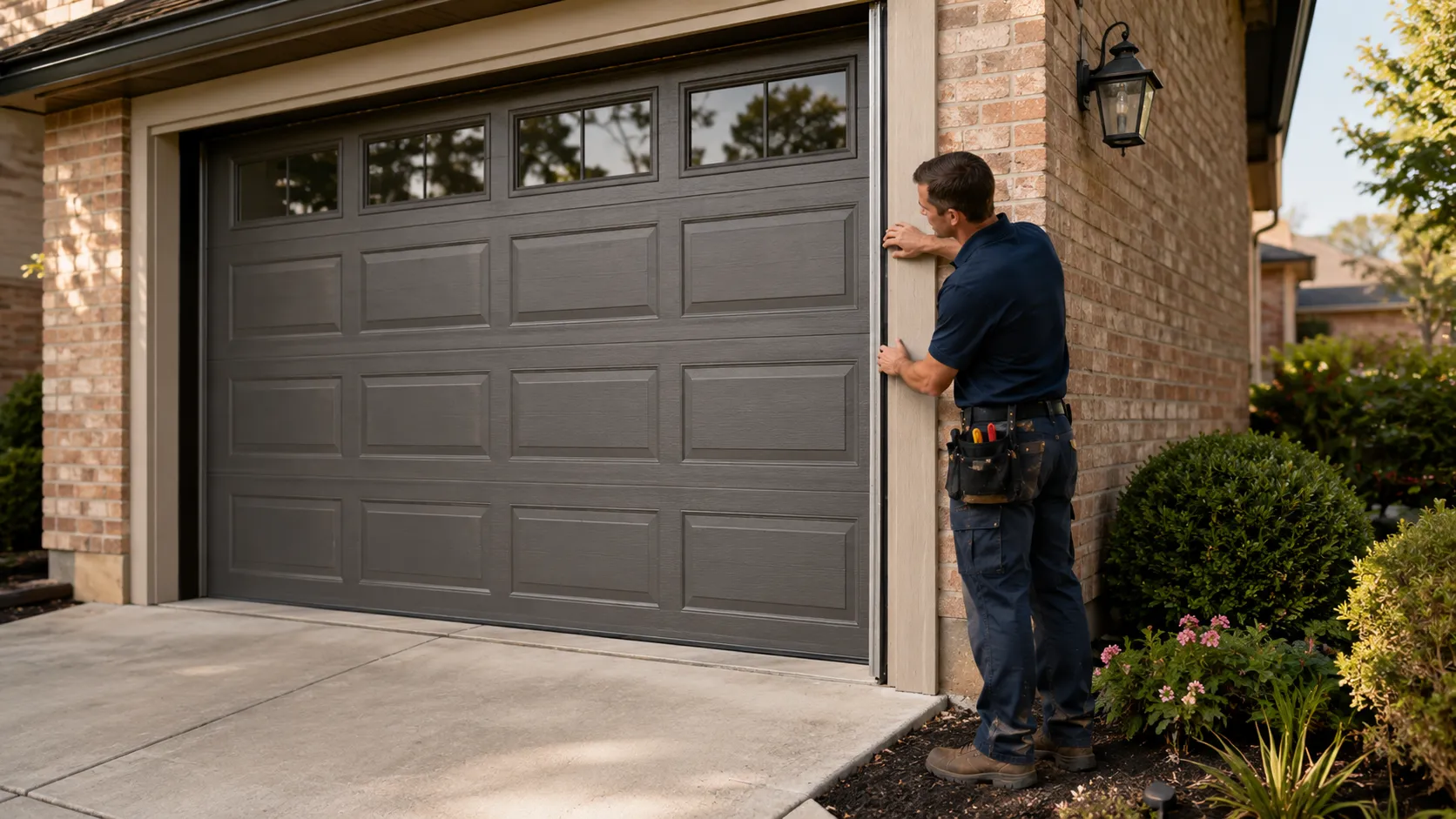
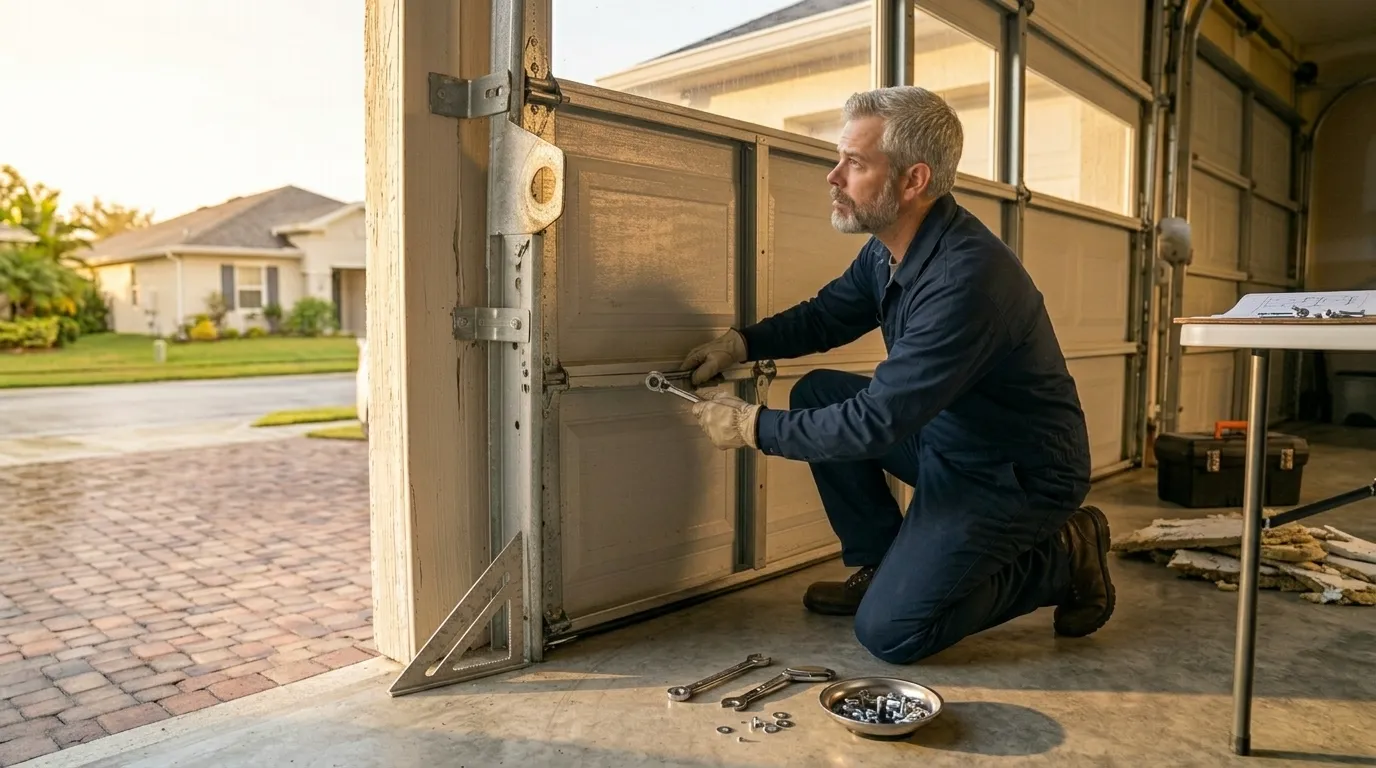
Age compounds it. A door installed when the neighborhood was built in 1990 has had over three decades of that heat cycle working on the same springs, the same rollers, the same weatherstripping. None of it is dramatic on its own, but it adds up to hardware that's due for a real inspection, not just a squirt of WD-40 on the hinges. We check spring tension, cable wear, roller condition, and track alignment as a set, because in a house this age they tend to fail as a set too.
The DIY Question
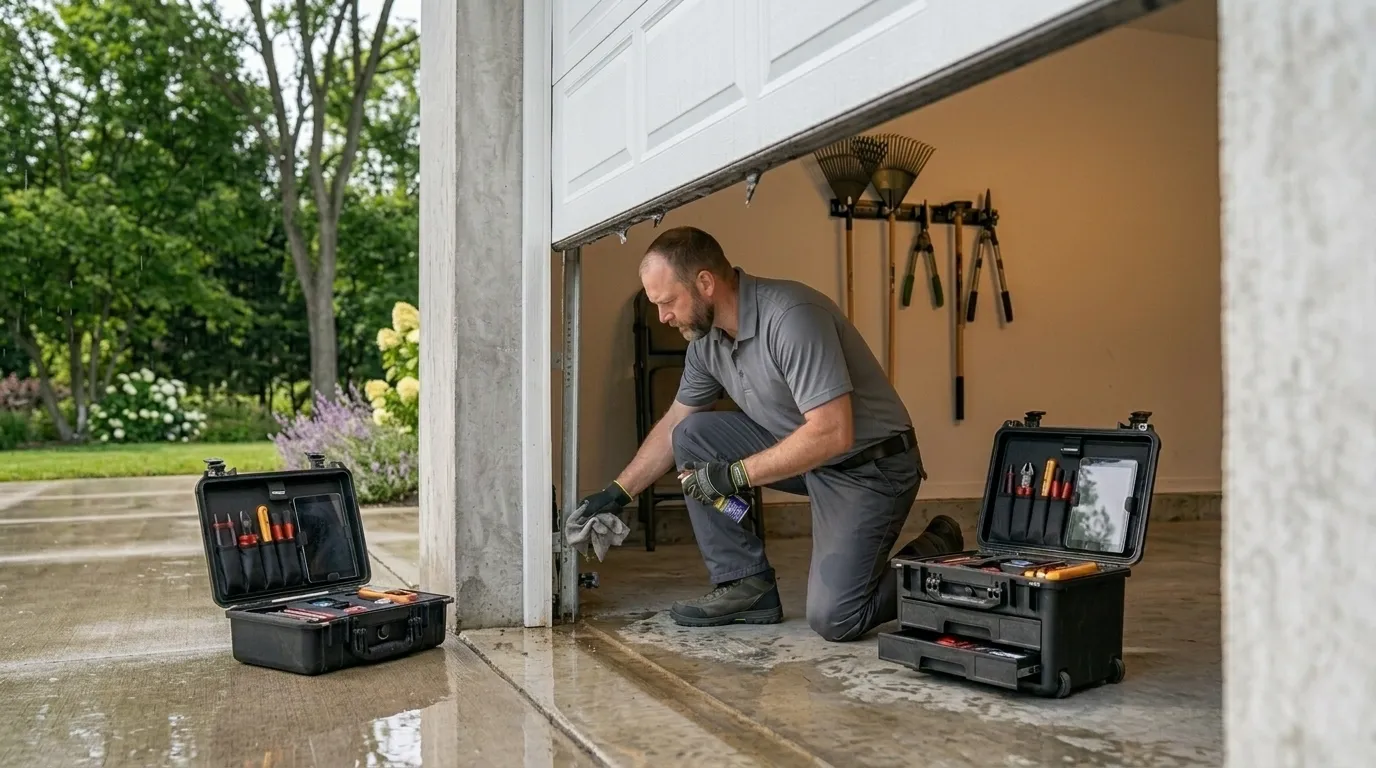
You can do some of this yourself. Wiping down tracks, checking that the door reverses when it hits an object, and putting a light lithium grease on rollers and hinges are all fine weekend jobs. What you shouldn't touch is the torsion spring itself. It's under enough tension to break a bone if it lets go while you're working on it, and on a door built in 1990 that spring has already absorbed three decades of heat cycling, which makes it less predictable, not more.
We'll also say plainly: if your opener and springs are original to a 1990 install and starting to show multiple small faults at once, a tune-up visit might tell you replacement is the better call rather than another repair. We won't sell you a maintenance plan on hardware that's past the point where maintenance helps. That's a judgment call worth having a second set of eyes on before you spend money either way.