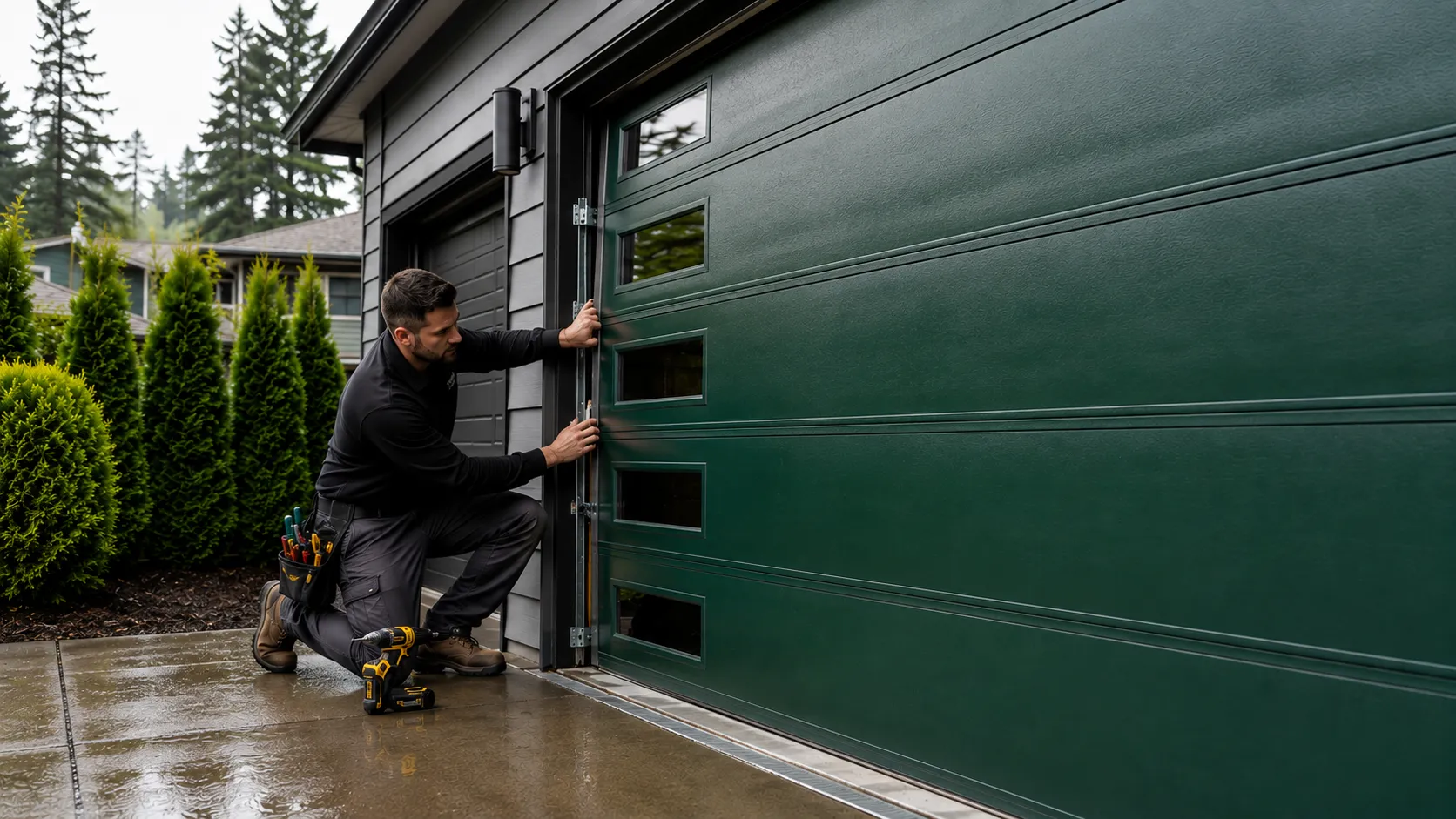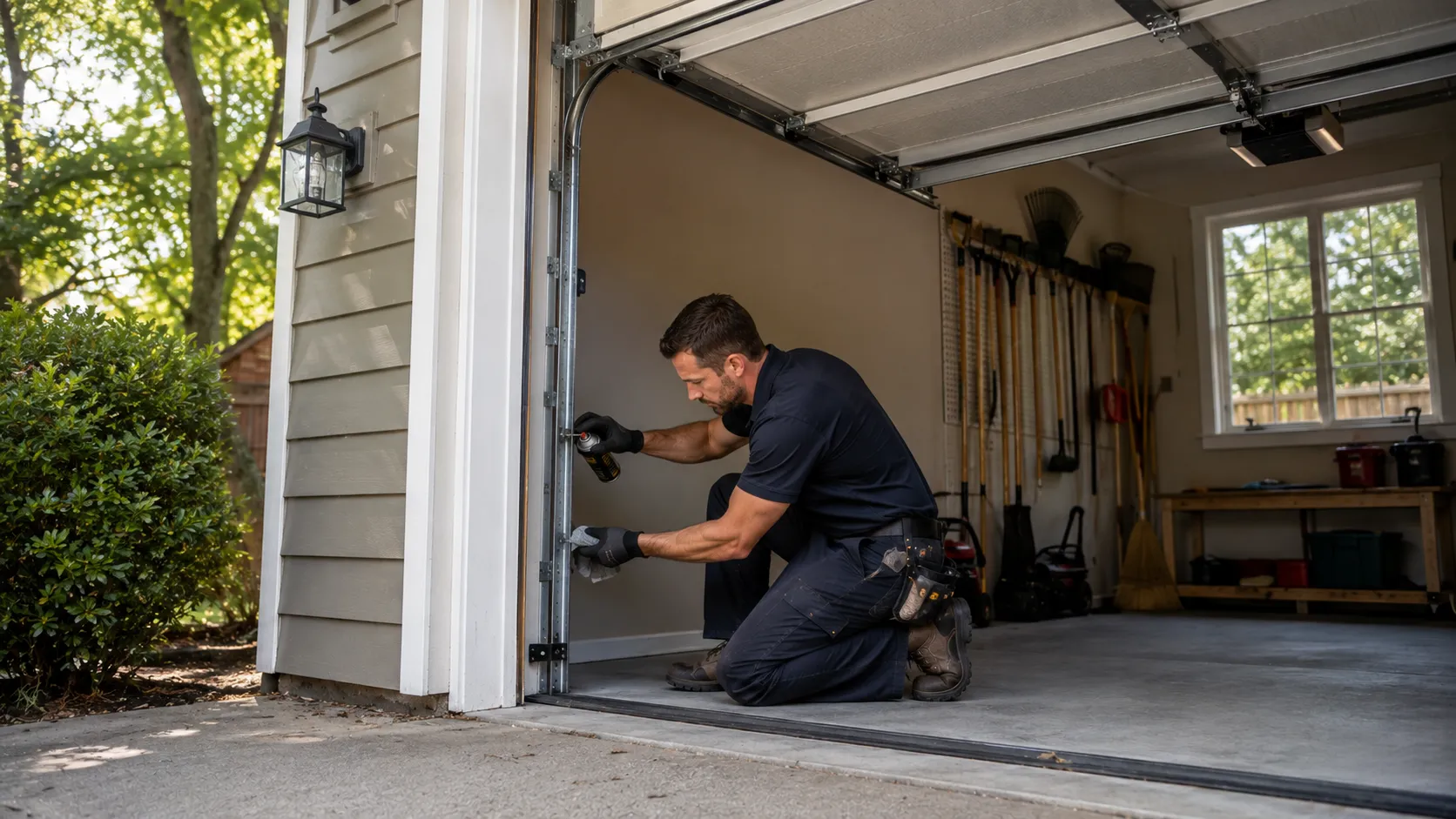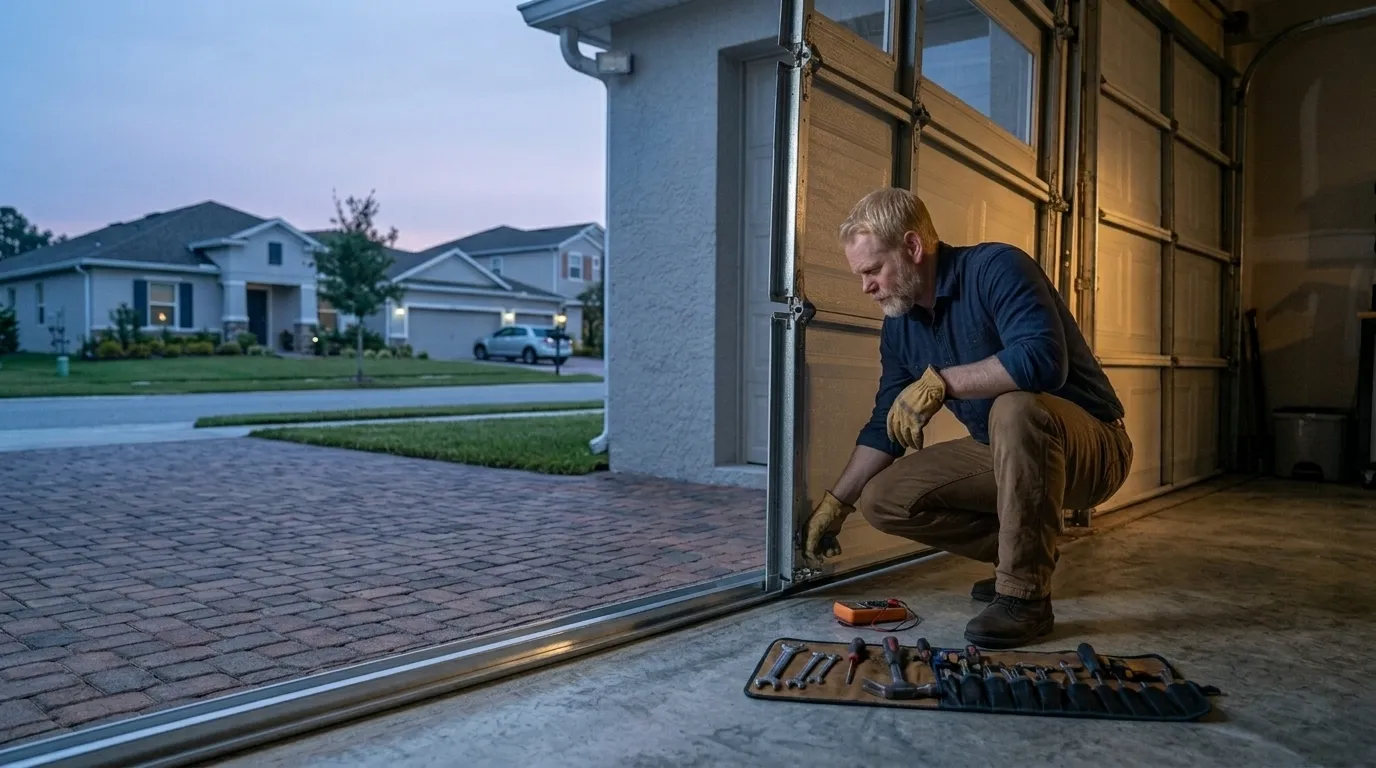
What You Are Seeing
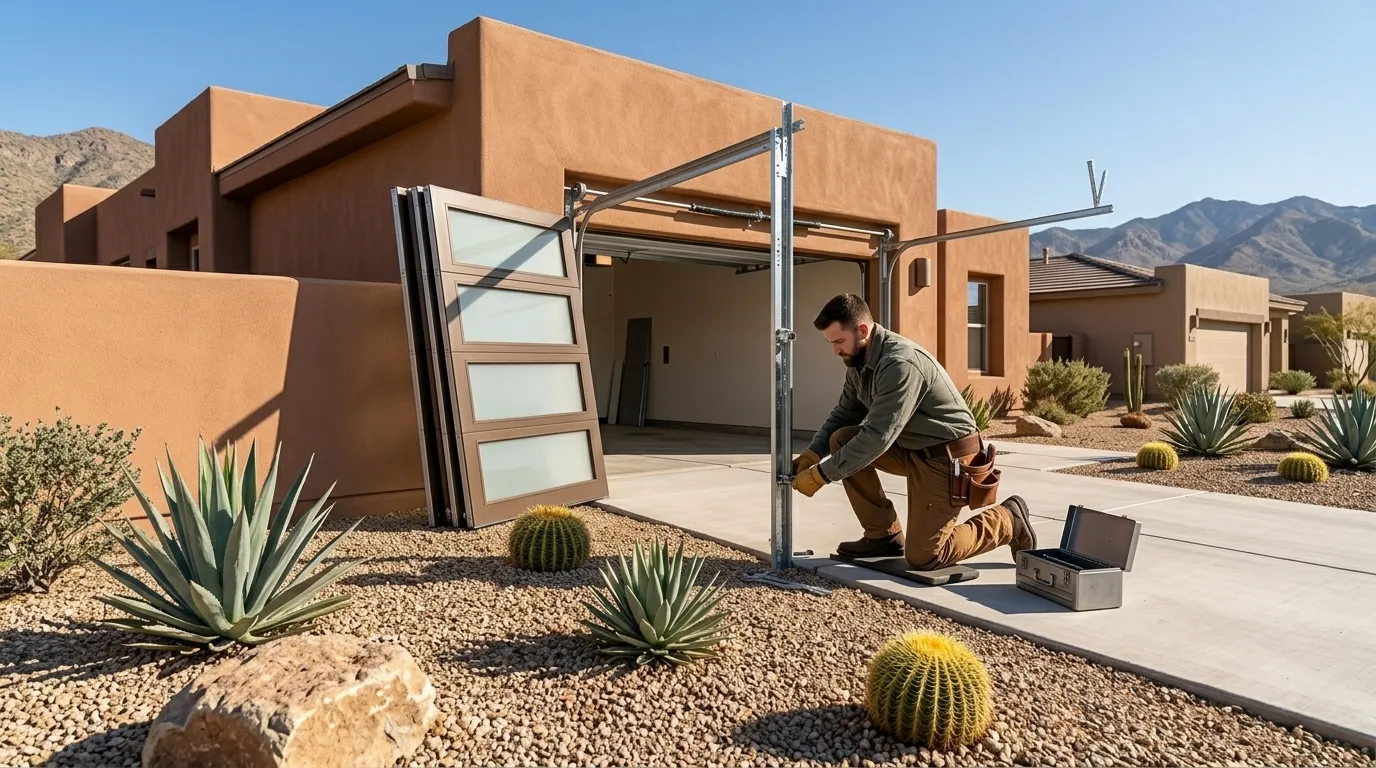
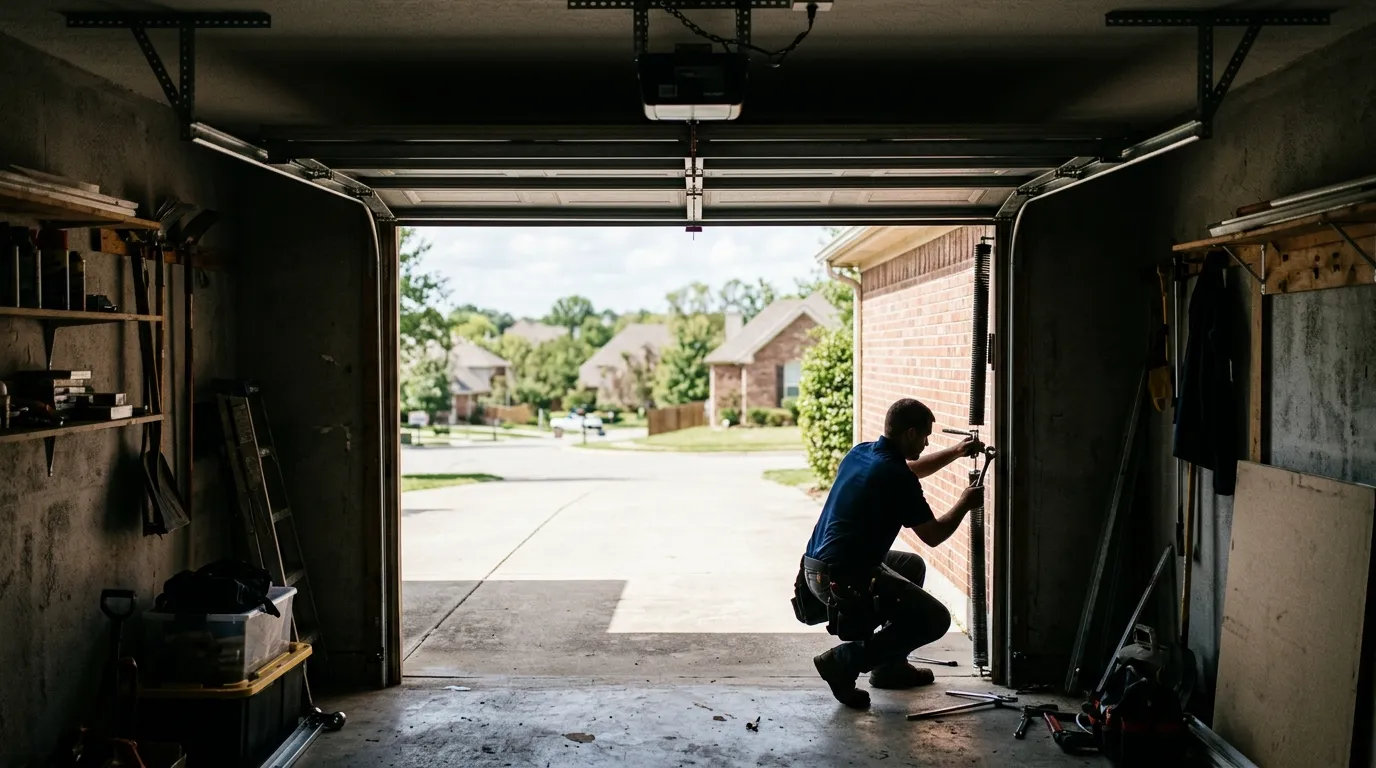
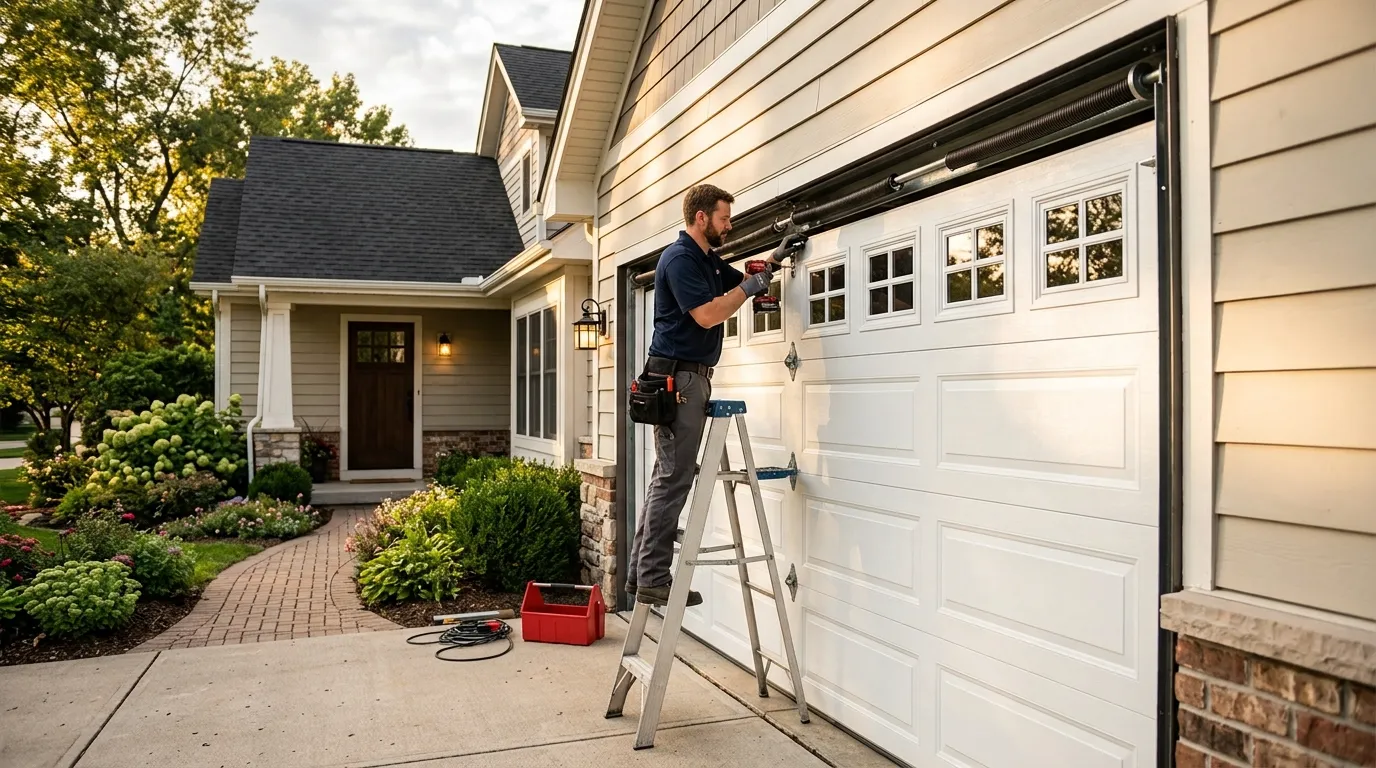
The door won't budge, or it opens six inches and stalls. That's a classic broken torsion spring - the opener has power but no help lifting the weight, so the motor strains and trips its own protection. You might hear a loud bang from the garage before it happens; that's the spring itself snapping under tension, not a mechanical fault in the opener.
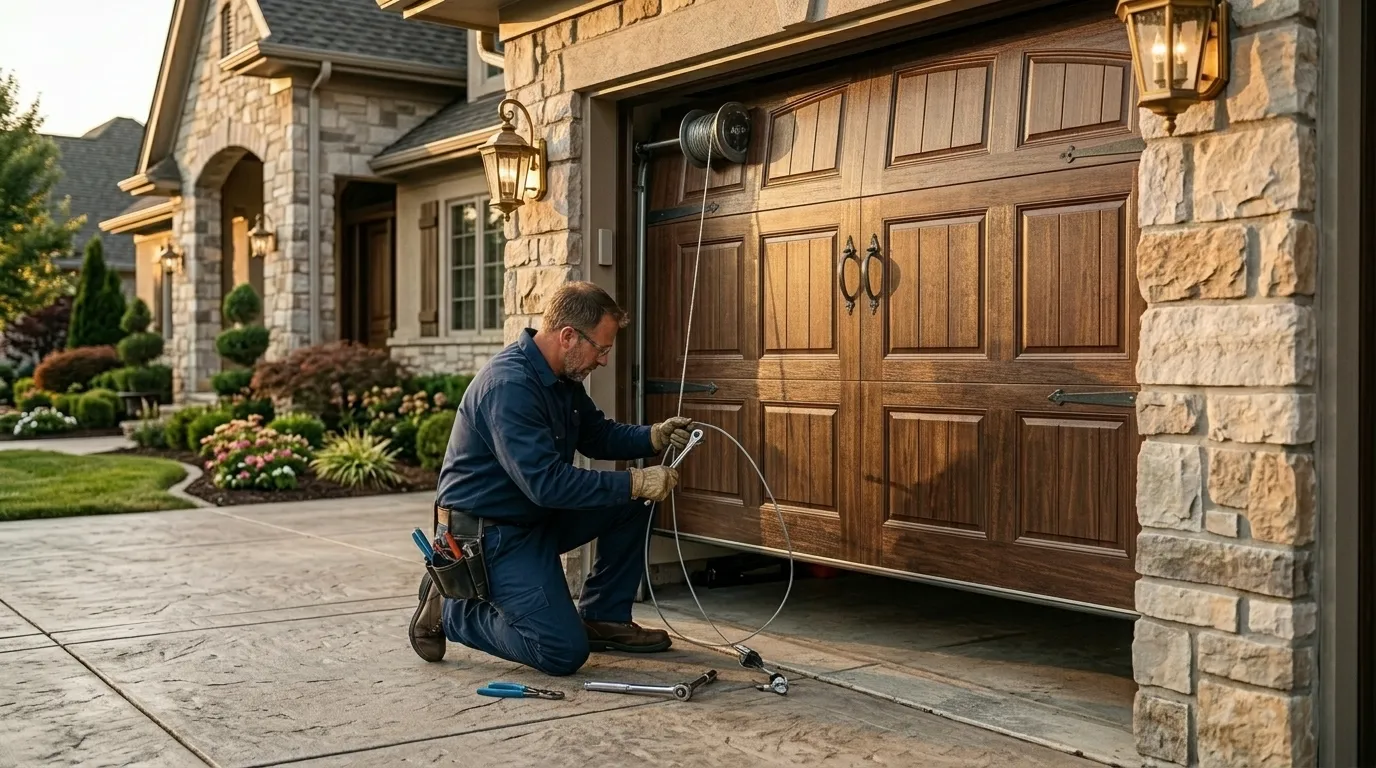
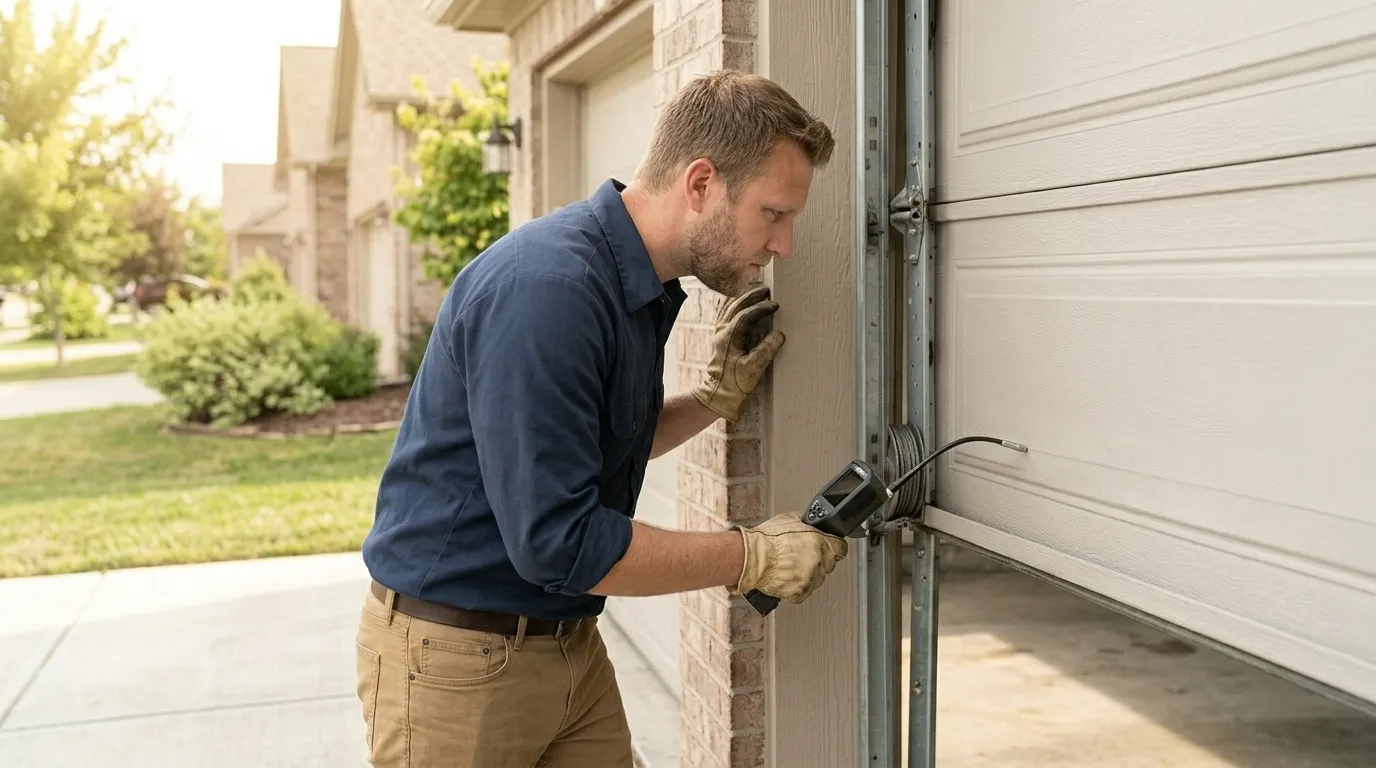
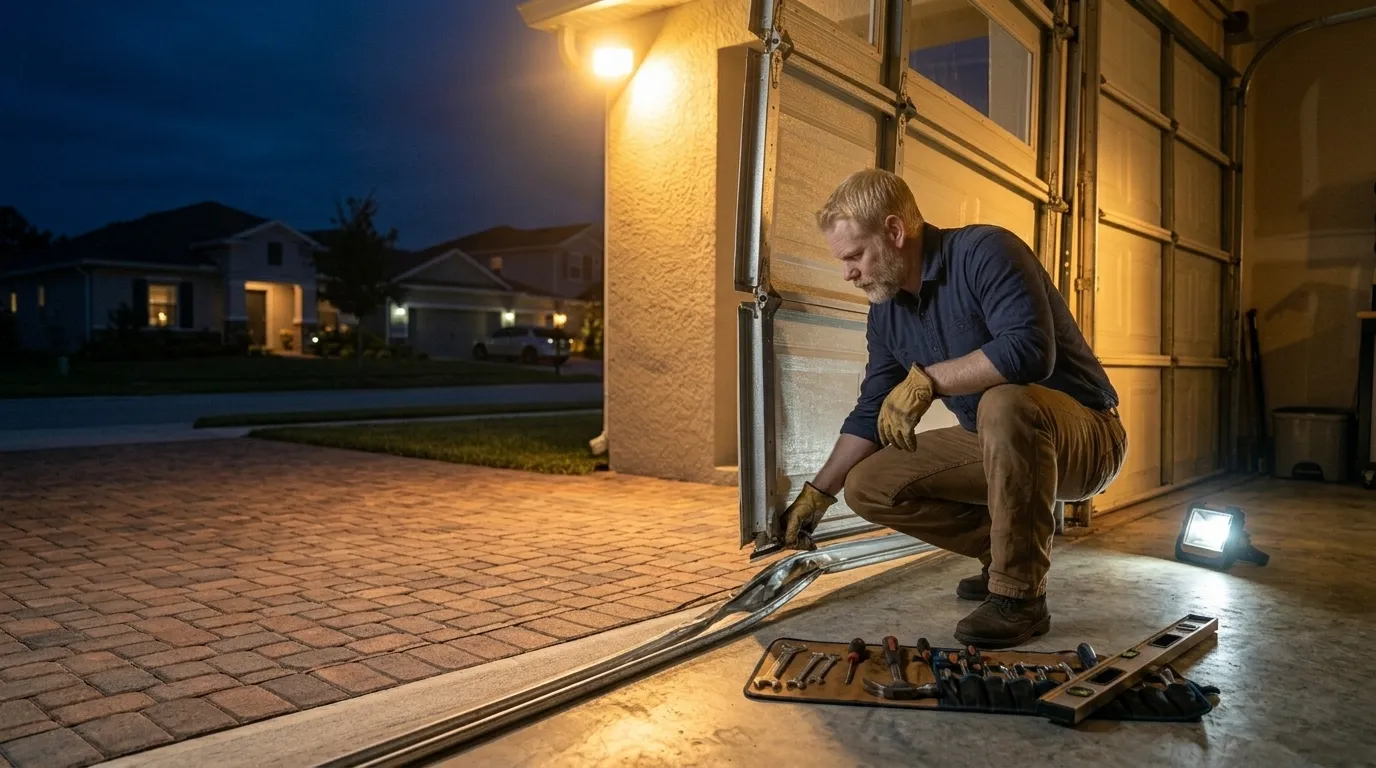
Sometimes it's slower: the door sags on one side, or one cable looks loose while the other is taut. That's usually a cable that's frayed through, often at the bottom bracket where sun and heat have dried out the galvanizing. On a double-wide door from the early 2000s, a single failed cable can drop that side hard enough to bend a track.
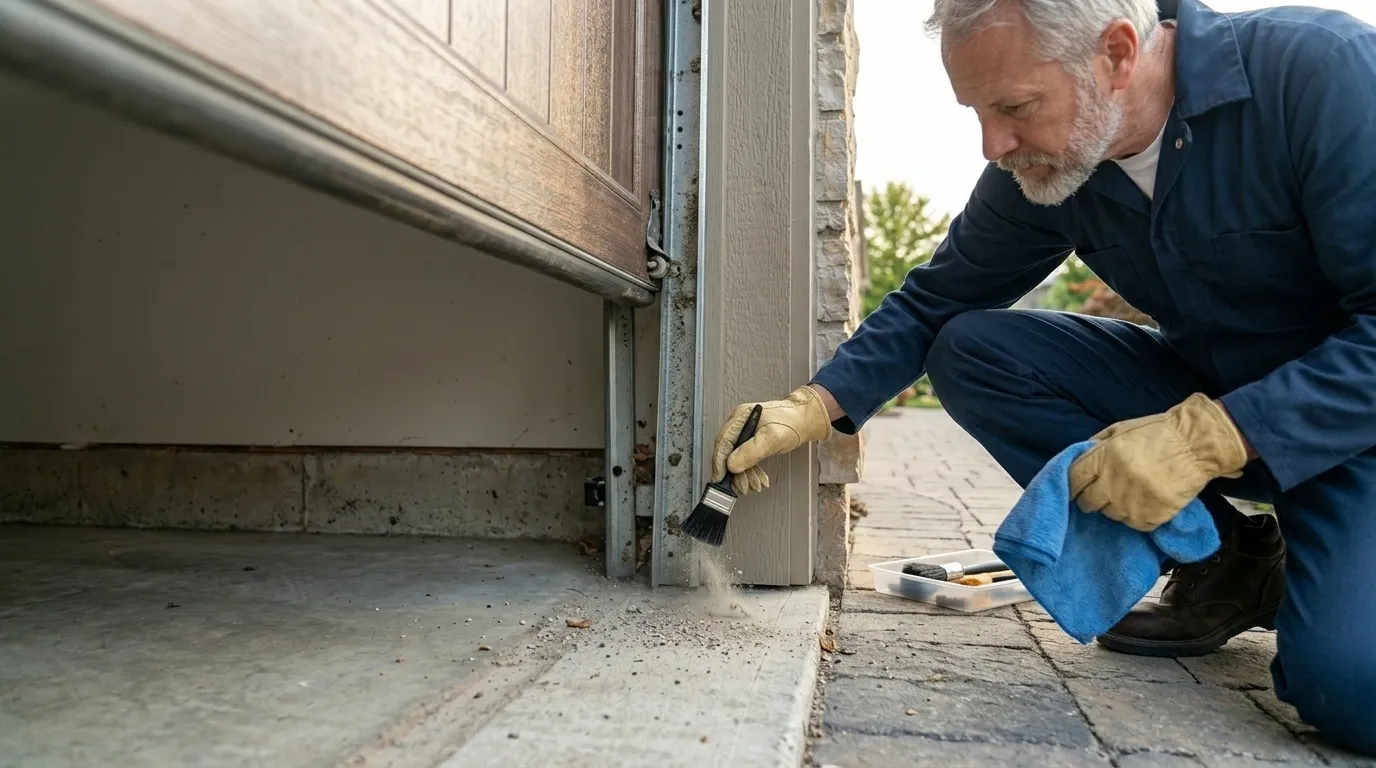
A door that reverses itself halfway down, or won't close at all, points at the opener's travel limits or a photo-eye sensor knocked out of alignment - common after years of thermal expansion shifting the track brackets a fraction of an inch. None of these are visible from inside the house until the door won't move, which is why most calls come in as a surprise on a hot afternoon rather than a slow warning.
What Can Go Wrong
A broken torsion spring on its own is a contained repair. Left alone, though, a homeowner or a well-meaning neighbor tries to force the door up manually, and that's when a second spring goes, or the cable drum spins loose and kinks the cable. At that point you're not replacing one part, you're replacing the spring set, both cables, and possibly a bent track - a bigger job than the original call.
On Litchfield Park's household income levels, most people replacing hardware here are choosing between a straight repair and stepping up to a heavier-duty spring rated for the panel weight, rather than deferring the fix. That's the right call on a 2001-era steel door that still has real life left in the rest of the assembly - spring and cable wear doesn't mean the panels or track need replacing too.
Where it goes wrong is delay. A frayed cable that snaps while the door's halfway open can drop a 150-pound panel onto anything underneath it, car or otherwise. That's the one failure mode worth treating as urgent rather than