What You Are Seeing
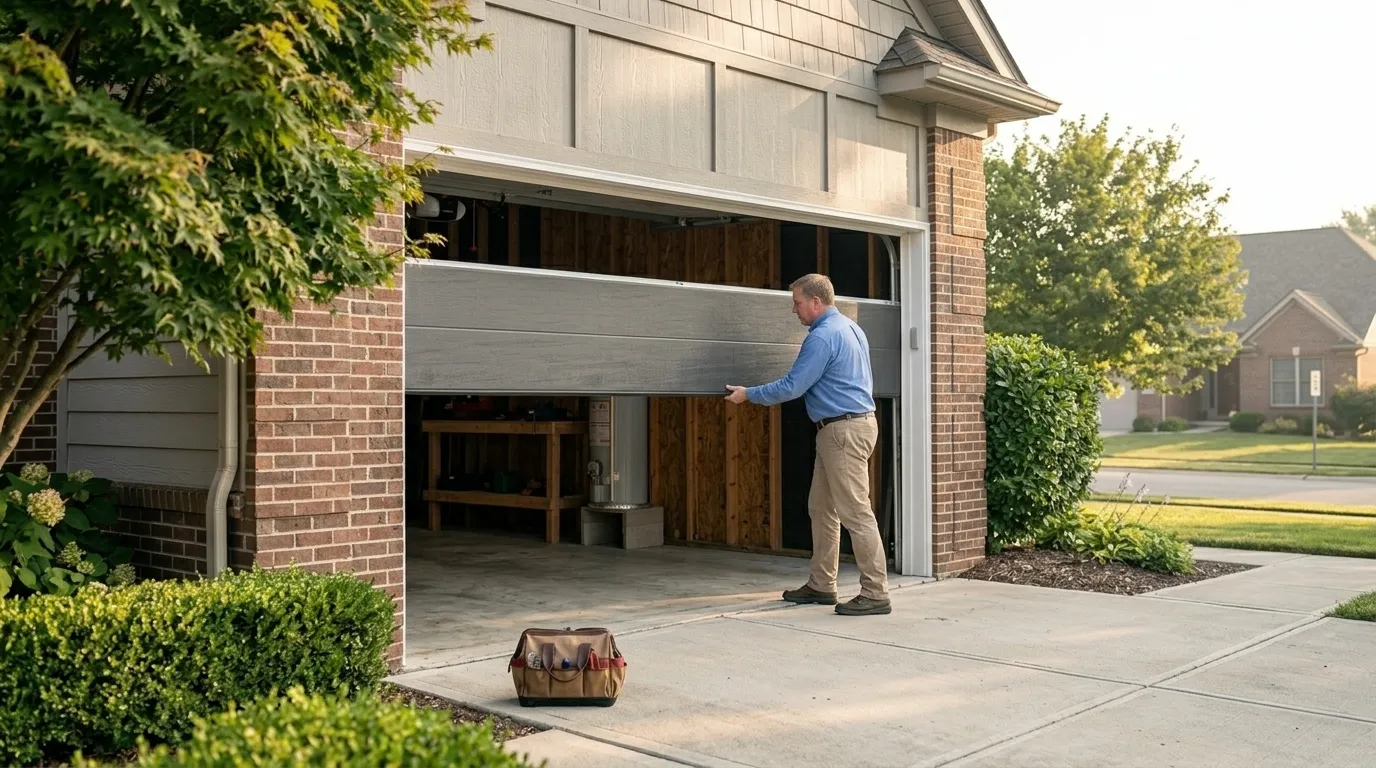
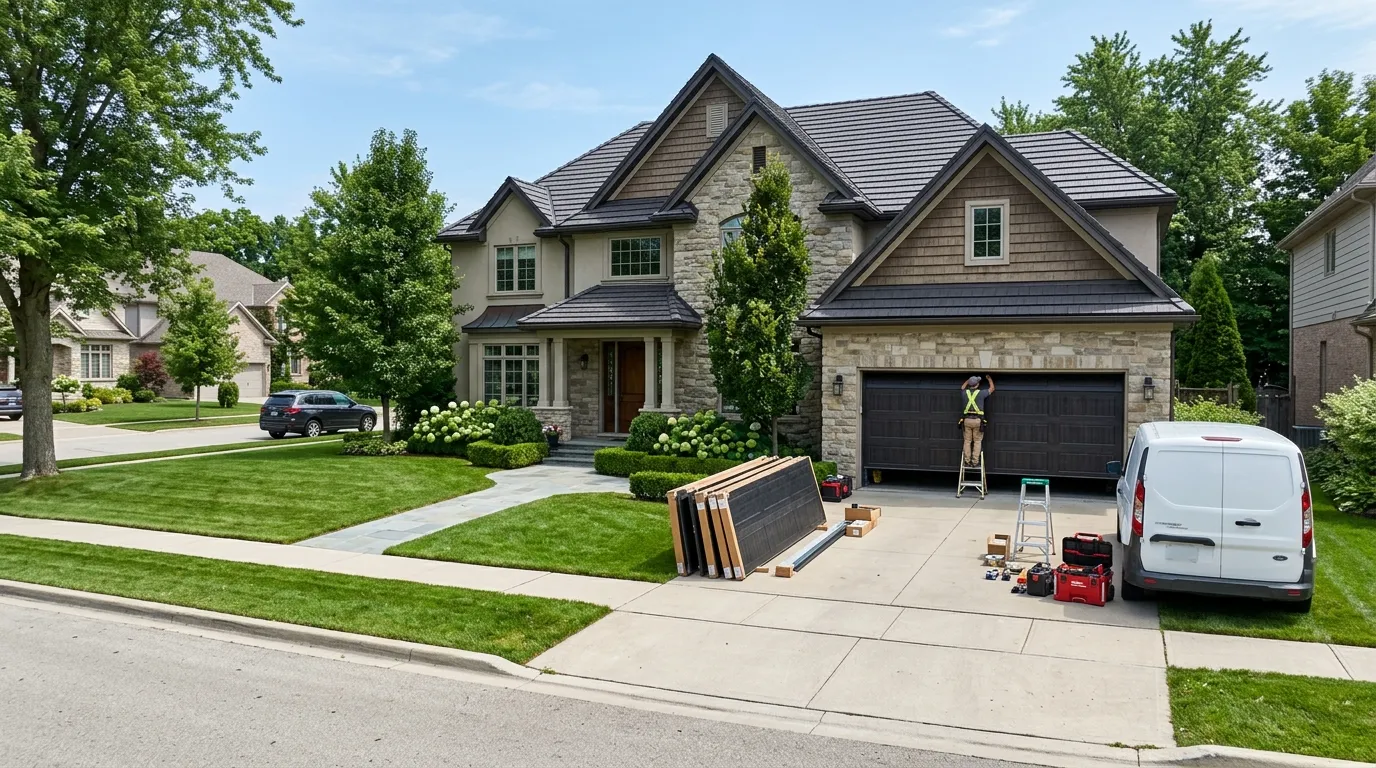
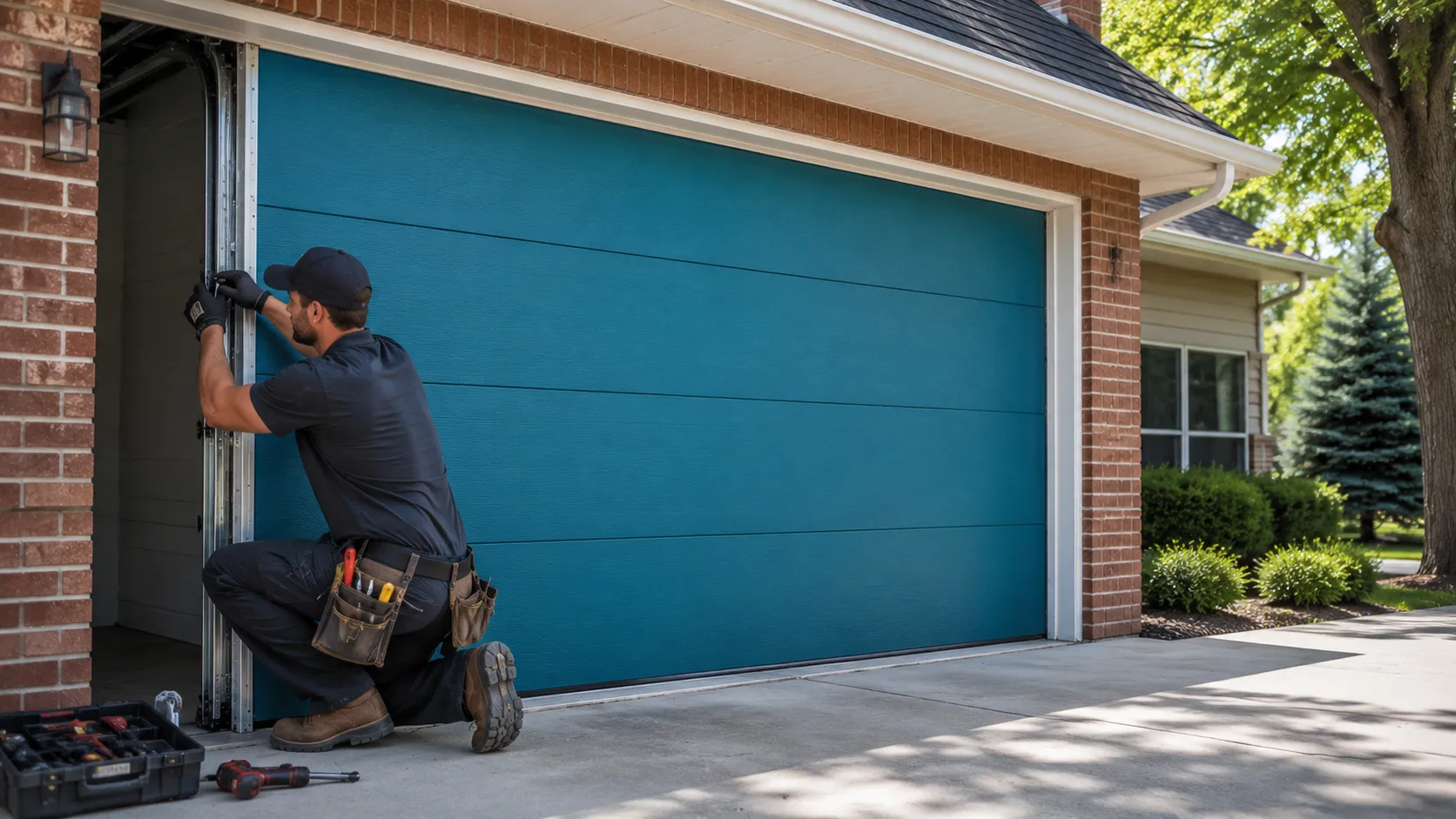
Walk a block in Litchfield Park and the failures repeat. Doors from the 2001 build wave were mostly steel sectional, often with a polystyrene or polyurethane core rather than the hollow single-layer panels from decades earlier - a reasonable door, but the spring sizing and the opener load stayed dialed in to the choices whoever built the tract made. Chain-drive and belt-drive openers from that generation, common across the mostly-2000s stock spread over this end of the valley, are old enough now that the circuit boards and the capacitors are the parts giving out, not the motors themselves. You'll notice a door that reverses for no reason, a remote that only works standing under it, or an opener that hums and doesn't lift. None of that is a mystery once you know the age of the stock. What you won't see as often here: the ancient single-piece slab doors and exposed extension springs that show up in older parts of the valley, because Litchfield Park mostly missed that earlier building era entirely.
What Can Go Wrong
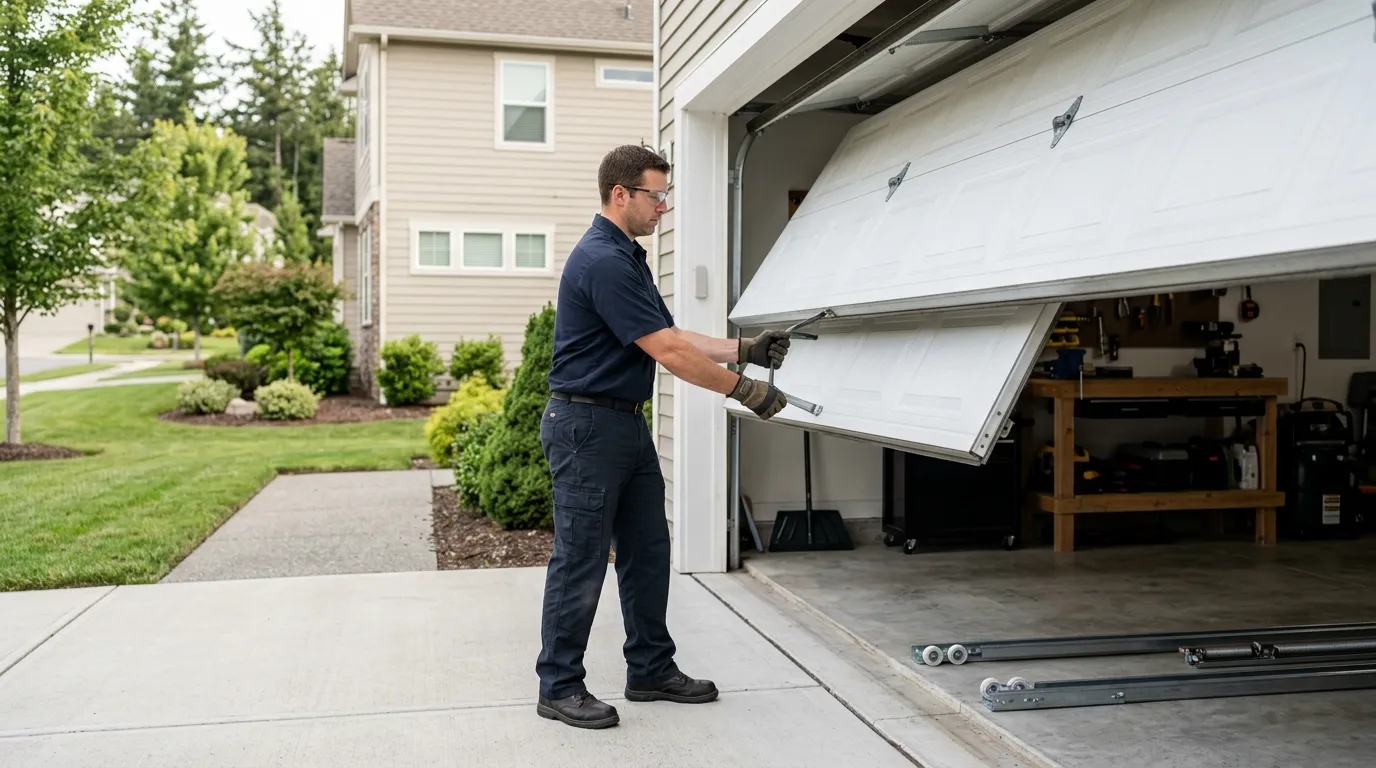
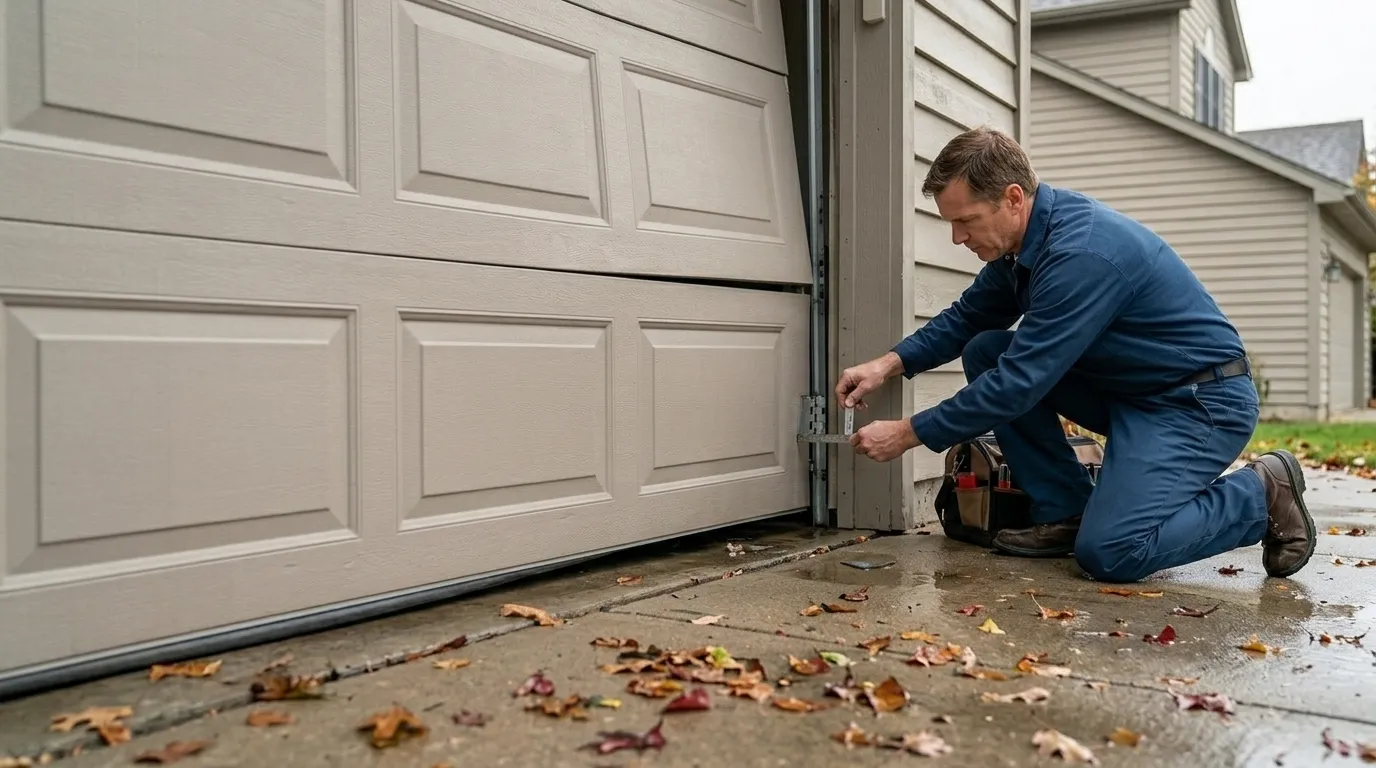
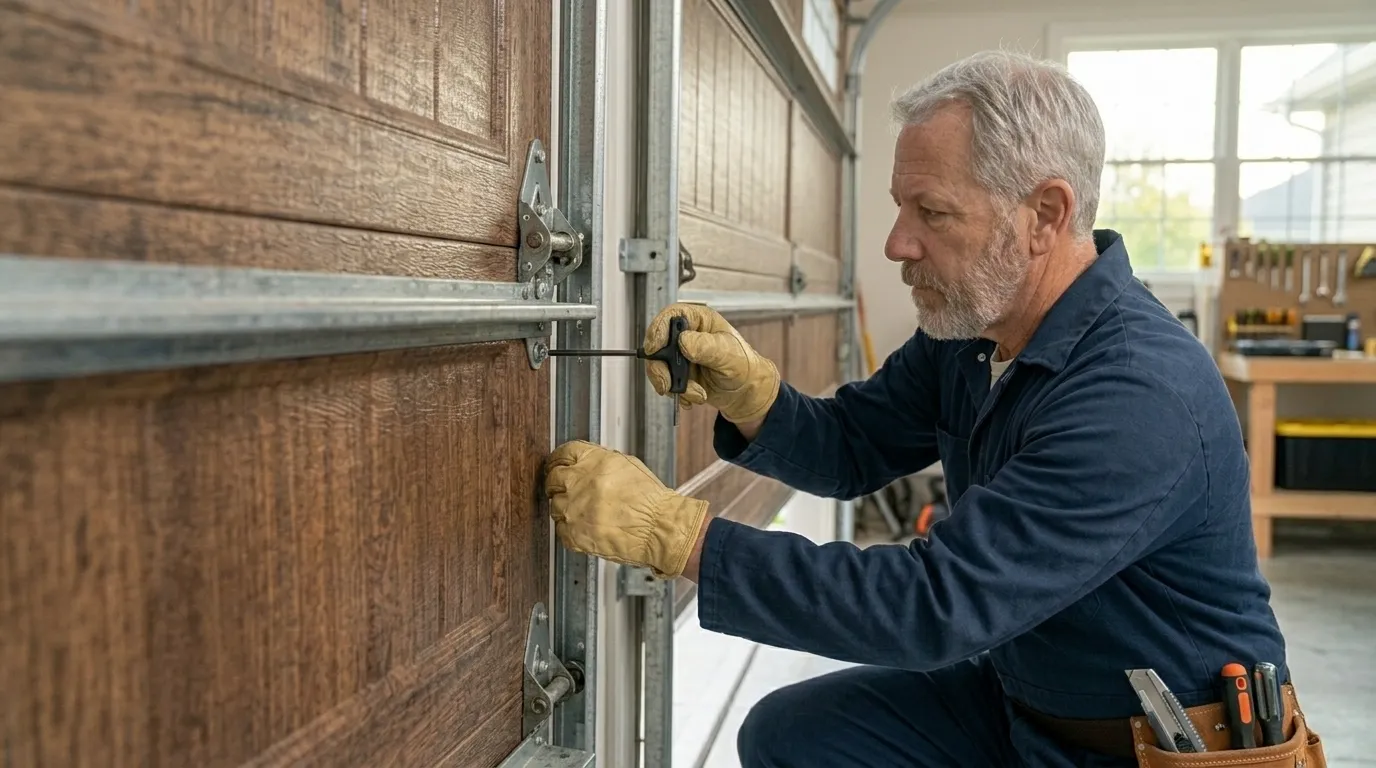
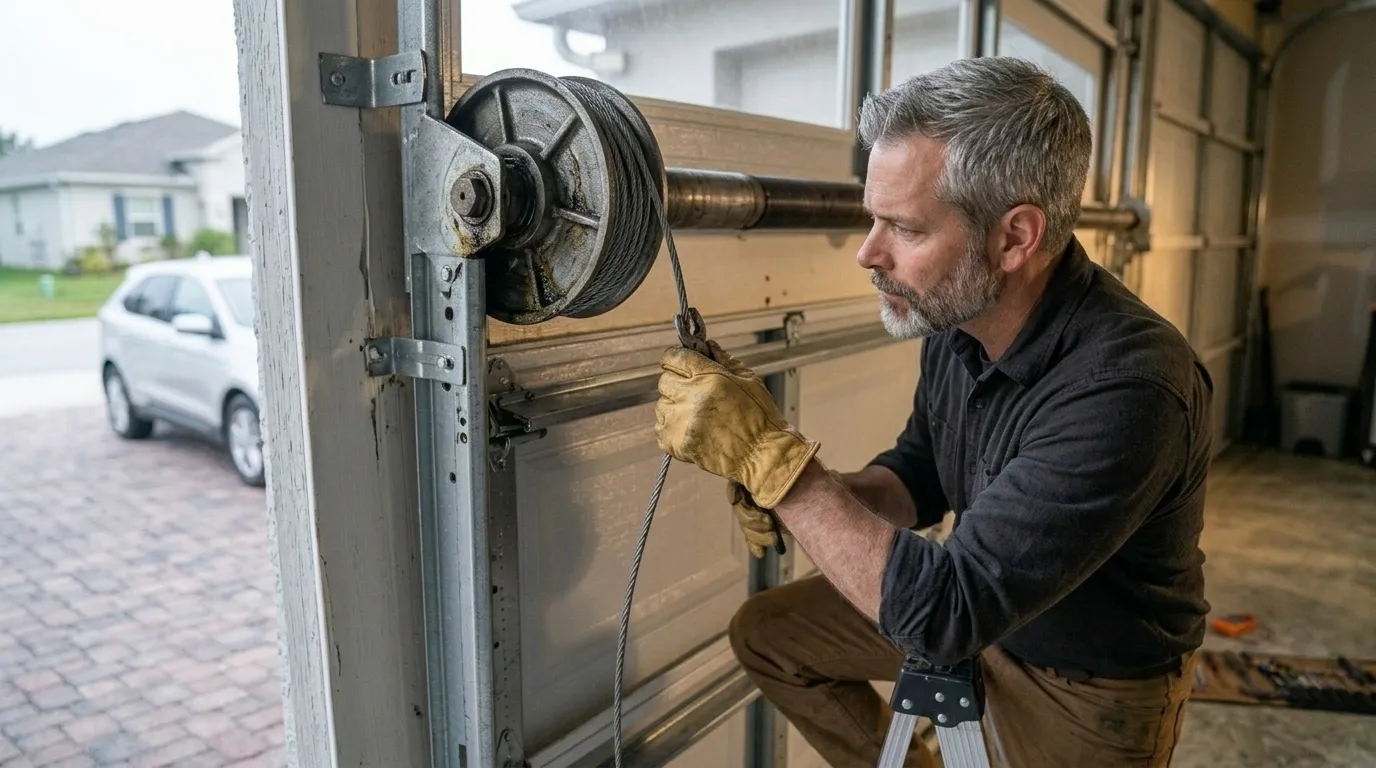
Heat is the variable that shortens everything. In a severe-heat climate band, lubricant on a torsion spring cooks off faster, the spring loses temper years before it should, and it lets go without much warning - usually as a loud bang and a door that won't budge. Openers suffer the same way: capacitors and control boards rated for a milder climate don't last as long here, and a 2001-era opener that's already twenty-plus years old is a reasonable candidate for full replacement rather than another repair. Tracks can rack out of alignment if a roller seizes and the door keeps getting forced through it, which turns a small roller problem into a bent track. One honest limit: if the opener is that old and the logic board is dead, we may not be able to get an exact replacement board for it. At that point a new opener costs about the same as chasing discontinued parts, and we'll tell you that instead of billing for parts that don't exist anymore.