Litchfield Park's housing mostly went up around 2001, part of the broader 1979-2007 build-out that shaped this whole service area. A door hung in that window almost always came standard with a galvanized torsion spring, steel roller-formed panels, and a chain- or early belt-drive opener with a basic circuit board - none of it exotic, all of it aging the same way twenty-plus years later.
What pushes that hardware toward failure here isn't moisture or rust, it's heat. This area sits in a severe-heat climate band, and repeated cycling between triple-digit afternoons and cooler nights dries out spring lubricant, hardens nylon rollers until they crack, and stresses the steel in a torsion spring far faster than the same door would wear in a mild climate. A spring rated for a fixed number of open-close cycles doesn't care what the calendar says - heat cycling burns through that rating quietly, with no warning sound until the day it lets go.
With around 2,867 households in town, most sitting on that same 2000s-era hardware, the failure pattern isn't random house to house. It's a generation of doors reaching the same wall at roughly the same time.
What You Are Seeing
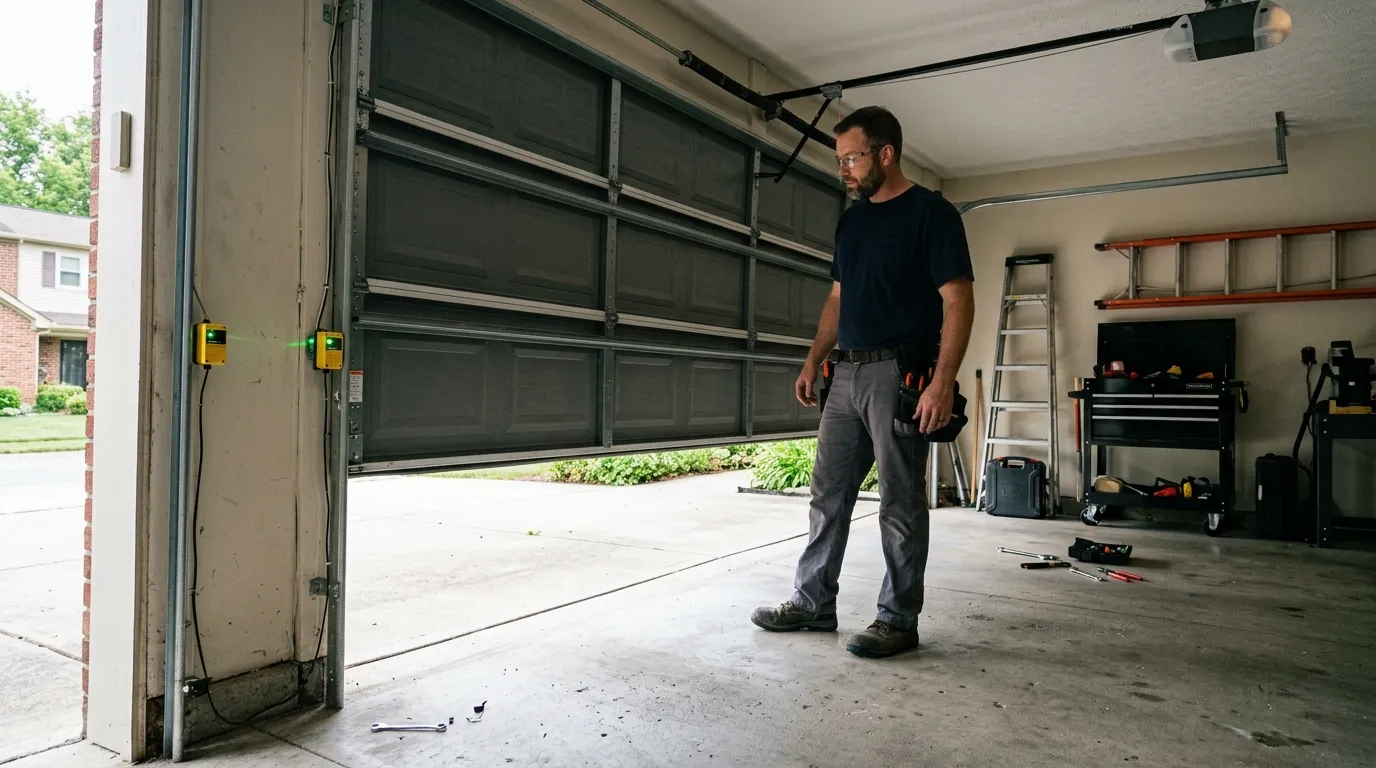
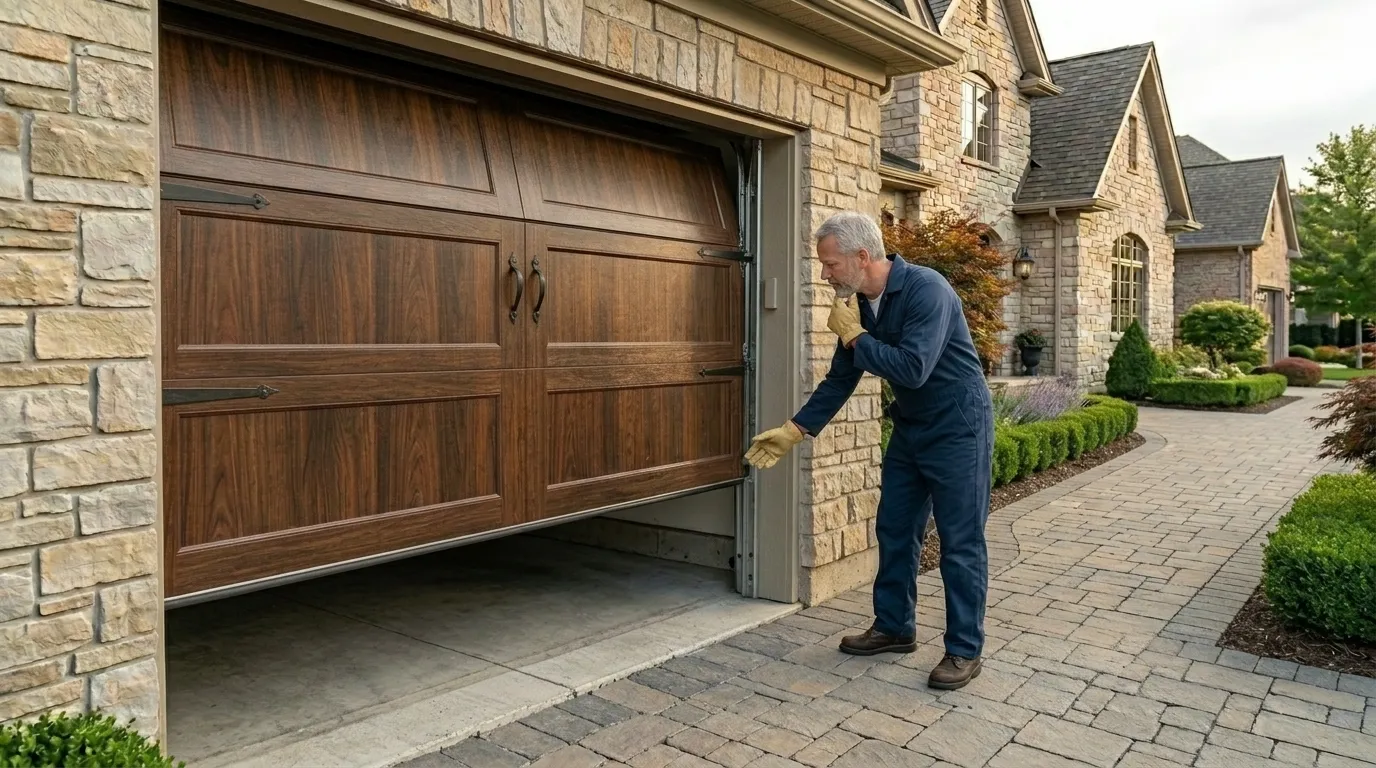
The most common early sign is an opener that strains before the door starts moving - a half-second hesitation or a groan from the motor as it takes up slack a weakening spring used to carry. Some owners notice the door reversing partway up for no clear reason, which is usually the opener's force sensor reacting to that same lost spring tension, not a bad sensor.
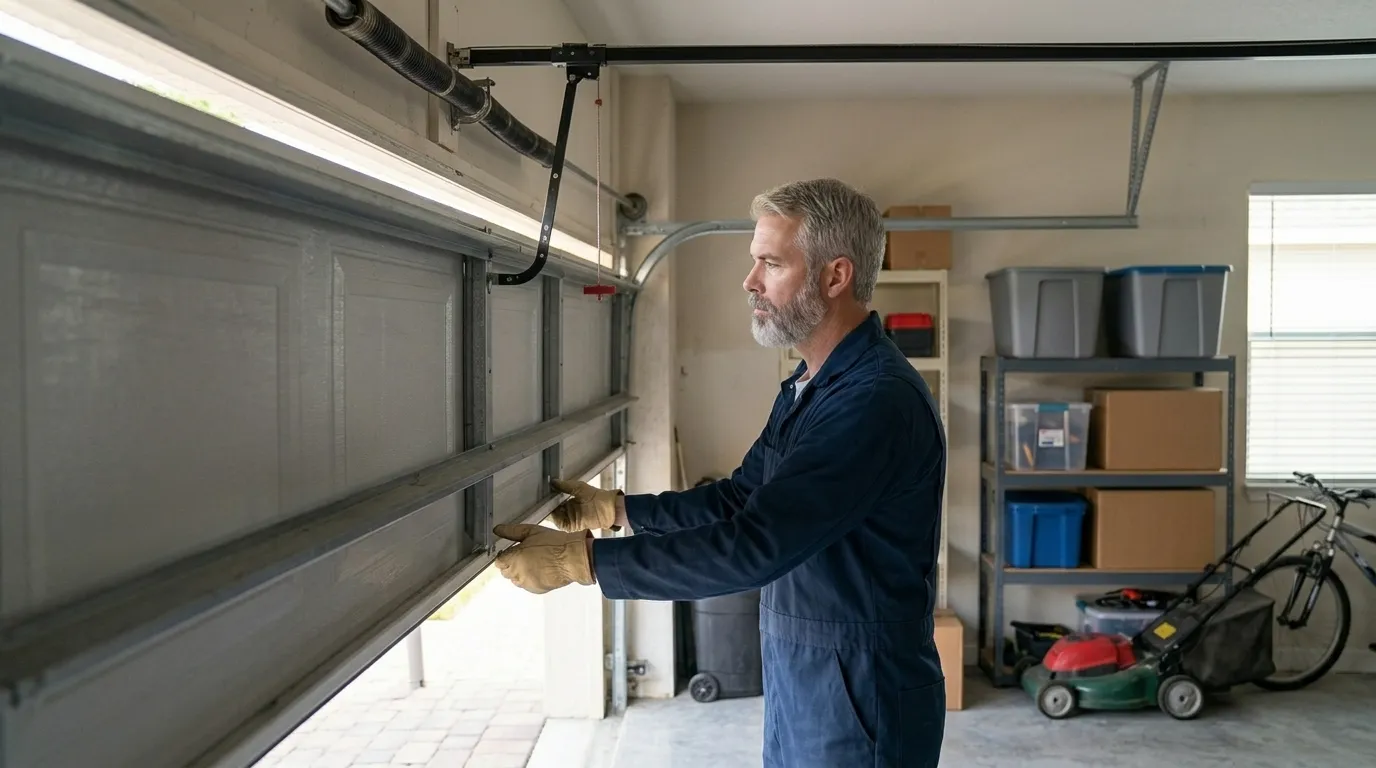
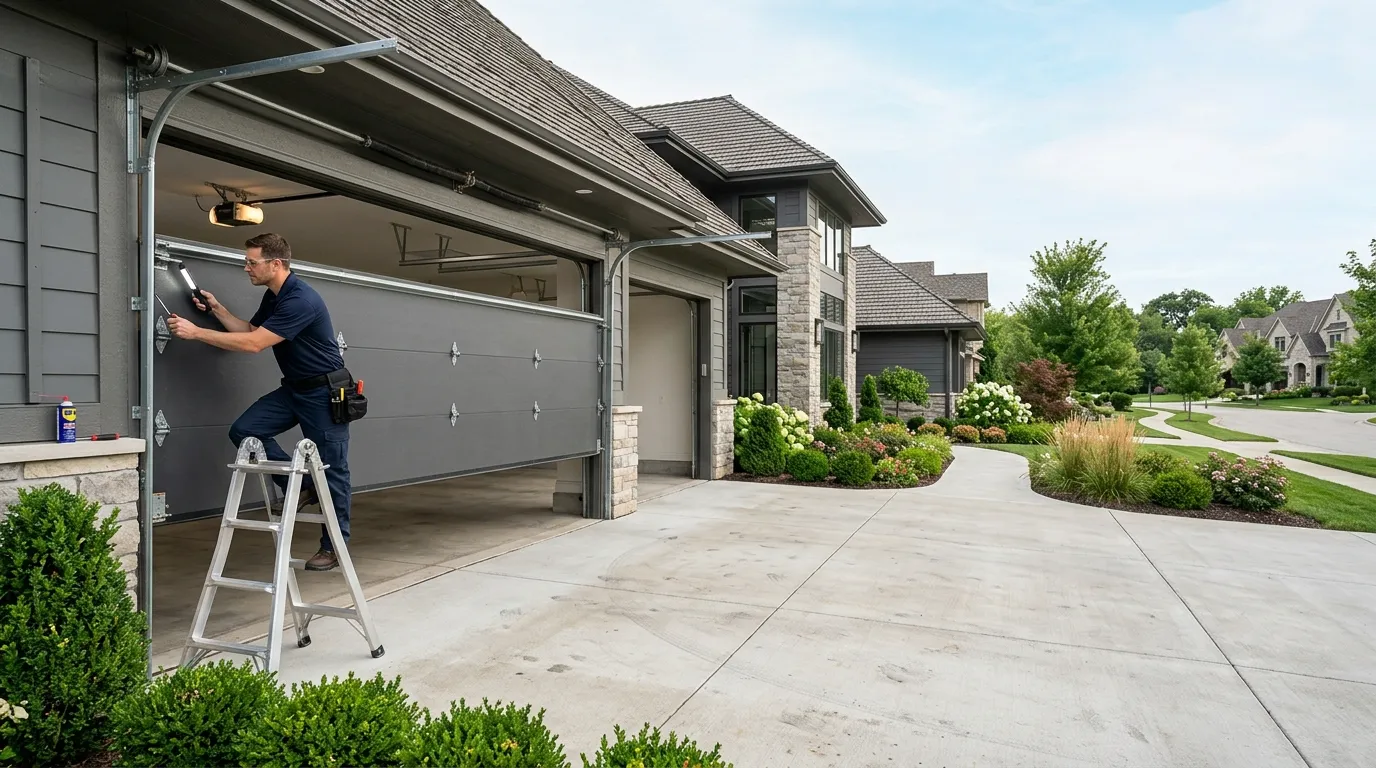
Noise is another tell. A door that used to run quiet and now rattles or squeals through the track is often down to dry rollers or hinges - heat bakes lubricant out faster than most people expect, sometimes inside a single summer. If you try to lift the door by hand with the opener disconnected and it feels heavy or drops on its own, that's a spring problem, not an opener problem, and it's not something to keep opening and closing on.
None of this is unique to any one house. It shows up across the 2000s-built stock in this part of the valley at roughly the same age, because the hardware and the climate are the same for all of it.
What Can Go Wrong
A torsion spring that's been quietly losing cycles doesn't usually give warning - it snaps. On a double door that's under real tension, and it's not a repair to attempt yourself. If a door in Litchfield Park is already showing that kind of failure rather than early wear signs, that's a repair job, not maintenance: see garage door repair in Litchfield Park.
Short of full spring failure, the more common path is slower: opener gears stripping under the extra load of a spring that's not doing its share, rollers going off-track as their nylon cracks and binds instead of rolling, or lift cables fraying at the drum from uneven tension. Any one of these left alone tends to drag another part down with it - a strained opener motor burns out faster, an off-track roller chews at the track itself.
One honest limit here: maintenance catches wear before it becomes a breakdown, but it doesn't reset a spring's cycle count or make a 2001 opener board behave like a new one. Past a certain point, replacing the part is the right call, not another service visit.
What Is on the Truck
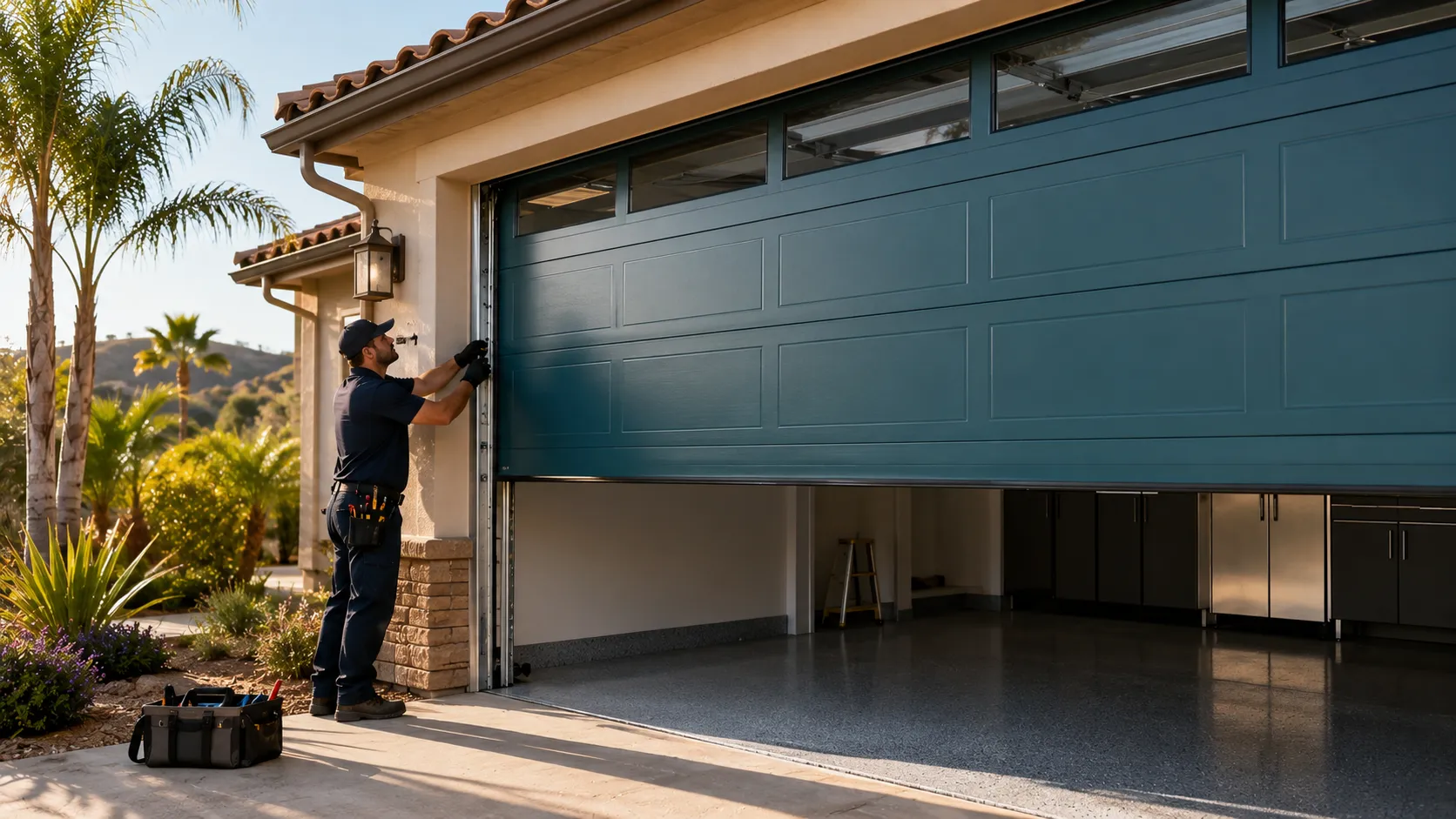
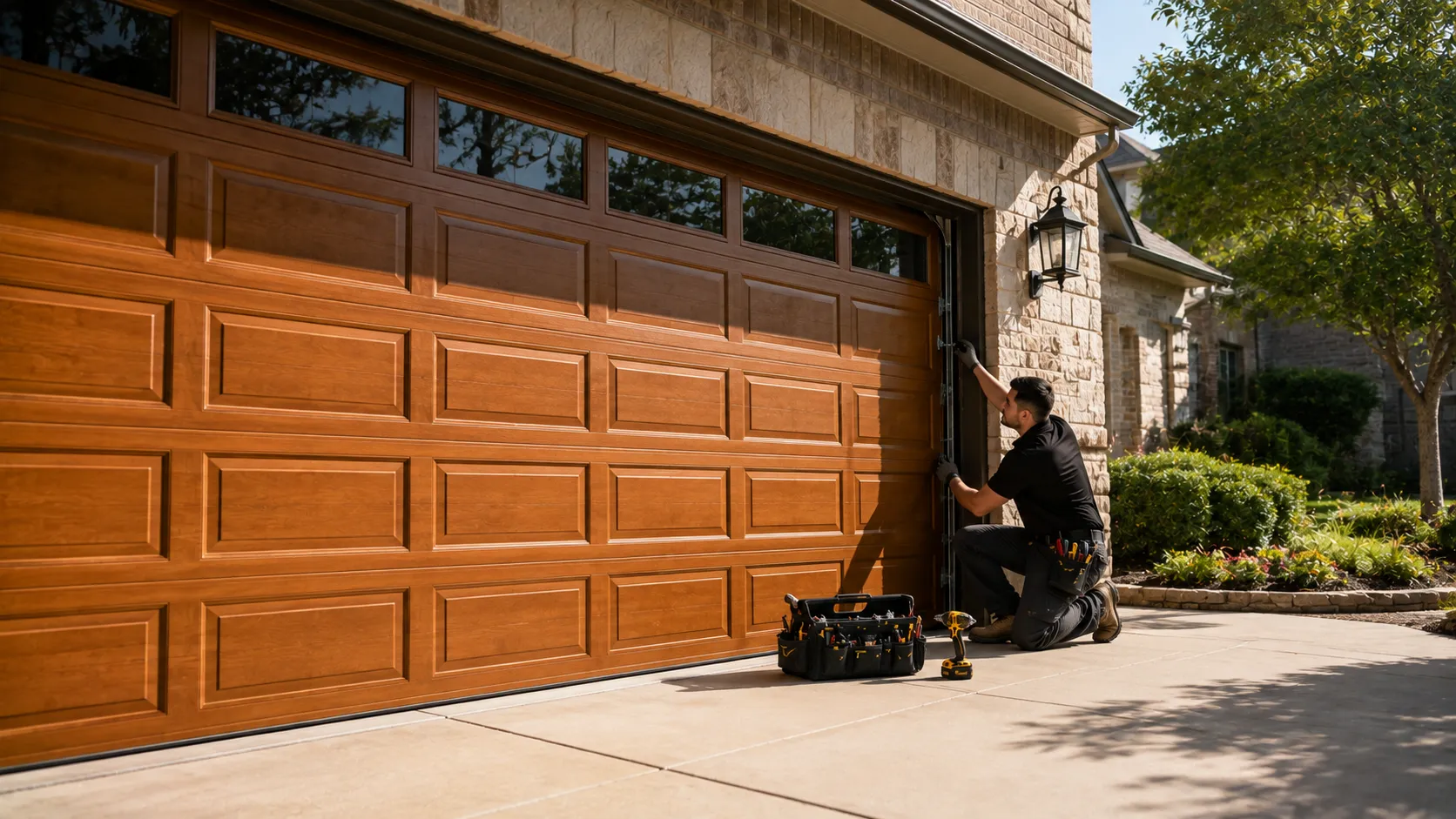
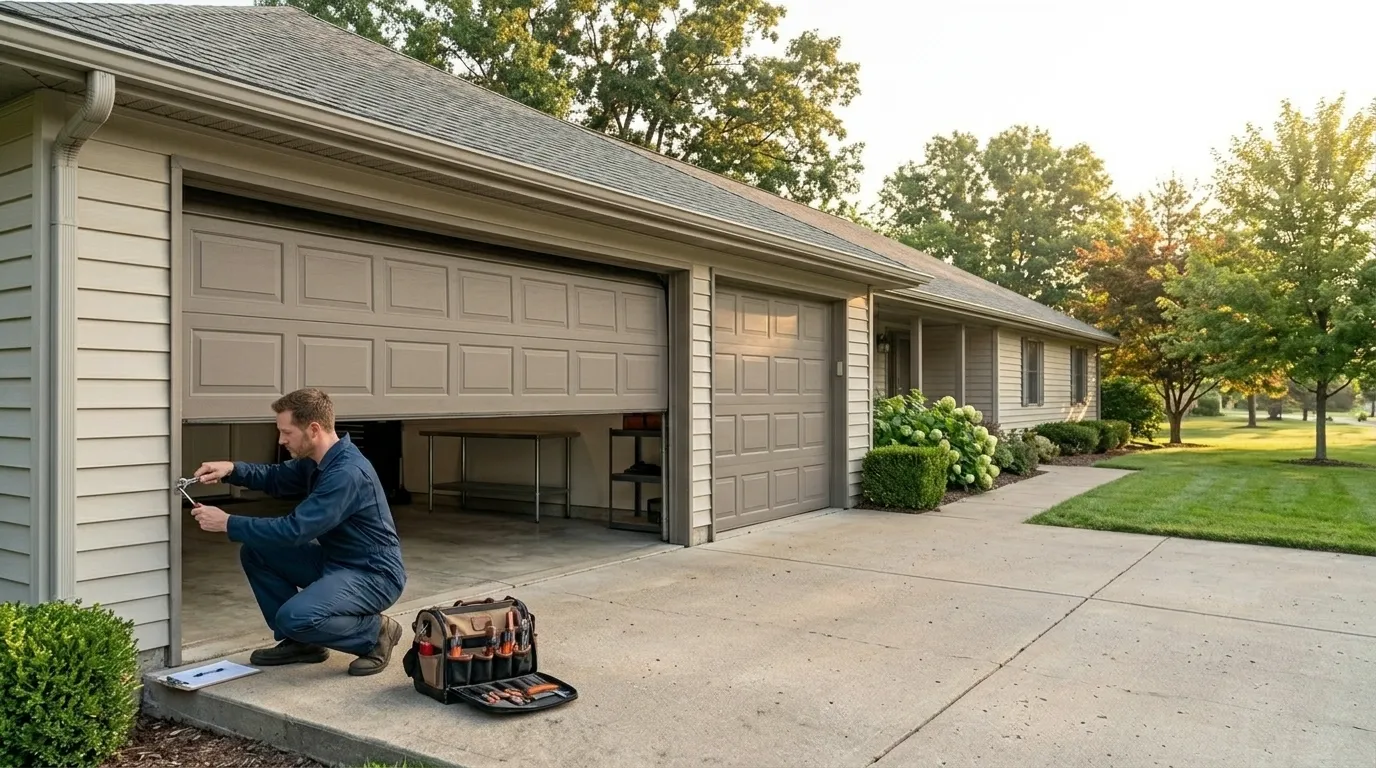
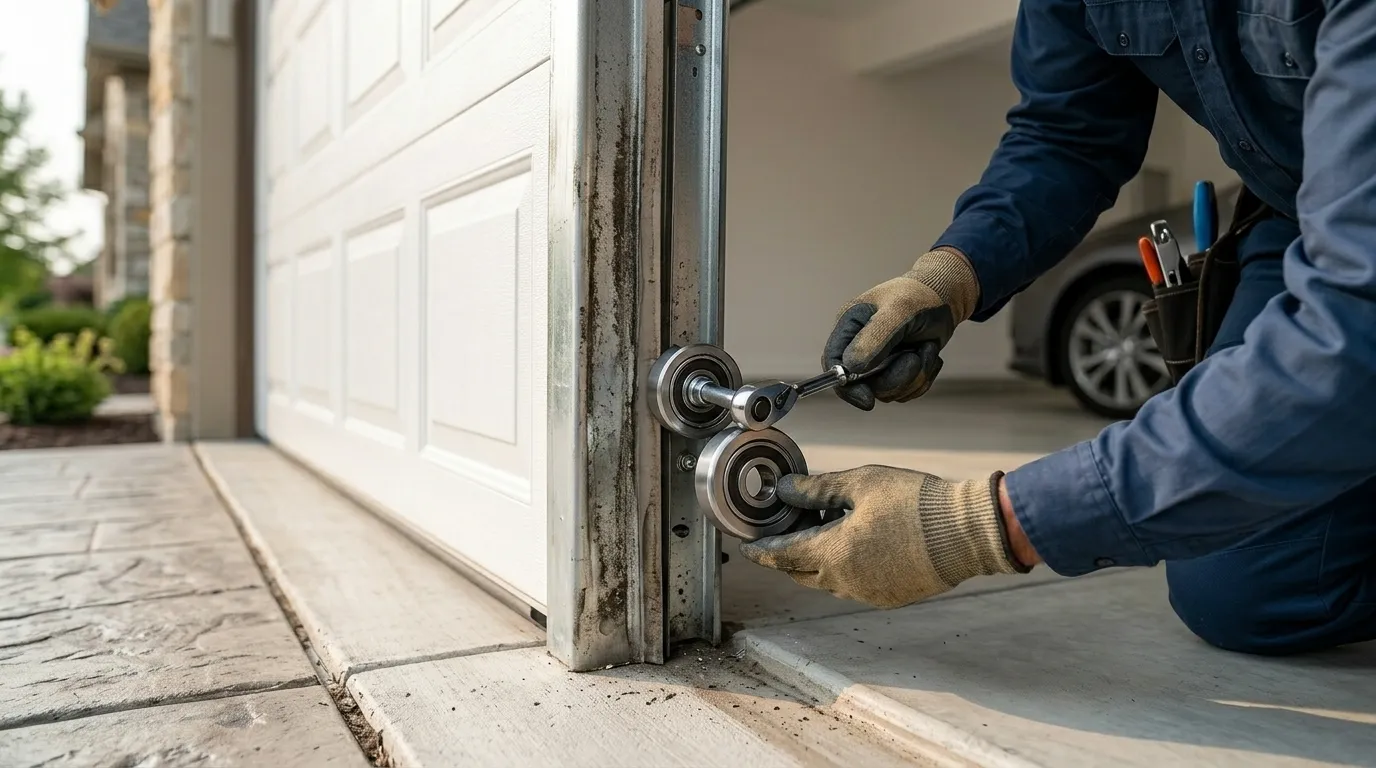
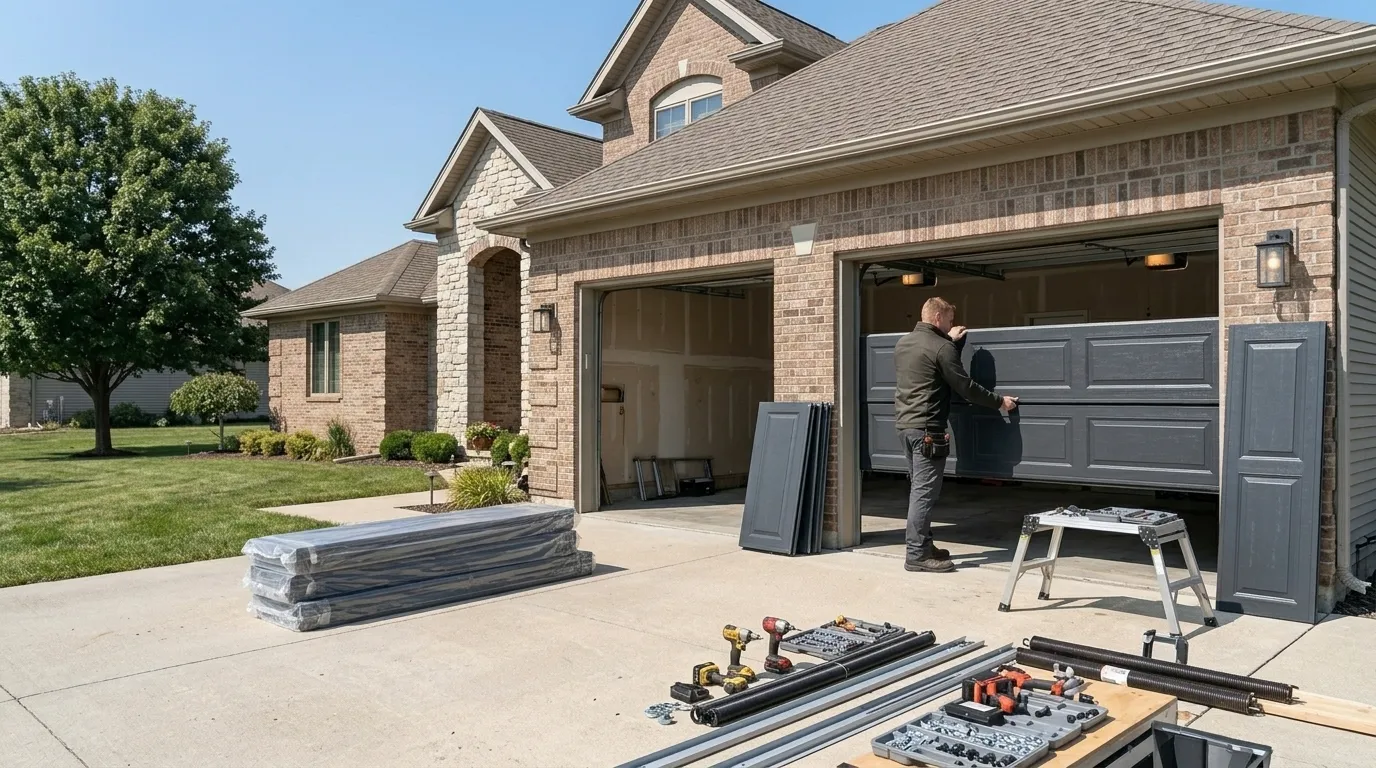
For a service area built mostly in the 2000s, the truck carries torsion springs sized for that generation of door, high-temperature lubricant made to hold up rather than cook off in the heat, and replacement rollers and hinges to swap out the cracked nylon that shows up so often on doors this age. Cable and drum checks are part of the visit, since fraying at this point in a door's life is common rather than rare.
The honest limit: the truck comes from Phoenix, about 16 miles out, so Litchfield Park maintenance runs on a scheduled visit rather than a same-day walk-up. It's also not stocked for custom insulated panel replacement - that gets ordered in ahead of a job rather than carried as standard stock. For general upkeep on a standard 2000s-era door, though, most of what a maintenance visit needs is already on board. Broader detail on what a maintenance visit covers across the service area lives on the Phoenix garage door maintenance page.
How it works
From “it’s stuck” to “it’s fixed”
01
Tell us what’s wrong
Describe the symptom - won’t open, loud bang, opener runs but the door won’t move.
02
On-site diagnosis
A technician tests the door under power and by hand and finds what actually failed.
03
Clear, up-front plan
You get the fix that’s needed and what drives the cost - before any work starts.
04
Repaired & tested
The repair is done, the door is set true and tested, and the work area left clean.
Serving Phoenix, AZ - tell us what your door’s doing and we’ll take it from there.
How old does a garage door have to be before it needs regular maintenance?
Most doors in Litchfield Park went up around 2001, which puts a lot of the town's hardware in its early twenties now. Once a torsion spring and opener pass that age under regular heat cycling, annual maintenance matters more than it did the first ten years - it's the difference between catching wear and getting a sudden spring failure.
Why does heat matter more than age here?
Litchfield Park sits in a severe-heat climate band, and repeated triple-digit cycling dries lubricant and hardens rollers faster than the same door would wear somewhere milder. Two doors installed the same year can be in very different shape depending on how much heat cycling they've absorbed, not just the calendar.
Do you have a shop in Litchfield Park?
No - the truck comes from Phoenix, about 16 miles away, so maintenance visits here are scheduled rather than same-day walk-ups. That's worth knowing when you're planning ahead of the busy season rather than waiting for a failure.
Can maintenance fix a spring that's already making noise?
Not reliably. Maintenance catches wear early - dry rollers, loose hardware, an opener straining before it should. A spring already grinding or groaning under load is closer to failure than to a tune-up, and that's a repair call, not a maintenance visit.
Ready to get your garage door sorted?
Tell us what it’s doing and where you are in Phoenix - we’ll take it from there.