We run this job out of Phoenix, and Litchfield Park sits about 16 miles out, which changes how the call goes more than people expect. It's not a same-block dispatch - when we tell you a window, we've already accounted for that drive, so the estimate you get is a real one, not a guess padded for traffic we haven't checked. That matters here because off-track doors don't wait politely; once a roller jumps the rail, the door either won't move or moves wrong, and every extra minute someone tries to force it makes the repair bigger.
As for why it happens: most houses in this part of the valley were built in the late 1990s through the mid-2000s, right around 2001 on average. That means steel sectional doors on roller tracks that are now old enough for the brackets to have worked loose from twenty-plus years of thermal cycling. Phoenix-area heat is severe enough that track hardware expands and contracts season over season, and the bolts holding the vertical rail to the jamb back out a little at a time. A door that's been fine for years can go off-track from nothing more dramatic than a slightly bent roller catching a loose bracket at the wrong moment.
What You Are Seeing
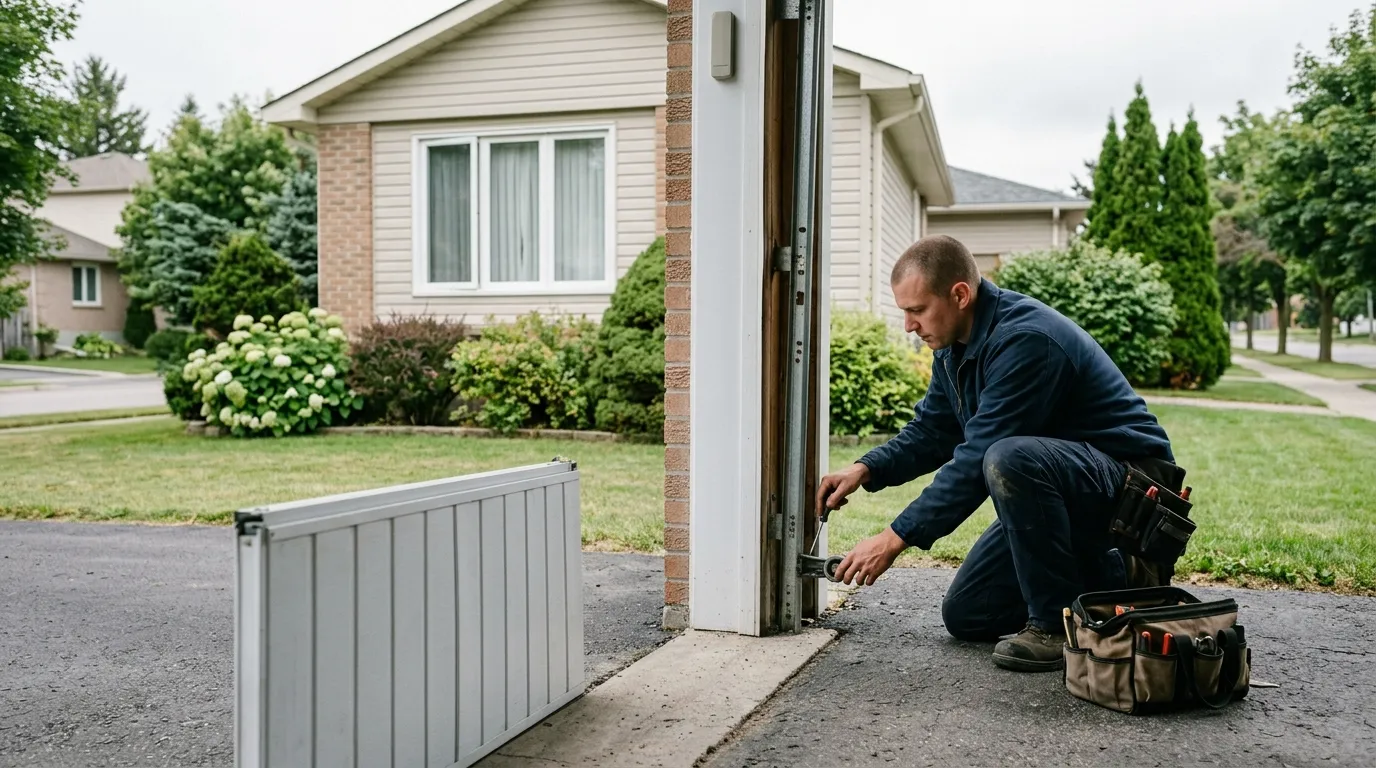
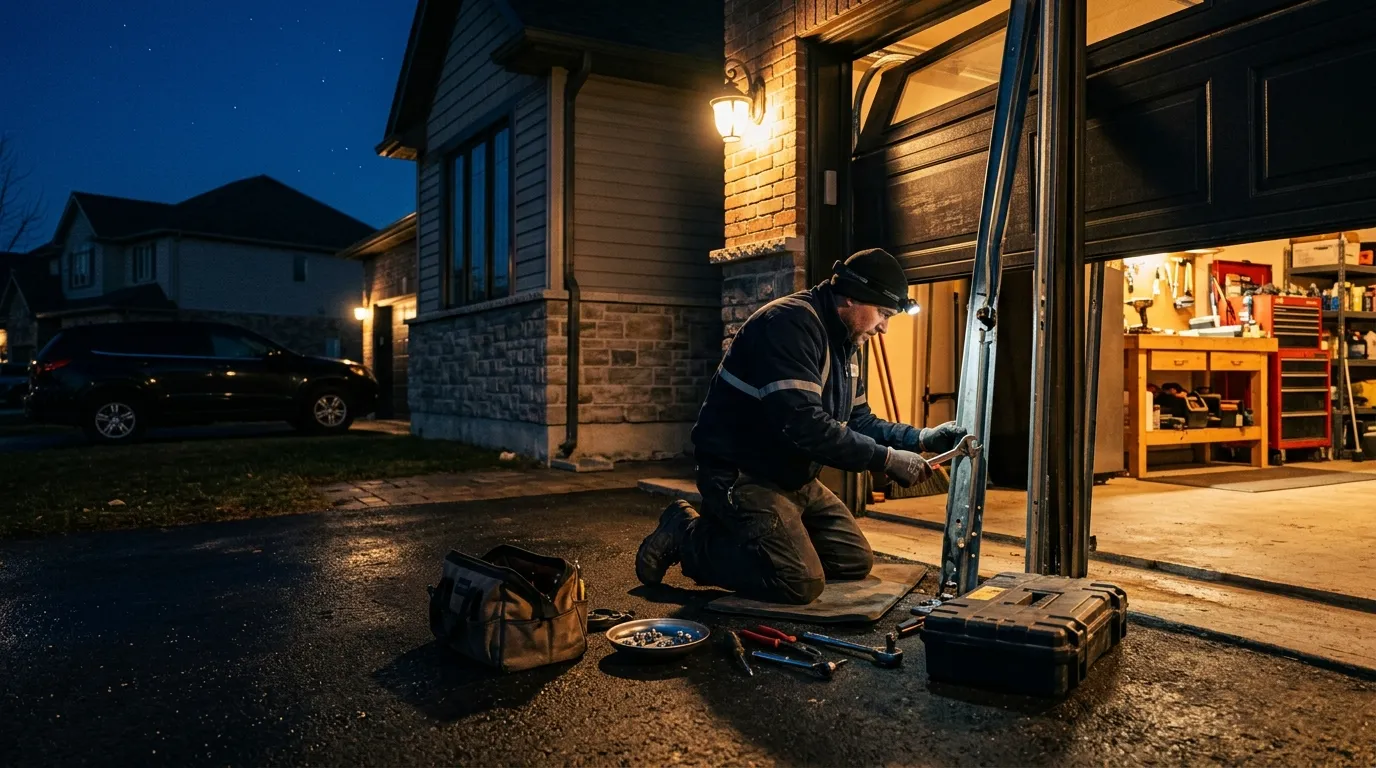
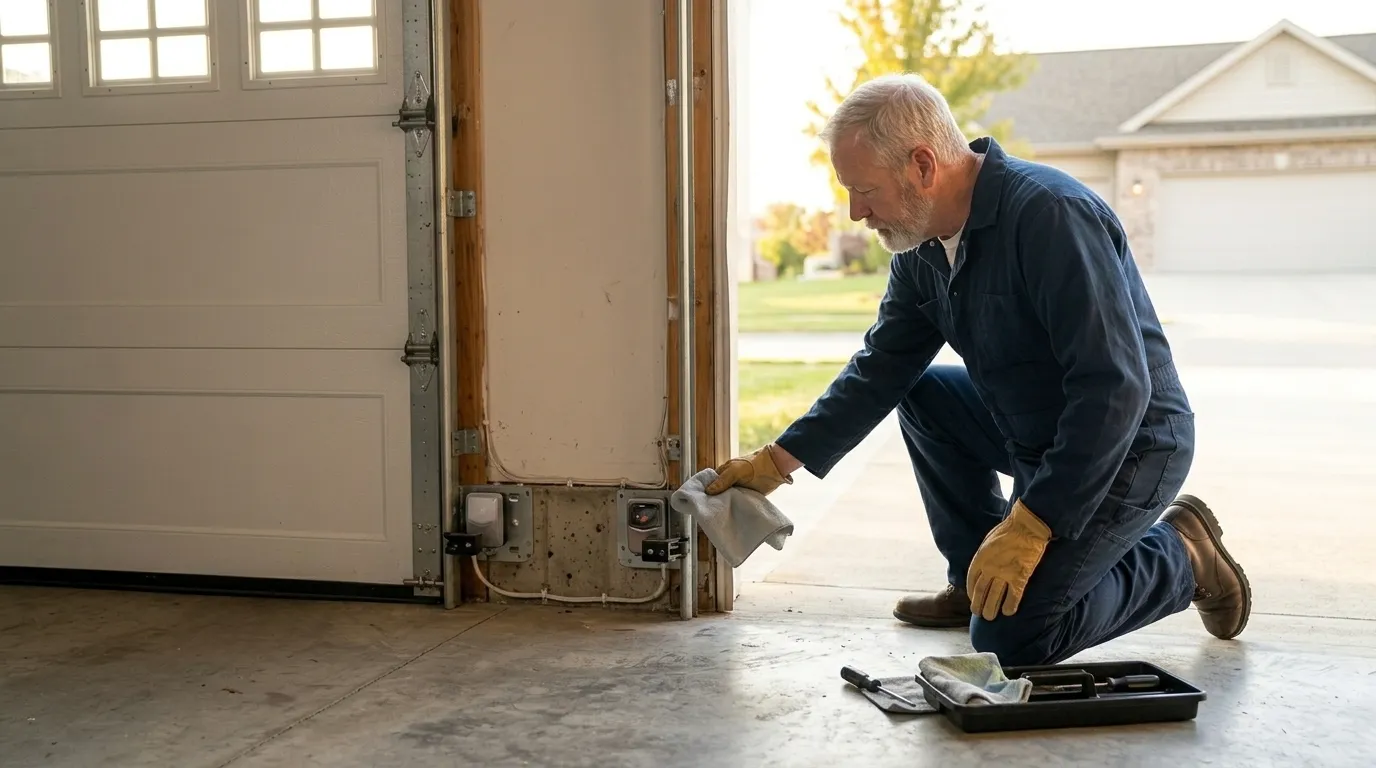
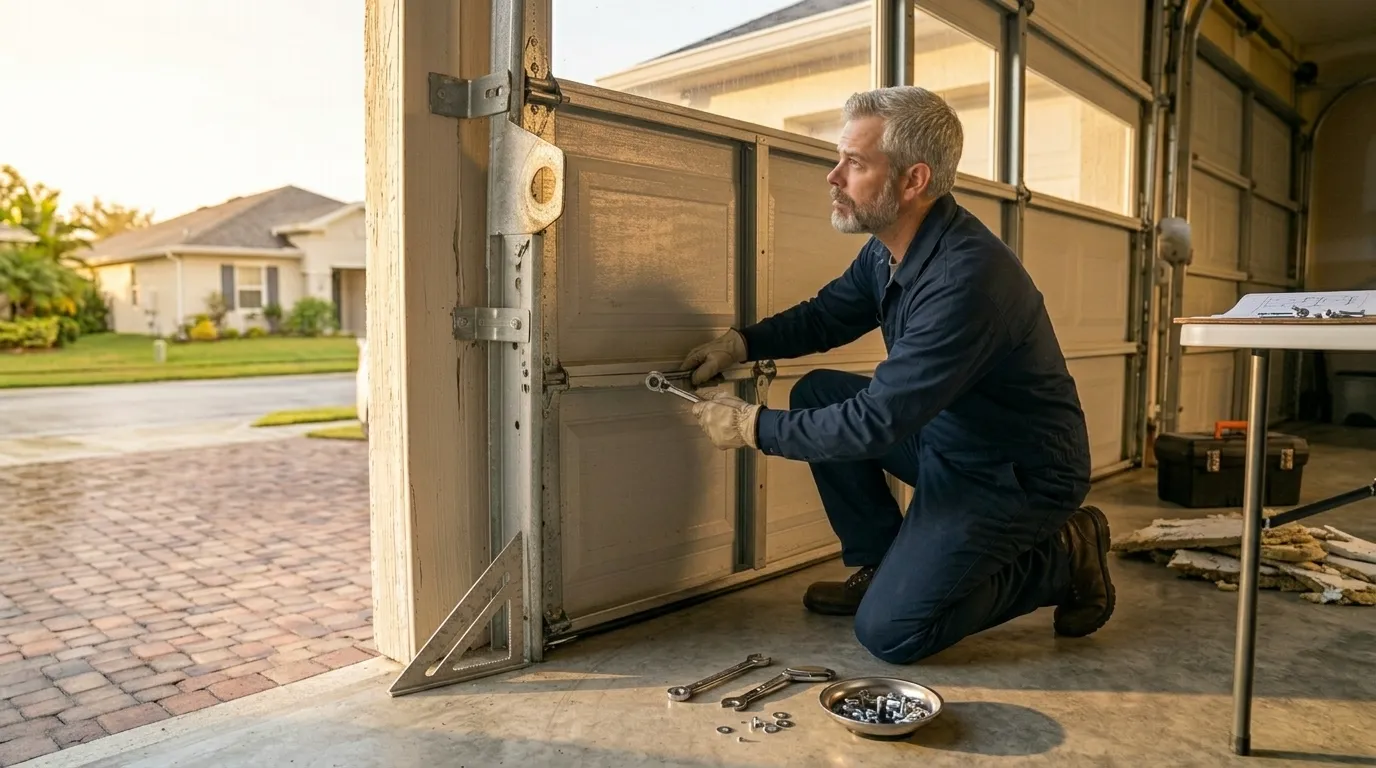
The door stalls partway, sits crooked in the opening, or one bottom corner hangs lower than the other. Sometimes it's louder than that - a scrape or a bang as a roller pops out of the track and the panel drops onto whatever's holding it, usually the opener arm or the next panel down. On a door of this era, the tracks are still galvanized steel roller tracks, not the newer nylon-guide systems, so a bent section shows up as a visible kink you can often see from across the garage.
If you catch it early, the door is just stuck and ugly. If someone's already tried to run the opener through it, you're looking at a bent track, a torn-loose bracket, or a cracked panel edge where the roller chewed into it. Either way, don't keep hitting the button. Every cycle after the first jump adds a second point of damage, and what started as a $200 track straighten turns into a $600 panel and track replacement.
What Can Go Wrong
Homes in Litchfield Park run a median household income around $124,973, well above the wider Phoenix-area figure of $74,764, and that shows up in the calls - more owners here ask for the door done right the first time rather than patched to get through the week. Fair enough, but it changes what we recommend. On a 20-plus-year-old track system, straightening a bent rail sometimes holds for years and sometimes doesn't; galvanized steel that's been kinked once has a memory, and it can walk back out of alignment in six months.
The honest call: if the track is bent in one clean spot and the rest of the hardware is sound, straightening or replacing that section is the right move. If we find the brackets already stripped out of the jamb, or the door's been run off-track more than once, we'll tell you replacing the whole track run is cheaper over three years than doing it twice. We don't upsell a full track kit when a bracket and a section of rail will do the job - but we also won't quote you a patch we know won't hold.
What Is on the Truck
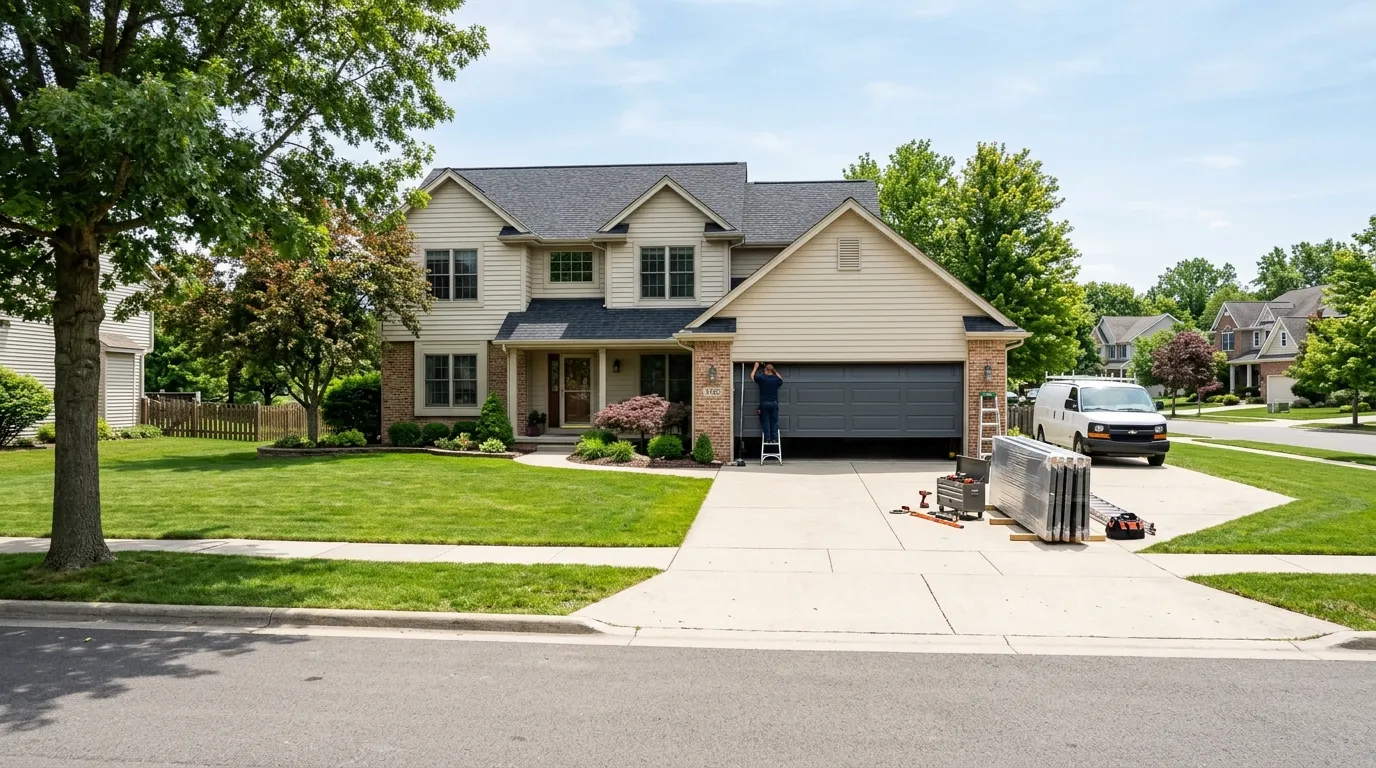
Because this is a drive-out call, not a walk-to-the-shop one, the truck carries what a torsion-era, early-2000s door needs: roller track sections in the standard widths, lag screws and jamb brackets sized for that era of framing, replacement steel rollers, and the alignment tools to reset a track without eyeballing it. What's not standard on the truck is anything custom - odd-width doors or track profiles outside the common sizes some manufacturers used briefly in the early 2000s. If your door is one of those, we may need to note the part on-site and come back with it, which is the one honest limitation of covering a route this wide from a single base: we stock for what's common, not for every variant.
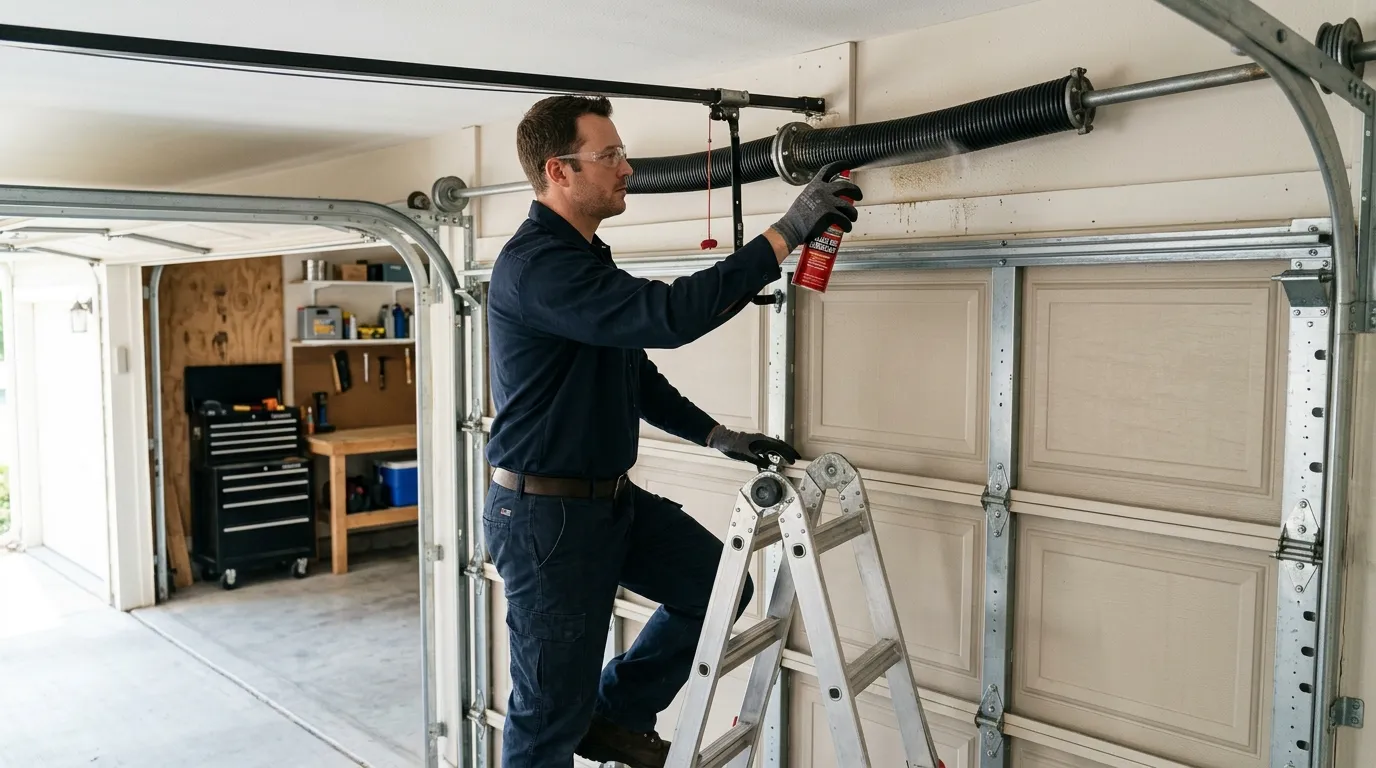
We also carry spring and cable hardware, because an off-track call sometimes turns out to be a spring problem wearing an off-track costume - a broken spring lets the door drop unevenly, which is what pulls a roller out of the rail in the first place.
How it works
From “it’s stuck” to “it’s fixed”
01
Tell us what’s wrong
Describe the symptom - won’t open, loud bang, opener runs but the door won’t move.
02
On-site diagnosis
A technician tests the door under power and by hand and finds what actually failed.
03
Clear, up-front plan
You get the fix that’s needed and what drives the cost - before any work starts.
04
Repaired & tested
The repair is done, the door is set true and tested, and the work area left clean.
Serving Phoenix, AZ - tell us what your door’s doing and we’ll take it from there.
We run this from Phoenix, about 16 miles out, so we give you a real window based on that drive rather than a same-hour promise we can't back up. Call and we'll tell you the honest estimate for the day.
Is a bent track always a full replacement?
No. If the bend is in one section and the rest of the track and brackets are sound, we can often straighten or swap just that section. If the brackets have pulled out of the jamb or the door's jumped track more than once, replacing the full run is usually cheaper long-term.
Why did my door go off-track with no warning?
On houses from around 2001, which is typical for this area, track brackets loosen slowly from years of heat cycling. A slightly bent roller then catches a loosened bracket and pops off the rail, often with no single dramatic cause.
Ready to get your garage door sorted?
Tell us what it’s doing and where you are in Phoenix - we’ll take it from there.